It fights cobras, survives their venom, and one of them broke out of every cage it was given
It is barely the size of a small dog, yet it will square up to a lion, raid a beehive bare-faced, and eat a cobra for dinner, venom and all. And when one was kept behind walls, it turned out to be a genius jailbreaker too. The honey badger may be the most stubborn animal on Earth.
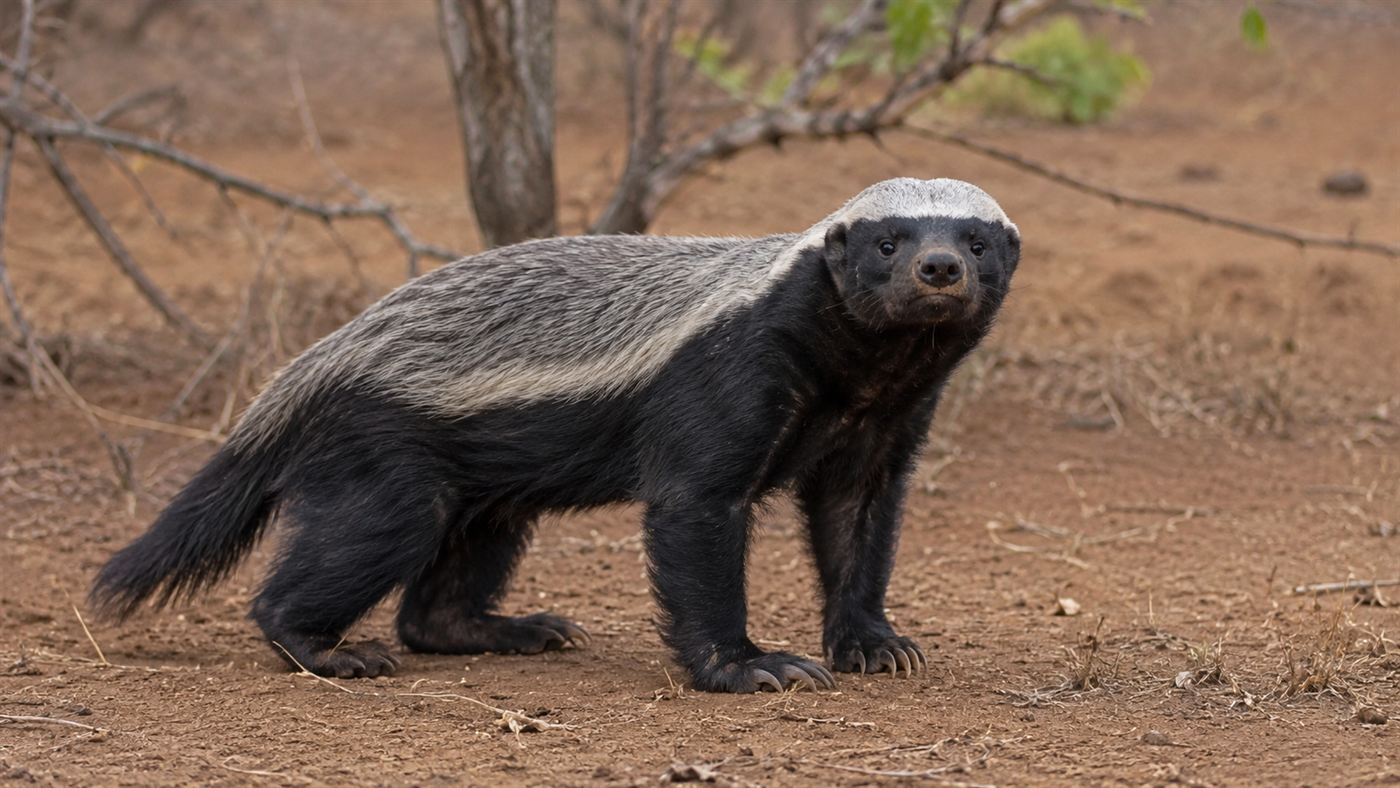
Small, low-slung and utterly unbothered, the honey badger picks fights far above its weight. Illustration: Watts & Wild.
Plenty of animals are bigger, faster or stronger than the honey badger. Almost none are as relentlessly difficult to kill or discourage. The honey badger has built a fearsome reputation by simply refusing to back down, from snakes and stings to lions many times its size.
Behind the bravado, though, is a genuinely remarkable animal, equipped with tricks that explain how it gets away with such recklessness.
Why the honey badger fears nothing
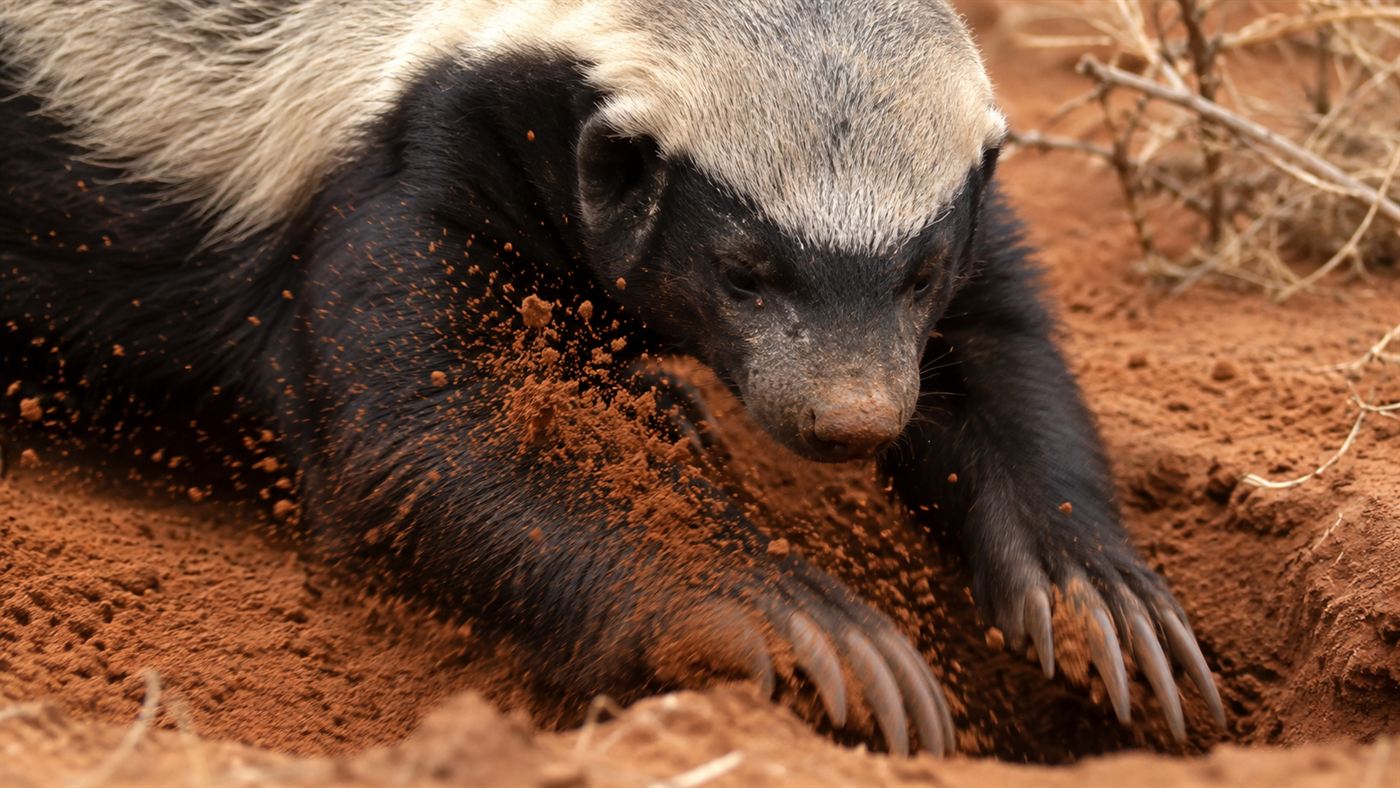
The secret starts with its skin. A honey badger is wrapped in a thick, rubbery hide that is only loosely attached to its body, and that loose fit is a weapon. If a predator grabs a honey badger, the animal can twist around inside its own skin and bite back, which makes it almost impossible to pin down.
That armour-like hide shrugs off bee stings, porcupine quills and many bites, while strong claws let the badger dig, climb and tear into nests. Add a famously bad temper and a refusal to give ground, and you have an animal that lions and leopards often decide is simply more trouble than it is worth. It does not win by being the biggest; it wins by being the least willing to quit.
Built to shrug off venom
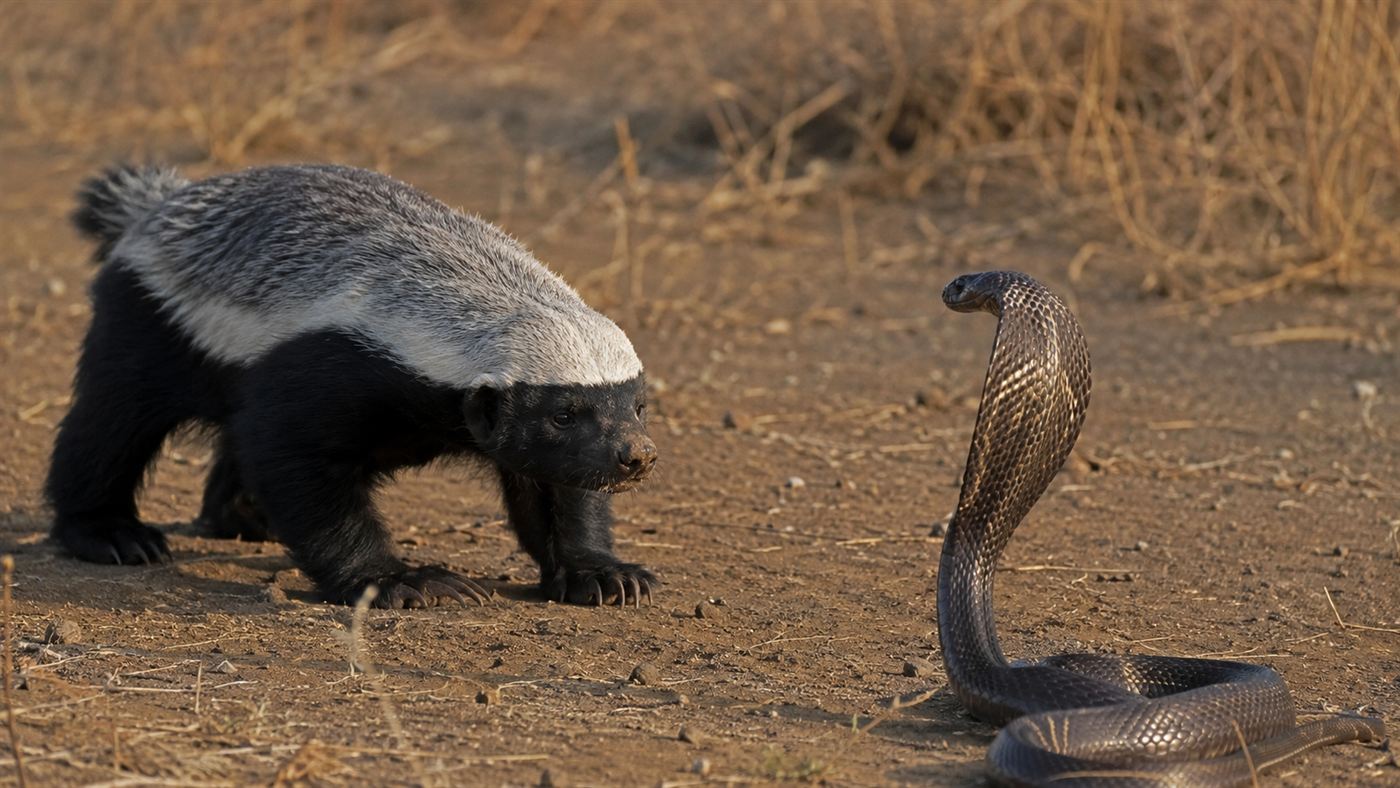
Most animals treat a cobra as something to flee. The honey badger treats it as a meal. Honey badgers regularly kill and eat venomous snakes, and they carry a powerful resistance to the venom that would quickly kill a similar-sized animal.
There are well-known accounts of a honey badger being bitten by a cobra mid-fight, collapsing as if dead, and then, a couple of hours later, simply getting back up and finishing its meal. The resistance is not magic; it comes from subtle changes in the animal's nervous system that blunt the effect of the venom, the same kind of trick evolved separately by mongooses. It does not make the badger immortal, but it gives it a terrifying edge.
Stoffel, the great escape artist
The honey badger's stubborn cleverness was captured perfectly by one famous individual. At a wildlife centre in South Africa, an orphaned honey badger named Stoffel became a legend not for fighting, but for escaping. Stoffel repeatedly broke out of enclosures built to hold him, stacking rocks and rolling balls of mud into ladders, and even using a rake left in his pen to climb the walls.
When his keepers stripped the enclosure bare, he dug. When they stopped the digging, he teamed up with a companion to work the gate latch between them. His exploits, filmed for a wildlife documentary, turned him into an internet star watched by tens of millions, and he lived far longer than a wild honey badger ever could. Stoffel was one animal, but he showed the whole species' defining trait: it does not accept that a problem cannot be solved.
Why is the honey badger so fearless?
Because almost everything about it is built for not losing. The honey badger pairs tough, loose skin and digging claws with a temperament that simply will not register defeat, so it stands its ground where smarter survival instinct would say run.
That attitude is not bravado for its own sake. In a harsh landscape full of bigger predators, an animal that bluffs hard and fights dirty can claim food and territory it has no right to, and live to do it again. Fearlessness, for a honey badger, is a survival strategy.
Can a honey badger survive snake venom?
Often, yes, which is one of the strangest things about it. The honey badger's body can withstand doses of snake venom that would kill most animals its size, letting it hunt the very snakes other creatures run from.
One honest note keeps the legend in proportion. The internet has turned the honey badger into a symbol of total invincibility, and it is not that. Lions and leopards do sometimes kill them, and a big enough bite of venom can still be fatal. What is true is impressive enough on its own: a small, clever, almost comically determined animal that punches so far above its weight it has made the rest of the animal kingdom decide to leave it alone.
An animal the size of a small dog fights lions, eats cobras, and outwits its own keepers, all on pure stubbornness. Is the honey badger truly fearless, or just too determined to know when it should be afraid? Tell us what you think in the comments.
Related reading: the frigatebird, a seabird so extreme it stays airborne for two months at a time, or the magnetic termites, whose compass-aligned mounds work as natural air conditioning.