Meet the spiky lizard that drinks rainwater through its skin
In the red heart of Australia lives a palm-sized lizard so covered in spikes that snakes struggle to swallow it. Stranger still, it cannot drink the way every other animal does. When rain finally comes, it does not lower its head to a puddle. It just stands there and lets the water climb up its body. The thorny devil drinks with its skin.
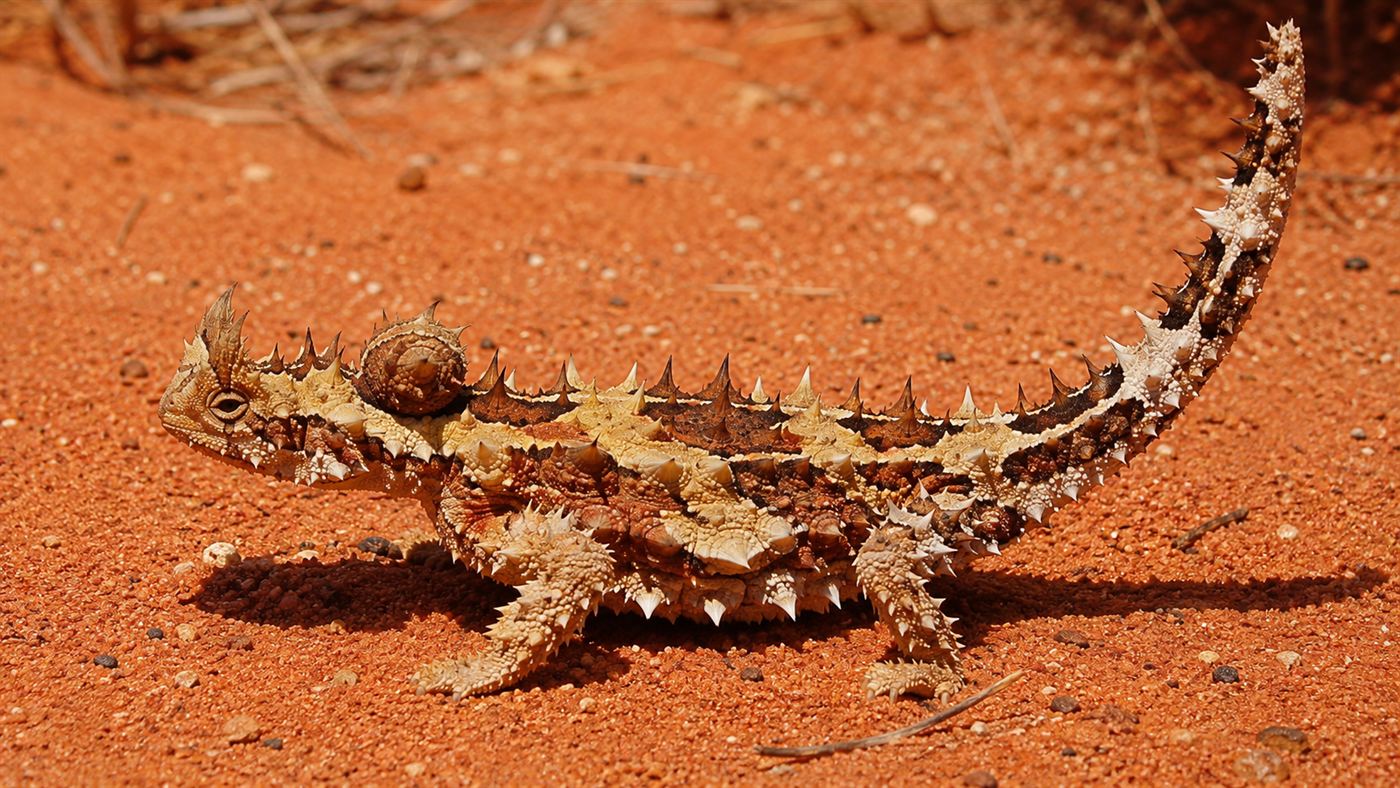
Every spine and ridge on this lizard is part of a water-harvesting system. Illustration: Watts & Wild.
Most desert animals survive thirst by hiding, hunting at night, or squeezing moisture from their food. The thorny devil does all of that, but it also pulls off something no engineer managed for decades. This little Australian lizard collects water out of dew and damp sand and moves it across its whole body to its mouth without a single drop of effort or a single muscle.
It is one of the cleanest examples of passive engineering in the natural world, and people are now trying to copy it.
A dragon the size of your palm
The thorny devil, scientific name Moloch horridus, lives in the sandy and scrubby deserts that cover much of inland Australia. It rarely grows longer than about twenty centimetres, and from head to tail it is armoured in hard, conical spines that make it look like a tiny dragon. Those spikes are not just for show, they make the lizard painfully hard for a predator to bite, swallow, or even pick up.
It moves in a strange, jerky shuffle, rocking back and forth as it walks, freezing between steps. The slow, twitchy motion makes it look less like prey and more like a wind-blown leaf, one more trick in a body built almost entirely around staying alive in a place with very little to drink.
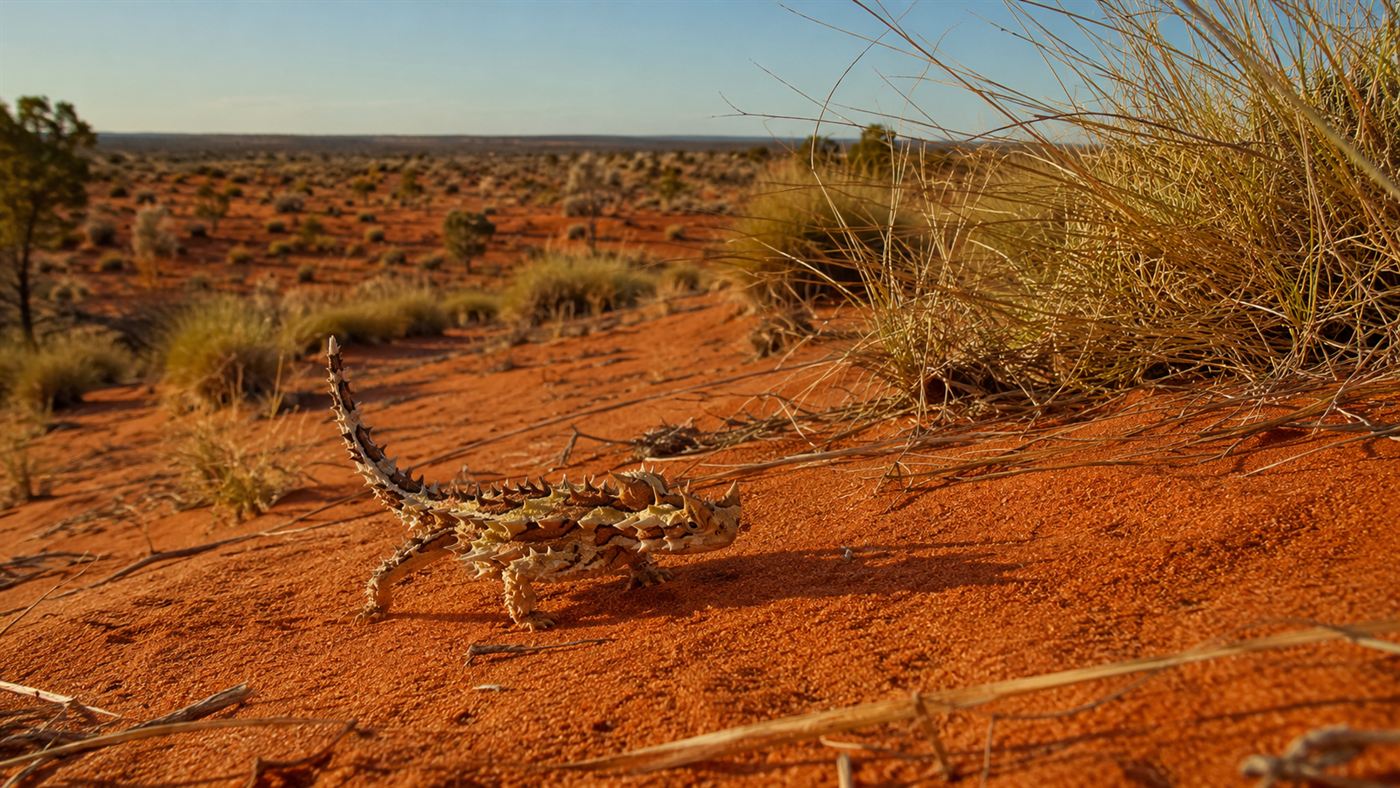
How the thorny devil drinks through its skin
Here is the part that sounds invented. The thorny devil cannot drink in the normal sense, because its mouth and tongue are built only for catching ants. So instead of lapping water up, it harvests it through its skin. When a thorny devil touches dew, rain, or wet sand, water is pulled into a hidden network of tiny channels between its scales and carried all the way to the corners of its mouth.
To fill up, the lizard will stand in a shallow puddle, press itself against moist ground, or use its limbs to flick damp sand up onto its back. Wherever the water lands on its body, it disappears into the skin and starts travelling. The animal does not have to be near its own mouth for the trick to work; the moisture finds its way there on its own.
Water that runs uphill
The secret is in the microscopic structure of the skin. Between the overlapping scales lies a dense maze of half-open grooves, roughly sixteen hundred tiny interconnected channels spread across the whole body. These channels act like the gaps in a paper towel, drawing water in by capillary action and pulling it along even against gravity, from the lizard's back and legs up to its jaws.
The numbers are remarkable. Water can race more than nine millimetres along the skin in about ten seconds, and the full channel system can hold around three percent of the animal's body weight in water. With each tiny movement of its jaws, the thorny devil squeezes a sip of that captured moisture into its throat and swallows. It is a pump with no moving parts, run entirely by the physics of narrow spaces.
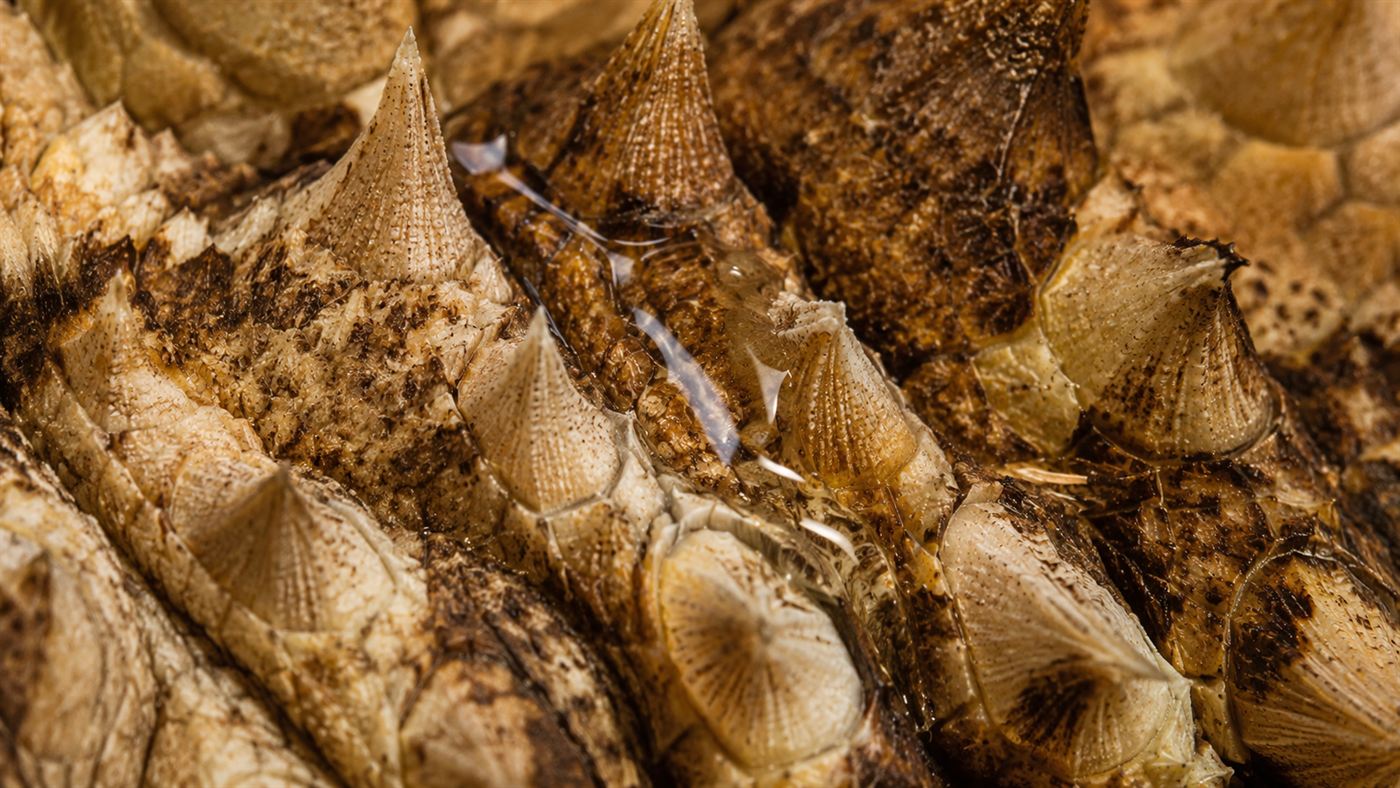
That is exactly the kind of trick engineers dream about. Collecting clean water from fog and dew, with no power and no pumping, would be a gift in dry parts of the world. Research teams studying the thorny devil's skin are using it as a blueprint for surfaces and materials that could one day pull drinking water straight out of the air, the same way this lizard has done for millions of years.
An ant-eater in armour
The reason the thorny devil cannot drink normally is the same reason it is so good at one job: eating ants. A single thorny devil can swallow hundreds or even thousands of small ants in a day, snapping them up one at a time with a quick, sticky tongue while standing beside an ant trail.
Its defences are just as specialised. Behind its head sits a knob of false scales, and when the lizard feels threatened it tucks its real head down between its front legs and presents this decoy instead, so a predator bites the wrong, spiny target. It can also puff itself up with air to look bigger and harder to swallow, and shift its colour from pale yellow to deep rust to blend into the sand or warm itself in the sun. Almost everything about this animal is a quiet answer to the question of how to survive where life is hard.
How does the thorny devil drink water?
Through its skin, not its mouth. The thorny devil stands on wet ground, sits in a puddle, or shovels moist sand onto its back, and the water is drawn into the channels between its scales and carried by capillary action to its jaws, where it finally swallows.
It is worth being precise about the romance here. The water does not soak into the lizard's bloodstream through the skin the way it might in a frog. It travels along the surface, through those open grooves, to the mouth, and only then is it drunk. The marvel is the plumbing on the outside of the animal, a self-filling network that needs neither thirst nor effort to work.
What does the thorny devil eat?
Ants, and almost nothing else. The thorny devil is a specialist that feeds only on small ants, eating them in their hundreds or thousands each day, which is exactly why its mouth is useless for ordinary drinking and its skin had to take over the job.
That single, narrow diet shaped the whole animal. A mouth tuned for flicking up ants one by one is no good for gulping water, so evolution solved the thirst problem somewhere else entirely, in the spaces between the scales. The thorny devil is a reminder that nature often fixes a problem not by changing the obvious part, but by quietly rebuilding something you would never think to look at.
A spiky lizard that cannot drink with its mouth solved a problem our best labs are still working on, and it did it with nothing but the shape of its skin. How many other quiet solutions are walking around the desert, waiting for us to notice? Tell us what you think in the comments.
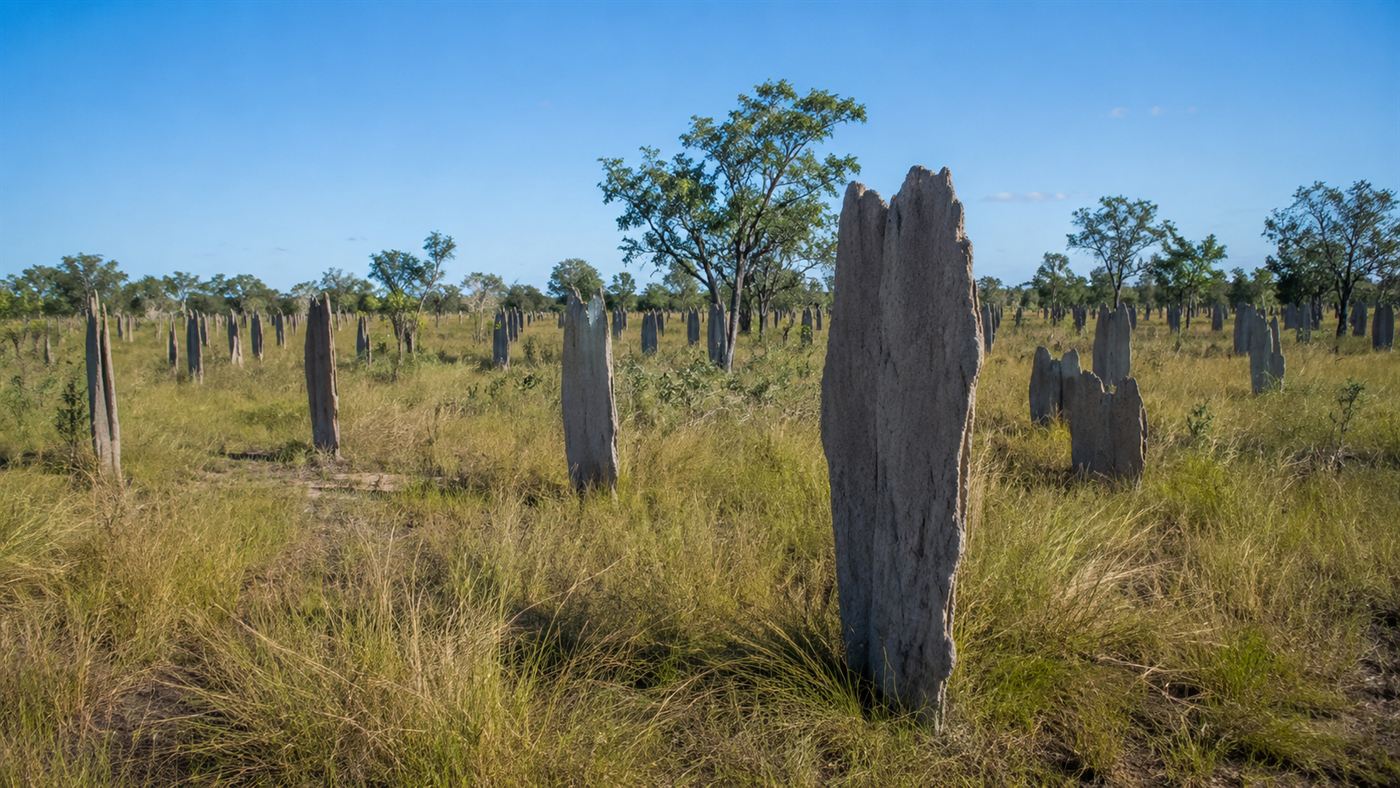
Related reading: the magnetic termites of Australia, whose mounds line up with the compass to beat the desert heat.