Pablo Escobar kept four hippos in his private zoo, and 30 years after his death they have become a 200-strong invasion Colombia cannot stop
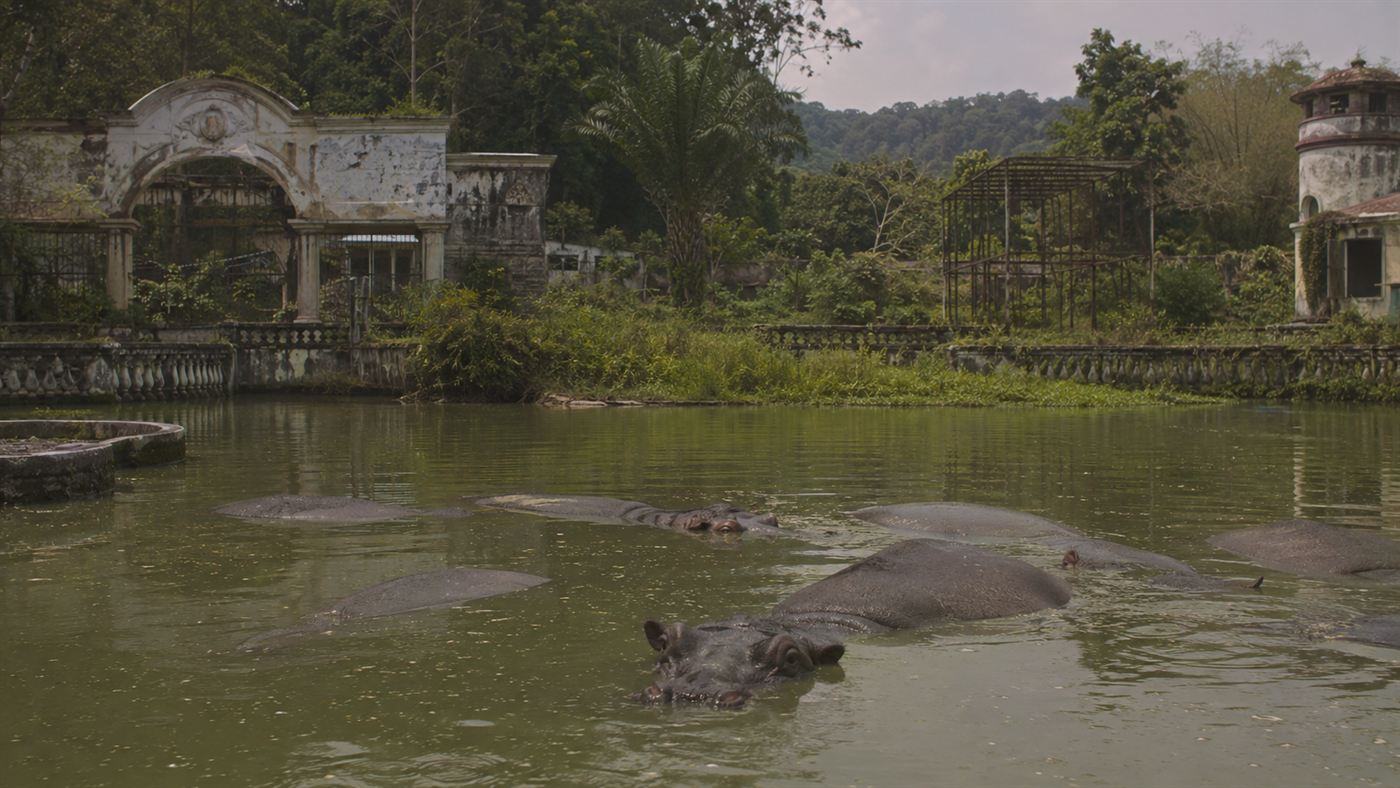
When the drug lord Pablo Escobar was gunned down in 1993, the authorities cleared the exotic animals out of his private zoo, except for the hippos, which were too big and too dangerous to move. Left alone in the warm rivers of Colombia, those few cocaine hippos did the one thing nobody planned for: they bred.
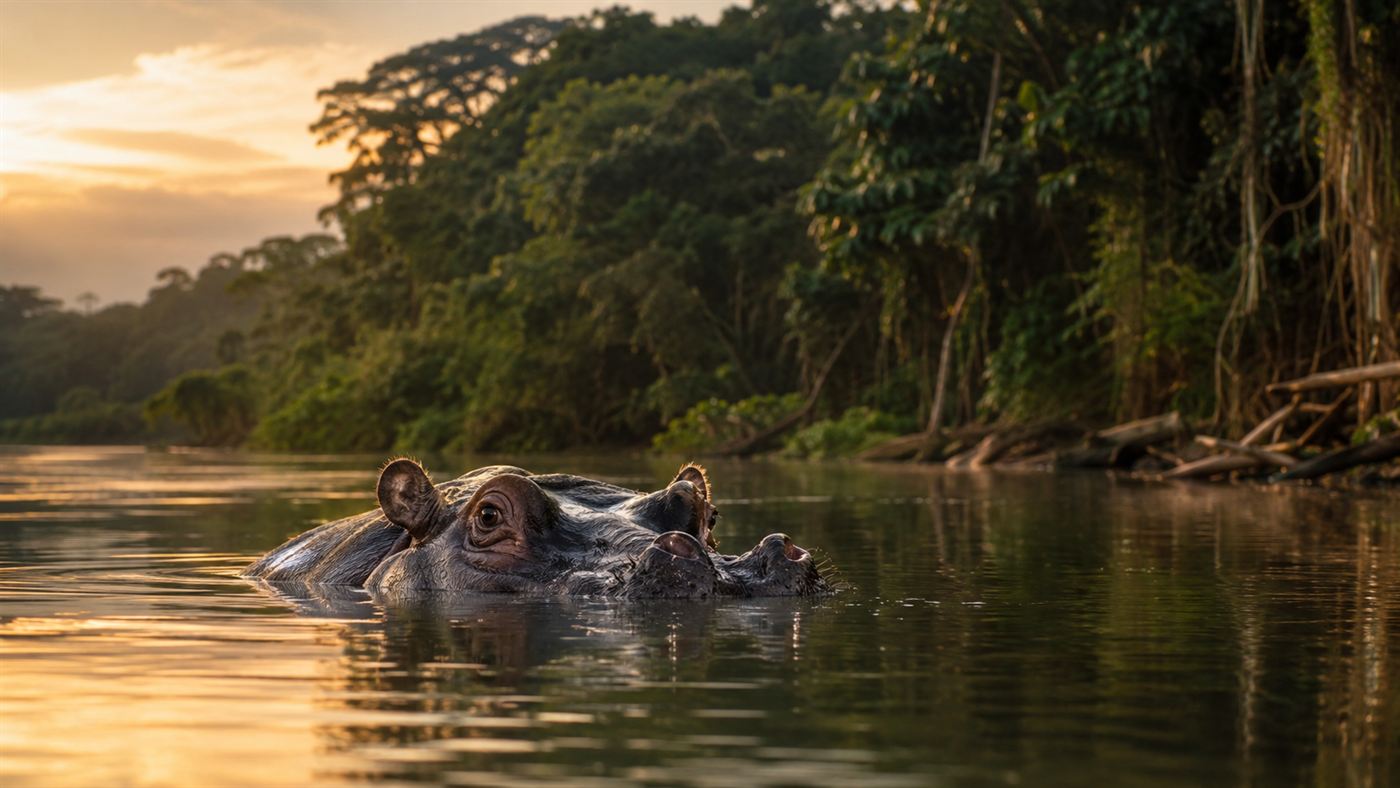
A hippo in a Colombian river, hundreds of miles from any wild hippo's natural home. Illustration: Watts & Wild.
In the early 1980s, at the height of his power, Escobar stocked his sprawling estate, Hacienda Nápoles, with elephants, giraffes, zebras and four hippopotamuses, one male and three females. When his empire collapsed, the other animals were rehomed in zoos. The hippos stayed in the estate's ponds, then wandered off into the nearby Magdalena River, and Colombia has been living with the consequences ever since.
It turned out to be just about the perfect place for them. There are no lions or droughts to thin the herd, the water is warm all year, and food is everywhere, so the females breed faster than they ever could in Africa. The result is the largest population of invasive cocaine hippos anywhere on the planet, and the only wild hippos living outside their home continent.
From four animals to a herd of two hundred
The arithmetic is the alarming part. By 2007 the four had become around sixteen. As Smithsonian magazine has reported, a 2023 survey put the number somewhere between 181 and 215, and by 2026 the herd sits at roughly two hundred. Scientists warn that if nothing changes, there could be a thousand of them by 2035.
A thousand three-tonne animals loose in a major river system is not a curiosity, it is an ecological problem. Their dung pours nutrients into the water and feeds the algae blooms that choke it, they bully and displace native manatees, capybaras and caimans, and a startled hippo is one of the most dangerous large animals on Earth to be near. People in the riverside towns have already been charged and injured.
The town that fell in love with the cocaine hippos
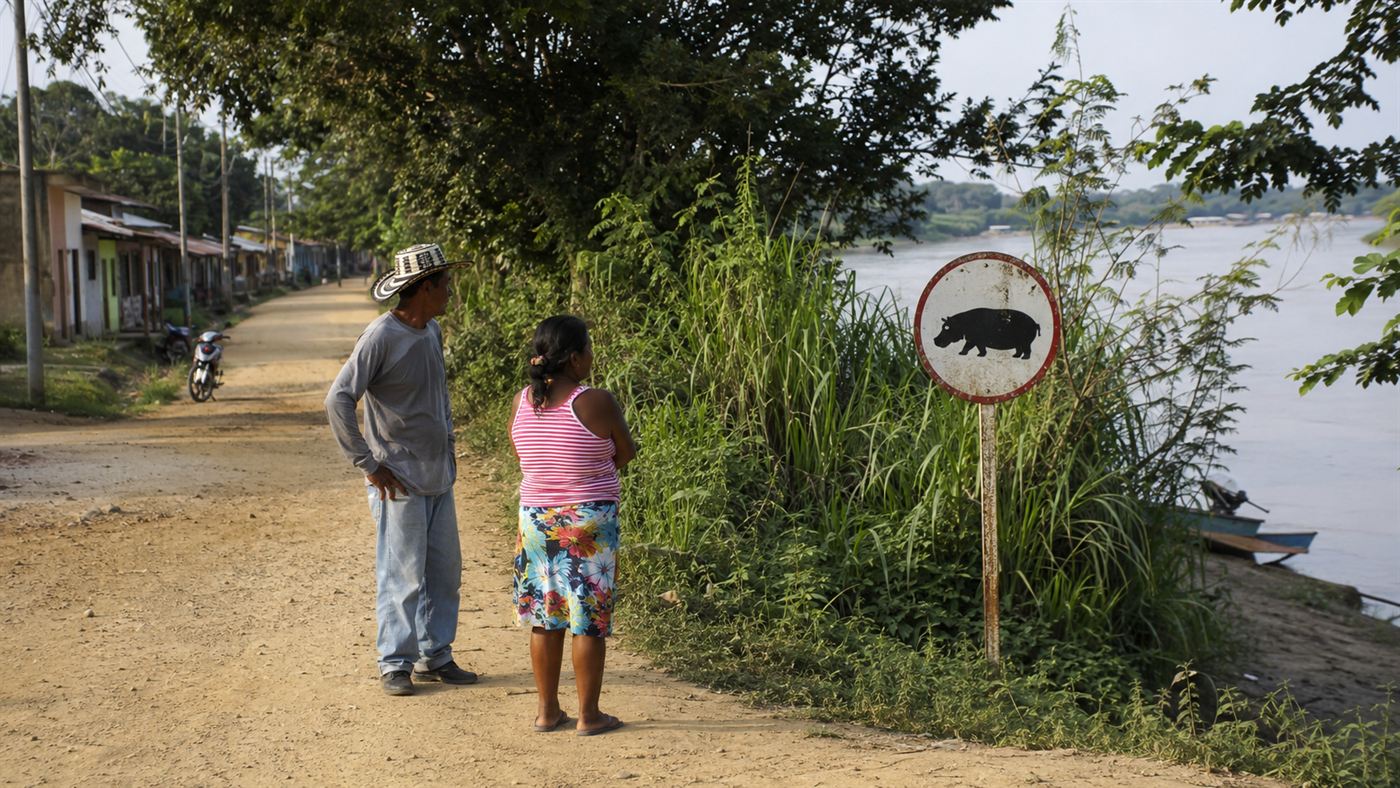
Here is the twist that makes the problem so hard to solve. The people who live alongside them do not all want them gone. In towns like Doradal, the hippos have become unlikely mascots, painted on shopfronts and printed on T-shirts, drawing tourists to a region that badly needs the money.
That affection turned to fury in 2009, when soldiers tracked and shot a stray male named Pepe, and a photo of the hunters posing over his body caused a national outcry. Ever since, any plan to cull the animals runs straight into a public that has, against all logic, adopted a drug lord's escaped hippos as its own.
What Colombia is trying to do now
The government has finally accepted it cannot wait. Officials declared the hippos an invasive species and drew up a plan that mixes sterilising about forty animals a year, shipping a handful off to sanctuaries abroad, and, most controversially, killing some of them. Sterilising a wild hippo is neither cheap nor safe, costing thousands of dollars per animal and risking a fatal reaction to the anaesthetic.
As CBS News has reported, in 2026 the environment ministry approved euthanising more than eighty of the invasive hippos, a decision that reignited the whole bitter argument all over again. There is no painless way out. Every option is expensive, slow, or unpopular, and the herd keeps growing while the country argues.
Why are Colombia's hippos a problem?
Because they are a heavyweight species dropped into an ecosystem that never evolved to handle them. With no predators and ideal conditions, they multiply unchecked, reshape rivers, poison the water with their waste, and crowd out native animals. Add their danger to people and the steep cost of controlling them, and a charming oddity becomes a genuine threat.
The honest catch
A few things are worth keeping in proportion. The population figures are careful estimates, not an exact census, and "largest invasive hippos on Earth" is a claim about size and weight rather than about being the most destructive invader Colombia faces. Some scientists even argue the hippos partly fill an ecological role left empty when South America's giant plant-eaters went extinct, though most experts think the risks far outweigh that. And the killing is genuinely contested, having already been blocked once in court by animal-rights groups. What no one disputes is the strange shape of the story: a dead cocaine kingpin accidentally founded a wild hippo dynasty, and a whole country is still trying to work out what to do about it.
Four pets left behind by a dead drug lord have grown into a herd that a whole country cannot agree on. Should Colombia cull the cocaine hippos to protect its rivers, or has it inherited an animal it now has a duty to keep? Tell us what you think in the comments.
Related reading: Another tale of a well-meant intervention spinning out of control, when a malaria spraying campaign forced authorities to parachute cats into the jungle.