Lewis Latimer drew the patent for the telephone and made the light bulb cheap enough for everyone, yet the son of escaped slaves is barely remembered today
We hand the light bulb to Edison and the telephone to Bell, and stop there. But behind both of those world-changing patents stands the same quiet man: a self-taught draftsman, the child of people who had fled slavery, whose hand and mind helped make two of the defining inventions of the modern world actually work.
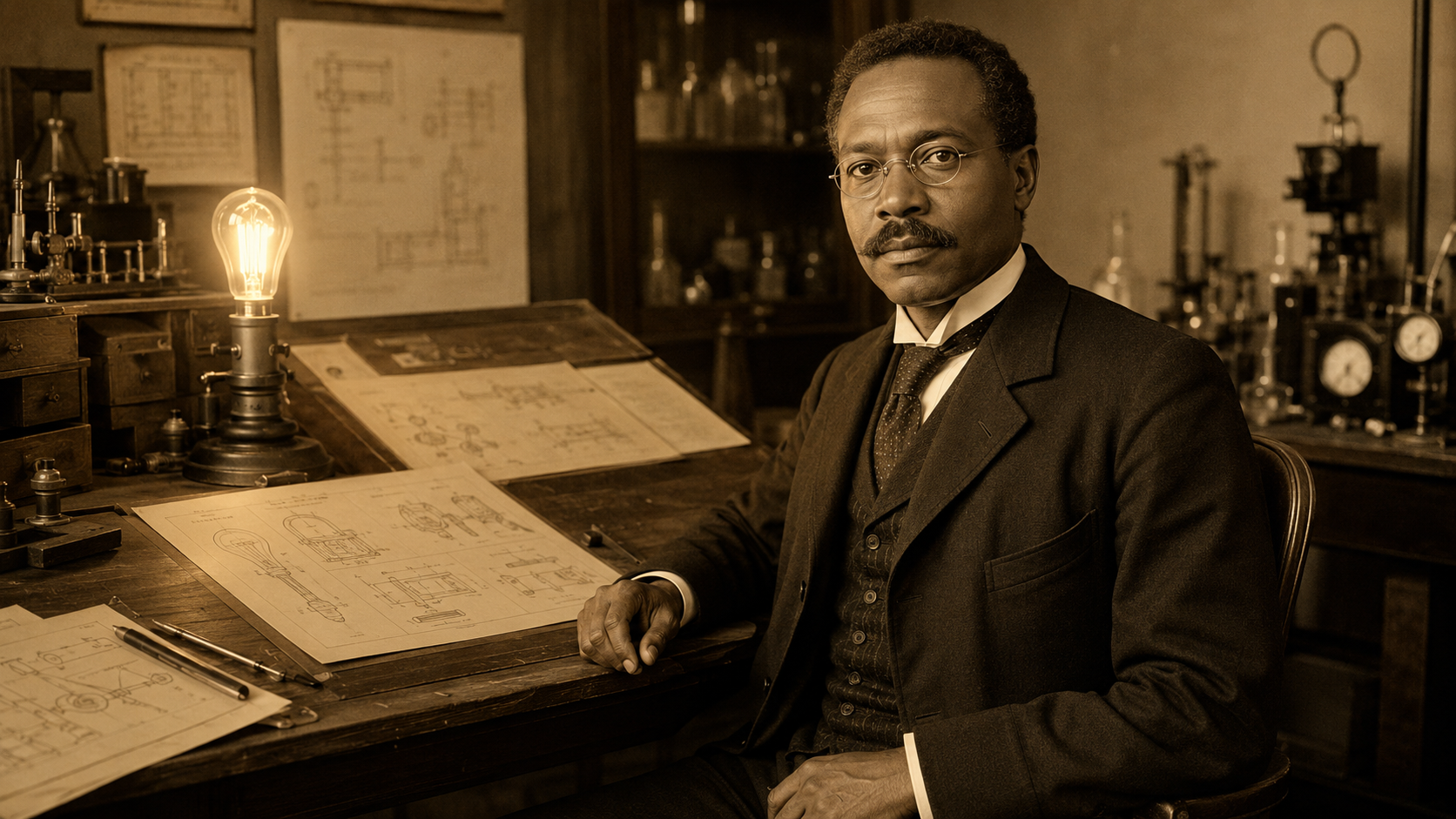
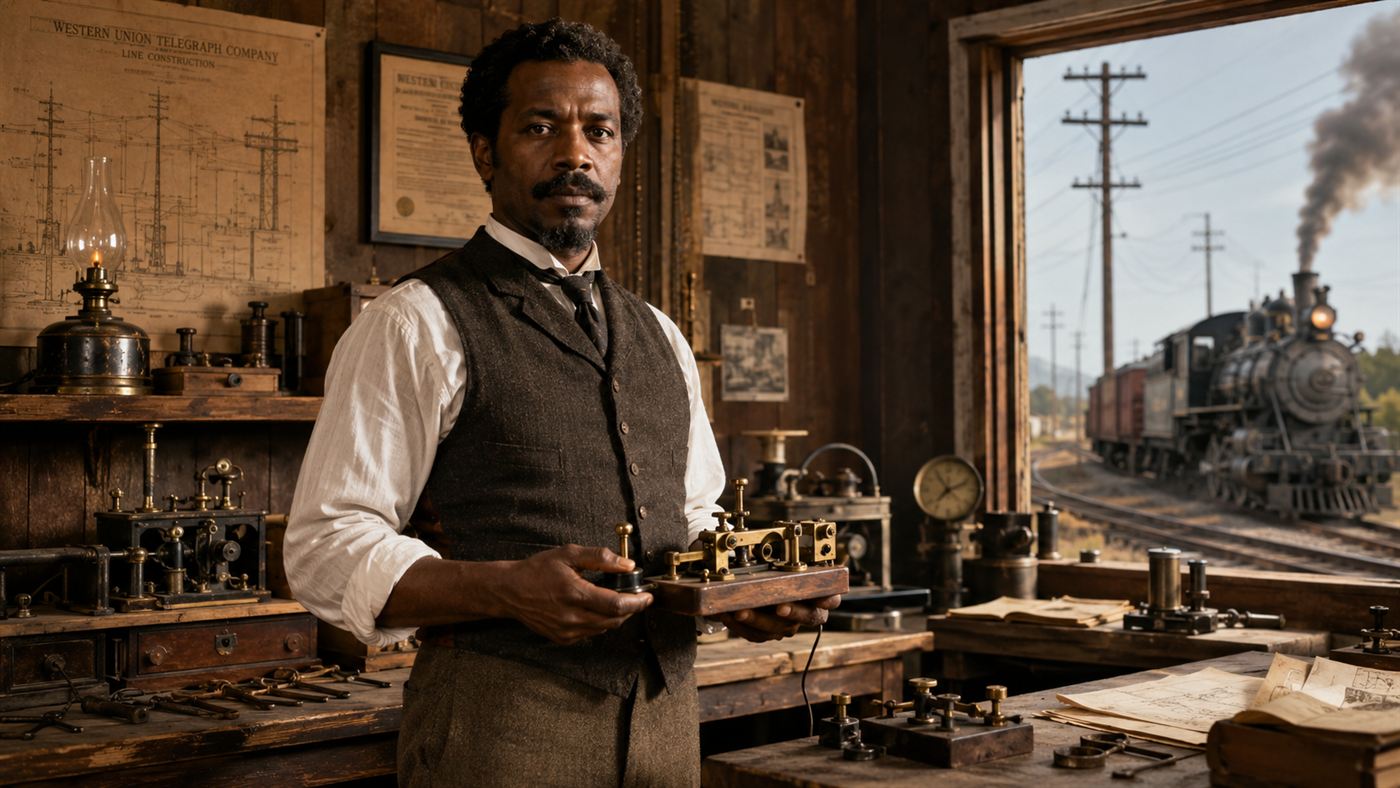
Lewis Latimer, draftsman and inventor, at the heart of the electrical age. Illustration: Watts & Wild.
The name Lewis Latimer should be as familiar as Edison or Bell, and the fact that it is not tells you a great deal about how history decides who to remember. Latimer was an inventor, a draftsman, an author and an expert witness, and his fingerprints are on the telephone and the electric light alike. He spent his career at the very centre of the inventions that built the twentieth century, and then was quietly written out of the story.
To understand how remarkable that career was, you have to start with where it began.
Who was Lewis Latimer?
Lewis Howard Latimer was born in Massachusetts in 1848. His parents, George and Rebecca, had escaped enslavement in Virginia and fled north to Boston, where George's case became a famous flashpoint in the fight over slavery. Lewis grew up poor, served in the Union Navy as a teenager during the Civil War, and came home to a country that offered a Black man almost no path into the professions.
He made one anyway. Taking a low-level job as an office boy at a patent law firm, he watched the draftsmen at work, bought himself second-hand books and tools, and taught himself mechanical drawing so well that the firm promoted him to head draftsman. In an age when patents lived or died on the quality of their drawings, he had made himself indispensable.
From escaped slaves to the drafting table
That skill put him in extraordinary rooms. In 1876, a Boston inventor named Alexander Graham Bell needed precise patent drawings prepared, quickly and correctly, for a device he was racing to protect. The man who drew up the patent application for Bell's telephone, one of the most valuable patents in history, was Lewis Latimer.
It is a staggering footnote. The telephone patent is legendary, fought over in court for decades and worth a fortune, and the careful technical drawings that helped secure it came from the hand of a self-taught son of fugitives from slavery. And the telephone was only his first brush with history.
The filament that lit the world
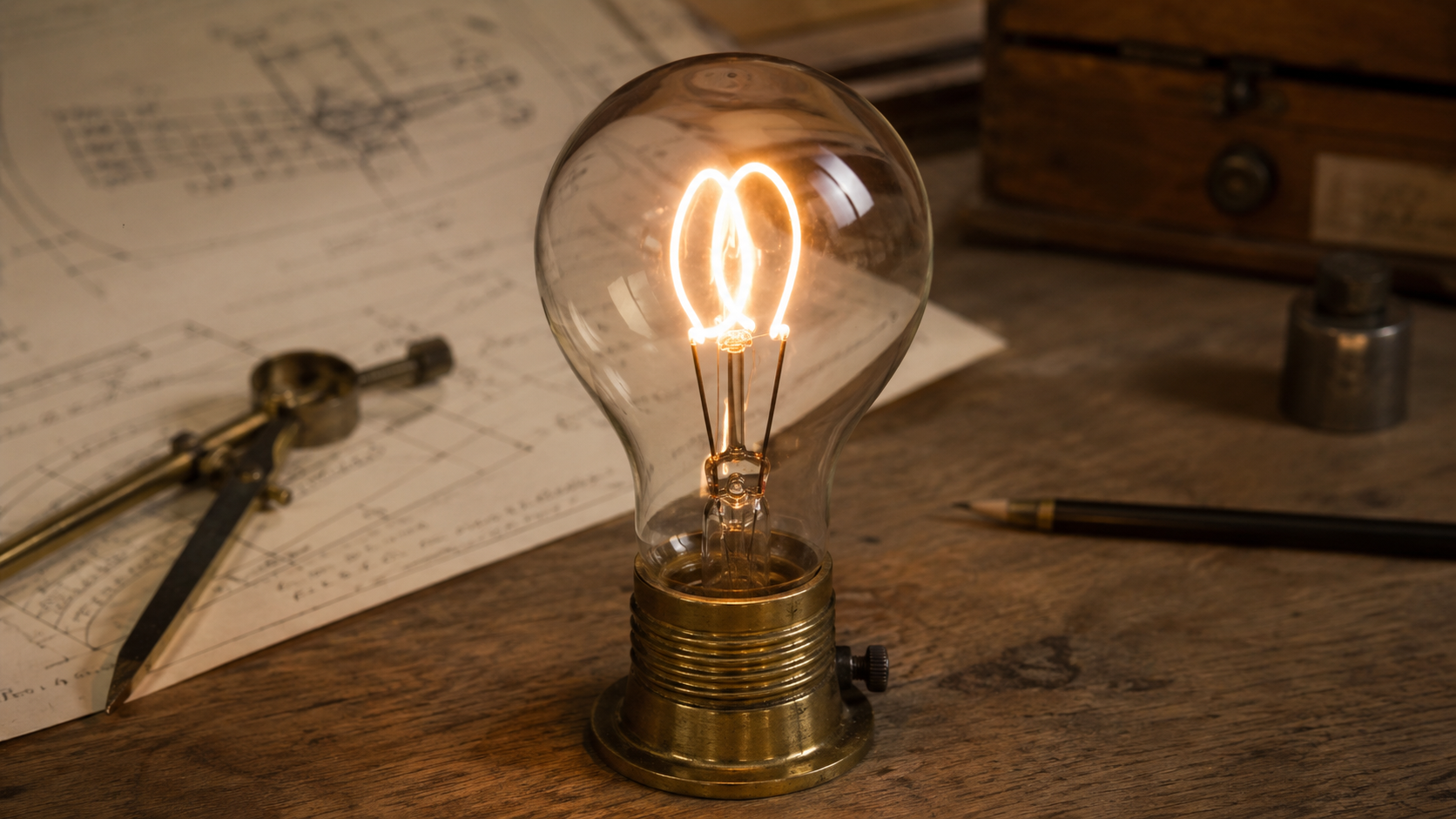
Latimer's own great invention came in electric light. The early incandescent bulb had a fatal weakness: its carbon filament was fragile, burned out fast, and was expensive and difficult to make consistently. A bulb that died in days and cost a fortune was a rich person's novelty, not a technology that could light a city.
Working first for Edison's rival Hiram Maxim, Latimer attacked exactly that problem. In 1882 he patented an improved process for manufacturing carbon filaments, wrapping them to stop them breaking, which made bulbs longer-lasting, more reliable and far cheaper to produce. He went on to supervise the installation of electric street lighting in New York, Philadelphia, Montreal and London, and even wrote one of the first technical books explaining how incandescent lighting worked. The bulb we credit to Edison reached ordinary streets and homes partly because Latimer made it manufacturable.
Did Lewis Latimer invent the light bulb?
It is important to be accurate here, because the truth is impressive enough without exaggeration. Latimer did not invent the light bulb. Working bulbs already existed, most famously from Joseph Swan in Britain and Thomas Edison in America, and the basic incandescent lamp was not his idea.
What he did was arguably just as important for the world. An invention that only works in a laboratory changes nothing; an invention cheap and durable enough to mass-produce changes everything, and that second leap was Latimer's. In 1884 he joined the Edison Electric Light Company itself, working as a draftsman and as an expert witness defending Edison's patents in court, where his deep technical knowledge made him formidable.
The honest catch
Two things are worth keeping honest. First, the popular shorthand that Latimer "invented the light bulb" is wrong and does him a disservice, because it invites easy debunking and obscures what he actually achieved, which was making the bulb practical. His real legacy is in manufacturing and engineering, not in a single eureka moment.
Second, it would be a mistake to tell his story only as a victim of erasure. Latimer was, in his own time, genuinely successful and respected; in 1918 he became a founding member of the Edison Pioneers, the elite circle of Edison's earliest collaborators, and the only Black man among them. The tragedy is not that he failed, but that a man who succeeded so visibly, against such odds, still slipped out of the popular story while the famous names beside him did not.
Why Lewis Latimer still matters
Every time you flick a switch, you are using a technology that Latimer helped drag out of the laboratory and into ordinary life. The careers of Bell and Edison, the two giants of nineteenth-century invention, both run straight through his drawing table. He is proof that the history of technology is never the work of a few lone geniuses, but of the many skilled hands around them.
His life carries a quiet challenge to how we tell that history. The people who make an invention actually work, and actually reach the public, deserve to be remembered alongside the people whose names end up on the patent, and far too often they are not. Lewis Latimer lit the world and then was left in the dark, and it is long past time we turned the light back on him.
The same hand drew the telephone patent and made the light bulb cheap enough to light the world, and we remember neither. How many of the people who actually made our inventions usable have we forgotten in favour of a single famous name? Tell us what you think in the comments.
Related reading: Another Black inventor of the same era, Granville Woods, beat Edison twice in court over the patents that made railways safe.