The Leaning Tower of Pisa was about to fall, so engineers un-leaned it just enough
The most famous mistake in architecture is a tower that cannot stand up straight. For centuries that flaw made it beloved, but by the end of the 20th century it had quietly become deadly, with the whole structure edging towards collapse. Saving the Leaning Tower of Pisa meant fixing it without ever making it straight.
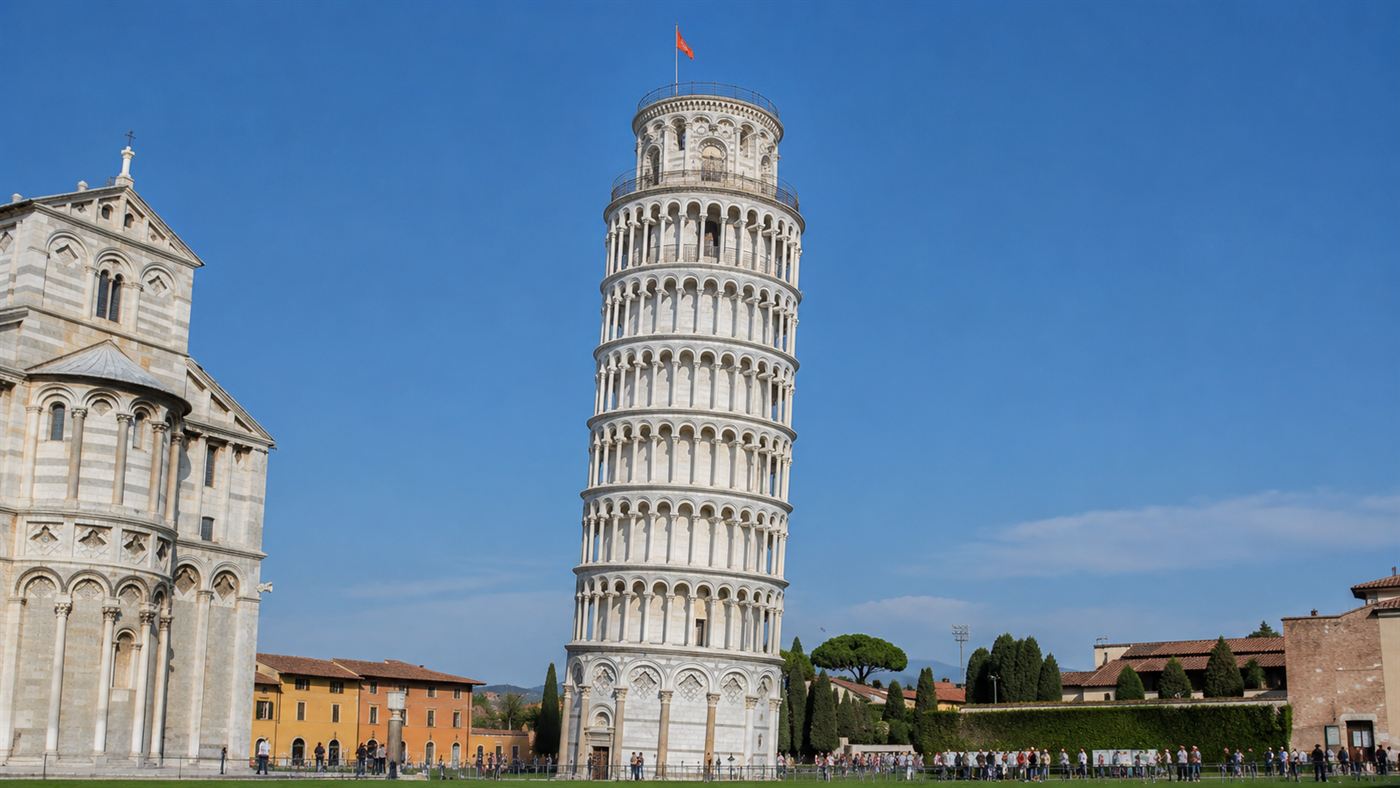
A flaw the world fell in love with, that almost became a disaster. Illustration: Watts & Wild.
Every famous building has a story, but few have one as strange as a structure whose entire fame rests on being wrong. The Leaning Tower of Pisa is celebrated precisely because it leans, and yet that very lean was slowly threatening to bring it crashing down.
The challenge facing the engineers who took it on was almost philosophical: how do you rescue a building from its defining flaw without destroying the flaw itself?
Why the Leaning Tower of Pisa nearly fell
The trouble was there from the very start, more than 800 years ago. The tower was raised on soft, waterlogged ground that could not bear its weight evenly, and it began to tip while it was still being built. Over the centuries the Leaning Tower of Pisa tilted further and further, until by the late 1900s it leaned about five and a half degrees and was genuinely at risk of toppling over.
A lean that looks charming in a holiday photograph is terrifying to an engineer, because a tilting tower grows more unstable the further it goes. Each extra degree shifts more of its weight out beyond its base, and earlier attempts to help had sometimes made things worse rather than better. The tower was running out of time.
The committee that closed the tower
In 1990, with the danger now too great to ignore, the authorities took the drastic step of closing the tower to visitors and assembling a team to save it. An international committee of experts, led by the British engineer John Burland, was given the delicate task of stabilising the foundations without spoiling the lean that made the tower famous.
It was a daunting brief. Brace it too hard or too clumsily and you might crack the ancient stonework or, worse, accidentally tip it over while trying to help. The team spent years studying the tower and testing ideas, first fitting temporary safeguards, including heavy lead weights stacked against the high side, to buy time while they worked out a permanent cure.
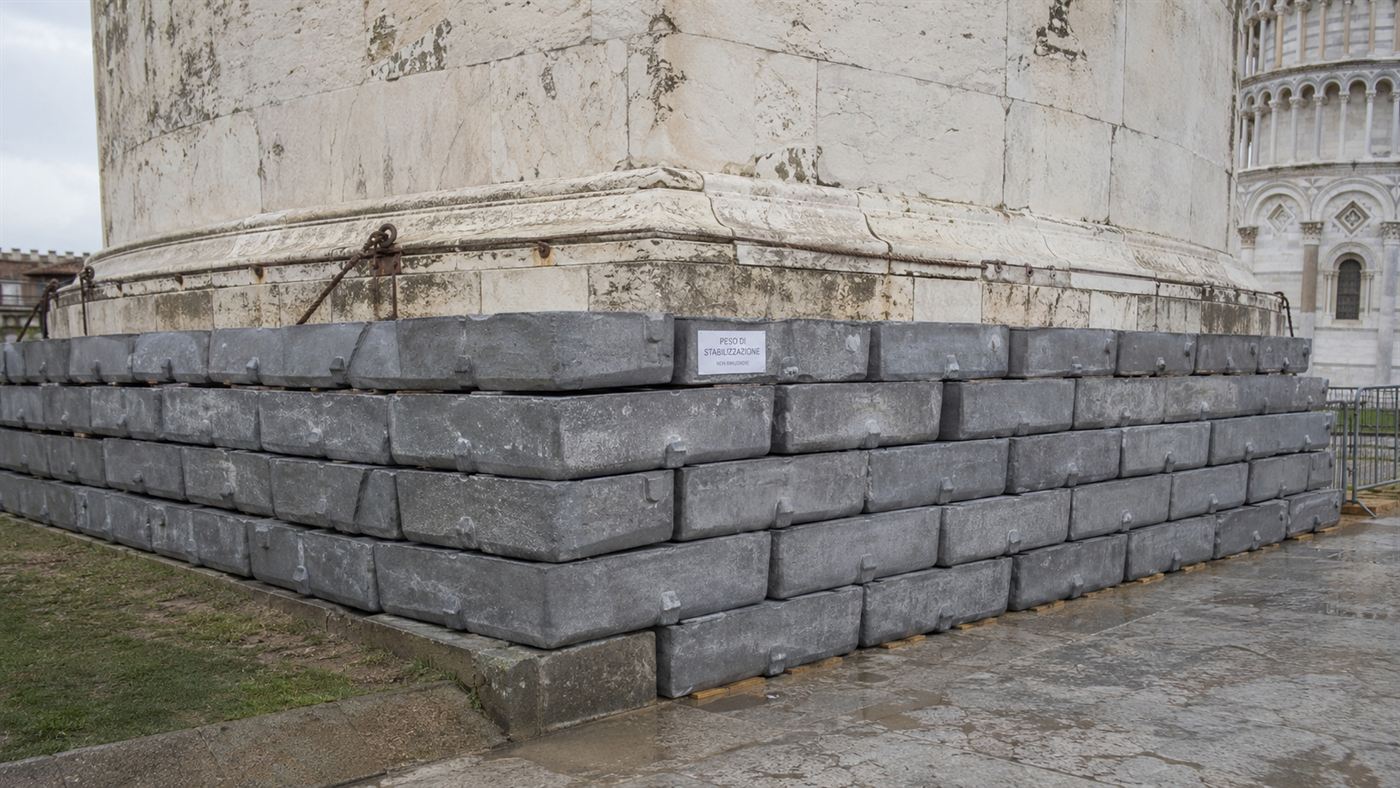
Digging out the high side
The solution they finally chose sounds almost backwards. Instead of pushing the leaning tower upright, they gently let it settle. Engineers drilled slanted tubes beneath the higher, northern side of the tower and removed small amounts of soil, about 70 tonnes in all, so that side sank just slightly and the tower eased back from its dangerous angle.
This careful technique, known as underexcavation, let them coax the tower back by tiny, controlled steps between 1999 and 2001, watching its movement constantly. By the end they had reduced the lean by roughly 44 centimetres, taking it back to about where it had stood a century and a half earlier. The work was finished and the tower reopened to the public in December 2001.
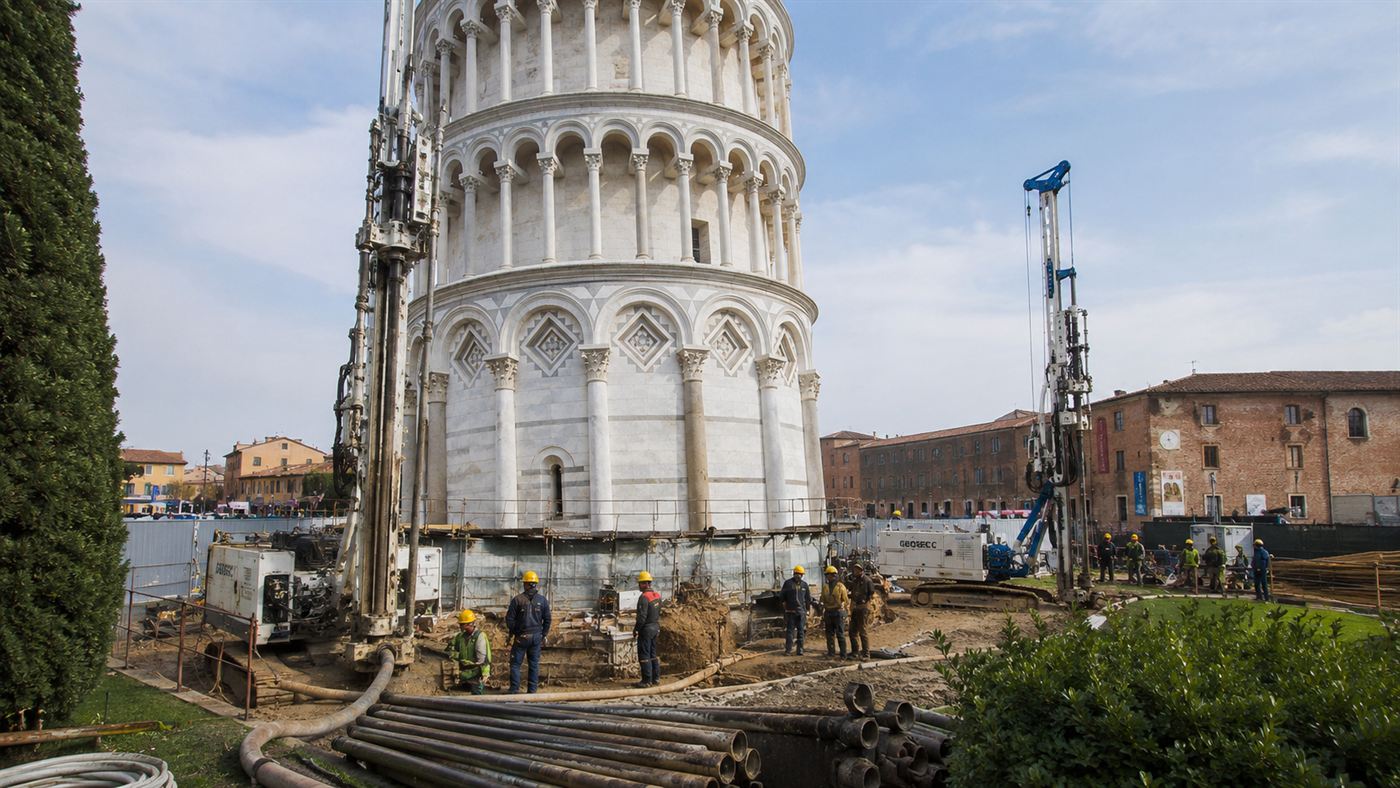
Why does the Leaning Tower of Pisa lean?
For the simplest of reasons: it was built on bad ground. The soft, soggy soil under Pisa could not support the heavy marble tower evenly, so one side sank more than the other almost as soon as construction began.
You can even see the builders fighting it. As the tower rose, they tried to compensate by making the upper floors slightly taller on the low side, which is why the tower is not just tilted but gently banana-shaped. Their efforts slowed the lean but could never cure the underlying problem, which is what finally caught up with it eight centuries later.
How was the Leaning Tower of Pisa stabilized?
By the patient, almost gentle removal of soil from exactly the right spot. Rather than fighting the tower, the engineers worked with gravity, letting the high side settle a fraction so the whole structure relaxed into a safer position.
The crucial decision was knowing when to stop. They deliberately left the tower still clearly leaning, because a perfectly straight Tower of Pisa would be a contradiction, a wonder of the world reduced to an ordinary bell tower. One honest note: the exact figures are sometimes quoted a little differently, and the tower still leans by close to four degrees today. But it is now considered safe for at least two centuries, a rare case of engineers saving something not by perfecting it, but by carefully preserving its flaw.
The world's most famous mistake was quietly saved by engineers who knew exactly when to stop fixing it. If a building's flaw is the very reason we love it, how far should we go to keep it standing? Tell us what you think in the comments.
Related reading: Roman concrete, the ancient recipe that lets 2,000-year-old structures heal their own cracks, or Hagia Sophia, the dome that collapsed once and was rebuilt to stand for 1,500 years.