The entire geothermal industry began in 1904 with five light bulbs glowing in a Tuscan valley so hellish it is said to have inspired Dante
Geothermal power, the idea of generating electricity from the planet's own heat, did not start with a vast modern plant. It started at Larderello in Tuscany, on 4 July 1904, when a prince lit five small light bulbs from steam hissing out of the ground, in a sulfurous valley locals called the valley of the devil.
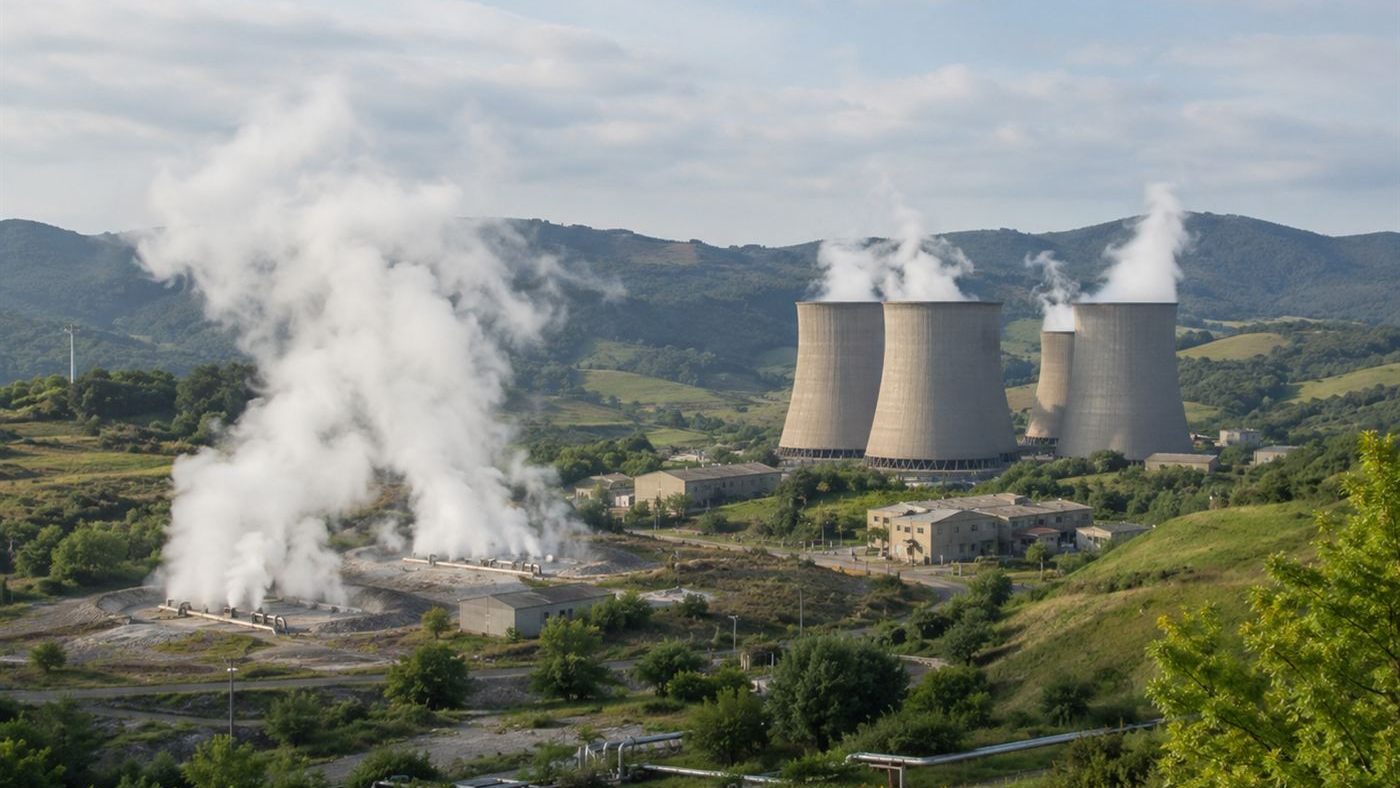
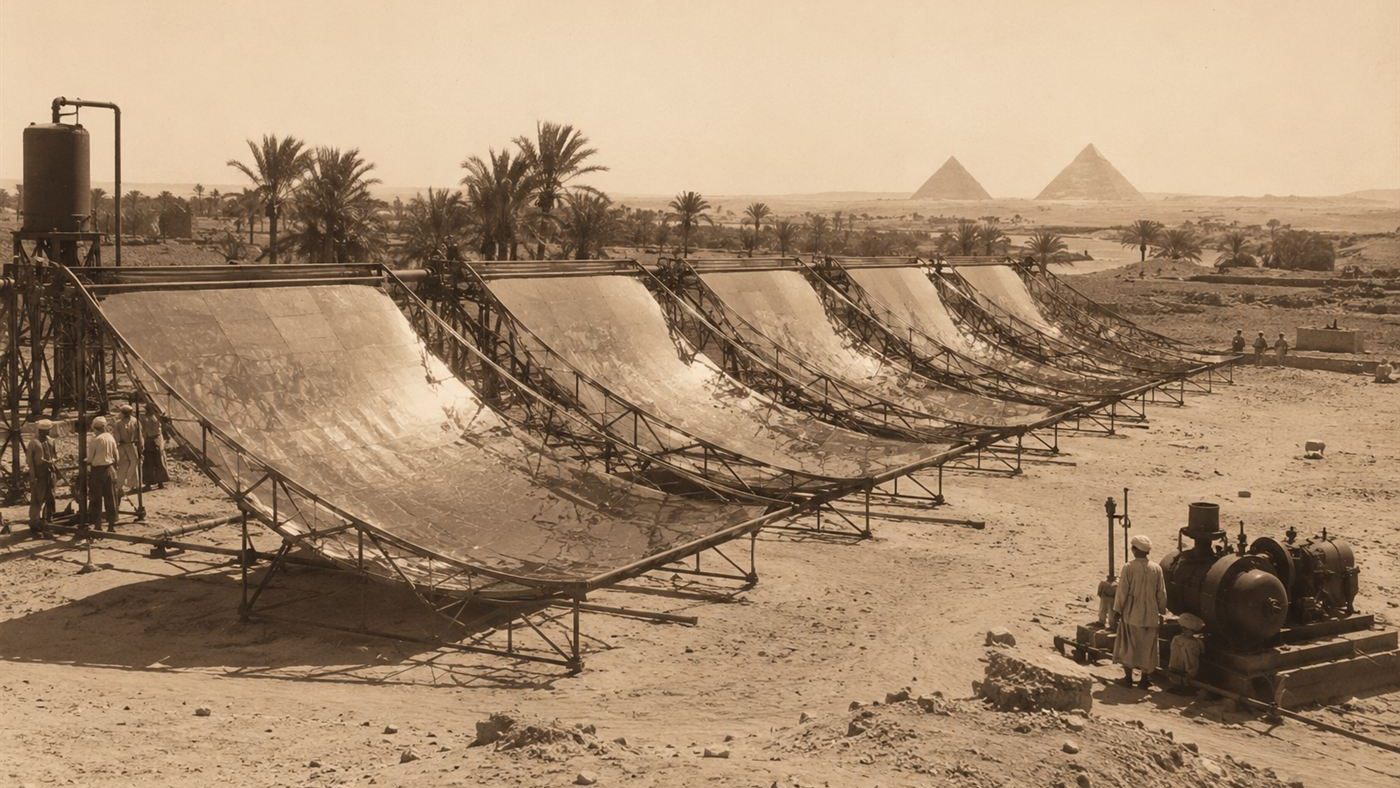
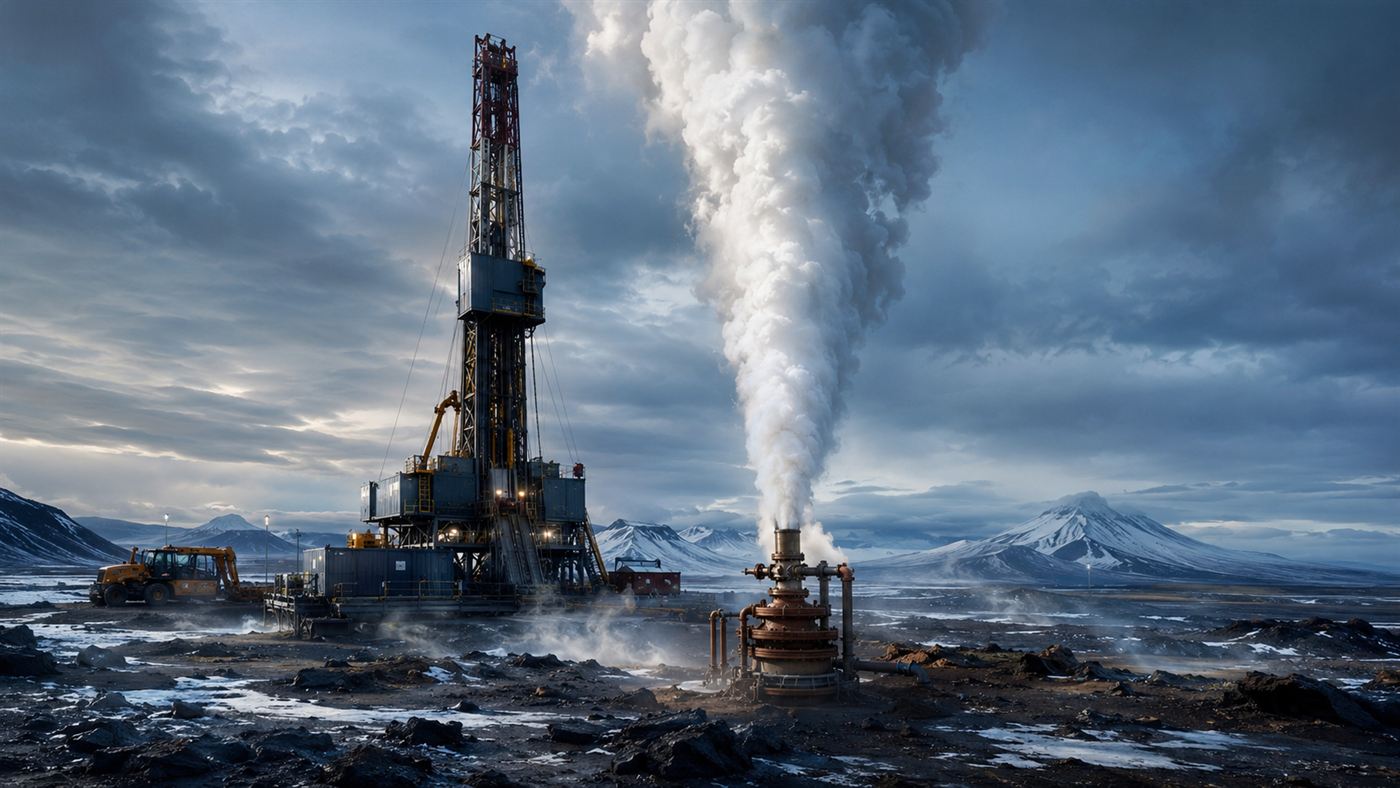
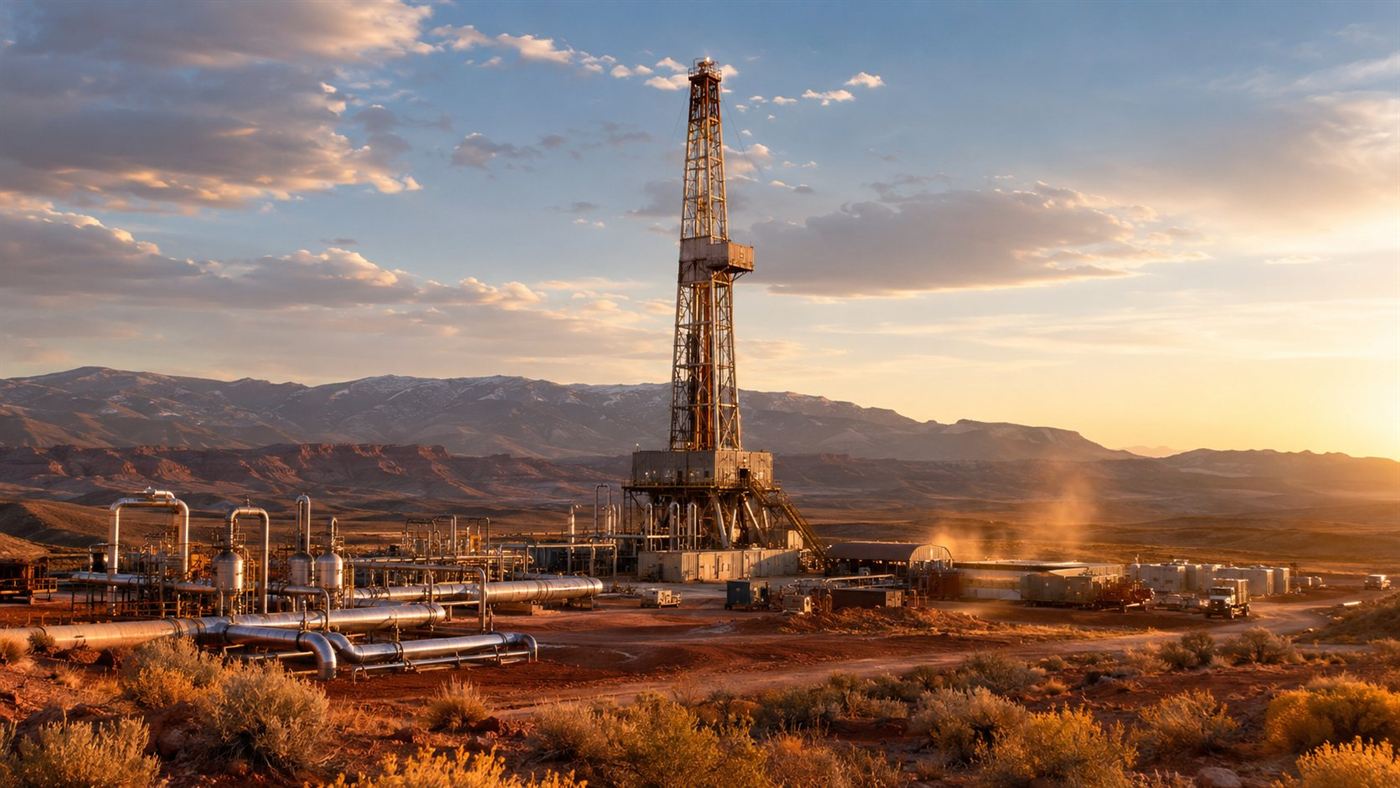
Larderello in Tuscany, the birthplace of geothermal power. Illustration: Watts & Wild.
This corner of Tuscany has been strange for a very long time. For thousands of years, steam and hot, mineral-laden water have forced their way up through the ground here, filling the air with the smell of sulfur and dotting the landscape with bubbling pools. The Romans used the hot springs, and by the nineteenth century the steam was prized for something else: it carried boric acid, which was extracted and sold, and the town took its name from the industrialist Francesco de Larderel.
Into that smoking, industrial valley came Prince Piero Ginori Conti, connected by marriage to the boric acid business. He looked at all that natural steam doing the slow work of the chemical industry and asked a bolder question. If the Earth was going to push hot, high-pressure steam out of the ground for free, why not use it to spin a generator and make electricity?
How Larderello lit the first five bulbs
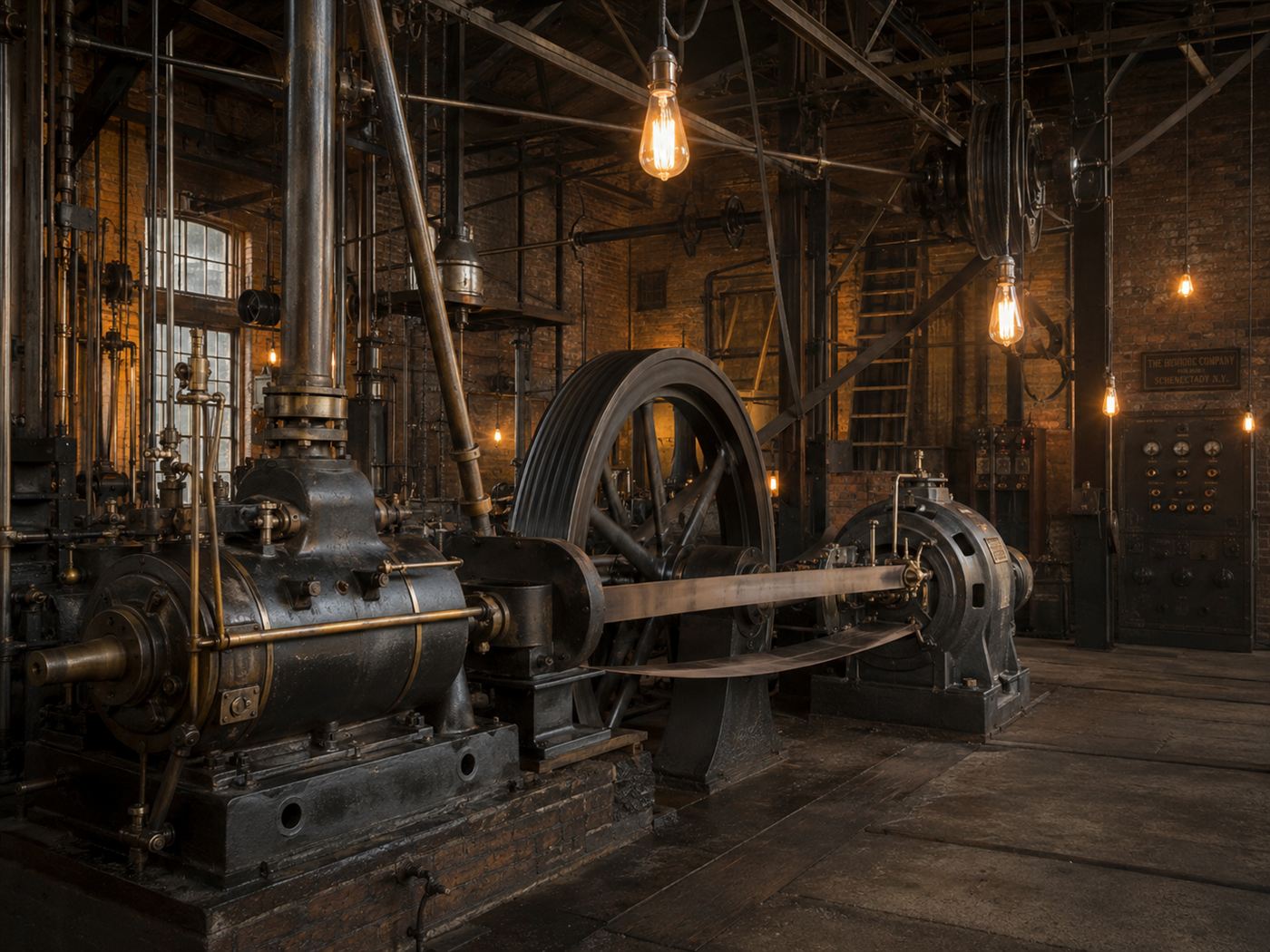
On 4 July 1904 he tried it. As Power Technology recounts, Ginori Conti coupled the natural steam to an engine driving a dynamo and used it to light five bulbs, the first time anyone had turned the heat of the Earth into usable electric power. It was a tiny output, a generator of only about ten kilowatts, enough to make a handful of bulbs glow inside his boric acid factory.
But the principle was proven, and it scaled fast for its day. The experiment worked well enough that, as ThinkGeoEnergy notes in marking the anniversary, the world's first true geothermal power plant was built at Larderello in 1913. From five bulbs to a power station in under a decade, a whole new way of generating electricity had been born in a Tuscan valley.
The valley of the devil
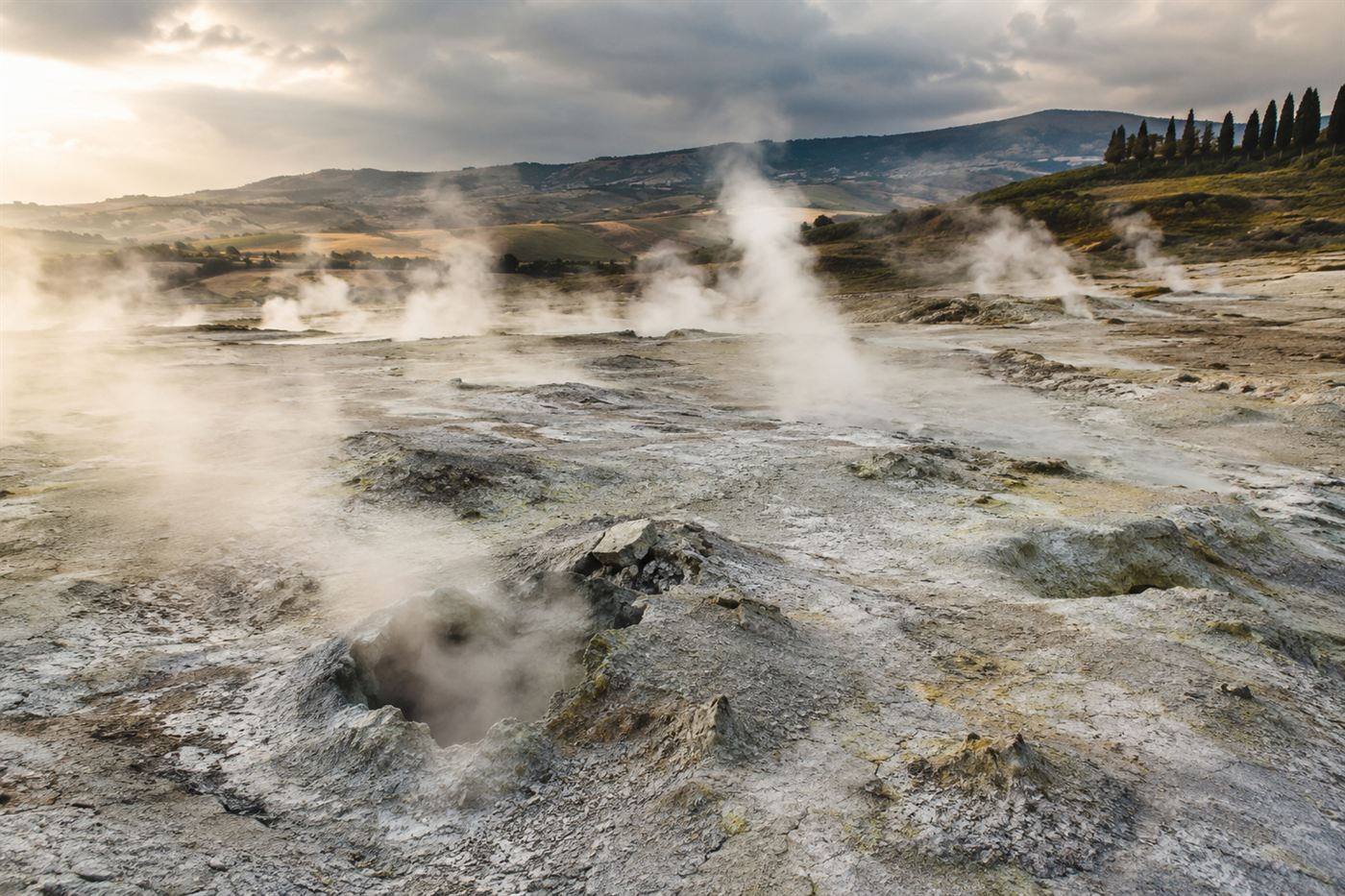
Part of what makes the story irresistible is where it happened. This stretch of Tuscany is known as the Valle del Diavolo, the Devil's Valley, for its steaming vents, boiling pools and the rotten-egg reek of sulfur drifting over the hills. By long tradition the eerie, smoking landscape is said to have helped inspire the hell of Dante's Inferno, which gives a certain dark poetry to the place where clean power was born.
There is something fitting in that. The same hellish heat that medieval imaginations turned into a vision of damnation turned out to be, in the right hands, a genuinely useful and renewable source of energy. The valley that looked like the underworld became the cradle of one of our oldest low-carbon technologies.
Does Larderello still produce power?
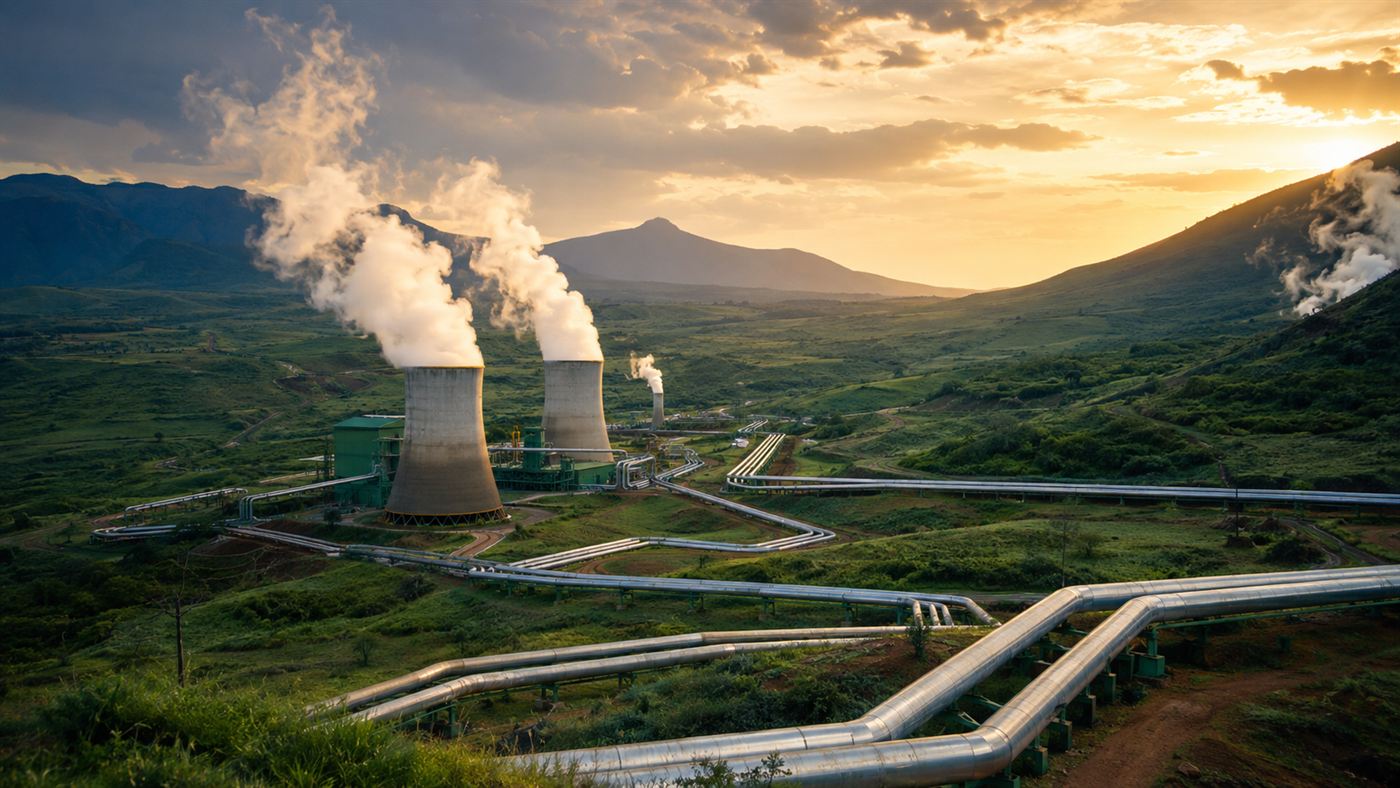
What started as a stunt with five bulbs never stopped. More than a century later, the Larderello area is still a working heart of geothermal energy, its hills studded with the tall cooling towers of power plants that tap the same kind of underground steam Ginori Conti used. Together they generate something like 5,000 gigawatt-hours a year, enough to light not five bulbs but roughly a million homes, and to supply a large share of Tuscany's electricity.
That is a remarkable run for a single idea tested in 1904. The technology has been refined and expanded enormously, but the basic move, letting the planet's heat boil water into steam and spinning a turbine with it, is exactly what the prince did in his factory, only now at a scale he could never have imagined.
The honest catch
It is worth puncturing the idea that this was perfectly clean, free power. The natural steam at Larderello does not come up pure; it carries gases including carbon dioxide and hydrogen sulfide, the source of that sulfur smell, so geothermal here has real emissions to manage, even if they are far lower than burning fossil fuels. Running a field like this sustainably also means carefully reinjecting water so the underground reservoir does not simply cool down and run out, a lesson the world's largest geothermal complex learned the hard way: California's Geysers now recharges itself with a city's treated wastewater.
The romance needs a little trimming too. Ginori Conti was not a lone green visionary so much as an industrialist looking to wring more value from a steam field already being exploited for chemicals, and the famous "first" is really two firsts, the 1904 demonstration and the 1913 plant. None of that lessens the achievement, but it makes it a story about practical industry as much as inspiration.
Why five bulbs still matter
The appeal of Larderello is the gap between how it started and what it became. Almost every big technology has a humble first moment, and few are as charming as five bulbs flickering on in a smelly Tuscan factory while steam roared up from the ground outside. It is a reminder that today's serious clean-energy industries often trace back to one stubborn person testing a strange idea.
As the world races to tap the Earth's heat on a far larger scale, it is worth remembering it all began with a prince, a dynamo and a valley people once mistook for hell. Does it surprise you that geothermal power is well over a century old? Tell us in the comments.
Related reading: In Iceland, drillers accidentally hit a pocket of magma and turned the hottest geothermal well ever found into a research prize.