The Geysers, the biggest geothermal field on Earth, was running out of steam, until a nearby city began pumping its treated sewage 40 miles uphill to turn the dirtiest water into clean power
The Geysers, in the hills north of San Francisco, is the largest geothermal power complex in the world. By the 1990s it was fading, its underground steam running thin. The fix was strange and brilliant: pipe a city's treated wastewater dozens of miles uphill and pour it into the earth.
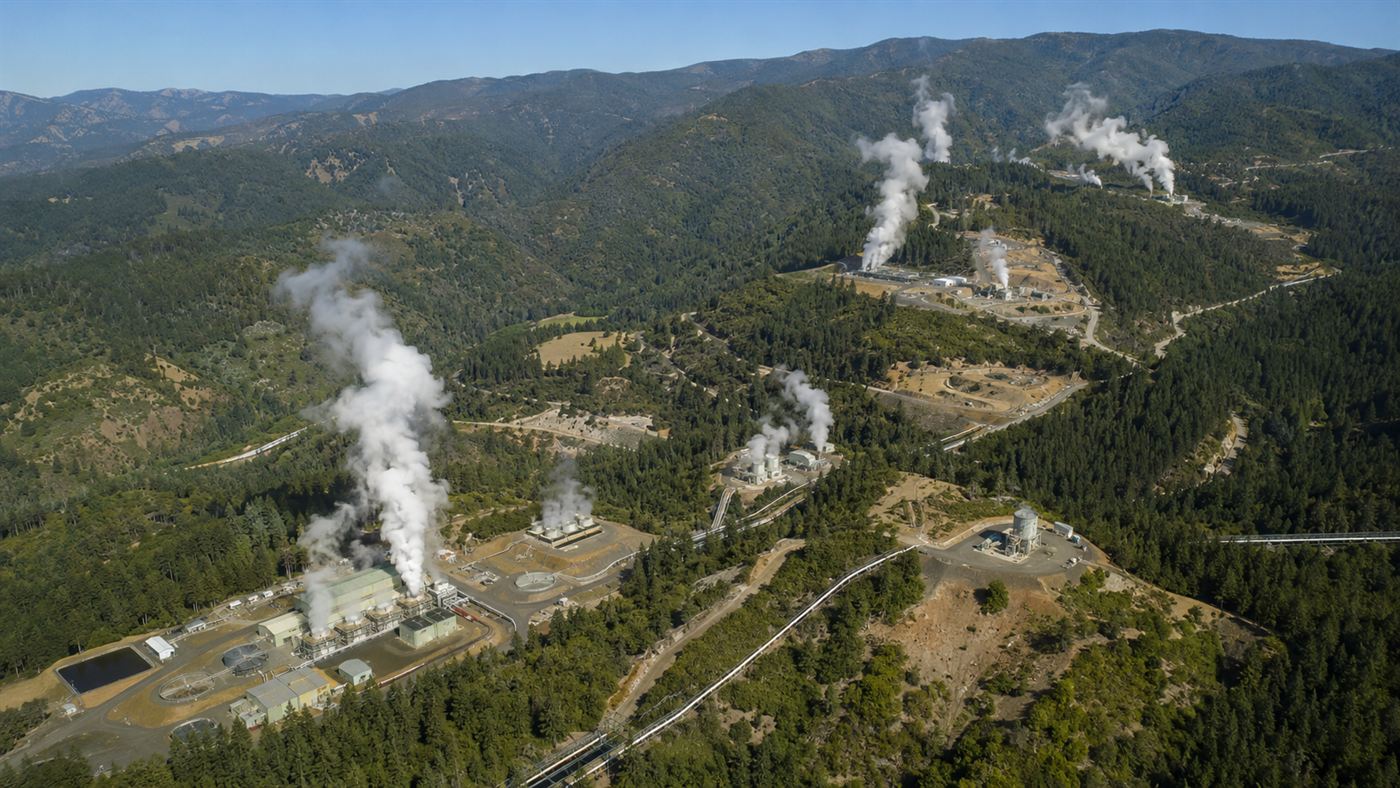
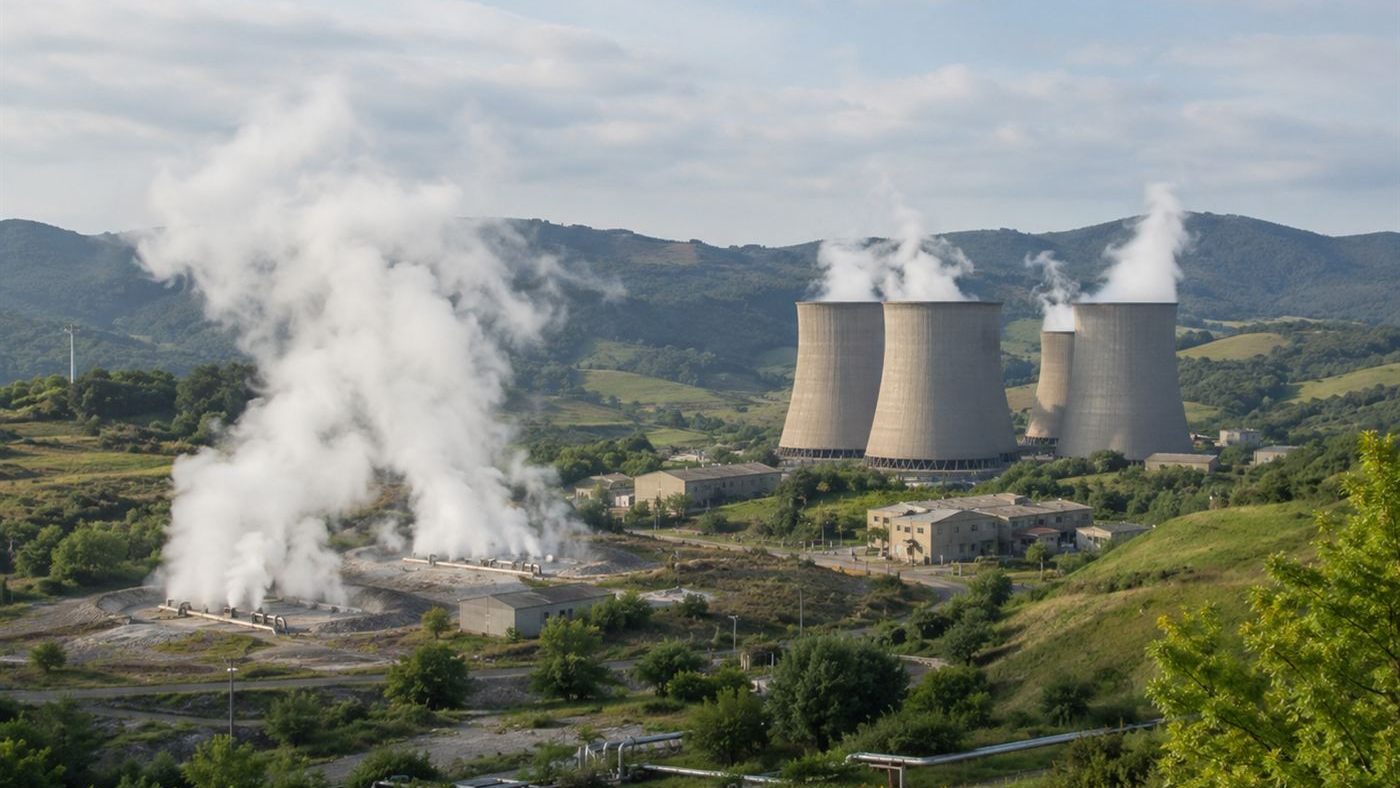
Plumes of steam from The Geysers, the largest geothermal field in the world. Illustration: Watts & Wild.
The Geysers is not a single power plant but a sprawling cluster of them, around two dozen, scattered across the steep Mayacamas Mountains roughly 70 miles north of San Francisco. Together they generate about 850 megawatts of electricity, enough for most of several surrounding counties, all of it drawn from steam rising out of the hot rock below. For decades it has been the largest geothermal field on the planet, and despite the name there is not a single spouting geyser in sight.
But by the late 1980s the field had a problem serious enough to threaten its future. The plants were pulling steam out of the ground faster than nature could replace the water beneath, and reservoir pressure was sliding year after year. The Geysers was, slowly, drying out. As Scientific American reported, the rescue arrived from an unlikely direction: the toilets, sinks and drains of the towns nearby.
How does The Geysers make electricity from wastewater? Cities pipe their treated wastewater dozens of miles uphill to The Geysers and inject it deep into the hot rock. There it flashes into steam, which rises through wells to spin turbines. The water replenishes the geothermal reservoir while solving the cities' sewage disposal problem.
Why was The Geysers running out of steam?
The Geysers is a rare kind of geothermal site called a dry-steam field, where the underground heat is so intense that water arrives at the wells already as steam, not hot liquid. That makes it wonderfully efficient, but it also means the system depends on a finite amount of water trapped in the rock. Pump too much steam out, and there is nothing to replace it.
Through the 1980s that is exactly what happened. As more and more plants tapped the field, they drew the steam down faster than rain could seep back in, and pressure across the reservoir kept falling. Output that had once been climbing began to slide. The operators realized that the real bottleneck was not heat, the rock stayed blazing hot, but water. The field had plenty of fire and not enough to boil.
Piping a city's sewage up a mountain
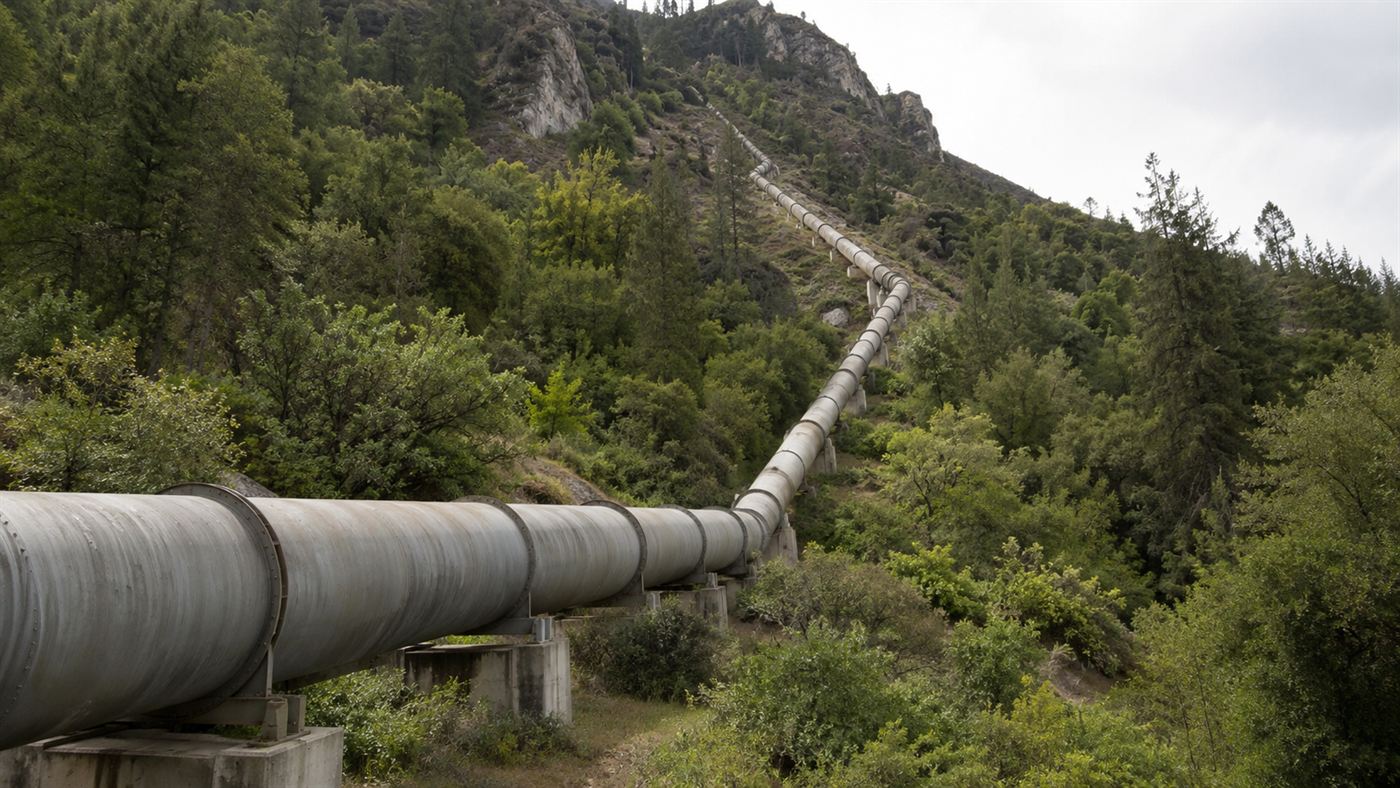
The answer was to put water back, and a lot of it, from a source nobody else wanted. Two big pipelines were built to carry treated wastewater up into the mountains. The first, finished in 1997, brought roughly 8 million gallons a day from Lake County communities. The second and more famous, completed in the mid-2000s, runs about 41 miles from the city of Santa Rosa and lifts some 11 million gallons of recycled water a day thousands of feet uphill to the field.
For Santa Rosa, this solved a headache of its own. The city had to do something with the millions of gallons of treated effluent its sewage plant produced every day, and discharging it into the Russian River was tightly limited to protect the waterway. Sending it up to The Geysers turned an expensive disposal problem into an asset, and it took real pumping power, around 9 megawatts, just to push the water up the hill against gravity.
Turning the dirtiest water into the cleanest power
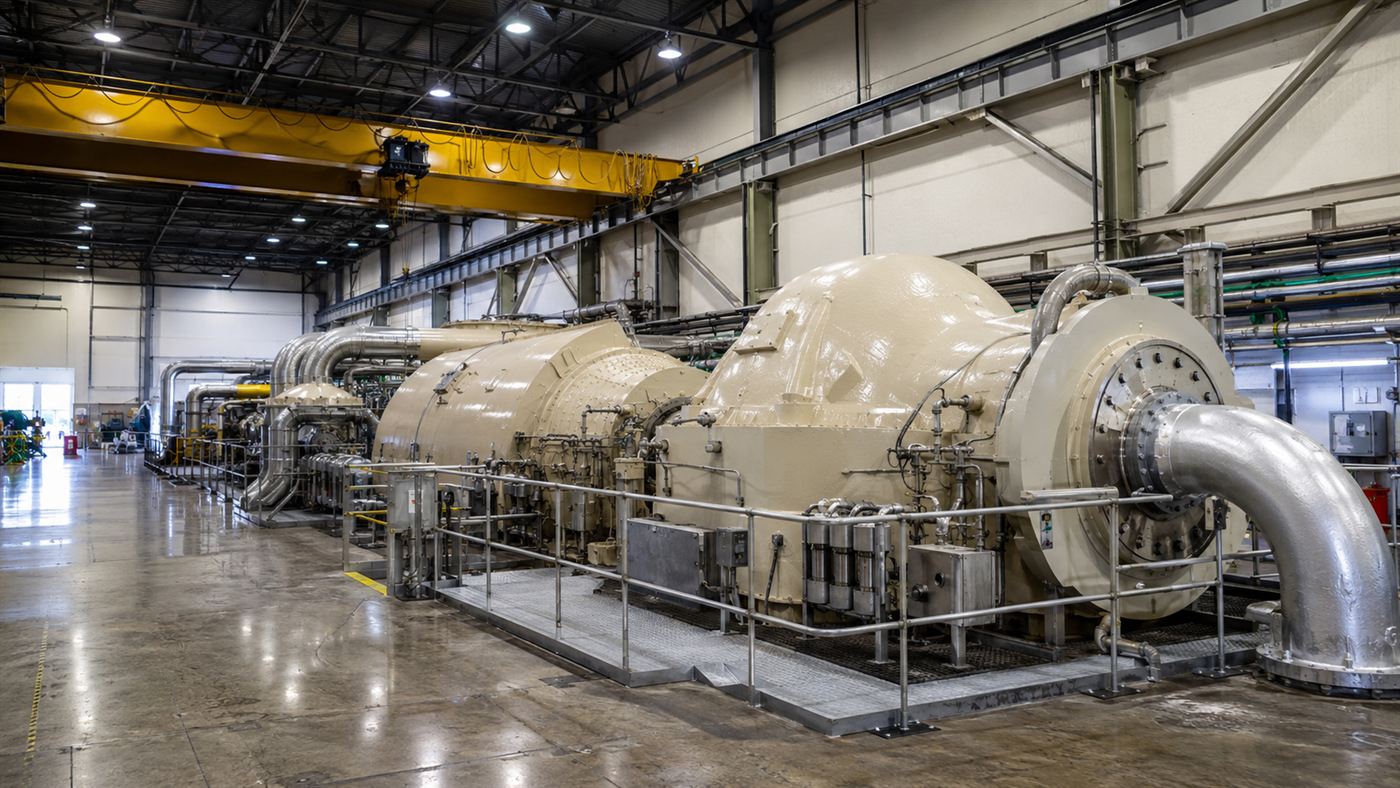
Once it reaches the field, the recycled water is pumped down injection wells deep into the hot rock, where it does something almost alchemical. The heat flashes it into fresh steam, which rises back up through the production wells and drives the steam turbines exactly as the original natural steam did. The impurities stay behind in the depths; what comes up to spin the turbines is clean vapor. A city's sewage goes down a hole and comes back as round-the-clock electricity.
The numbers are real. The Santa Rosa pipeline alone is reckoned to support roughly 77 megawatts of generating capacity that would otherwise simply not exist, power for tens of thousands of homes conjured out of water that used to be a waste-disposal burden. It is the largest wastewater-to-electricity scheme in the world, and it runs day and night, rain or shine, in a way solar and wind cannot.
What the wastewater fix actually buys
The injection program did not just slow the decline of The Geysers, it stabilized it. Steam pressure firmed up, output leveled off, and a field that looked like it might fade into early retirement instead settled into a long, steady old age at around 850 megawatts. Two counties' worth of clean, constant power now leans, in part, on what the neighbors flush.
It also rewrote how planners think about treated wastewater. Instead of a liability to be dumped, reclaimed water became a resource with a second job, recharging a power source and protecting a river at the same time. In a drying California, the idea of moving water uphill to make electricity sounds backwards, yet here the accounting works, because the water was going to be cleaned and released anyway.
The honest catch
There is a real cost buried in this clever loop, and it shakes. Pumping large volumes of water into hot, fractured rock lubricates faults, and The Geysers is now one of the most seismically busy injection sites in the world, setting off frequent small earthquakes that residents of nearby communities like Anderson Springs and Cobb genuinely feel. Most are tiny, but they are constant, and they are the direct price of keeping the steam flowing.
None of this makes the field a perpetual machine, either. Geothermal heat is vast but not infinite, and even with recharge the reservoir must be managed carefully for decades to come. Still, as trade-offs go, a fleet of mostly harmless micro-quakes in exchange for 850 megawatts of fossil-free, always-on power, plus a tidy solution to a city's sewage, is a bargain most grids would take. The dirtiest water really is making some of the cleanest electricity around.
A whole region's clean, around-the-clock power now depends partly on pumping a city's treated sewage 40 miles up a mountain and into the earth. Is recharging a power plant with wastewater a stroke of genius, or are the constant little earthquakes too high a price? Tell us what you think in the comments.
Related reading: The Italian valley where the world's first geothermal power station lit five light bulbs in 1904. See also how Hawaii's Puna Geothermal Venture was nearly buried by Kilauea's lava in 2018.