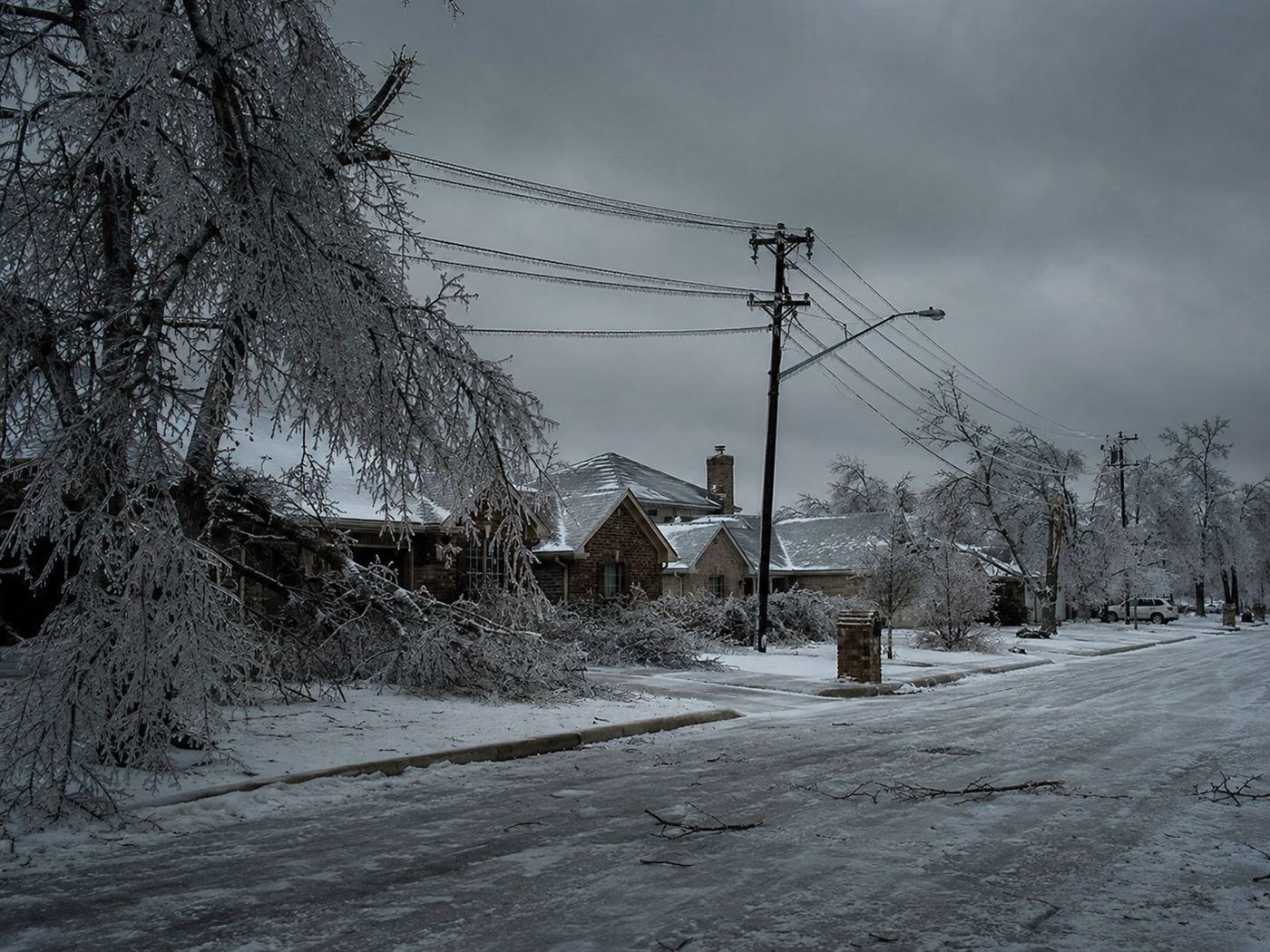
The biggest accidental oil spill in history gushed for 18 months in 1910, and at the time people came to admire it as a sign of good fortune
It is bigger than Deepwater Horizon. It ran longer than any blowout before or since. And when it happened, nobody mourned it, they cheered. The Lakeview Gusher blew a black fountain of oil into the California sky in 1910 and kept blowing for a year and a half, and the technology to switch it off simply did not exist.
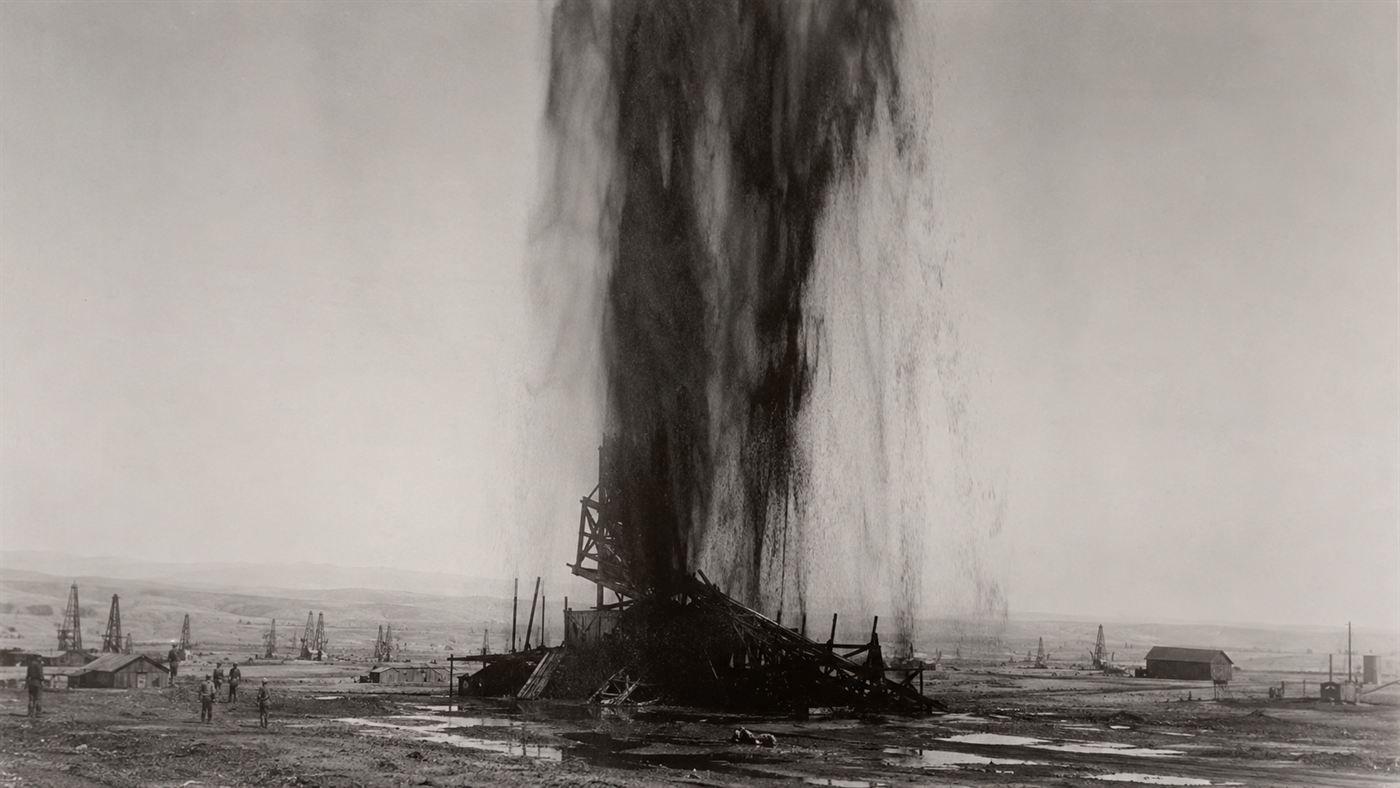
The Lakeview Gusher shot oil more than 60 metres into the air. Illustration: Watts & Wild.
It happened on 15 March 1910 in the Midway-Sunset oil field of Kern County, in the dry interior of California. A crew had been drilling a well, and the lead driller, a man with the unpromising nickname "Dry Hole Charlie" because of all the empty wells he had sunk, finally hit something. At about 2,225 feet down, the drill struck a pocket of oil under colossal pressure, and the well let go.
The blast tore the top of the wooden derrick clean off and sent a column of crude roaring more than two hundred feet into the sky. There was no slow leak and no warning; it was a geyser of oil that no one could approach and no one could close. The rig was wrecked in seconds, and the black fountain just kept coming.
Why nobody could stop the Lakeview Gusher
In 1910 the oil industry simply had no way to shut in a well that had blown out. The blowout preventers and control systems that exist today were decades away, so when a high-pressure well let rip, all anyone could do was get out of the way and try to manage the flood. As KQED has noted, the gusher remains the largest accidental oil spill in history, and it earned that title precisely because nobody could turn it off.
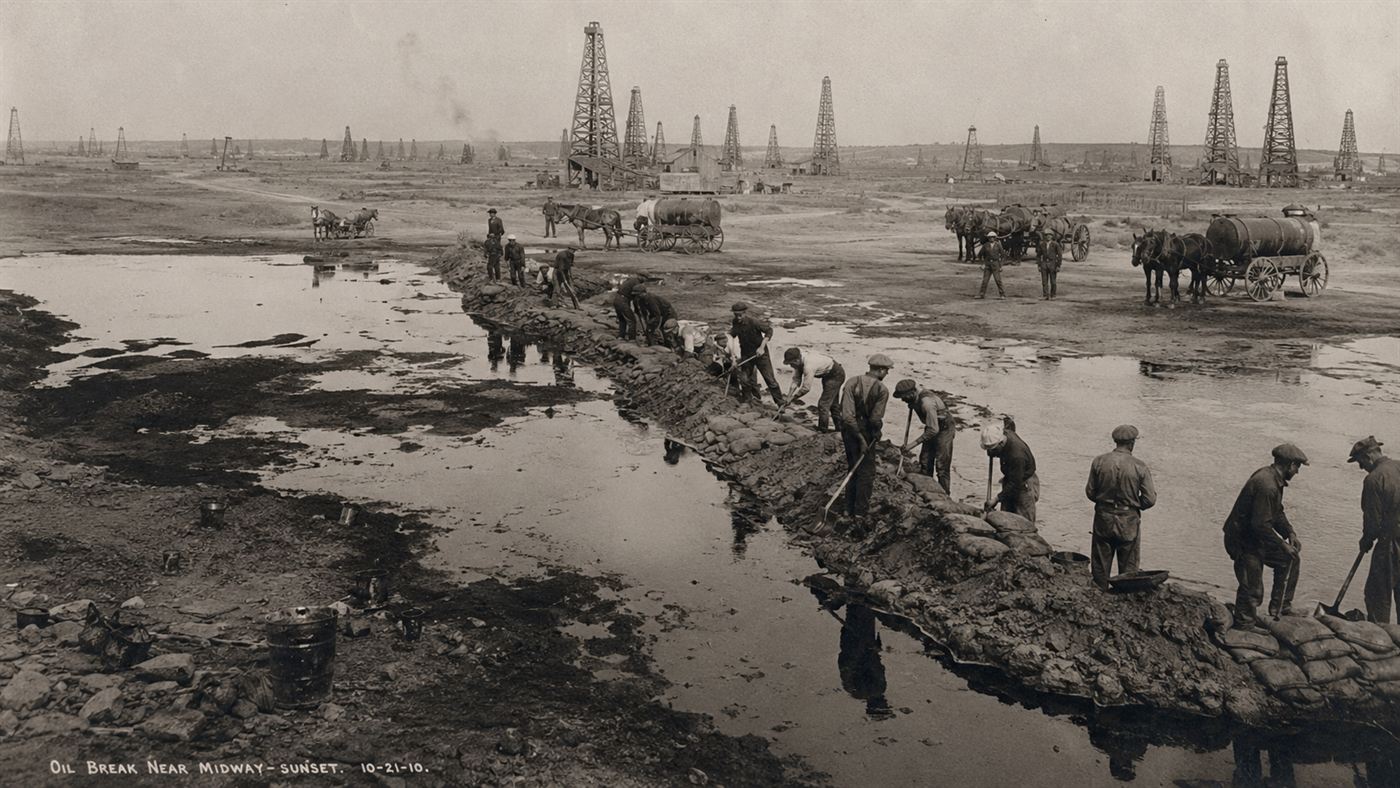
So instead of capping it, hundreds of workers fought to contain it. They threw up earthen dams and sandbag dikes, a great circular wall around the well, and dug channels and reservoirs to corral the oil into artificial lakes before it could run off across the desert. Some was piped away to storage tanks. In the end, of the staggering volume that came up, only around four in ten barrels were ever recovered.
How much oil the Lakeview Gusher spilled
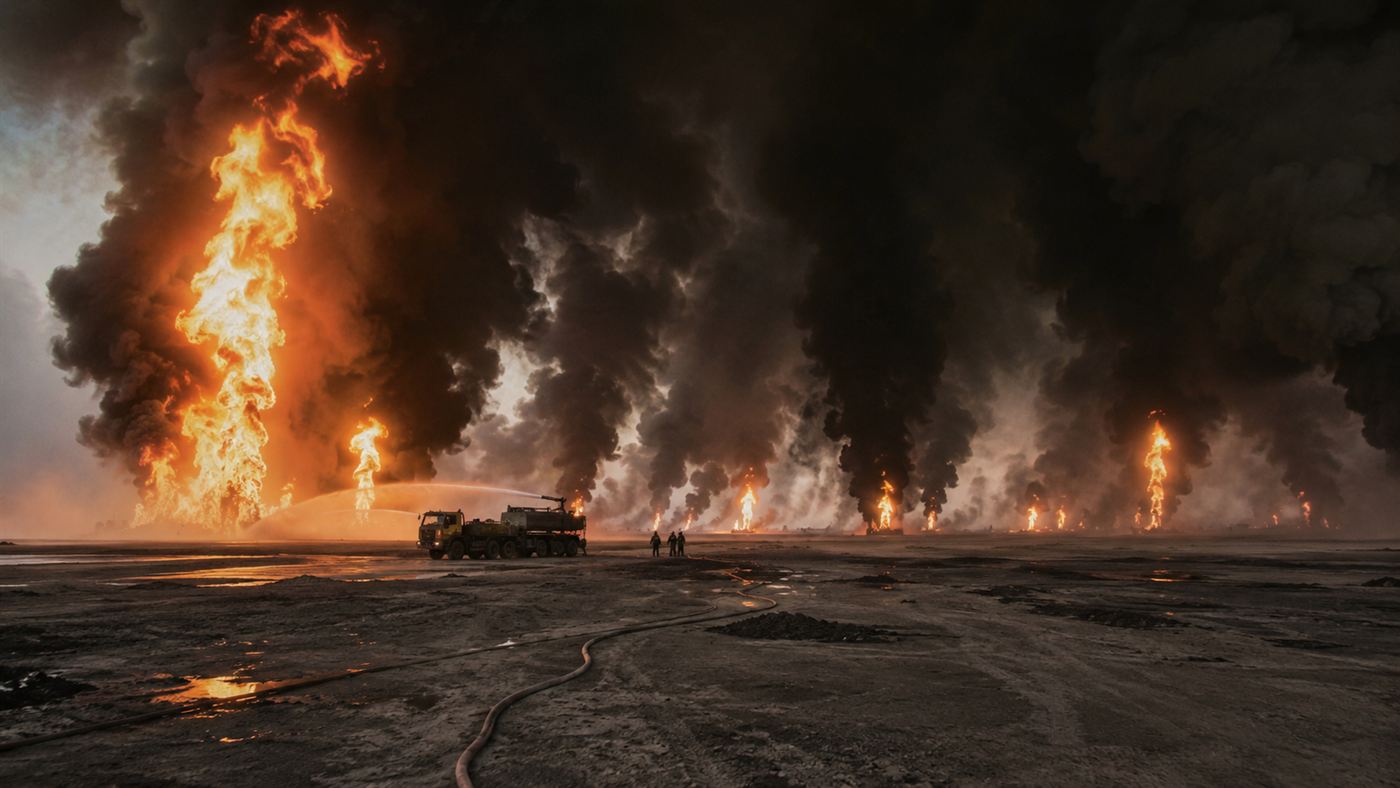
The numbers are almost hard to credit. At its peak the well was throwing out something like ninety thousand barrels a day, and over its eighteen-month life it released an estimated nine million barrels in total, roughly 378 million gallons. That is around twice the size of the Deepwater Horizon spill of 2010, and the only oil release ever to beat it was the deliberate sabotage of Kuwait's wells during the 1991 Gulf War. As accidents go, nothing has ever come close.
The disaster everyone celebrated
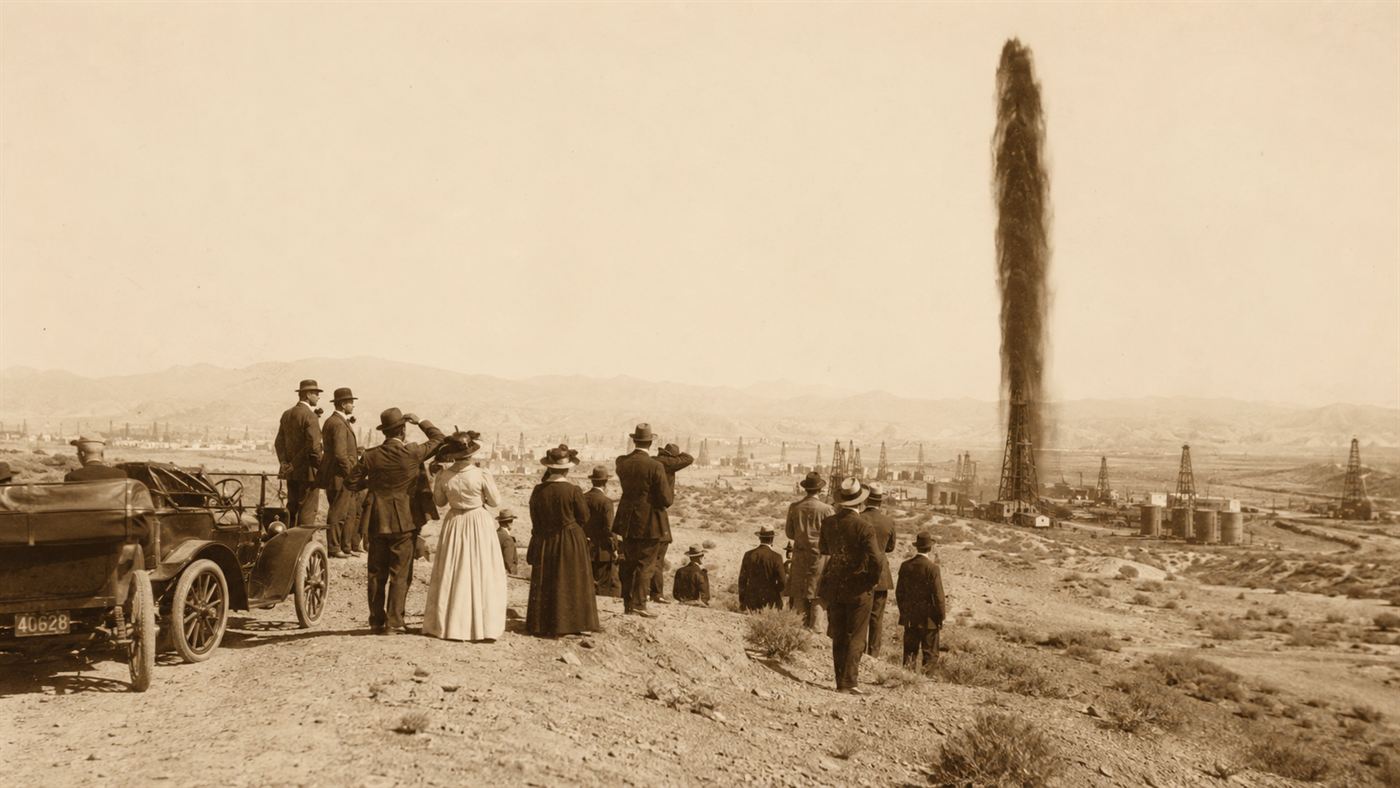
Here is the part that feels strangest to a modern reader. As NPR recounted on the centenary, almost no one saw the Lakeview Gusher as a catastrophe at the time. It was 1910, the oil age was young and roaring, and a well that gushed this hard was read as proof that California was sitting on a fortune. The gusher made money, briefly flooded the market and pushed prices down, and turned into a genuine tourist attraction, with sightseers travelling out to the desert to gawp at the towering black fountain.
The idea that millions of barrels of crude soaking into the ground might be a problem barely registered. There were no environmental laws to break and little sense that there was anything to protect, and so the biggest oil spill in human history unfolded as a spectacle and a celebration rather than a disaster to be cleaned up.
How was the Lakeview Gusher finally stopped?
Not by anyone's hand. After about a year and a half, the immense underground pressure that had driven the eruption finally began to fade, and the well choked itself off with sand and collapsed in on its own. Humans never managed to cap the Lakeview Gusher; it simply ran out of force and the Earth shut its own valve. By the time it stopped in 1911, it had written a record that still stands.
The honest catch
A bit of perspective is owed in both directions. The famous nine-million-barrel figure is an estimate, made in an age of rough bookkeeping, and the true total could be higher or lower. And while it remains the largest accidental spill, the even bigger 1991 Gulf War release was a deliberate act of war, not an accident, which is why the two are usually counted apart. It is also fair to say the desert location spared the kind of wildlife and coastline carnage we associate with modern ocean spills, even as the lost oil scarred the land for years. But the deepest lesson is not really about the size of the puddle. It is about humility. A little over a century ago, we could rip a hole in the Earth and unleash a force we had no way whatsoever to control, and we stood around admiring it. The blowout preventers and the regulations that followed are, in the end, the industry slowly learning to be afraid of what the Lakeview Gusher showed it could do.
The largest accidental oil spill in history was a tourist attraction, and the only thing that ever stopped it was the Earth itself. Does the Lakeview Gusher read to you as a marvel of the early oil age or a warning we took far too long to hear? Tell us what you think in the comments.
Related reading: The only oil release ever bigger came from war, the 700 Kuwaiti wells set ablaze in 1991.