A blacked-out cargo ship drifted toward Baltimore's Key Bridge in the dark, and the mayday it sent bought just enough time to stop traffic and save dozens, but six workers still fell
The Key Bridge collapse took only about 30 seconds. In the small hours of March 26, 2024, a giant container ship lost all power in the channel below Baltimore's Francis Scott Key Bridge and drifted, helpless, into one of its piers. A single frantic radio call in the minutes before decided who lived and who did not.
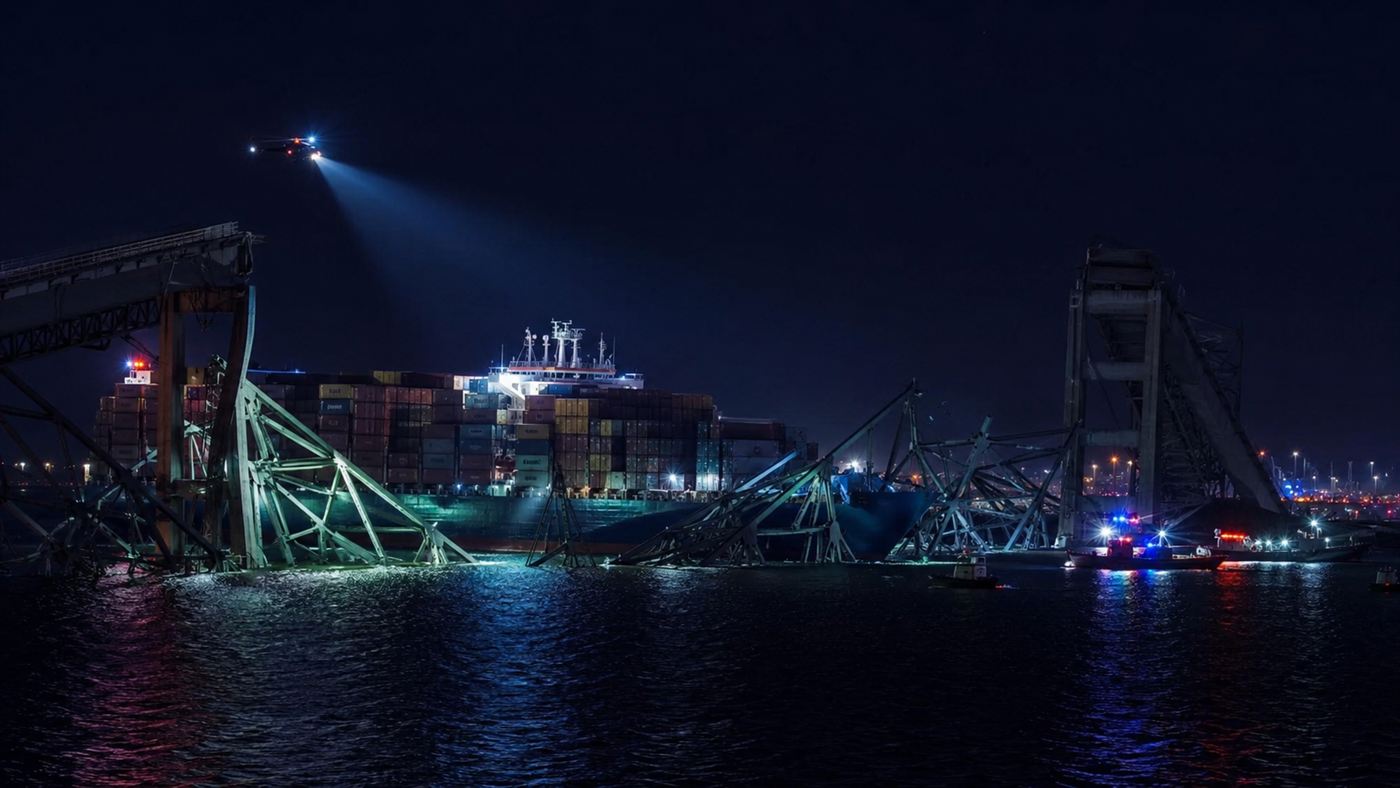
The Francis Scott Key Bridge fell into the Patapsco River within seconds of the strike. Illustration: Watts & Wild.
The Key Bridge collapse is remembered as a catastrophe, and it was. But hidden inside it is one of the most consequential emergency calls in recent American history, three minutes of radio traffic that quietly saved dozens of lives. It is a story about a fragile bridge, a crippled ship, and a handful of people who did exactly the right thing with almost no time to do it.
As detailed in the public record of the disaster, the container ship Dali suffered a complete blackout at 1:24 a.m., about 3,200 feet from the bridge. It lost its engines and its steering at the worst possible moment, a floating wall of steel gliding toward a bridge that carried tens of thousands of cars a day. What happened in the next few minutes is the part worth slowing down for.
The short version: On March 26, 2024, the container ship Dali lost power and struck a pier of Baltimore's Francis Scott Key Bridge, which collapsed in about 30 seconds. A mayday call gave officers roughly three minutes to stop traffic and save countless drivers, but six road workers repairing potholes on the span were killed.
The three minutes that saved dozens of lives
At 1:27 a.m., the Dali issued a mayday. The message reached a Maryland Transportation Authority dispatcher, and one of the harbor pilots asked that traffic be stopped from crossing the bridge immediately. Officers on both ends moved at once, throwing their cars across the lanes and holding back the steady overnight stream of trucks and commuters. They cleared the bridge of moving traffic with barely a minute to spare.
At 1:28:45 a.m. the Dali struck a main support pier at roughly 8 knots. Within about 30 seconds the central spans folded and dropped into the cold Patapsco River. Every second of warning had mattered. Because two officers held the line, the cars that would normally have been streaming across at that hour were stopped safely short of the gap, and an ordinary traffic stop became one of the most important things anyone did that night. This is the same razor's edge between disaster and near-miss that runs through the sudden fall of Genoa's Morandi Bridge.
The six men on the bridge
The warning could not reach everyone. Out on the span, a crew from Brawner Builders was doing the invisible night work that keeps a highway running, filling potholes in the dark when traffic is light. They had no way to know what was bearing down on them, and when the roadway dropped, they went with it into the river. Six of them died: Miguel Angel Luna Gonzalez, Maynor Yasir Suazo Sandoval, Alejandro Hernandez Fuentes, Dorlian Ronial Castillo Cabrera, Carlos Daniel Hernandez Estrella, and Jose Mynor Lopez.
They were immigrants from El Salvador, Honduras, Mexico, and Guatemala, fathers and brothers who had taken the overnight shift most people never think about. One man survived. According to accounts reported by CBS News, Julio Cervantes Suarez escaped his sinking truck only because it had a manual window crank he could roll down by hand, then clung to a chunk of floating concrete until rescuers reached him. That detail, a hand crank against a river in the dark, is the whole disaster in miniature.
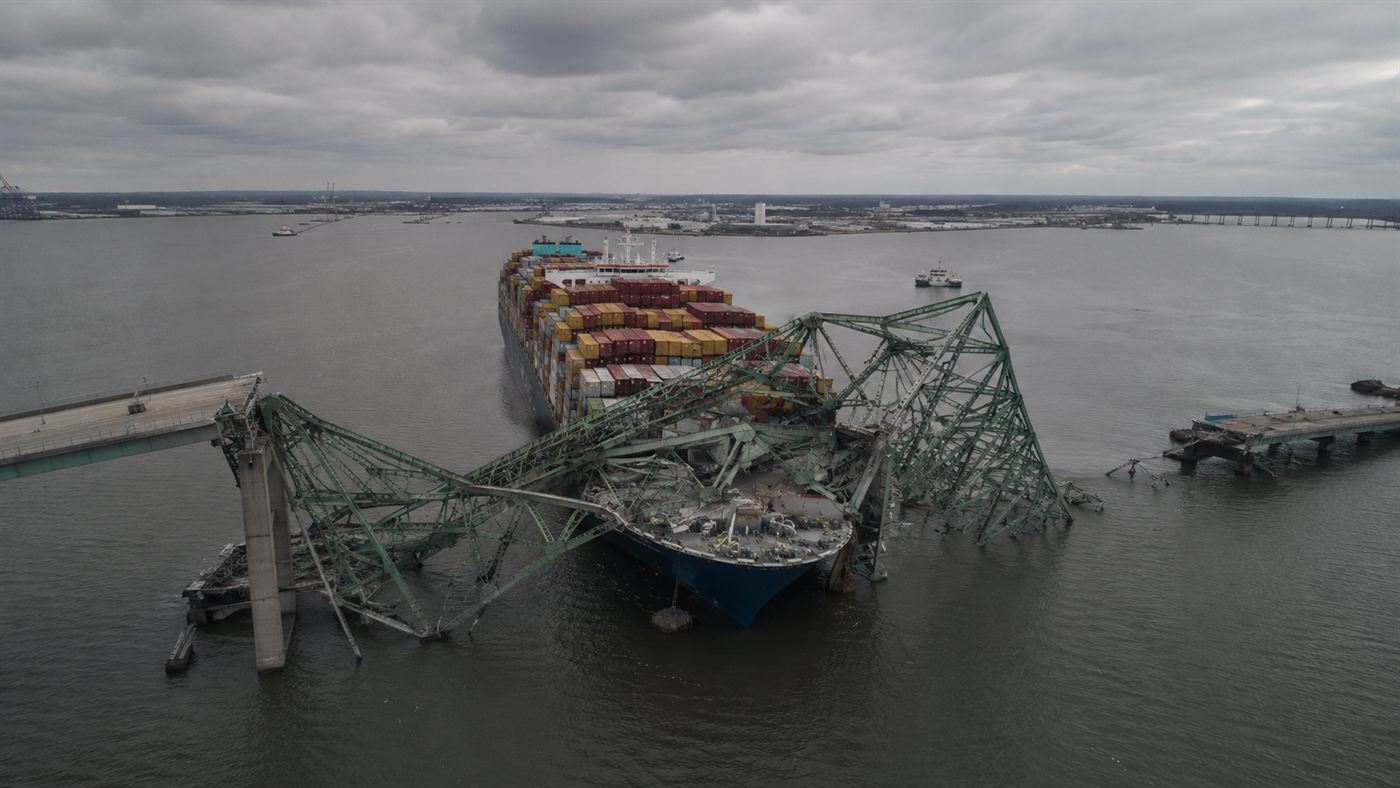
Why did the Key Bridge collapse so fast?
Part of the horror was the speed. A bridge that had stood since 1977 was gone in half a minute. The Francis Scott Key Bridge was a 1.6-mile steel truss bridge, and crucially it was what engineers call fracture critical, a design with no backup load path. In that kind of structure, the failure of one key member can bring down the whole thing, and there is no redundancy to catch the fall.
So when the Dali, a 980-foot ship carrying some 4,700 containers, drove into a main pier, the bridge simply had nowhere to send the load. It was never built to survive a direct hit from a modern mega-ship, because ships this size did not exist when it was designed. The mismatch between an aging bridge and today's enormous vessels sits underneath the whole tragedy, the same tension that shadows every old crossing straining under loads its builders never imagined.
What caused the Dali to lose power?
For all the scale of the wreck, investigators traced it to something tiny. After a long inquiry, the National Transportation Safety Board concluded in November 2025 that the probable cause was a single loose signal wire in the ship's electrical control center, at a spot labeled terminal block 381. The connection was not seated properly, which tripped breakers and blacked the ship out, not once but effectively at the worst moment on the approach.
The NTSB investigation found the Dali had experienced electrical problems before it ever left port, and it recommended new inspections and clearer manufacturer warnings for exactly this kind of fault. It is a sobering reminder that in a tightly wound machine like a container ship, the difference between a routine departure and a national disaster can come down to whether one wire is screwed in tight. Small, hidden failures have toppled giants before, from a chain of dams in China to a factory floor in New York.
A five billion dollar bridge and a long reckoning
What the Dali knocked down will take years and a fortune to rebuild. Maryland plans to replace the crossing with a modern cable-stayed Baltimore bridge featuring a 1,600-foot main span and far more clearance for ships, roughly 230 feet versus the old 185. Early estimates near 1.7 billion dollars have climbed toward a range of 4.3 to 5.2 billion, with completion targeted around 2030. The port that the bridge served, one of the busiest on the East Coast, was choked for months while crews cut the wreck apart.
The reckoning has been human as well as financial. In 2026 the families of the six workers reached settlements with the ship's owner and operator over the deaths, and federal prosecutors moved against the companies involved. No settlement brings the men back, but their case forced a hard look at who does America's most dangerous overnight work, and how little protection stands between them and a river. The story rhymes with older fights over disposable labor, like the Triangle Shirtwaist fire that reshaped worker safety a century ago.
The honest catch
It is tempting to file the mayday under heroism and move on, but the fuller truth is harder. The call was a genuine act of quick thinking that saved many lives, and it still was not enough to save the men already out on the span, because there was no way to reach a work crew in the seconds available. Celebrating the rescue without sitting with that gap would be dishonest.
And the disaster was not really bad luck. The Dali's electrical faults were known, the bridge's vulnerability to ship strikes was understood in principle, and the workers most exposed were the ones with the least power to say no to a night shift on an old bridge. The Key Bridge collapse was a freak event built on very ordinary neglect. The mayday is the part worth honoring. The six names are the part worth remembering.
A dying ship's radio call cleared a bridge with a minute to spare and saved dozens of strangers, but six men repairing the road never got the warning. Should old bridges on busy shipping channels be required to protect their piers against today's giant ships, whatever it costs? Tell us what you think in the comments.
Related reading: A motorway bridge in Genoa stood for 51 years, then fell in seconds and killed 43 people in a rainstorm.
More from Watts & Wild
More in Industry & Mega-Builds →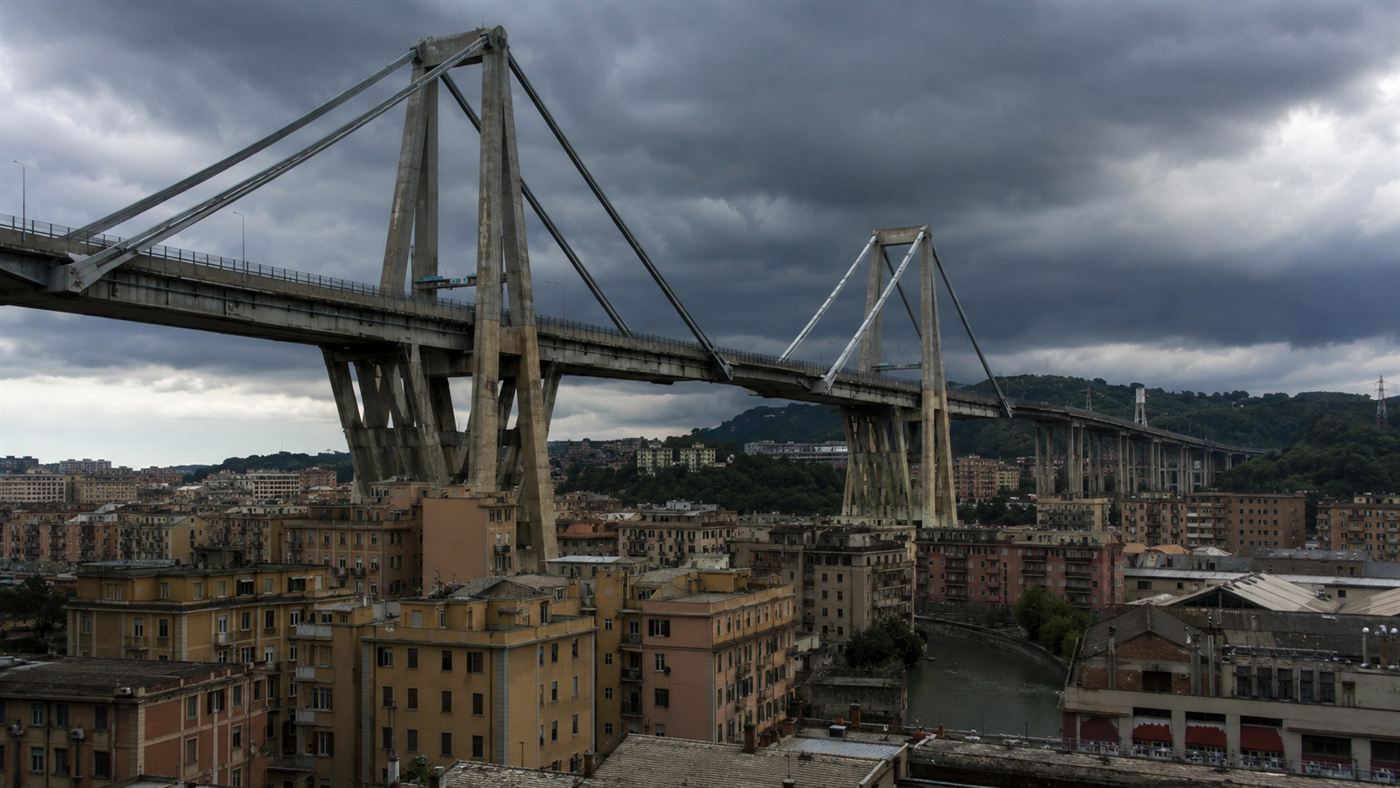

Maria covers heavy industry, mega-builds, dams, tunnels, and the record-breaking engineering reshaping the world for Watts & Wild.