The world's longest road tunnel is so long it could hypnotise drivers to sleep, so engineers carved glowing blue caves into the mountain to keep them awake
Driving for half an hour through a single straight tube of rock does strange things to the human brain. So when Norway bored the Laerdal Tunnel, the longest road tunnel on Earth, the engineers faced a problem no amount of concrete could fix: how to stop drivers being lulled to sleep. Their answer was to build glowing blue caverns deep inside the mountain.
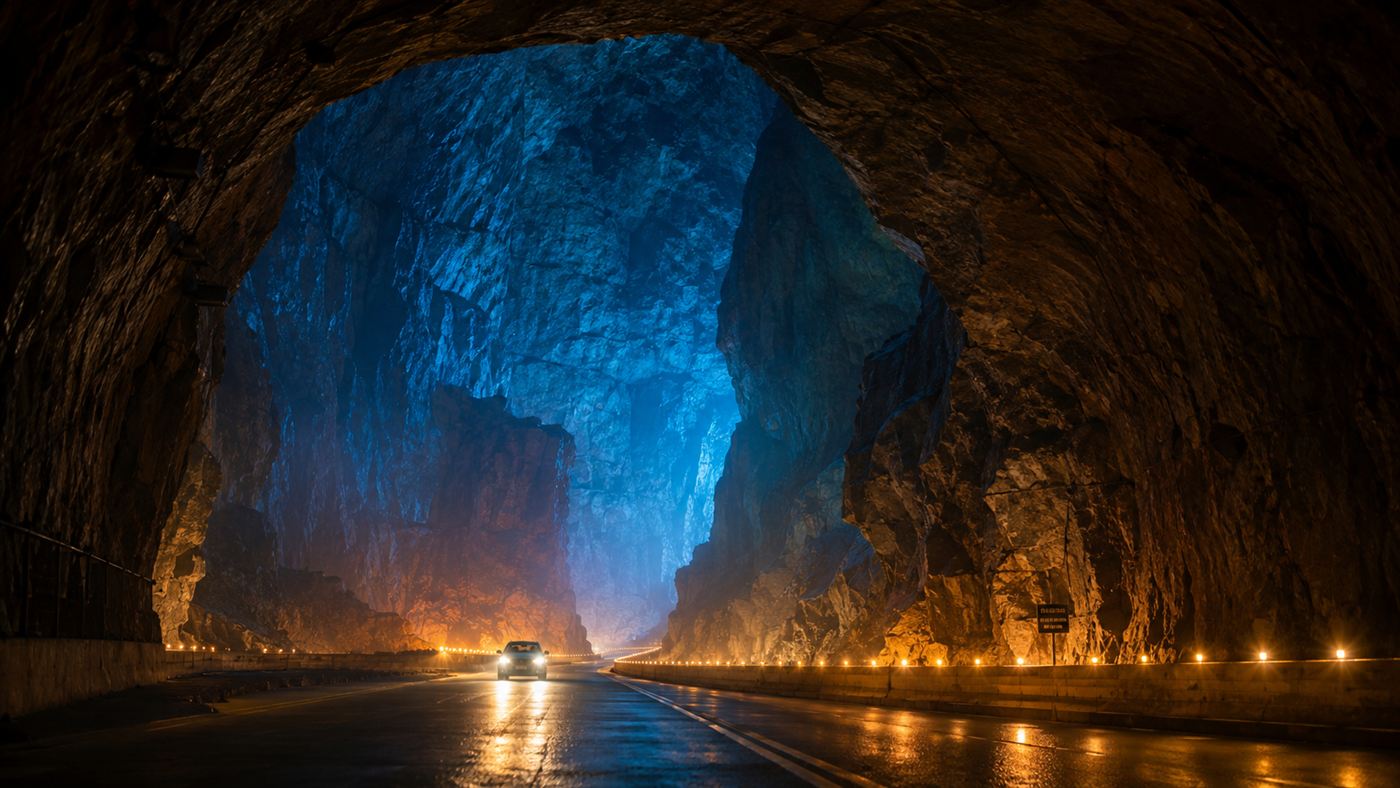
One of the Laerdal Tunnel's blue-lit caverns, designed to wake the driver's mind. Illustration: Watts & Wild.
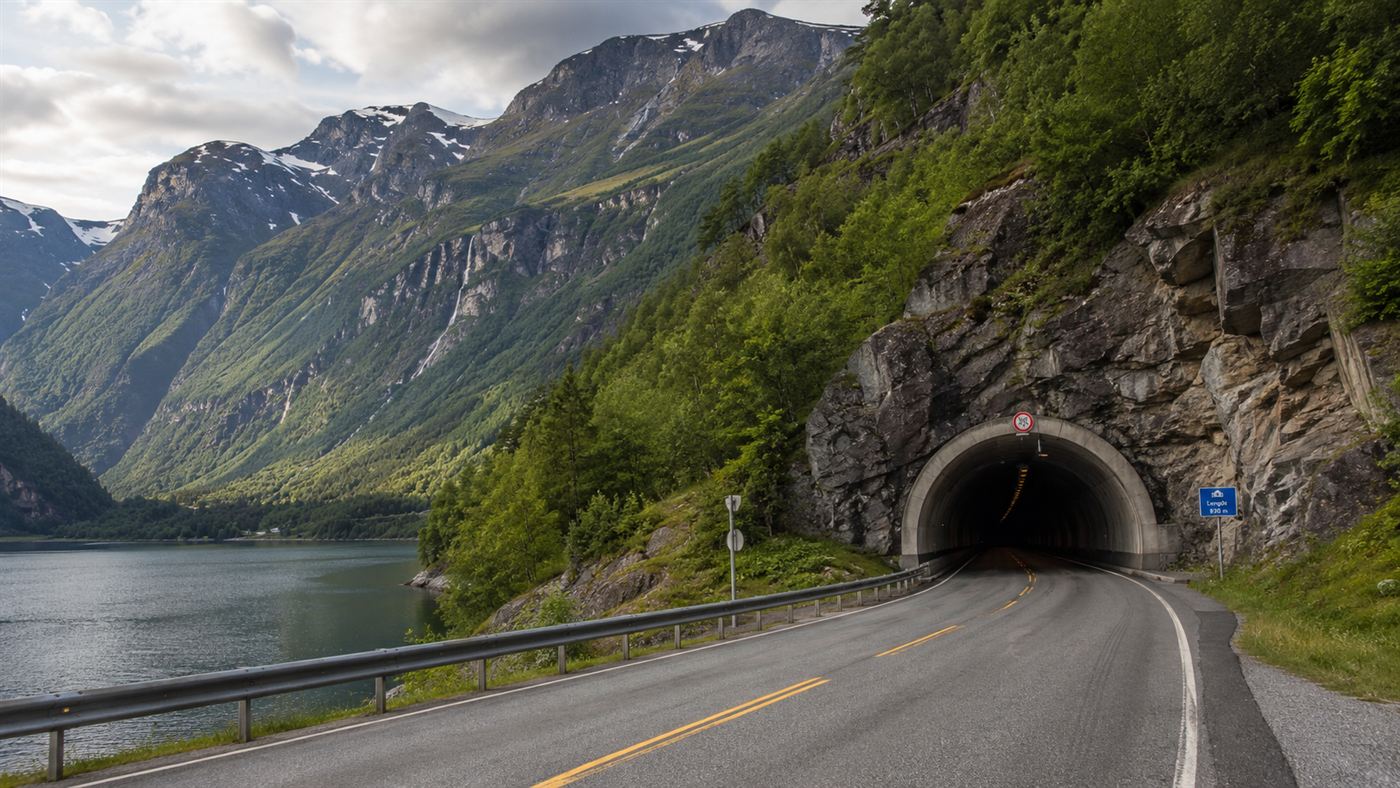
Norway is a country carved up by mountains and deep fjords, which makes simply getting from one town to the next an epic engineering challenge. The main route between the capital, Oslo, and the western city of Bergen had long depended on a high mountain pass that snow and ice closed for much of the year, leaving travellers reliant on ferries and white-knuckle drives. The country wanted a road that would stay open every day, whatever the weather.
The solution was to go straight through the mountains rather than over them. As Wikipedia records, between 1995 and 2000 crews drilled and blasted 24.5 kilometres of road tunnel beneath the peaks between Laerdal and Aurland. When it opened, the Laerdal Tunnel became, and remains, the longest road tunnel in the world, a record it has held for a quarter of a century.
Why the Laerdal Tunnel could put you to sleep
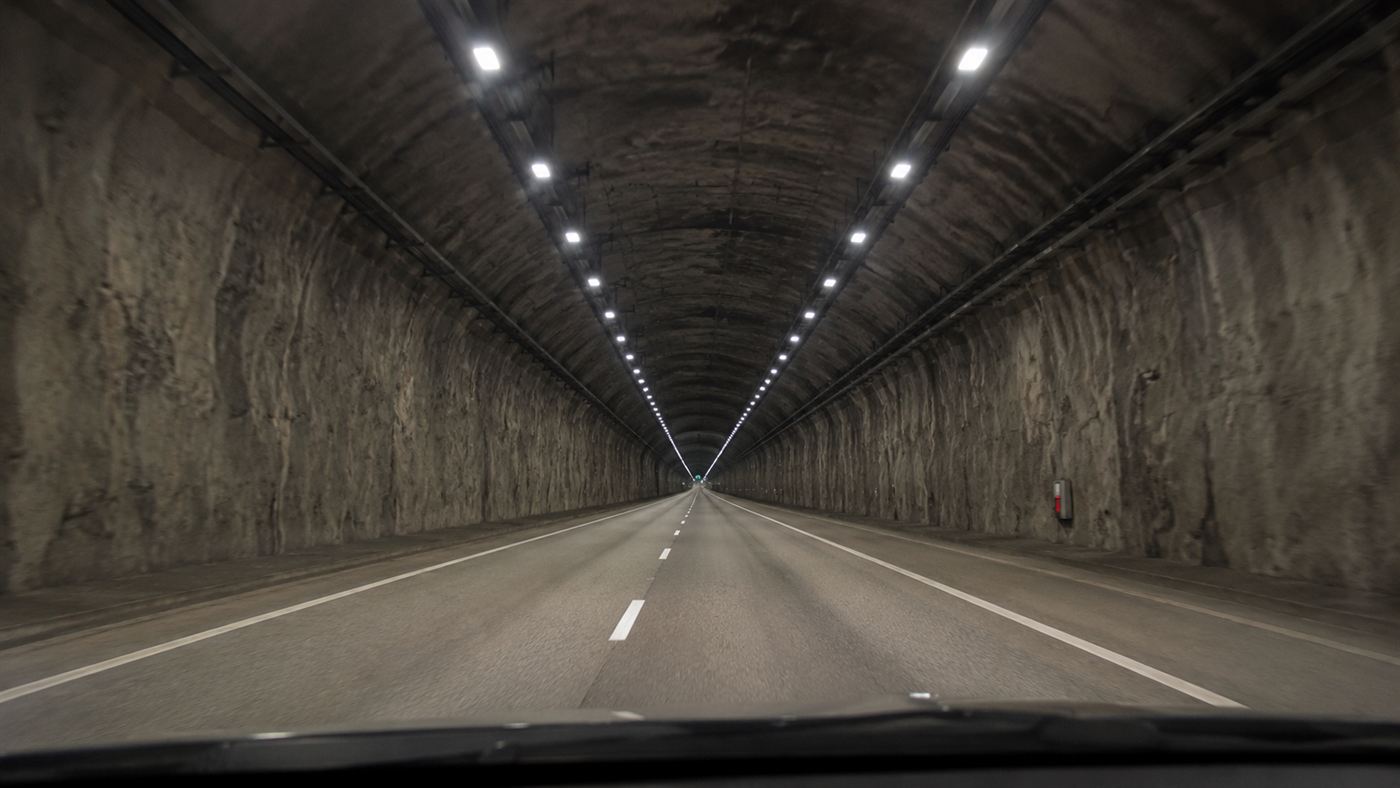
A tunnel that long is not just a feat of digging; it is a psychological hazard. Studies of long tunnels show that the steady walls, constant lighting and unchanging hum can induce a kind of trance, sometimes called highway hypnosis, where attention drifts and reaction times slow. On a drive lasting around twenty minutes with nothing to look at, even alert drivers can find their eyelids growing heavy.
The designers of the Laerdal Tunnel understood that a sleepy driver in the middle of a 24-kilometre tube of rock is a serious danger, with nowhere to pull over and no daylight in sight. Rather than just hanging more signs, they decided to treat the human mind as a part of the structure that had to be engineered, and that is where the project becomes genuinely clever.
The blue caves inside the mountain
At roughly six-kilometre intervals, the engineers hollowed out three large caverns where the tunnel widens dramatically. As Atlas Obscura describes, each one is lit unlike ordinary tunnel lighting: the rock is washed in cool blue light from below, with warm gold and yellow tones near the floor, deliberately echoing the colours of a sunrise breaking over a fjord.
The effect is striking and intentional. As you drive out of the dim, repetitive tube and into a glowing blue chamber inside the mountain, your brain snaps back to attention, you feel a jolt of novelty, and you register that you have made progress along the route. The caverns also serve as places to rest, turn around, or let emergency vehicles work, turning a safety idea into something close to underground art.
How they kept the air breathable
There was a second invisible problem: air. In a tube nearly 25 kilometres long, the exhaust from thousands of vehicles has nowhere to go, and simply blowing it out the ends was not enough over such a distance. So the Laerdal Tunnel was fitted with one of the most advanced ventilation and air-treatment systems of its time, a field where, as Britannica notes, long tunnels demand powered ventilation, including a plant that pulls dust and harmful nitrogen dioxide out of the air inside the mountain itself.
Fans drive the air along the tunnel while the cleaning plant scrubs a portion of it, keeping the atmosphere breathable for the cars strung out along its length. It is the kind of engineering nobody notices when it works, which is exactly the point. Between the lighting and the air system, the tunnel was designed around the comfort and safety of the people inside as much as the rock around them.
The honest catch
Impressive as it is, a tunnel this long carries real risks that the blue caves cannot solve. Because it runs deep under a mountain, there are no emergency exits to the surface anywhere along its length, so if a serious fire broke out, drivers would have to escape through the tunnel itself, the same nightmare that turned other long road tunnels into disasters. Safety here rests heavily on ventilation, the caverns and emergency bays rather than a quick way out.
The blue caverns, charming as they are, are also a clever patch on a fundamental drawback rather than a cure: the underlying truth is that driving 24.5 kilometres underground is unavoidably monotonous and tiring. And as traffic grows and the structure ages, Norway has had to keep investing in upgrades and even plan refits to keep the world's longest road tunnel safe. A record-breaking tunnel is never quite finished.
Why a glowing tunnel still matters
What makes the Laerdal Tunnel special is not really its length, impressive as that is. It is the rare humility of the design, the recognition that the weakest part of any machine is often the person operating it, and that good engineering has to account for human attention, fatigue and even mood, not just loads and stresses.
Most tunnels treat people as cargo to be moved through as fast as possible. This one treats them as fragile, distractible humans who need a splash of artificial sunrise to stay safe. In an age of ever bigger and more automated infrastructure, the blue caves under a Norwegian mountain are a quiet reminder that the cleverest engineering sometimes looks a lot like kindness.
Norway built the longest road tunnel on Earth, then realised its biggest danger was boredom and answered it with fake sunrises in the rock. Would a glowing blue cave keep you alert, or would 24 kilometres underground unsettle you anyway? Tell us in the comments.
Related reading: The world's longest railway tunnel, driven flat through 2,300 metres of Alpine rock.