India quietly built the world's largest electric vehicle fleet, and it is not Teslas but millions of humble rickshaws that are pulling their drivers out of poverty one cheap battery at a time
The future of electric driving was supposed to look like a sleek car. In India it looks like a tin box on three wheels, charged overnight from a house socket. There are now millions of them, and almost nobody planned it. For the drivers, the maths is simple and life-changing.
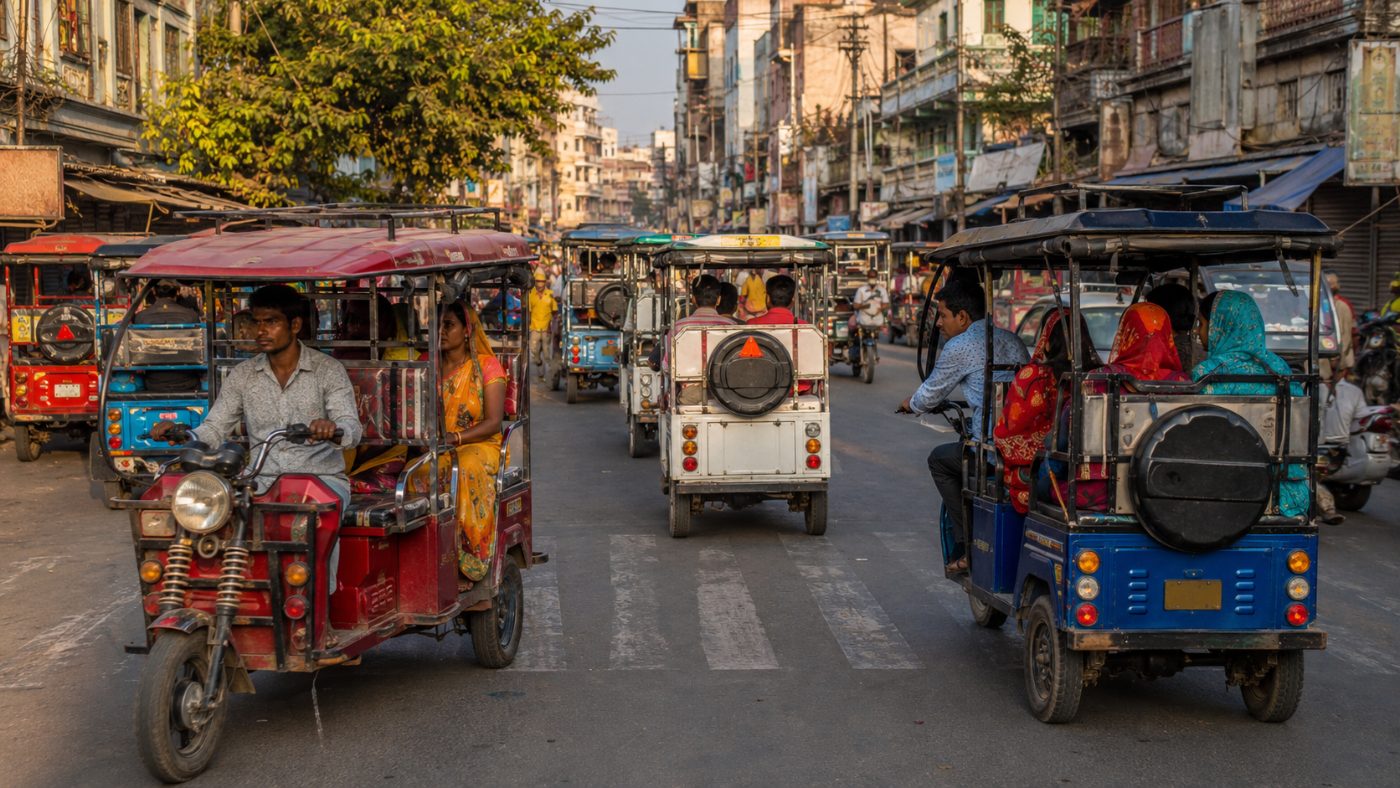
India's real electric revolution rides on three wheels, not four. Illustration: Watts & Wild.
While the rest of the world argued over whether electric cars would ever truly catch on, India quietly built the largest fleet of electric vehicles anywhere outside China, and almost nobody noticed, because they were looking for the wrong thing. The India e-rickshaw fleet did not arrive as a luxury sedan. It arrived as the e-rickshaw, a cheap, boxy, battery-powered three-wheeler humming through streets and villages by the million.
The scale is hard to overstate. India's national vehicle database had registered roughly 1.8 million e-rickshaws by late 2024, and as Rest of World reported, these humble three-wheelers are outselling electric cars in India several times over. They were not handed down by a government scheme or a famous brand. They were built mostly by small, often unregistered workshops, and bought by some of the poorest drivers on the road.
The India e-rickshaw fleet nobody planned
This is not a story of policy. The e-rickshaw boom grew from the bottom up, organically, faster than anyone could write rules for it. Thousands of tiny manufacturers sprang up to assemble the vehicles, which are mechanically simple, little more than a frame, a motor, a controller and a battery, and therefore cheap to make and cheap to fix.
That simplicity is exactly why it spread. In 2023, India overtook China to become the world's largest market for electric three-wheelers, a milestone reached not through gigafactories but through a swarm of small workshops meeting a real and immediate need. As the Lowy Institute has noted, around a million of these electric rickshaws now move some 60 million people every single day.
Why the maths changed a driver's life
To understand the boom, sit in the driver's seat. A diesel or gas auto-rickshaw burns through roughly 2.5 to 3.5 rupees of fuel for every kilometre. An electric one sips about 0.3 to 0.5 rupees of electricity for the same distance, charged overnight from an ordinary socket. That is a running cost cut by 60 to 70 percent, money that goes straight into the driver's pocket.
For a man who once strained to pull a cycle rickshaw by muscle, or paid a daily rent to drive someone else's fuel auto, owning a cheap electric one is a genuine step up the ladder. It is lighter work and more take-home pay. The vehicles are the daily livelihood of millions of drivers, and the backbone of last-mile travel in exactly the places buses and metros never reach.
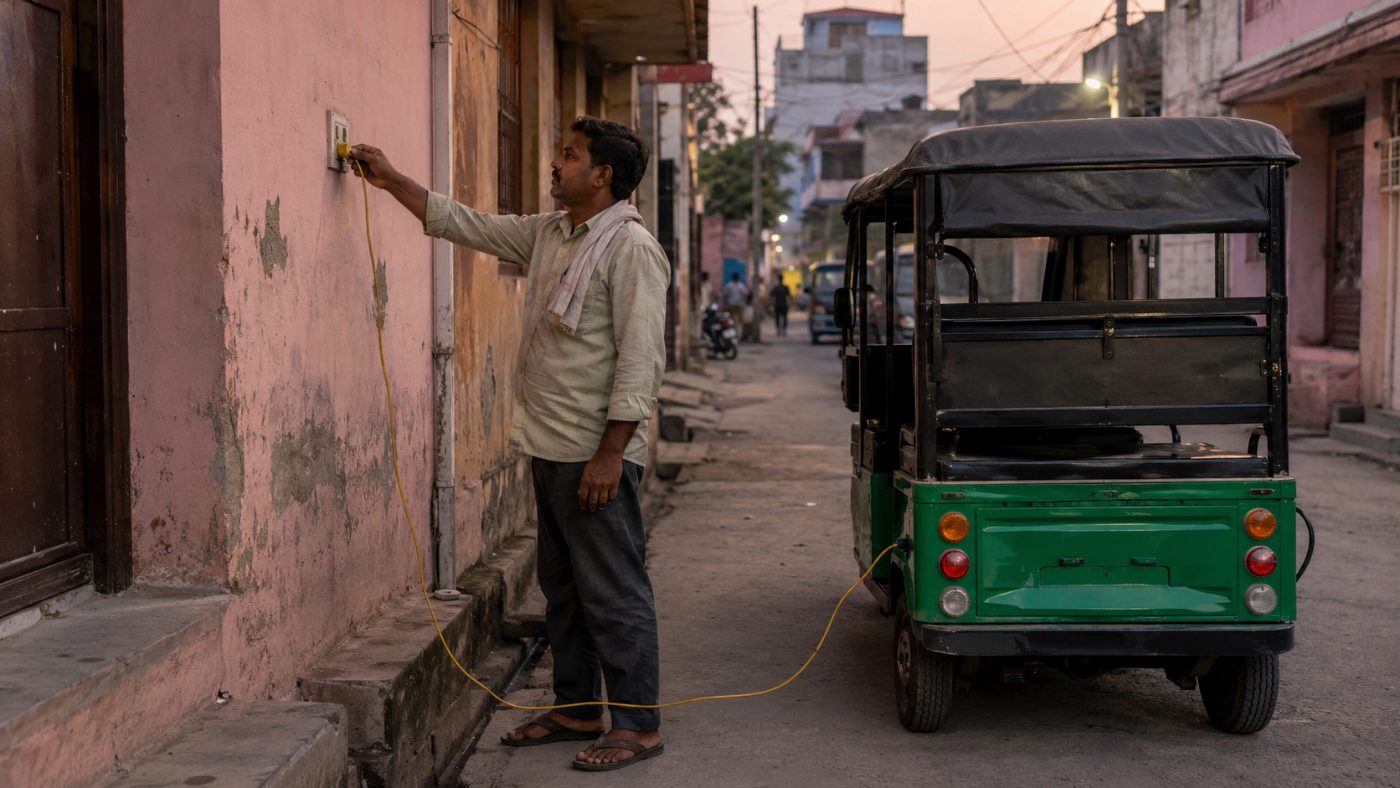
An electric revolution from the bottom up
The e-rickshaw quietly turns the usual electric-car story on its head. In rich countries, the transition has often meant subsidies that help comfortable buyers afford a second, greener car. In India, the real electric revolution is the opposite: poor people electrifying their own work because it is simply cheaper, with no green slogan attached. India has been an electric pioneer before, too, with the Reva G-Wiz that became Britain's best-selling electric car in the 2000s.
It is the same pattern showing up wherever clean technology gets cheap enough to undercut fuel, an unglamorous, ground-up shift driven by household economics rather than climate targets. It rarely makes headlines because it is not shiny. It just quietly moves more people on electricity than any fleet of expensive cars ever has.
The honest catch: a clean ride with a dirty battery
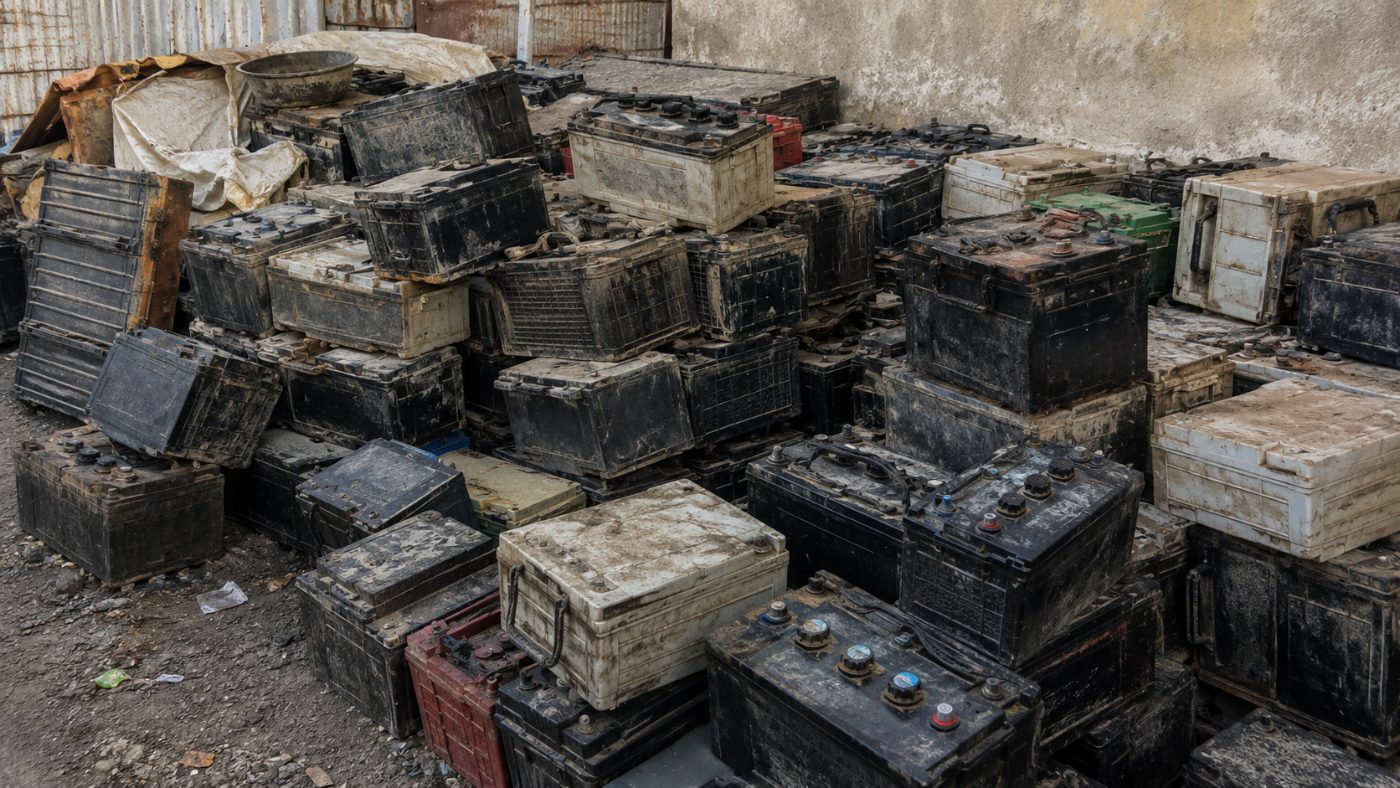
Here is the part that does not fit on a poster. Almost every one of these rickshaws runs on a cheap lead-acid battery tucked under the passenger seat, and those batteries are worn out within six to twelve months. Multiply that by millions of vehicles and you get well over ten million spent lead-acid batteries flowing into the system every year.
As Indian outlet Newslaundry reported, citing the environmental group Toxics Link, the great majority of those old batteries end up in the informal sector, broken open at unlicensed smelters with no real safety. The result is lead fumes in the air, lead in the soil and water, and lead poisoning in the workers who do the breaking, often in the same neighbourhoods the clean rickshaws serve.
India still has no nationwide, properly run system for collecting and recycling these batteries, so a vehicle that is spotless at the tailpipe can leave a toxic trail at the end of its battery's short life. Lithium batteries are cleaner and last far longer, but they cost more upfront, which is exactly the kind of money the poorest drivers do not have. There is a squeeze on income, too, as more drivers pile in and a day's takings that once reached 1,500 rupees settle closer to 800 or 1,000.
What the rickshaw is really telling us
The e-rickshaw is a preview of how the electric shift will actually happen across much of the world, and it looks nothing like the brochure. It is cheap, messy, unplanned, driven by a poor driver's arithmetic rather than anyone's ideals, and tangled up in real trade-offs like that toxic battery. And yet it is already carrying more people on electricity than any fleet of gleaming new cars on Earth.
The cleanest ride in a lot of cities is not a shiny machine in a showroom, it is a battered little three-wheeler that costs almost nothing to run. Does the real electric revolution look like the one we were promised, or like this? Tell us what you think in the comments.
Related reading: China won the electric car race, but now it faces a wave of worn-out batteries heading for a million tonnes a year by 2030.