A tiny Indian electric car that Top Gear crash-tested into a punchline, the Reva G-Wiz, quietly became Britain's best-selling electric car years before most people had heard of Tesla
Long before the Tesla badge meant anything to ordinary drivers, the best-selling electric car in Britain was a buzzing plastic bubble from Bangalore. The Reva G-Wiz was slow, short-ranged, and famously unsafe, yet for a few strange years it ruled the streets of central London.
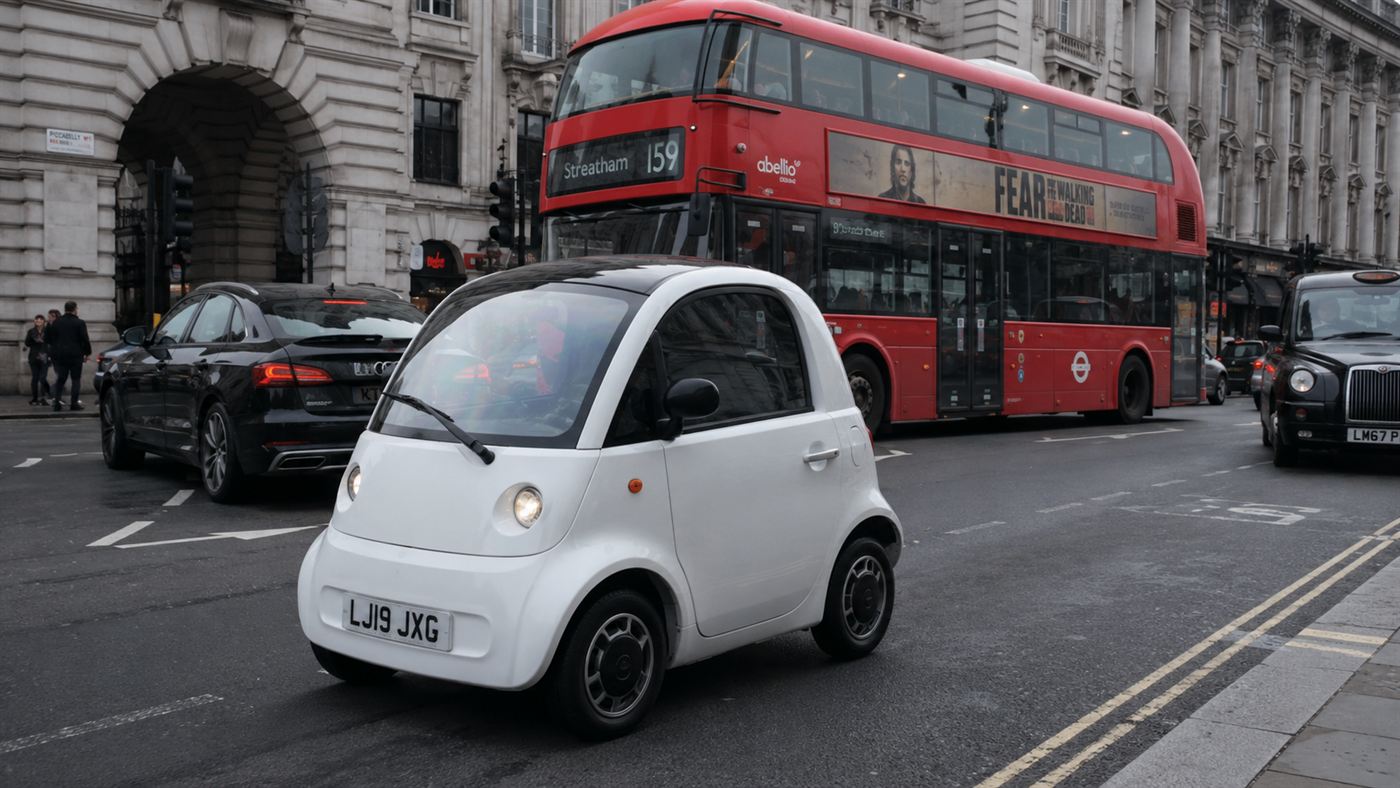
Dwarfed by a London bus, the Reva G-Wiz looked like a toy. For years it outsold every other electric car in Britain. Illustration: Watts & Wild.
The Reva G-Wiz is one of the great underdog stories of the electric age, even if almost nobody tells it. It was a two-seat city runabout, barely longer than a sofa, built in India and shipped to London, where from the mid-2000s it became the best-selling electric car in the country. This was years before the Nissan Leaf, years before the Tesla Model S, at a time when most people thought an electric car was a milk float or a golf buggy.
And yet it was treated as a national joke. The British motoring press, Jeremy Clarkson loudest of all, savaged it at every chance. The story of how a ridiculed quadricycle from Bangalore briefly conquered the capital of a car-obsessed nation is really a story about money, loopholes, and one stubborn engineer who saw the future early.
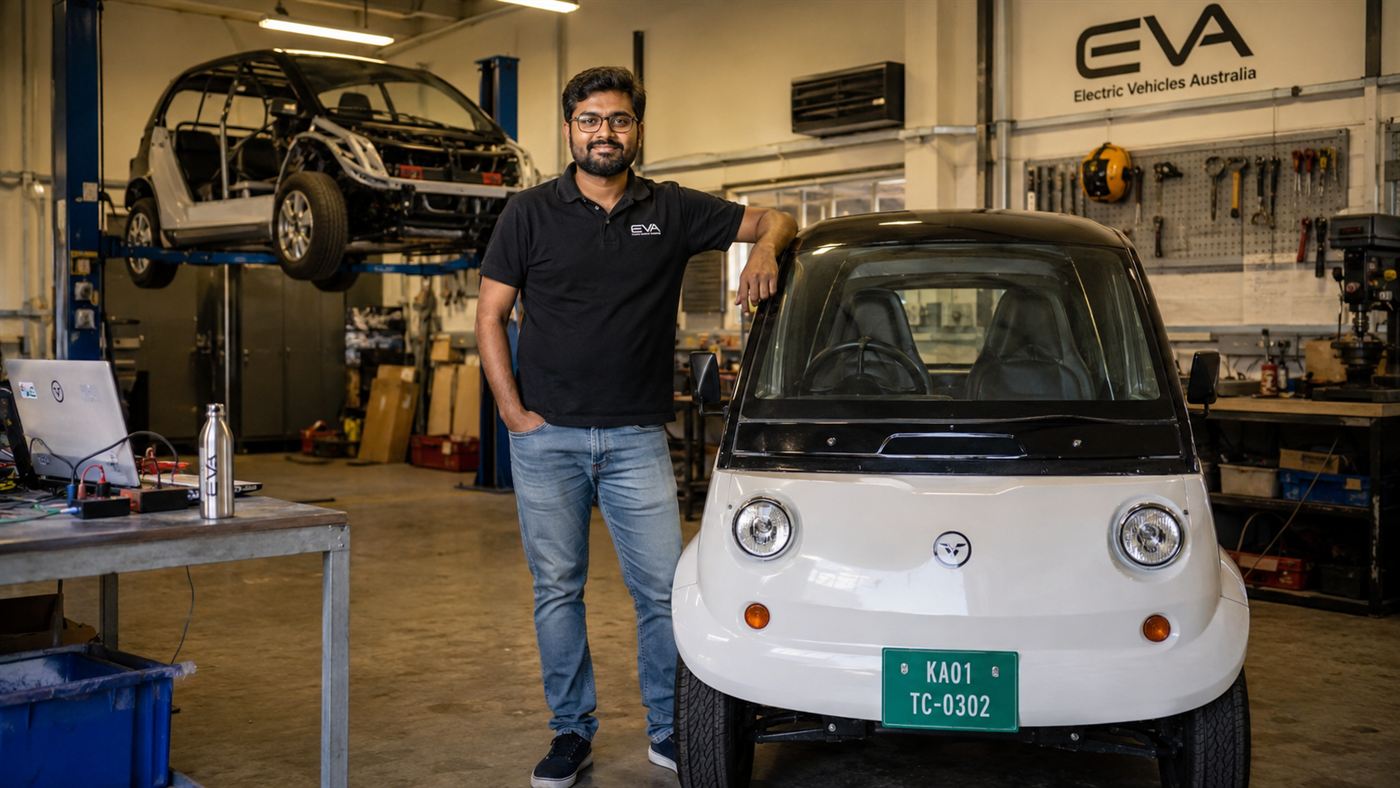
The Reva G-Wiz was a tiny two-seat electric city car designed in Bangalore by engineer Chetan Maini. Launched in India in 2001 and sold in London from 2004, it became Britain's best-selling electric car for several years, largely because it was exempt from the London congestion charge and cost almost nothing to run.
The Bangalore engineer behind the Reva G-Wiz
The car came from Chetan Maini, an Indian engineer who had caught the electric bug young. As a student he had helped build and race solar-powered cars, the kind of featherweight machines that cross the Australian outback on sunlight alone, and that obsession with squeezing distance from a battery shaped everything that followed. As TIME reported in its profile of the project, he founded the Reva Electric Car Company in Bangalore in 1994 to make an affordable city EV for crowded, polluted Indian streets.
The result, launched in 2001, was unapologetically humble. It was a featherweight plastic-bodied two-seater with a small electric motor and, at first, ordinary lead-acid batteries, good for a top speed around 50 miles per hour and a range of roughly 50 miles. Chetan Maini was not trying to beat a sports car. He was trying to build the cheapest practical electric car in the world, and on that narrow goal he largely succeeded.
How a congestion charge loophole conquered London
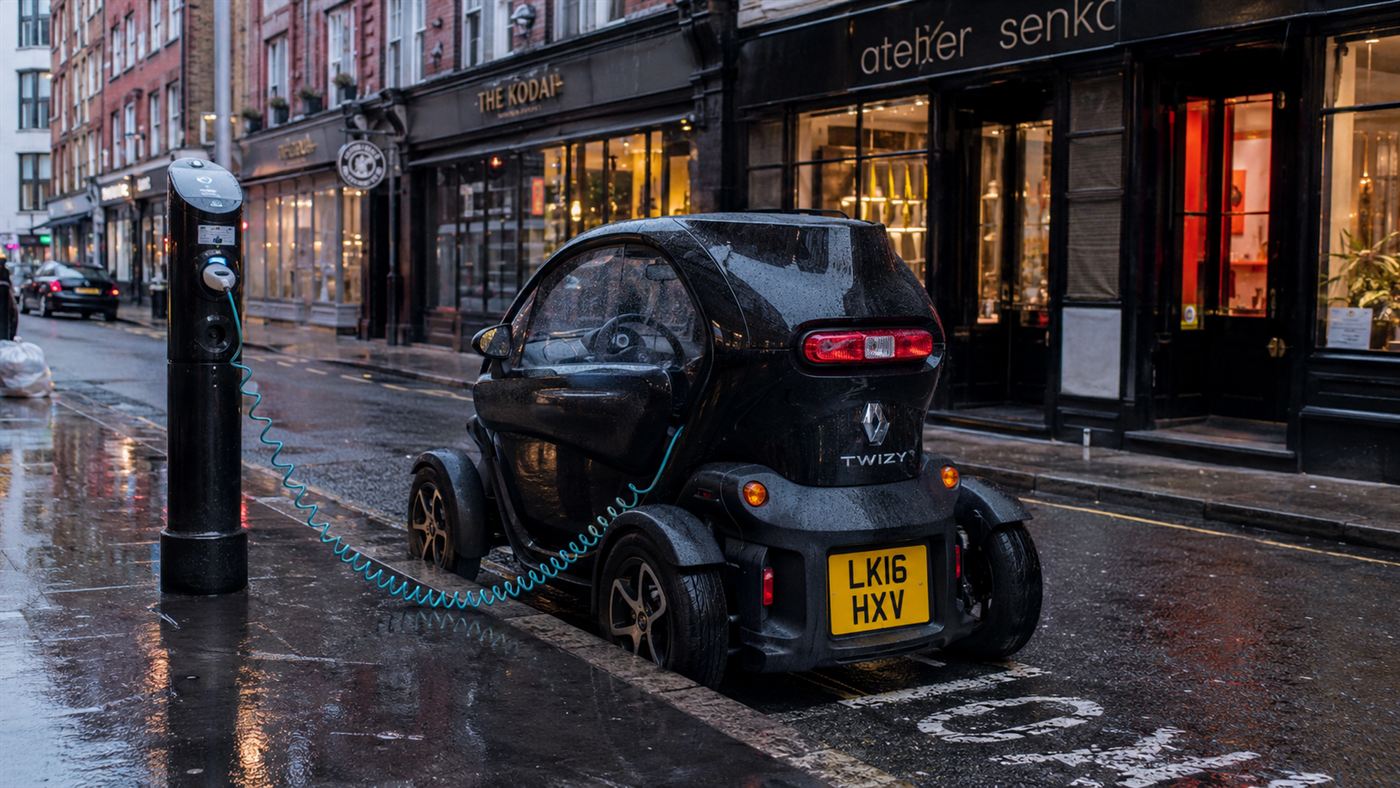
What turned a modest Indian car into a London icon was a quirk of the rulebook. In 2003 the city introduced its congestion charge, a daily fee to drive into the centre, and electric vehicles were waved through for free. Sold in Britain from 2004 under the name G-Wiz, the little Reva slipped neatly through that gap, and the savings stacked up fast for anyone commuting into town.
The maths was irresistible. Skip the congestion charge every working day, park for free or next to nothing in boroughs that rewarded electric cars, and charge from a domestic socket for the price of a few cups of coffee a week. Londoners did the sums and bought it in numbers no other plug-in could match, which is how a buzzy little pod with no real crash protection ended up as Britain's best-selling electric car for several years running.
Why did Top Gear hate the Reva G-Wiz?
The backlash was ferocious and, in fairness, not entirely unearned. Because it was certified as a quadricycle rather than a car, the Reva G-Wiz never had to pass the crash tests a normal vehicle does. When Top Gear Magazine commissioned its own test to Euro NCAP-style standards, the result was grim: it concluded, as Top Gear recounted, that occupants would suffer serious or life-threatening injuries in a 40 mile-per-hour impact, and the programme cheerfully named it among the worst cars it had ever encountered.
Jeremy Clarkson turned mocking the thing into a recurring bit, and the image stuck. But the ridicule and the sales happened at the same time, which is the strange heart of the story. Drivers were not buying the Reva G-Wiz because Top Gear approved; they were buying it precisely because it was cheap to run in a city that punished everything else, and the jeering did almost nothing to slow them down.
What happened to the Reva
The Reva's real legacy was not its sales but its timing, and big players noticed. After General Motors walked away from a planned deal, India's giant Mahindra Group stepped in and bought a controlling stake in 2010, turning the company into Mahindra Reva. Under Mahindra Reva the little car evolved into the Mahindra e2o, and the Mahindra Reva business became the backbone of one of India's main electric vehicle operations.
As for the man who started it, Chetan Maini moved on to the next bottleneck. He later co-founded a company built around battery swapping, the idea of trading a drained pack for a charged one in minutes instead of waiting to recharge, a concept other firms keep chasing from Israel's billion-dollar Better Place to scooter networks across Asia. The Mahindra Reva lineage proved that an Indian startup could see the electric future a decade before the giants did.
The honest catch
It would be easy to over-romanticise this, so here is the other side. The Reva G-Wiz genuinely was unsafe by normal standards, and the quadricycle classification that let it dodge the congestion charge also let it dodge the crash rules that keep people alive, which is not a loophole to celebrate. It was slow, its early lead-acid batteries were heavy and wore out, and its real range in cold London traffic was often less than the brochure promised.
The title of best-selling electric car also flattered it, because in those years there was barely any competition to beat. People bought it to save money, not to save the planet or because it was good, and that is the honest version of the legend. Still, the core of the story holds: a small team in Bangalore put a usable, affordable electric car on the road and found real customers for it while the world's biggest carmakers were still insisting nobody wanted one, and the Mahindra Reva that grew out of it is the proof. Sometimes the future arrives looking ridiculous.
A mocked little pod from Bangalore beat every famous carmaker to Britain's electric crown, just by being cheap to run. Would you have driven a slow, unsafe city car to skip the charges and save a fortune, or is some ridicule not worth it? Tell us in the comments.
Related reading: India quietly built the world's largest electric vehicle fleet, and it runs on humble three-wheelers, not Teslas.