For the first time, a single infusion edited a genetic disease away inside patients' own bodies
In 2026, doctors reported something that reads like the opening line of medicine's next chapter: a one-time treatment that reaches into a living person and rewrites a faulty gene where it sits. This is in vivo gene editing, and in a major trial a single infusion, given once, meant to last a lifetime cut a rare disease's attacks by almost ninety percent.

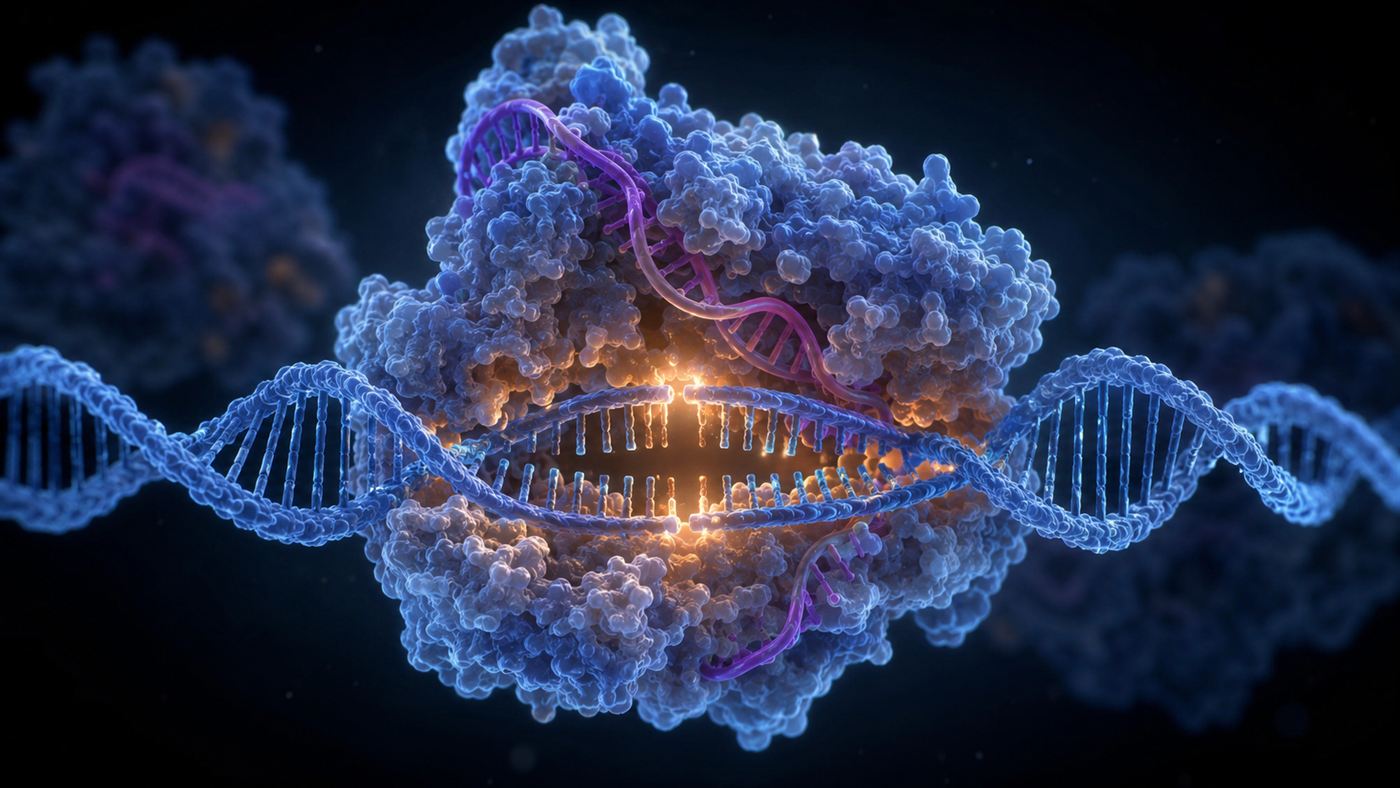
In vivo gene editing rewrites DNA inside the body itself, with no cells removed. Illustration: Watts & Wild.
The treatment, made by the company Intellia Therapeutics and known as lonvo-z, targets hereditary angioedema, an inherited disorder that triggers sudden, sometimes life-threatening swelling of the face, throat and gut. In the phase 3 trial, whose fuller results were reported in 2026, a single 50-milligram dose reduced the rate of those attacks by 87 percent over six months compared with a placebo.
Even more striking, about 62 percent of the people who got the therapy had no attacks at all during the evaluation period, against 11 percent in the placebo group, and most were freed from taking any ongoing medicine. For a condition usually managed with lifelong drugs, that is the difference between managing a disease and ending it.
The short version is that scientists edited a gene inside living human beings, once, and a cruel disease largely switched off, which is a threshold medicine has been walking toward for a decade.
What makes this in vivo gene editing different
The phrase that matters is in vivo, meaning inside the living body. Earlier gene-editing successes, including the landmark CRISPR treatment for sickle cell disease, work ex vivo: doctors remove a patient's cells, edit them in a laboratory, and infuse them back. It is powerful but slow, complex and enormously expensive, closer to a bespoke transplant than a drug.
Lonvo-z instead delivers the CRISPR machinery straight into the bloodstream, packaged so it travels to the liver and edits the gene in place. There is no harvest, no lab-grown cells, no long hospital stay, just an infusion. That is why this trial matters far beyond one rare illness: it shows the editing tools can be sent into the body like ordinary medicine and still do their precise work.

How CRISPR switches the faulty gene off
Hereditary angioedema is driven by a protein cascade that runs out of control, producing a molecule called bradykinin that makes blood vessels leak and tissues balloon. Lonvo-z uses CRISPR to find and disable a gene called KLKB1, which sits near the top of that cascade, permanently lowering the signal that sets off an attack.
The elegance is in the permanence. Because CRISPR makes a lasting change to the DNA of liver cells, the body simply stops producing as much of the troublesome protein, and keeps not producing it. Instead of taking a drug that must be topped up forever, the patient's own biology is quietly re-tuned, spelled out one wrong letter at a time in our DNA and then corrected at the source.
Is this a cure, and is it safe?
Those are the right questions, and the answers need care. The trial results are genuinely strong, but they cover six months, and a therapy meant to last a lifetime has to be watched for years to be sure the benefit holds and no late problems appear. Intellia has begun a rolling submission to the US Food and Drug Administration, with a possible launch around 2027 if regulators agree.
There is also the matter of permanence cutting both ways. A change to a person's DNA is not easily undone, so the very feature that makes this exciting, a change made to living cells that does not wash out, also raises the stakes on getting it exactly right. So far the safety picture looks encouraging, but honesty demands the word so far.
The honest catch
It is tempting to read this as the moment gene editing became routine, and in one real sense a door has opened. The same in-body approach could, in principle, be pointed at many other genetic diseases, turning years of research into treatments that arrive as a single bag on a drip stand. That promise is real, and it is why this result is being celebrated.
But the catch is worth stating plainly. This is one rare disease, one liver-targeted gene and a six-month window, not a universal fix, and these therapies are likely to arrive with staggering price tags that could put them out of reach for many of the people who need them most. The science of rewriting the body's own instructions from the inside has crossed a real line. Whether its benefits reach beyond a fortunate few is a different question, and a fair one to keep asking.
Sources: CNBC on the Intellia phase 3 trial, BioPharma Dive, and Intellia Therapeutics.
For the first time, doctors rewrote a gene inside a living person and watched a lifelong disease fade, from one infusion. If a single shot could edit away an inherited illness in your family, would you take it, knowing the change is permanent? Tell us what you think in the comments.
Related reading: the first approved CRISPR therapy, which cured sickle cell by editing cells outside the body. See also the goats engineered to spin spider silk in their milk, and the naked mole-rat, whose genes may hold clues to beating cancer and age. And on another medical frontier, brain implants are letting people move cursors and robotic arms by thought.