People are moving cursors and robotic arms with their thoughts, and in 2026 it stopped being a stunt
In 2026, a technology that has sounded like science fiction for decades quietly grew up. The brain-computer interface, a chip that lets a person control a machine by thought alone, reached roughly two dozen people, some of whom are now moving a cursor with nothing but a thought, or steering a robotic arm they cannot move a muscle to reach.
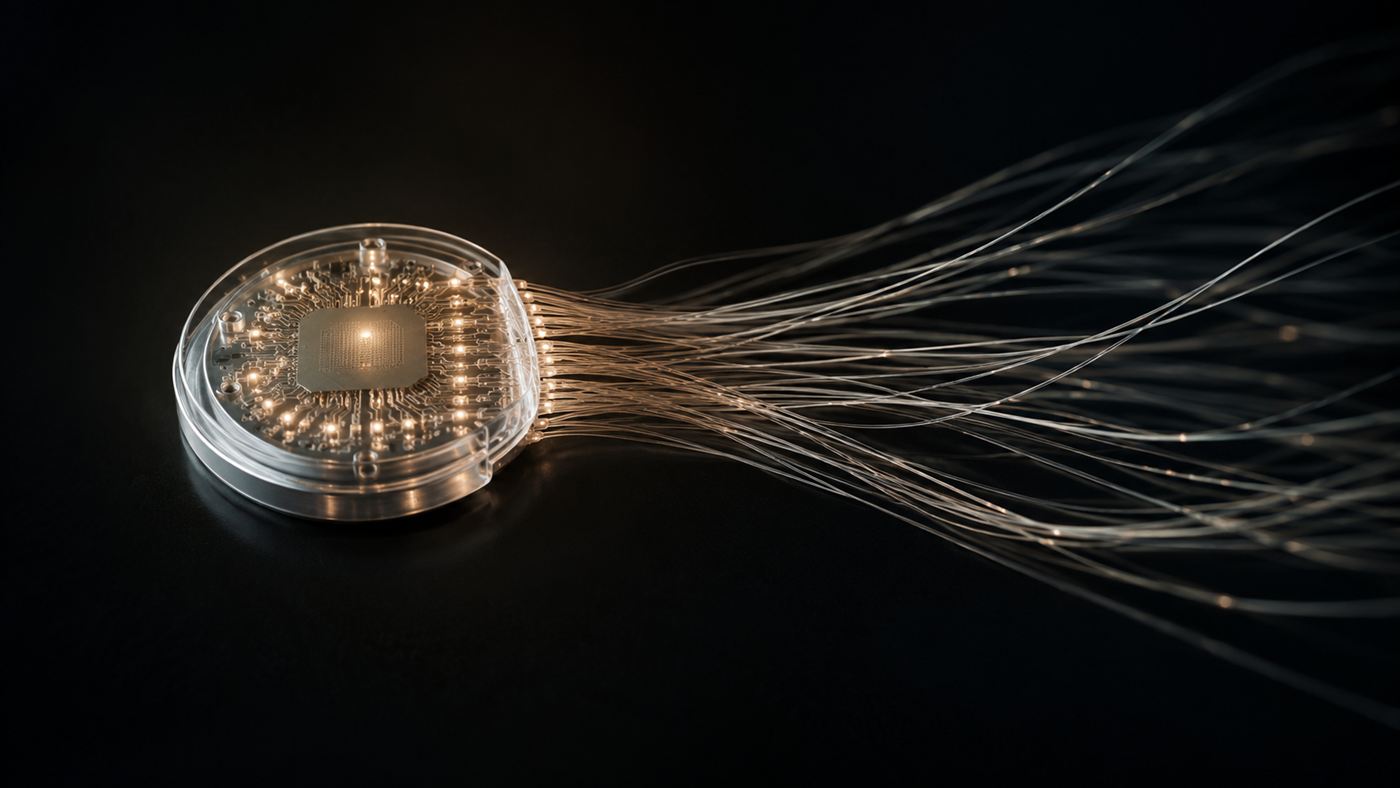
A coin-sized implant reads the brain's signals through threads finer than a hair. Illustration: Watts & Wild.
The company furthest along in the public eye is Neuralink, whose feasibility study had implanted around two dozen participants by 2026, spread across the United States, the United Kingdom, Canada and the United Arab Emirates. Between them they have logged thousands of hours using the devices at home, not in a lab, to control computers with their minds.
What changed in 2026 was less a single breakthrough than a shift in feeling. A handful of people using an implant for a few weeks is a demonstration. Two dozen people, in several countries, relying on it daily for months to do ordinary things, is the beginning of a real medical technology. Neuralink also won a coveted FDA breakthrough designation for a system aimed at restoring speech, a sign regulators are taking it seriously.
The short version is that reading intentions straight from the brain has crossed from a laboratory trick into something a small group of people now quietly live with, and that is a genuine threshold.
How a brain-computer interface reads a thought
The idea is less magical than it sounds, and more astonishing. When you intend to move, your brain's motor cortex fires a storm of tiny electrical signals, and it does so even if the body below is paralysed and cannot obey. An implant sits against that patch of brain and listens in, its threads finer than a hair studded with sensors that pick up the chatter of individual cells.
Software then learns to translate those signals into intentions: this pattern means move the cursor left, that one means click. Because the electrodes are inside the skull, right against the source, they capture far more detail than sensors worn on the scalp, which is why a well-tuned system can let someone browse, type and play games by imagining the movement. The user does not spell out commands so much as simply try to move, and the machine reads the attempt.
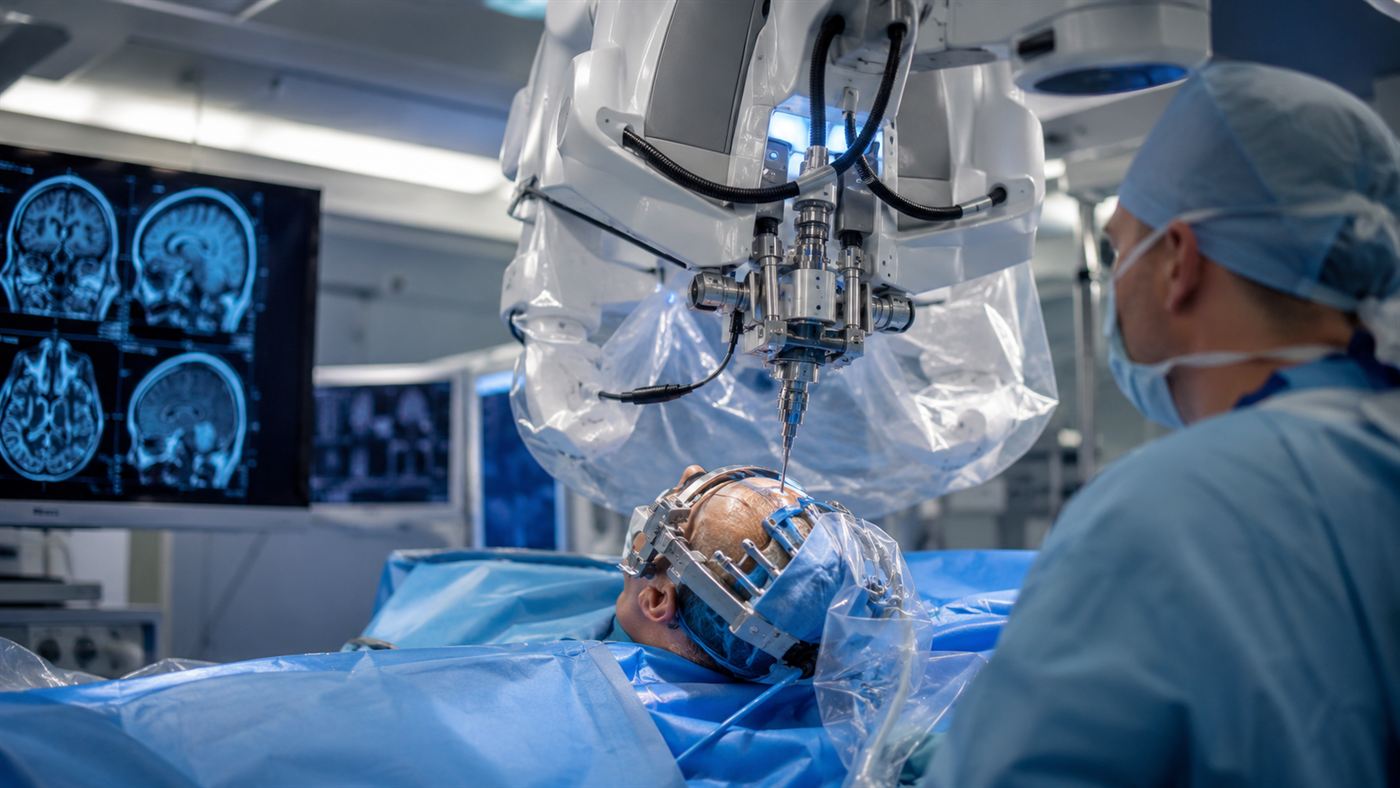
From cursors to robotic arms and speech
The first goal was simple: give people with paralysis back a cursor, a way to touch the digital world that everyone else takes for granted. That alone can be life-changing, restoring to someone with paralysis the ability to message a friend, work or play without help. But 2026 pushed further, into the physical and the spoken.
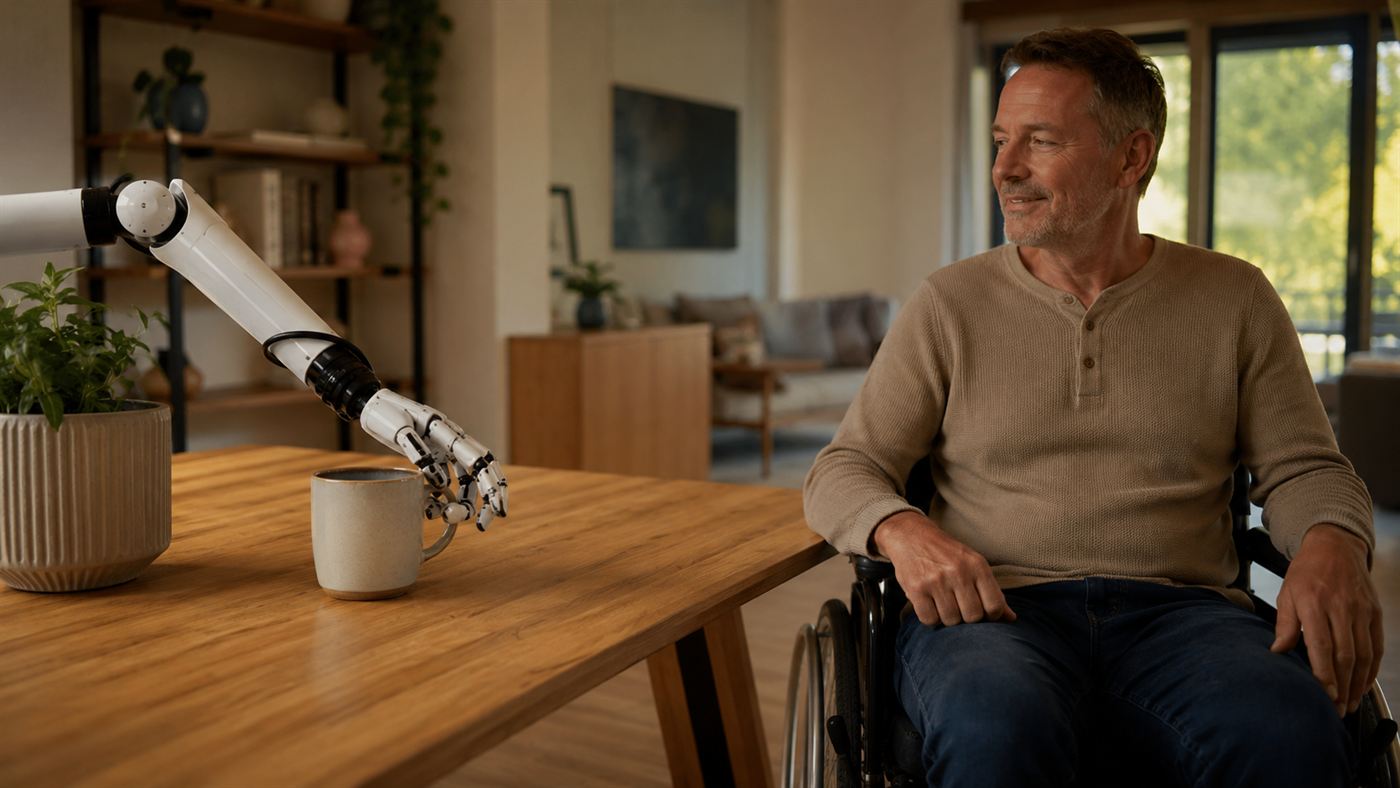
One line of work, sometimes called Convoy, links the implant to an assistive robotic arm, so a person might one day feed themselves or pick up a cup by thought. Another, the VOICE effort, aims to decode intended words directly from the brain, giving a voice back to people who have lost theirs to conditions like ALS or stroke. It is early, but the direction is clear: from clicking, to reaching, to speaking.
Is this really as close as it sounds?
Here the excitement needs a firm hand. What exists today is a feasibility study of a couple of dozen people, chosen carefully, closely supervised, and still learning what works. It is not an approved treatment, and the larger, decisive trials that regulators demand are still being designed, with wide approval unlikely before roughly 2027 or 2028 at the earliest.
The technology has stumbled, too. In the very first human implant, some of the fine threads pulled loose from the brain, cutting the number of working sensors before a software fix recovered much of the performance. That is the ordinary, messy reality behind the headlines, and it is a reminder that the promise is dazzling, but the proof is still small.
The honest catch
It is easy to leap from these results to a future of thought-controlled everything, and easier still when the loudest voices promise merging our minds with computers. Set that aside. The real story here is quieter and, for the people in it, far more meaningful: a technology that can hand back a scrap of independence to someone who has lost the use of their body. That is a worthy goal on its own, and it is being met with care.
But the catch is worth stating plainly. This is still a study of a few dozen, not a product for millions, it requires brain surgery, and it raises questions we have barely begun to answer about privacy and control when a company can read signals straight from your head. The medical promise is real and moving. The grander visions are not here, and treating a hopeful early trial as a finished revolution would do a disservice to both the science and the people bravely testing it.
Sources: Medical Device Network on the FDA speech designation, Neuralink updates, and the FDA Breakthrough Devices Program.
For a small group of people, a chip in the brain is quietly handing back what illness or injury took away. Would you accept a brain implant if it could restore something you had lost, or does the idea cross a line for you? Tell us what you think in the comments.
Related reading: the first gene editing done inside the body, another medical frontier crossed in 2026. See also the humanoid robots learning to work alongside us, and the CRISPR therapy that cured a genetic disease.