Natural gas escaped from a storage cavern and traveled seven miles underground before erupting in geysers of fire in a Kansas town, and no one could work out how until it was too late
On a freezing January morning in 2001, downtown Hutchinson, Kansas blew up. Then, as the town reeled, jets of gas and salty water began shooting out of the ground in yards and streets miles away. An invisible enemy was surfacing all over the city, and at first nobody knew where it was coming from.
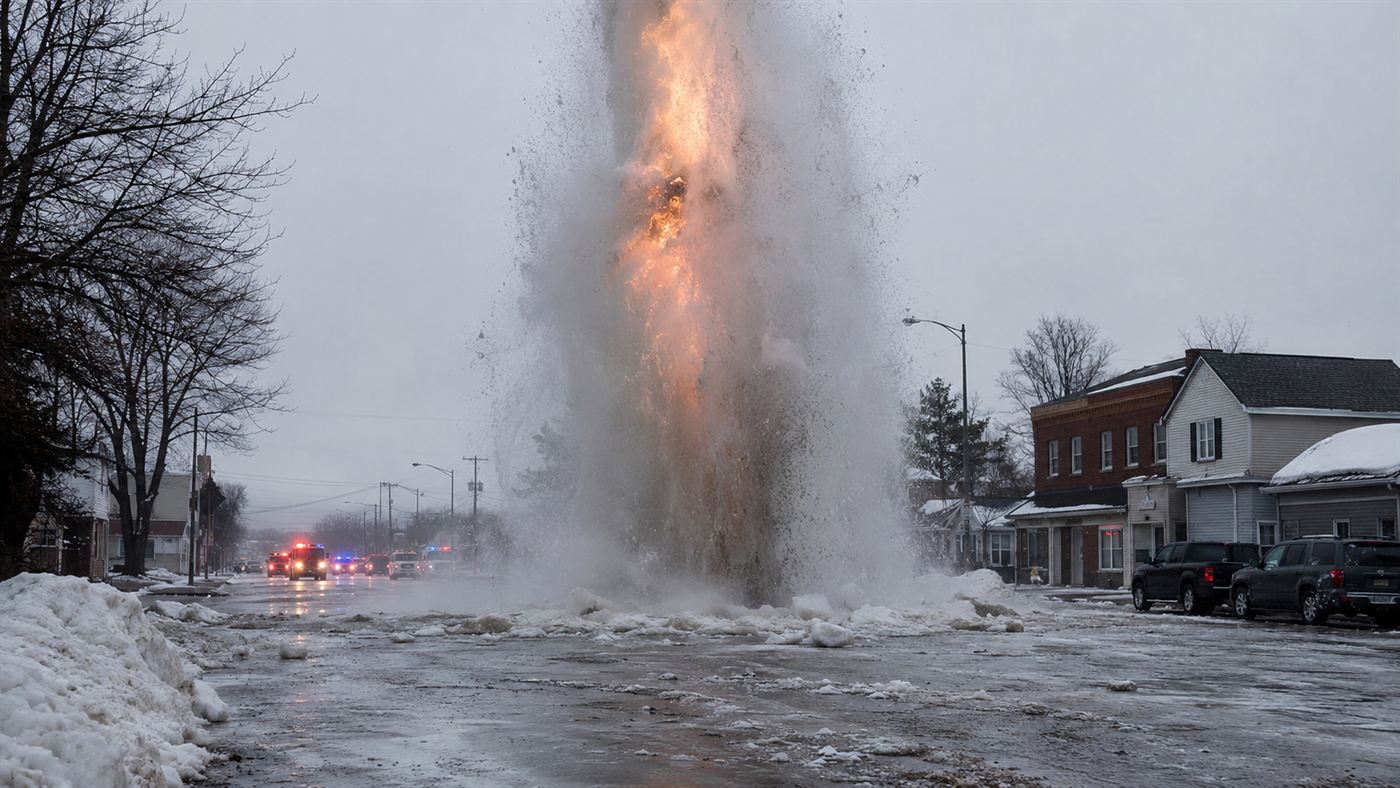
Gas and brine geysered out of old wells across Hutchinson, far from any leak. Illustration: Watts & Wild.
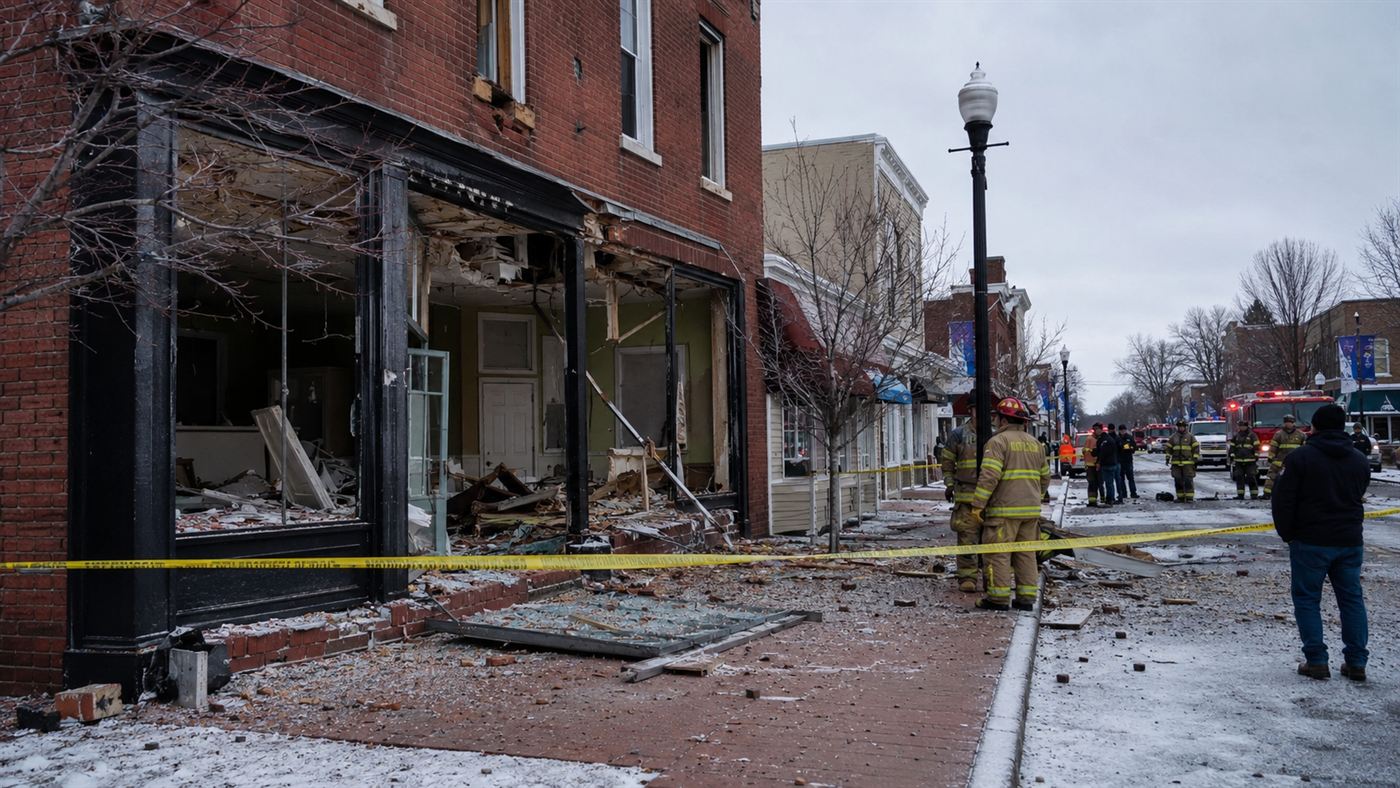
The Hutchinson gas explosions began on January 17, 2001, when a downtown business suddenly detonated, wrecking two storefronts in the middle of an ordinary Kansas town. It looked at first like a one-off accident. It was anything but. Over the next hours and days, the ground itself seemed to turn against the city.
Geysers of natural gas and brine started erupting from the earth around Hutchinson, some of them catching fire, in places with no gas line anywhere nearby. The next day a second blast tore through a mobile home park, killing an elderly couple. A whole town was suddenly sitting on top of something invisible, lethal and, at first, completely unexplained.
The short version: the Hutchinson gas explosions were caused by natural gas leaking from a storage field seven miles away, where gas was kept in underground salt caverns. The gas escaped a well, migrated for miles through a salt layer, and surfaced through forgotten old wells in town, where it ignited and killed two people.
The town built on salt
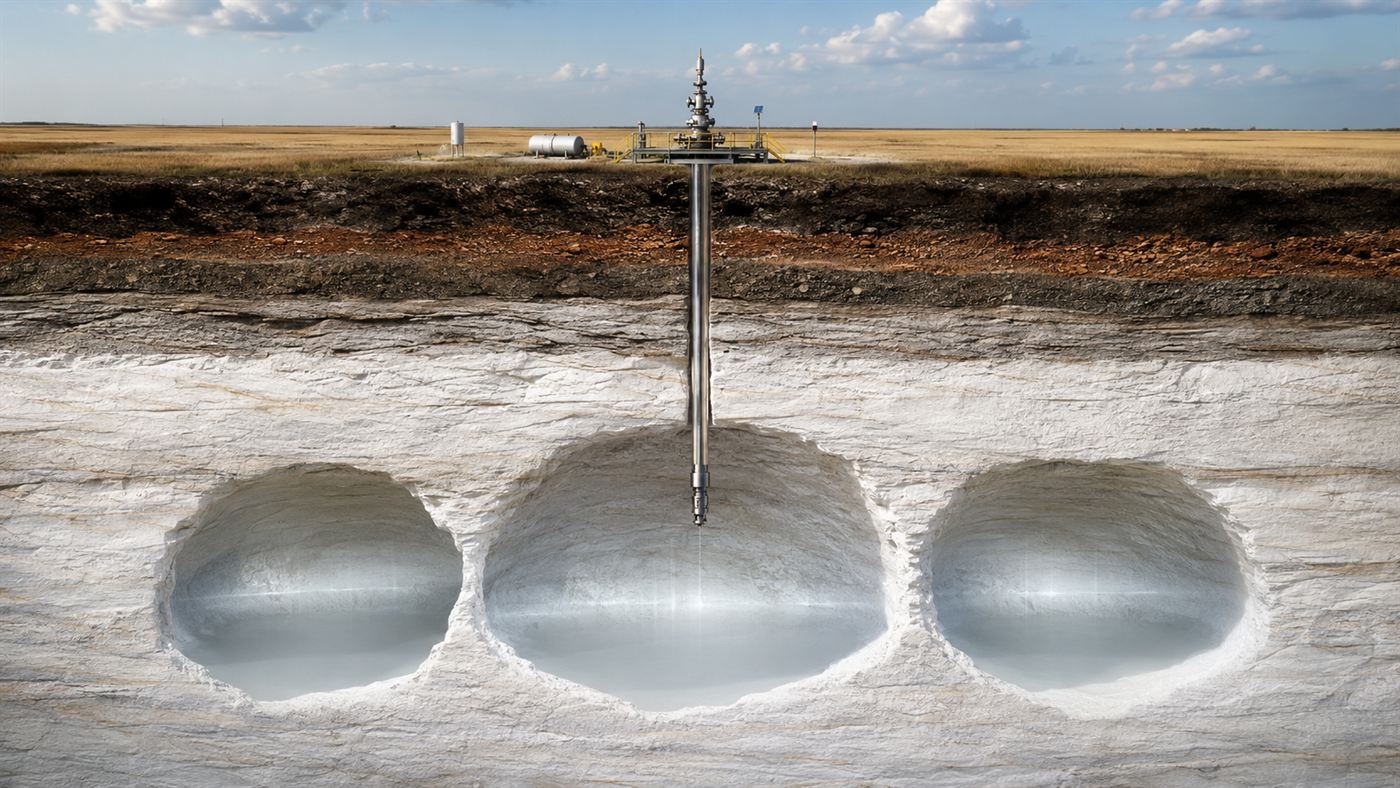
To understand what happened, you have to know what Hutchinson sits on. The town lies above the Hutchinson Salt, a thick underground bed of rock salt that has been mined there for well over a century. That salt made the region a natural place to store fuel, because you can hollow out huge, sealed caverns in a salt formation and pump gas into them under pressure.
Seven miles northwest of town was the Yaggy field, where energy companies had done exactly that, storing gas in salt caverns carved from the formation. It was a routine, widely used technology, and for years it worked without trouble. The catch is that the same geology that makes salt good for storage also gave a leak somewhere to run.
How gas traveled seven miles underground
The Hutchinson gas explosions started with a failure deep in a Yaggy storage well, where gas escaped from the well casing instead of staying sealed in its cavern. Once loose, the gas did not simply bubble straight up. It found a permeable layer near the top of the salt and spread sideways through it, pushing east under the prairie toward Hutchinson.
Mile after mile, the gas migrated underground until it reached the town, and there it found its way out. Decades earlier, salt had been mined near Hutchinson by pumping water down wells to dissolve it and drawing up the brine, leaving behind old, abandoned brine wells that everyone had forgotten. Those forgotten shafts became chimneys, and the gas came roaring up them into the city.
Why did the geysers terrify everyone?
What made the crisis so frightening was that it was everywhere and nowhere. The explosions and geysers were not clustered around a single broken pipe you could rush to and shut off. They popped up unpredictably across town, wherever an old well gave the gas an opening, so no street felt safe.
Emergency crews faced an enemy they could not see and could barely track. Residents were evacuated, schools closed, and the city held its breath as more geysers appeared. For a place in the flat, orderly heart of Kansas, the sight of flaming fountains bursting out of the frozen ground was almost apocalyptic.
How were the Hutchinson gas explosions traced?
Solving the mystery fell largely to state geologists, who had to think in three dimensions about what lay beneath the town. By mapping the old brine wells, the layers of rock and the pressure of the gas, they pieced together the astonishing truth: the fuel now venting in Hutchinson had come all the way from the Yaggy field seven miles off.
Once they understood the path, crews could fight back. As Wikipedia's account of the disaster records, dozens of vent wells were drilled across the city to give the gas a safe way out instead of letting it collect and explode. The pressure eased, the danger slowly passed, and the long work of understanding exactly what had gone wrong began.
The honest catch
It would be comforting to treat this as a freak event, a one-in-a-million alignment of old wells and geology. But that is not really the lesson. The gas storage at Yaggy was ordinary, the kind used all over the country, and the abandoned wells that vented it were the legacy of routine industry that nobody had fully mapped. The ingredients of the disaster were sitting quietly under a normal town.
The real takeaway is about the invisible infrastructure beneath our feet. As ProPublica has reported in its look at underground gas storage risks, the country is riddled with aging wells and caverns whose behavior is not always fully understood. Hutchinson forced regulators to tighten how gas is stored underground, but it also revealed how much of our energy system runs on trust in ground we cannot see.
A leak nobody could see traveled seven miles through solid rock and turned a quiet Kansas town into a field of exploding geysers. How much should we trust the vast web of gas caverns and forgotten wells hidden under our own towns? Tell us in the comments.
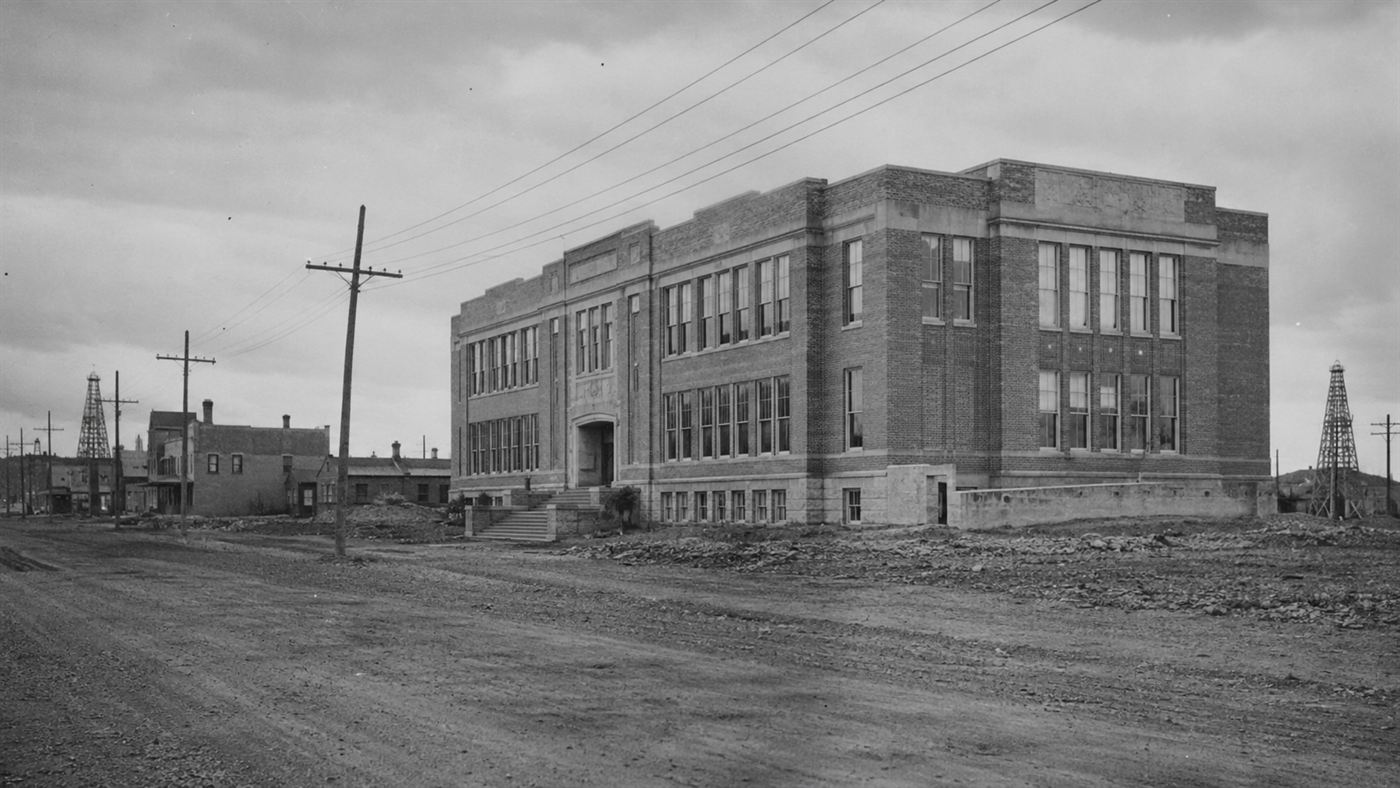
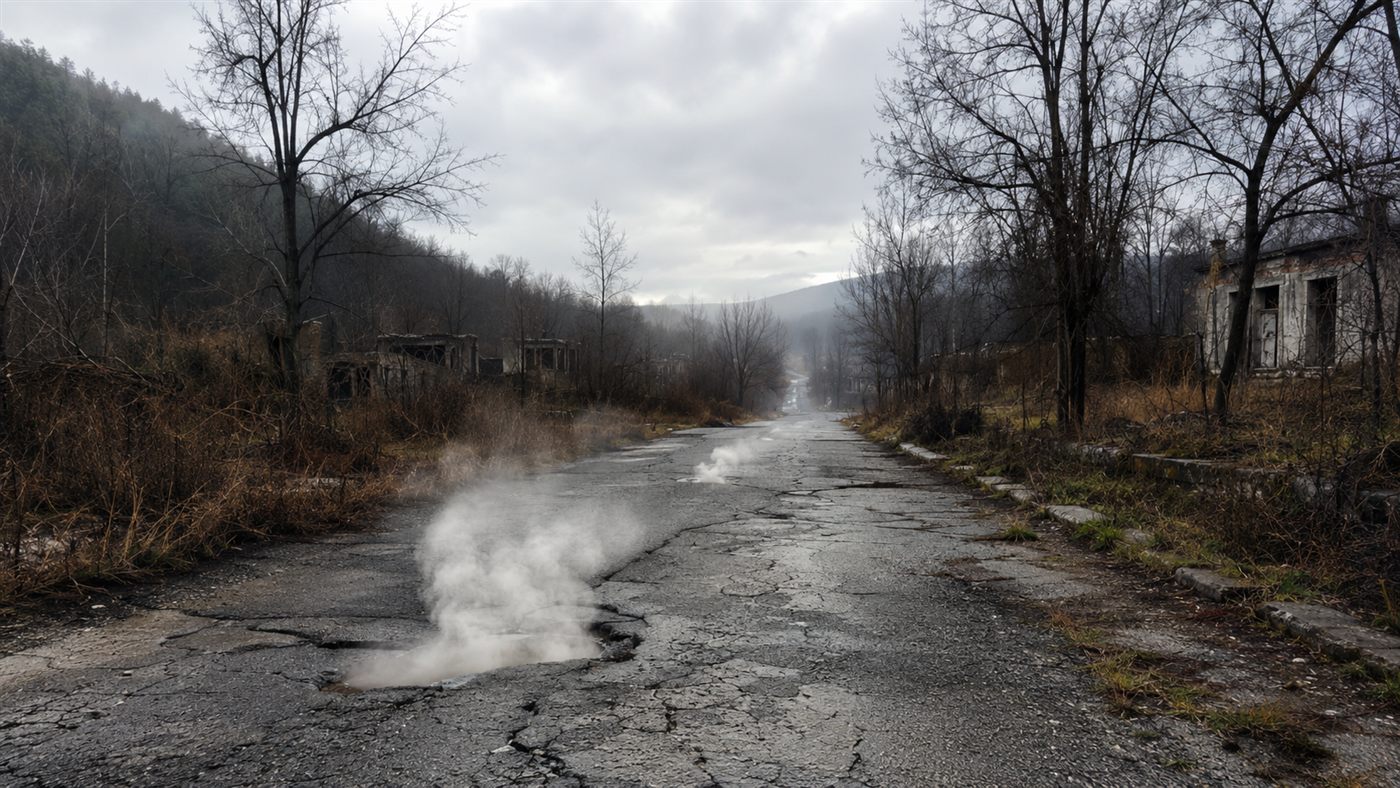
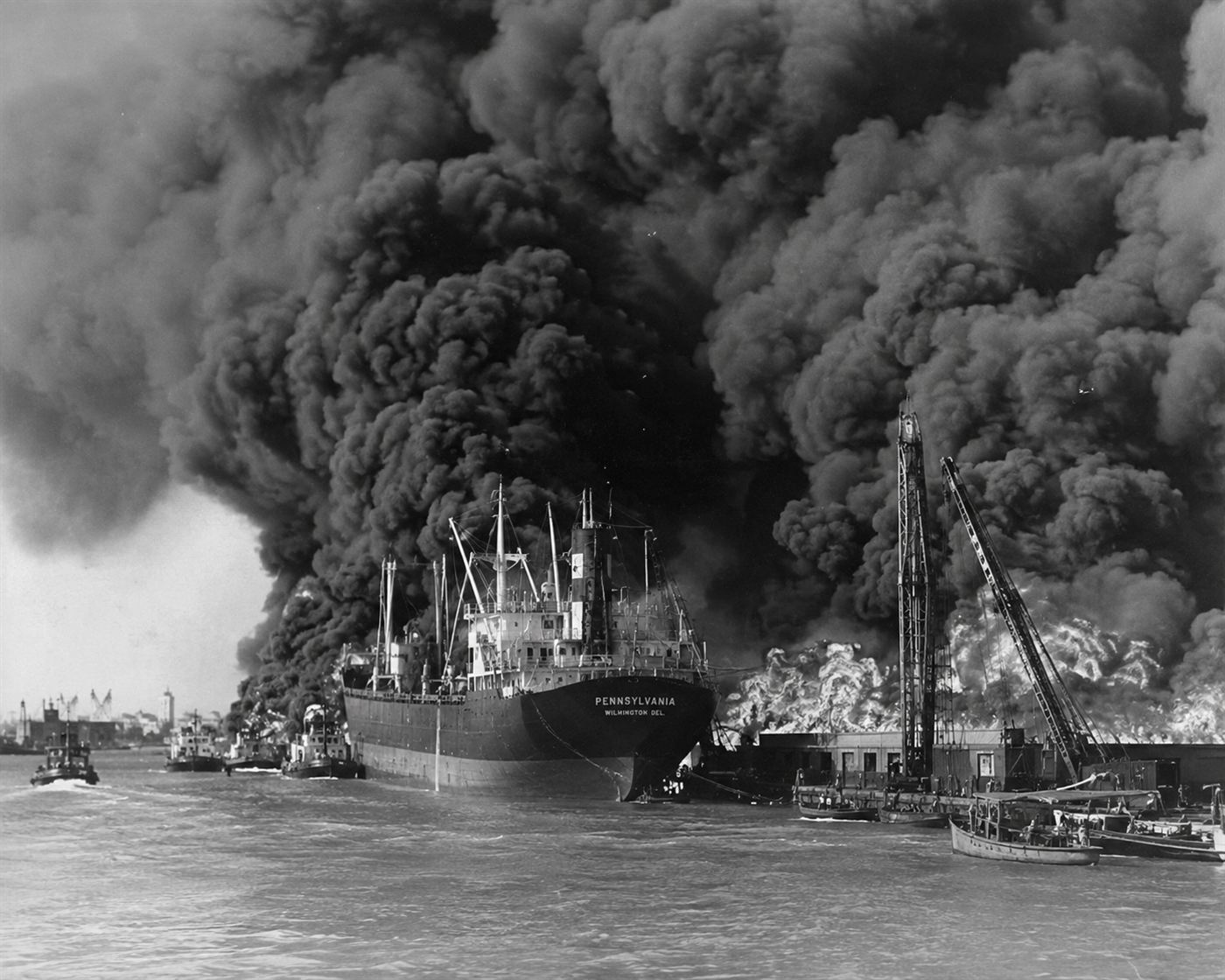
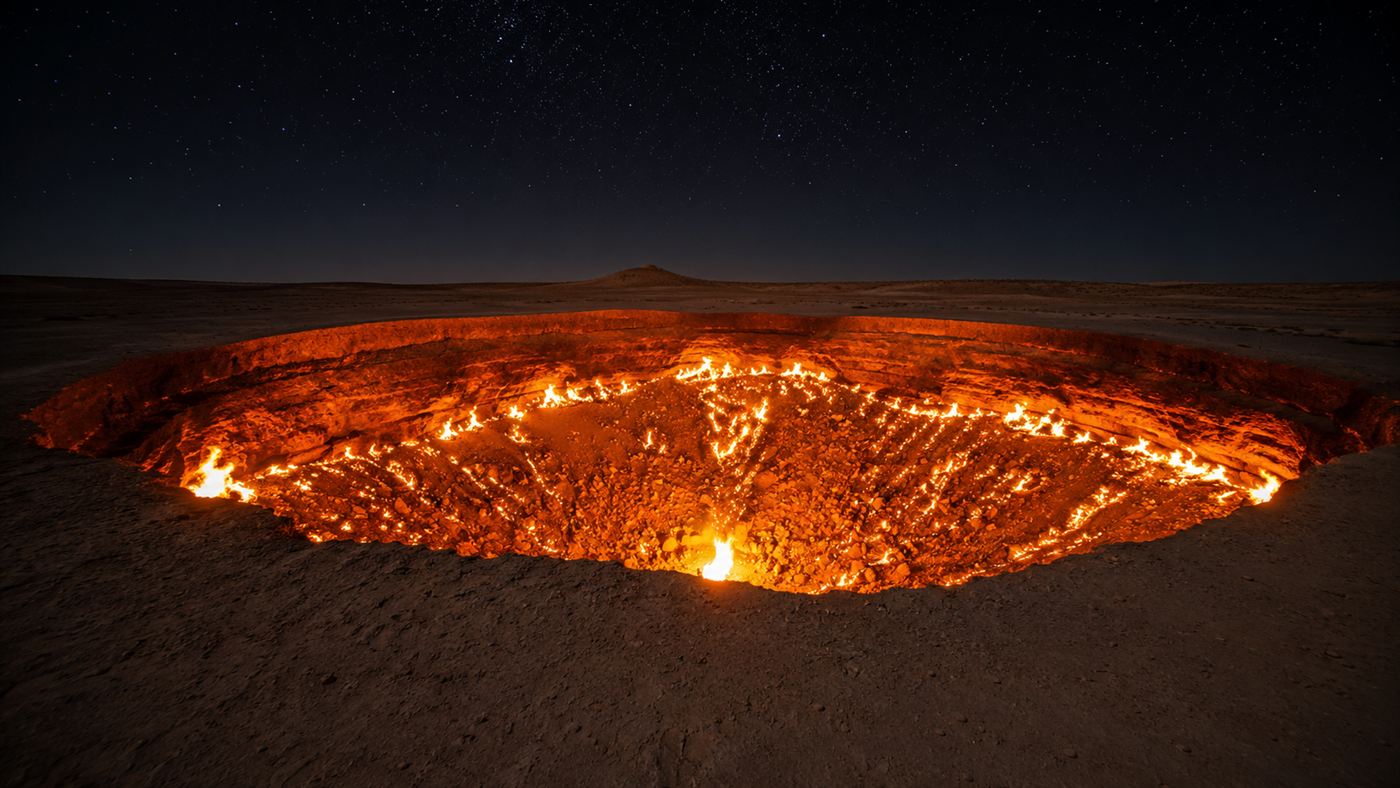
Related reading: the New London School explosion, the gas disaster that gave natural gas its warning smell. See also Centralia, the town sitting on a coal fire that has burned underground for decades, or the Aliso Canyon blowout, the largest methane leak in US history.