On April 16, 1947, all 28 members of the Texas City volunteer fire department walked toward a burning cargo ship not knowing it carried 2,300 tons of ammonium nitrate
The Texas City disaster of April 16, 1947, remains the deadliest industrial accident in American history. A French cargo ship loaded with ammonium nitrate fertilizer caught fire at the dock. The city's entire volunteer fire department arrived to fight what looked like a routine ship fire. The ship exploded and killed all of them. Five hundred and eighty-one people died in total. The cause of the original fire was never determined.
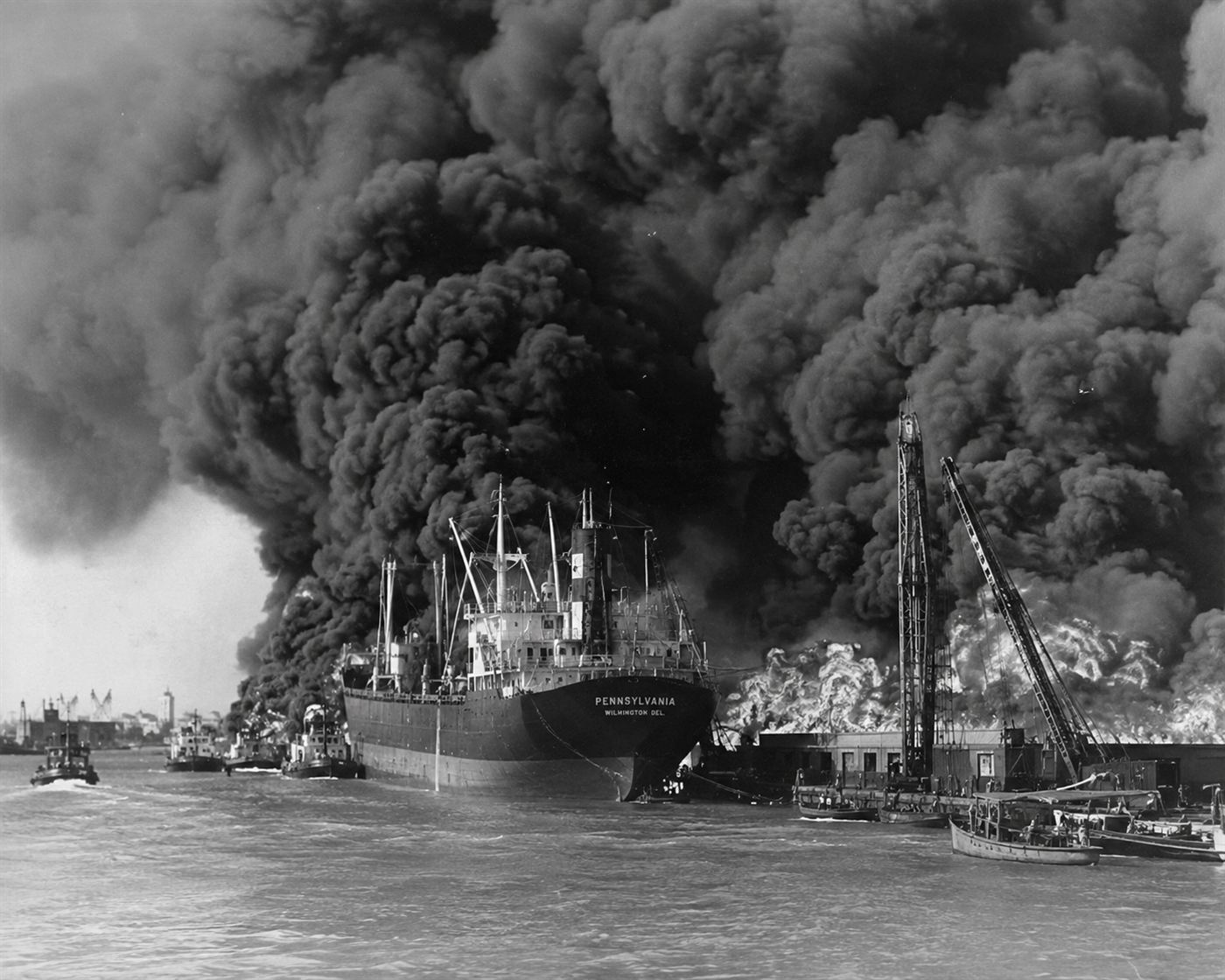
Just after eight in the morning on April 16, 1947, smoke was reported rising from the SS Grandcamp at Pier O in Texas City, a port town on Galveston Bay. The Grandcamp was a converted Liberty ship, and it was loaded with 2,300 tons of ammonium nitrate, a fertilizer being shipped to Europe as part of postwar reconstruction aid. The ammonium nitrate was packed in paper bags inside the hold. Someone, for reasons that were never established, ignited the cargo.
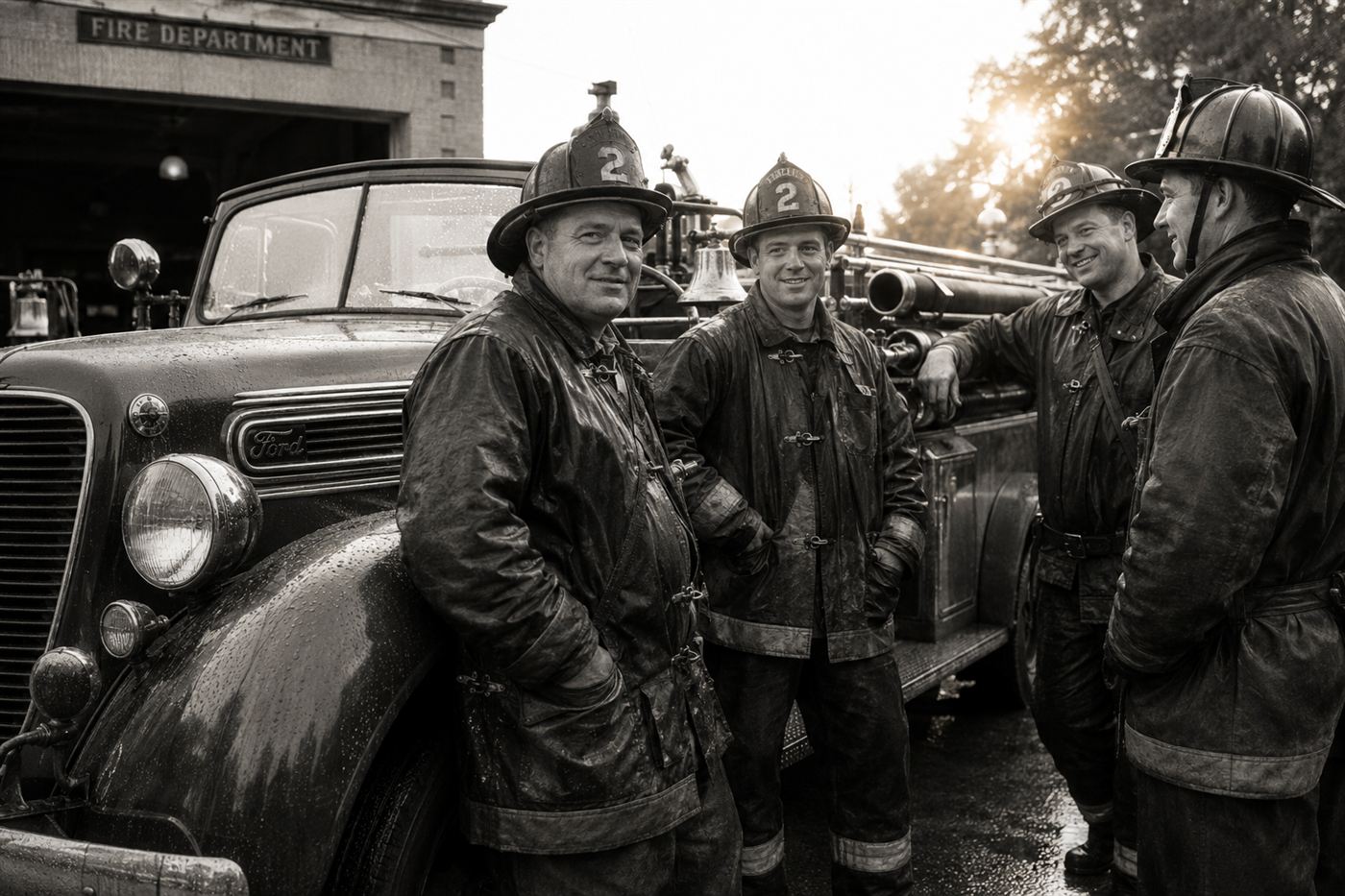
The Texas City volunteer fire department responded to the call. All 28 members arrived at the pier. The fire on the Grandcamp had been burning for about an hour when the ammonium nitrate in the hold reached its detonation temperature. At 9:12 AM, the SS Grandcamp exploded. The blast was felt 240 kilometers away in Louisiana. Two planes flying overhead were knocked out of the sky. Every firefighter at the dock was killed instantly. The Texas City disaster killed 581 people in total, injured more than 5,000, and leveled the waterfront of a city of 16,000.
The Texas City disaster happened because ammonium nitrate had only recently entered civilian commerce as a fertilizer, and neither the chemical industry, the shipping industry, nor the fire services had fully communicated how explosively dangerous it was when stored in bulk. The warning had been known and suppressed.
How the SS Grandcamp loaded 2,300 tons of ammonium nitrate at Texas City
The ammonium nitrate that destroyed the SS Grandcamp was a byproduct of the American wartime munitions industry.
During World War II, the United States had produced vast quantities of ammonium nitrate for use in explosives.
After the war ended, the stockpile was repurposed as agricultural fertilizer, which ammonium nitrate is extremely effective at providing.
The Marshall Plan to rebuild war-devastated Europe required large quantities of fertilizer to help restore agricultural production, and ammonium nitrate became one of the goods being shipped abroad.
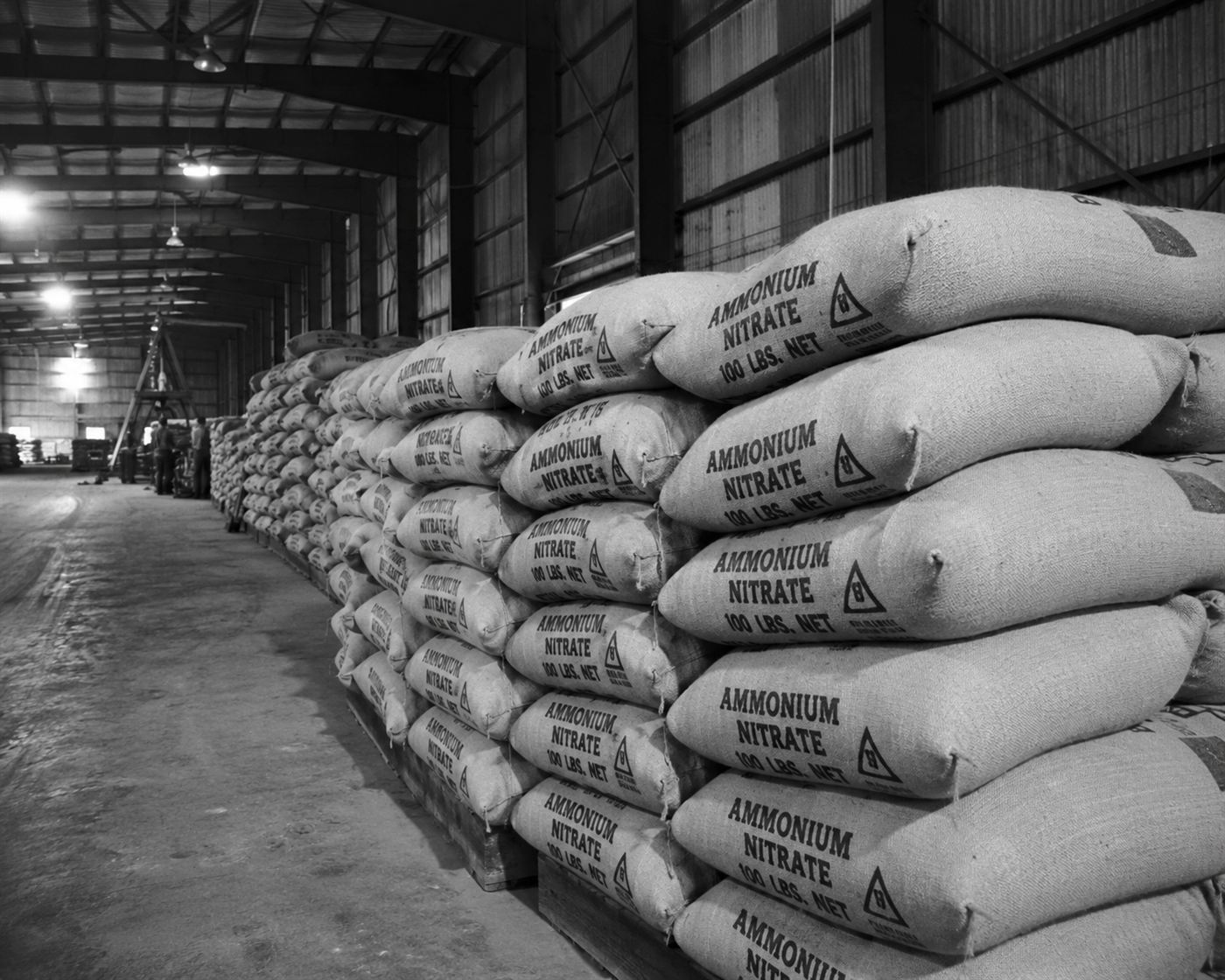
The fertilizer was loaded in 100-pound paper bags, coated with wax to protect against moisture during shipping.
On April 12, 1947, the SS Grandcamp arrived at Texas City and began loading cargo that included 2,300 tons of ammonium nitrate fertilizer in the hold.
The ammonium nitrate was a civilian agricultural product, and it was being treated as such.
Nobody at the dock knew that when large quantities of ammonium nitrate are confined in an enclosed space and exposed to heat, they do not burn: they detonate.
The United States Bureau of Mines had published findings in 1944 warning that ammonium nitrate could be detonated under certain conditions.
The warning had not reached the Texas City dockworkers, the ship's crew, or the volunteer fire department that would respond to the fire four years later.
What ammonium nitrate does when it catches fire in a confined hold
Ammonium nitrate is not spontaneously flammable.
It does not ignite easily on its own.
But when it is already burning in a confined space, adding heat does not slow it down the way it would with most materials.
Instead, ammonium nitrate decomposes rapidly when it reaches temperatures above about 230 degrees Celsius, releasing oxygen that accelerates the burning, and then transitions suddenly from deflagration to detonation.
The wax-coated paper bags in the Grandcamp's hold were not helping: the wax had been applied precisely because ammonium nitrate is hygroscopic and absorbs moisture, and moisture-free ammonium nitrate is more reactive, not less.
The crew of the Grandcamp noticed smoke rising from the hold at about 8:00 AM.
The ship's captain, Charles de Guillebon, initially ordered the crew not to use water on the fire, fearing it would damage the cargo.
Instead the crew attempted to smother the fire by closing the hatches and pumping steam into the hold.
This was exactly the wrong response: the steam raised the temperature in the sealed hold and accelerated the decomposition of the ammonium nitrate.
When the Texas City volunteer fire department arrived at 8:33 AM, the smoke rising from the Grandcamp was a dense orange-red color, which was later identified as a warning sign that nitrogen dioxide was being produced by the decomposing fertilizer.
None of the firefighters recognized it as a danger signal.
They were fighting a ship fire.
What the SS Grandcamp explosion did to the Texas City waterfront
At 9:12 AM, the SS Grandcamp detonated.
The explosion sent a column of fire 600 meters into the sky.
The blast wave swept across the waterfront, flattening warehouses and industrial buildings in an instant.
A fifteen-foot tidal wave surged through the harbor.
The anchor of the SS Grandcamp, weighing nearly two tons, was thrown 1.6 kilometers and found embedded in the roadway of a highway.
Two small planes circling overhead were destroyed by the pressure wave.
The fertilizer explosion was heard in Louisiana, 240 kilometers away.
All 28 members of the Texas City volunteer fire department were killed.
Hundreds of spectators who had gathered on the dock to watch the firefighters work were also killed.
The Monsanto Chemical Company's styrene plant adjacent to the pier was set on fire and destroyed; 145 of its workers were killed.
The Texas City disaster injured more than 5,000 people.
Approximately 500 homes were destroyed and another 2,000 damaged.
The fires on the waterfront burned for three days.
Fifteen hours after the first explosion, the SS High Flyer, another ship docked nearby that was also carrying ammonium nitrate fertilizer, exploded as well.
The second fertilizer explosion damaged ships and buildings that had survived the first and deepened the casualty count.
The total death toll from the Texas City disaster was 581, with approximately 400 bodies recovered and another 113 people listed as "missing" and never found.
What the Texas City disaster changed about how America handles industrial chemicals
The Texas City disaster forced the United States government to confront a gap in its approach to hazardous materials in civilian commerce.
Ammonium nitrate's explosive properties had been known to military and munitions experts since World War I, when an accidental ammonium nitrate fertilizer explosion destroyed the German city of Oppau in 1921, killing more than 500 people in circumstances almost identical to Texas City.
After the Oppau disaster, a number of countries imposed restrictions on how ammonium nitrate could be stored and shipped.
The United States had not.
When ammonium nitrate transitioned from wartime explosive to peacetime fertilizer after World War II, those who knew about its explosive properties did not fully warn those who would be handling it.
After the Texas City disaster, the federal government introduced new regulations on the storage and transportation of ammonium nitrate, including requirements for labeling, segregation from flammable materials, and limits on how it could be stored at docks.
The Texas City disaster also directly influenced the passage of the Federal Disaster Relief Act of 1950, which for the first time gave the federal government a formal mandate to respond to major domestic disasters.
Before the disaster, no such federal framework existed: Texas City had to manage the immediate response largely on its own, with volunteers and local resources overwhelmed by the scale of the catastrophe.
As in Bhopal in 1984, where residents living next to a chemical plant had no idea what was stored there, the people most at risk from the ammonium nitrate cargo at Texas City were the last to know what it could do.
The right-to-know principle that would eventually become law in the United States with the Emergency Planning and Community Right-to-Know Act of 1986 has its roots, in part, in the Texas City disaster and disasters like it.
Why the widows and survivors of Texas City never received proper compensation
The Texas City disaster became the first major test of the Federal Tort Claims Act of 1946, which had been passed just the year before and which, for the first time, allowed private citizens to sue the United States government.
The families of the victims filed a class action lawsuit against the federal government, arguing that the United States had been negligent in how it produced, stored, and labeled the ammonium nitrate that destroyed Texas City.
The case reached the United States Supreme Court in 1953.
The Supreme Court ruled against the victims in a 4-4 decision (one justice recused himself).
The Court found that the government's decisions about how to package and label the ammonium nitrate were "discretionary functions" that fell within an exception to the Federal Tort Claims Act, shielding the government from liability.
The survivors and the widows of the Texas City disaster received nothing from the federal government through the courts.
Congress eventually passed a private relief bill in 1955 appropriating approximately $16.5 million for the Texas City victims, to be divided among thousands of claimants.
The average payment was a few thousand dollars per family.
The honest catch
The Texas City disaster is sometimes described as a simple story of corporate negligence and government failure, and in important ways that framing holds up.
The explosive properties of ammonium nitrate were known, the risks of bulk storage had been documented after Oppau in 1921, and the warnings did not reach the people who needed them.
But some of the specific facts are harder to assign blame for than the broad narrative suggests.
The cause of the original fire in the Grandcamp's hold was never definitively established.
Investigations considered a smoldering rope, a burning cigarette discarded by a dockworker, and spontaneous combustion of other cargo as possible causes.
None was proven.
The ship's captain's decision not to use water on the fire was wrong, but it was not entirely irrational: water damage to a cargo hold full of fertilizer could have been economically significant and, in 1947, the captain's training would not have included guidance on ammonium nitrate detonation risk.
The chemical and shipping industries' failure to warn was more culpable, but even there the picture is complicated: the Bureau of Mines reports on ammonium nitrate were published, they simply were not distributed effectively or made mandatory reading for those who would handle the material.
The same gap between knowledge at the expert level and knowledge at the operational level killed the radium watch dial painters in the 1920s and has been a recurring theme in industrial disasters across the century since.
The Texas City disaster is not the story of villains who chose to let people die.
It is the story of a system that treated a known hazard as a logistics problem and failed to put the warning in front of the people who were going to be standing on the dock.
All 28 members of the Texas City volunteer fire department had jobs, families, and neighbors in the town they were trying to protect.
They walked toward the fire because that is what fire departments do.
After Texas City, the United States passed laws requiring better labeling of hazardous cargo. Ammonium nitrate fertilizer still explodes, in Beirut in 2020 and in West, Texas, in 2013. How many people need to die in the same kind of accident before the warning reaches everyone who needs it?
More from Watts & Wild
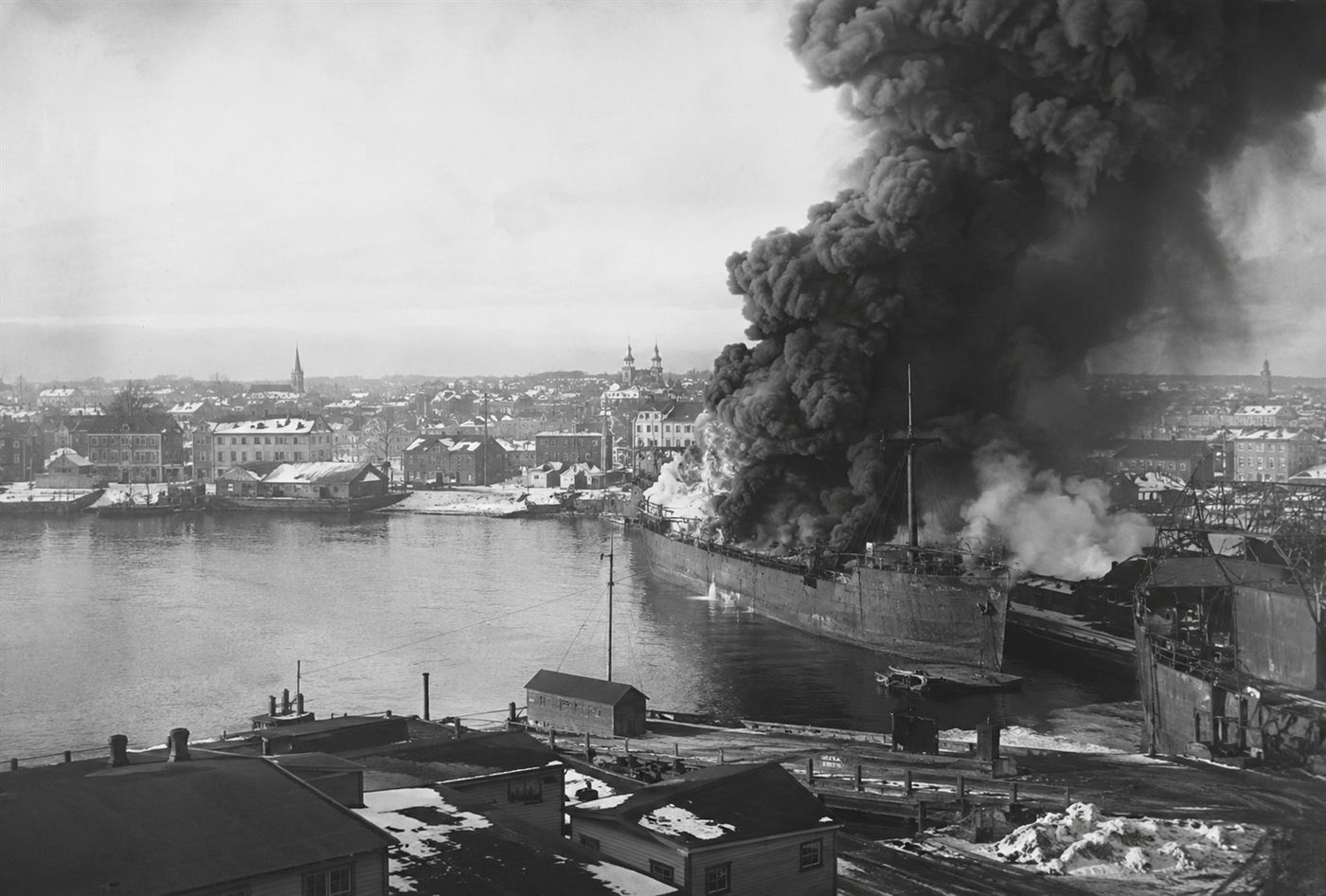 In 1917, a munitions ship caught fire in Halifax Harbour and a railway telegraph dispatcher named Vincent Coleman stayed at his key to warn an incoming passenger train. The explosion killed him and two thousand others.
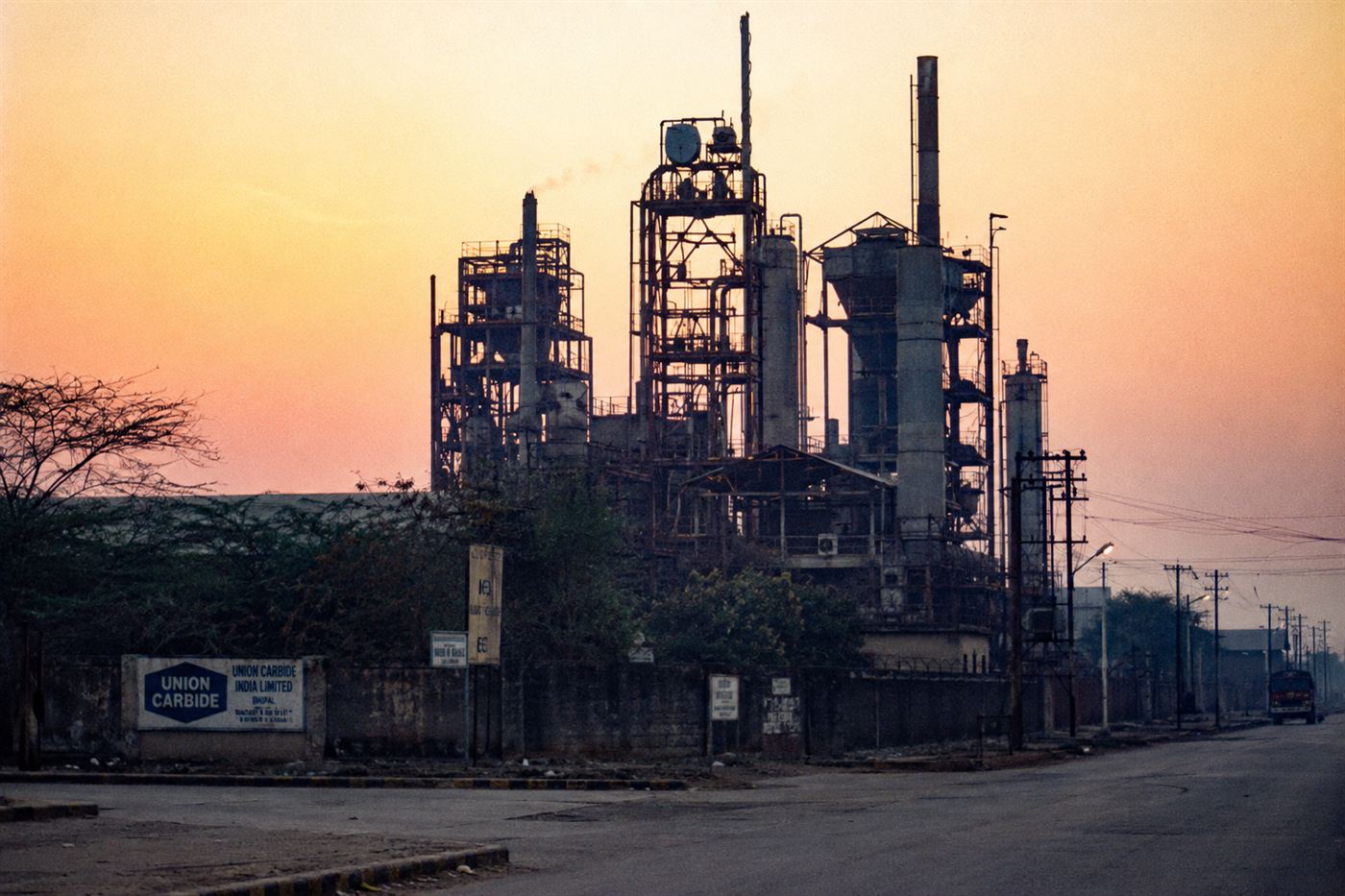 In December 1984 a Union Carbide pesticide factory in India leaked thirty tons of toxic gas over sleeping neighborhoods, killing at least fifteen thousand people. The CEO was arrested, bailed, and flew home the same day.
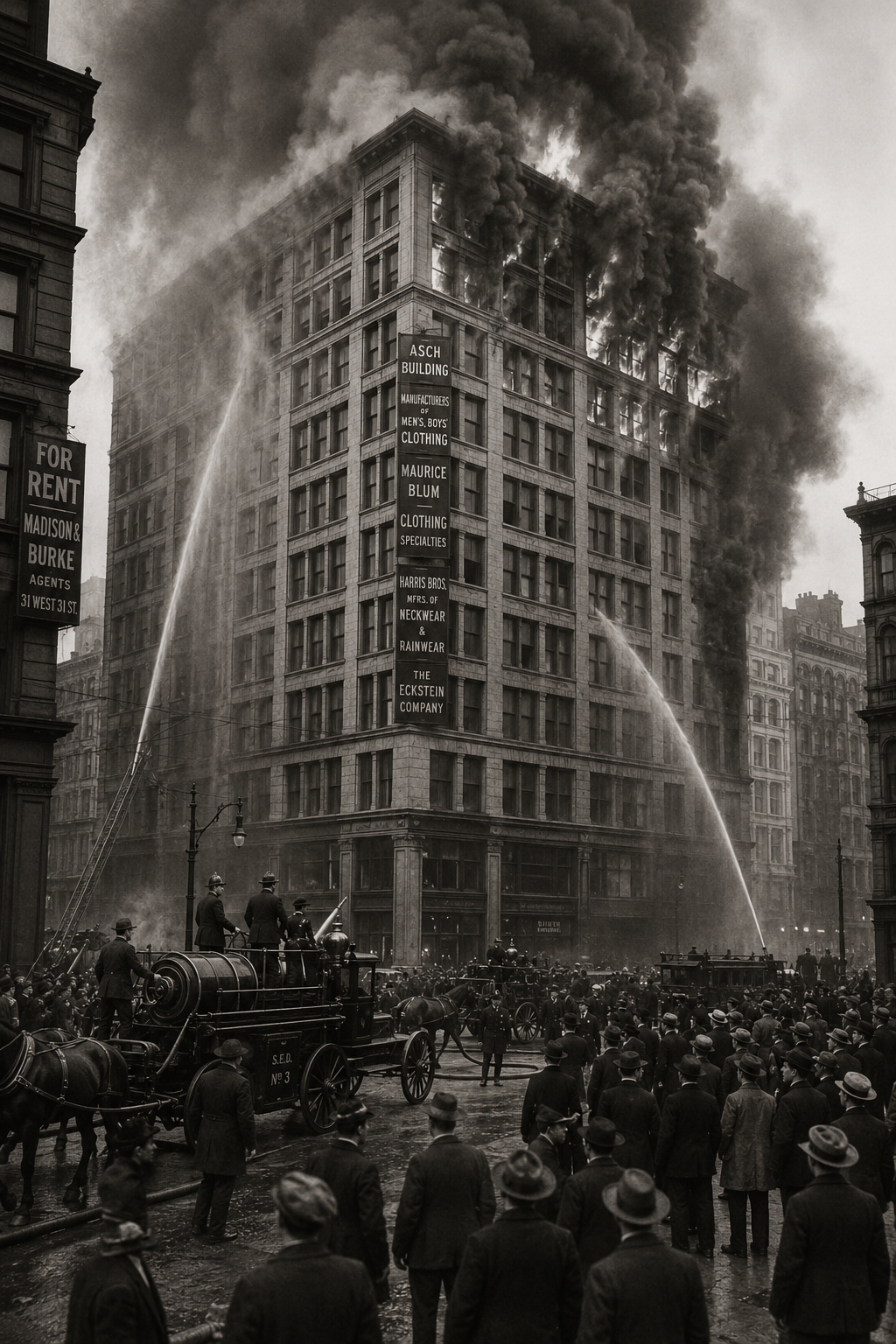 In 1911 a Manhattan garment factory fire killed 146 workers in eighteen minutes. The owners were acquitted and collected more from insurance than they lost.
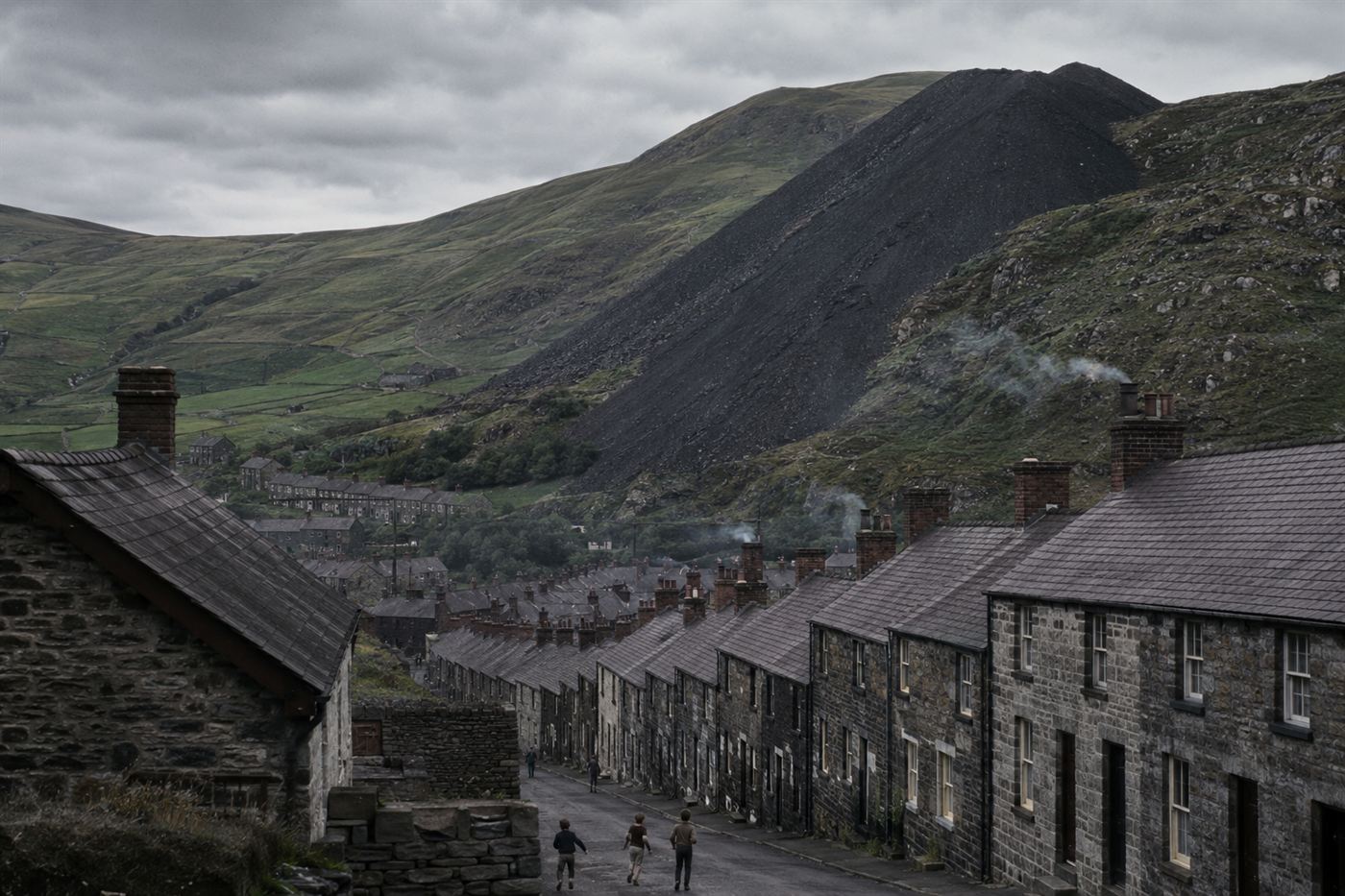 Residents of Aberfan warned for years that the coal tip above their village would kill someone. When it buried a school in 1966 and killed 116 children, no one went to prison.
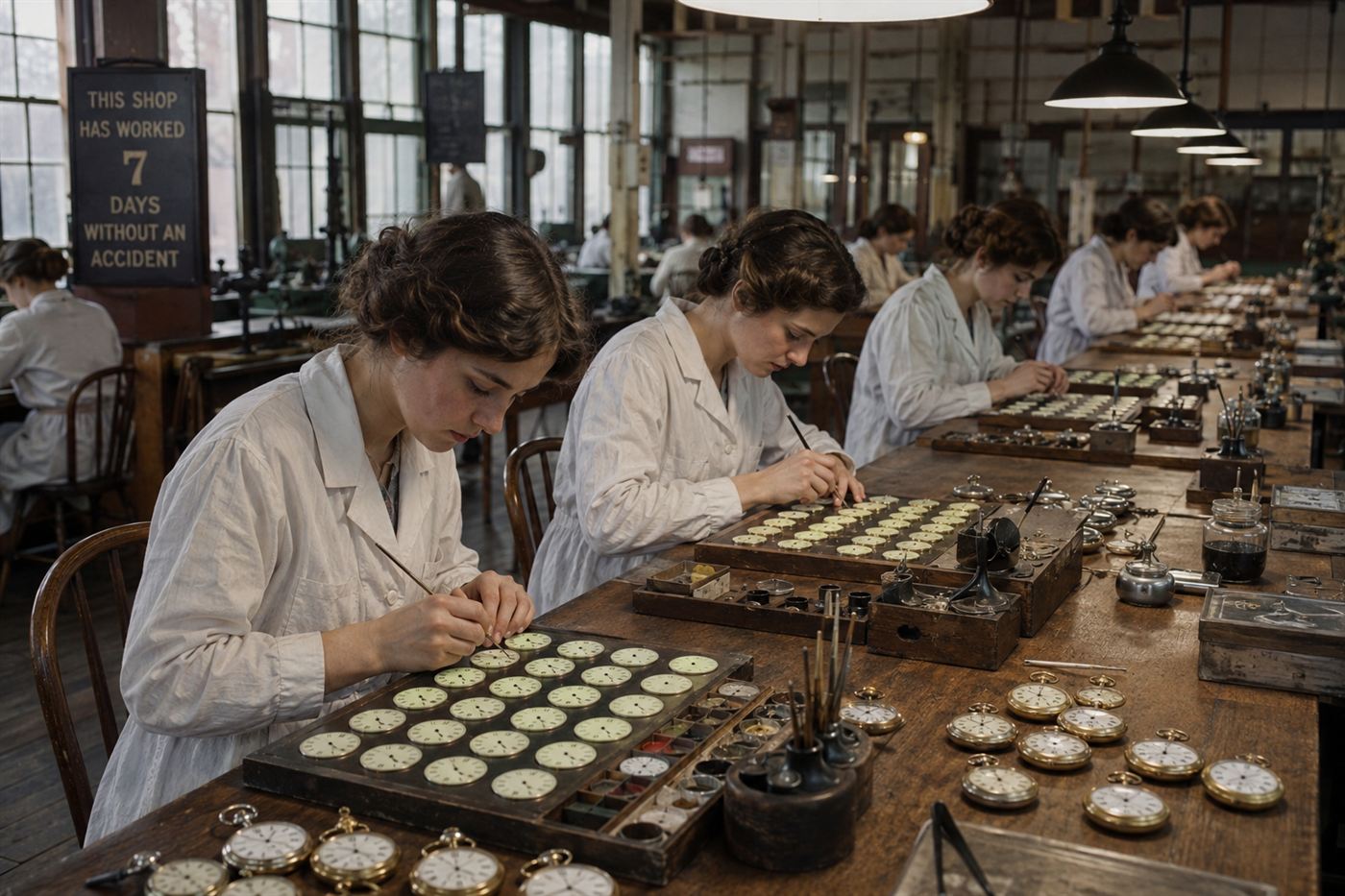 Young women at a New Jersey watch factory were told licking their brushes was safe. Their jaws were crumbling before anyone admitted the truth.