NASA launched the most powerful telescope ever built and discovered its mirror was ground to precisely the wrong shape, so astronauts had to fly up and fit the Hubble with contact lenses
It was going to be humanity's perfect eye on the universe, the sharpest mirror ever polished, lofted above the blur of the atmosphere. Then the first pictures came back fuzzy. The most precise mirror ever made had been ground to exactly the wrong shape. What happened next is the greatest repair job in the history of spaceflight.
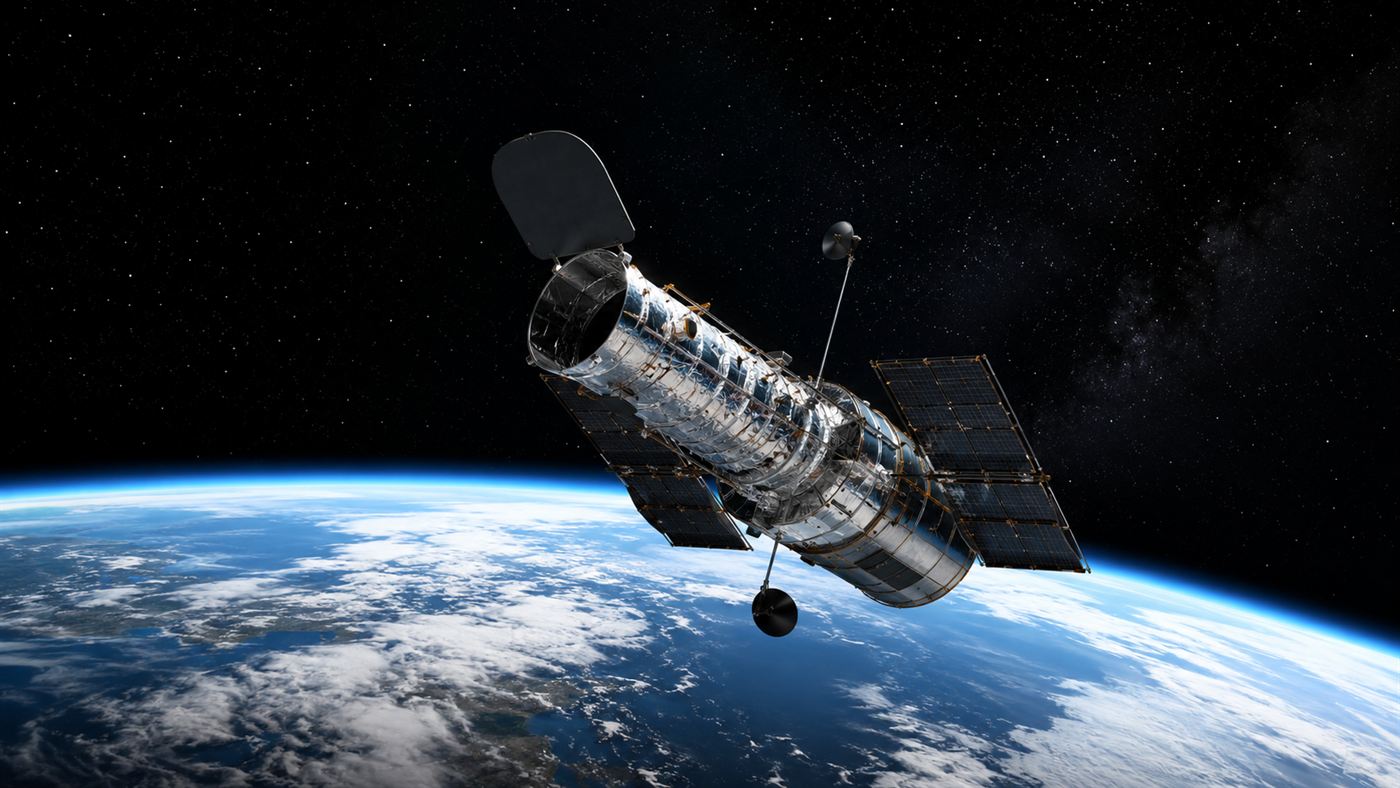
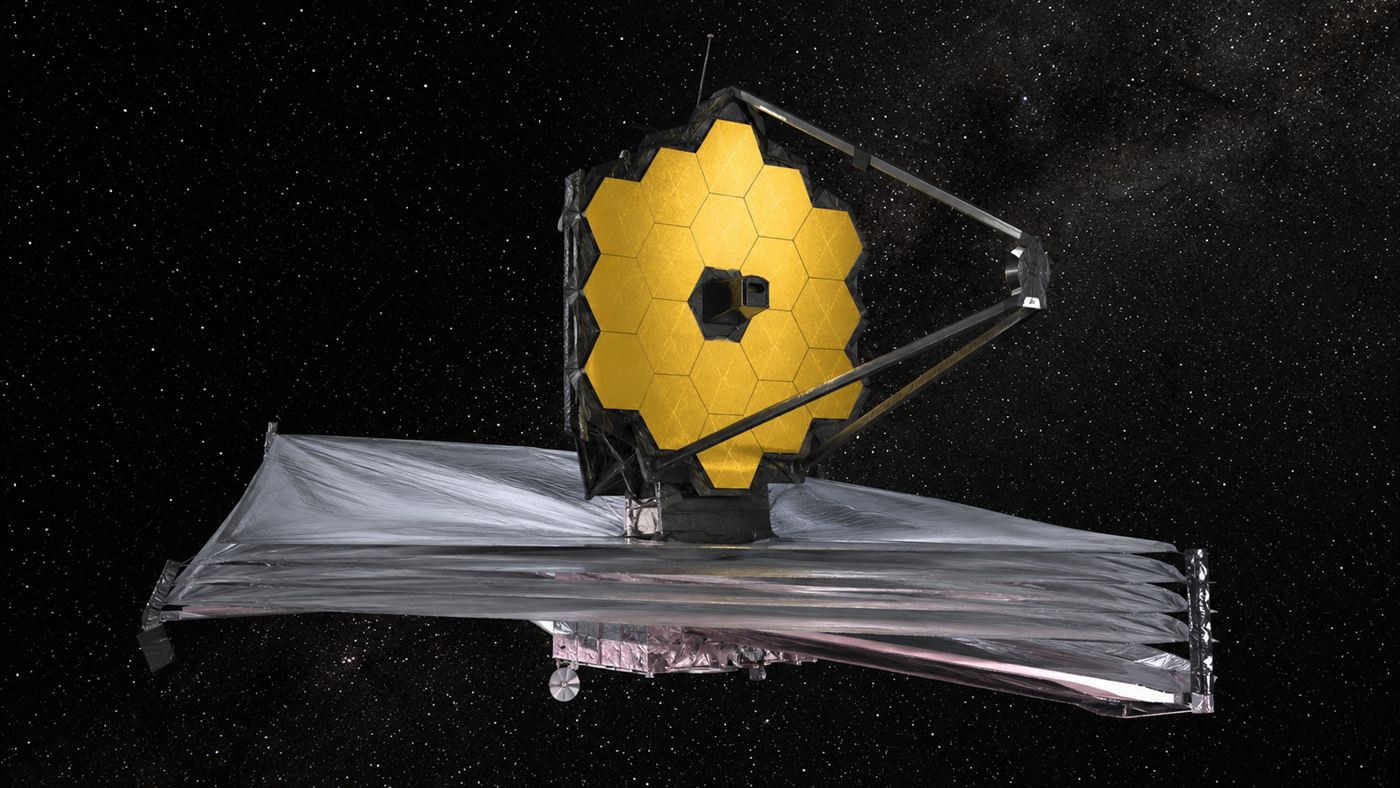
Hubble was meant to be the clearest eye ever aimed at the cosmos. Illustration: Watts & Wild.
When the Hubble Space Telescope rode into orbit aboard the space shuttle in April 1990, expectations could not have been higher. Here at last was a great observatory floating above the shimmering air that smears every ground-based telescope, promising views of the universe sharper than anything in history. NASA and the world waited for the first stunning images.
What came back instead was a quiet catastrophe. The stars were fuzzy. Instead of pinpoints, they had soft halos around them, and the Hubble Space Telescope had cost around 1.5 billion dollars and could not focus properly. Something was deeply wrong with the most expensive eye ever launched, and it did not take long to find the culprit.
The short version: the Hubble Space Telescope launched in 1990 with its main mirror ground to the wrong shape by a fraction of a hair's width, blurring every image. Because the error was measured exactly, engineers built corrective optics, and in 1993 astronauts flew up and installed them, transforming a national embarrassment into a triumph.
The most perfect wrong mirror ever made
The problem was the telescope's primary mirror, an eight-foot disc of glass that was supposed to gather and focus starlight. It had been polished with breathtaking precision, one of the smoothest surfaces humans had ever created. The catch was that all that precision had been aimed at the wrong target shape.
The edge of the mirror was too flat, by roughly a fiftieth of the width of a human hair. That sounds impossibly small, but in optics it is enormous. It meant light bouncing off the rim focused in a different place than light from the center, a flaw called spherical aberration, and it was enough to rob Hubble of the razor sharpness that was its entire reason to exist.
How a tiny error slipped into orbit
The most maddening part is how avoidable it was. The mirror had been shaped using a special measuring device called a null corrector, and that device had been assembled with a lens out of position by a little over a millimeter. The machine that guided the polishing was itself slightly wrong, so the mirror was ground faithfully to a flawed blueprint.
Worse, other, simpler test instruments had hinted that something was off, but those warnings were set aside in favor of the miscalibrated device. The mirror was made perfectly, to the wrong prescription, and then sealed up and flown to space before anyone caught it. It was a failure not of skill but of checking.
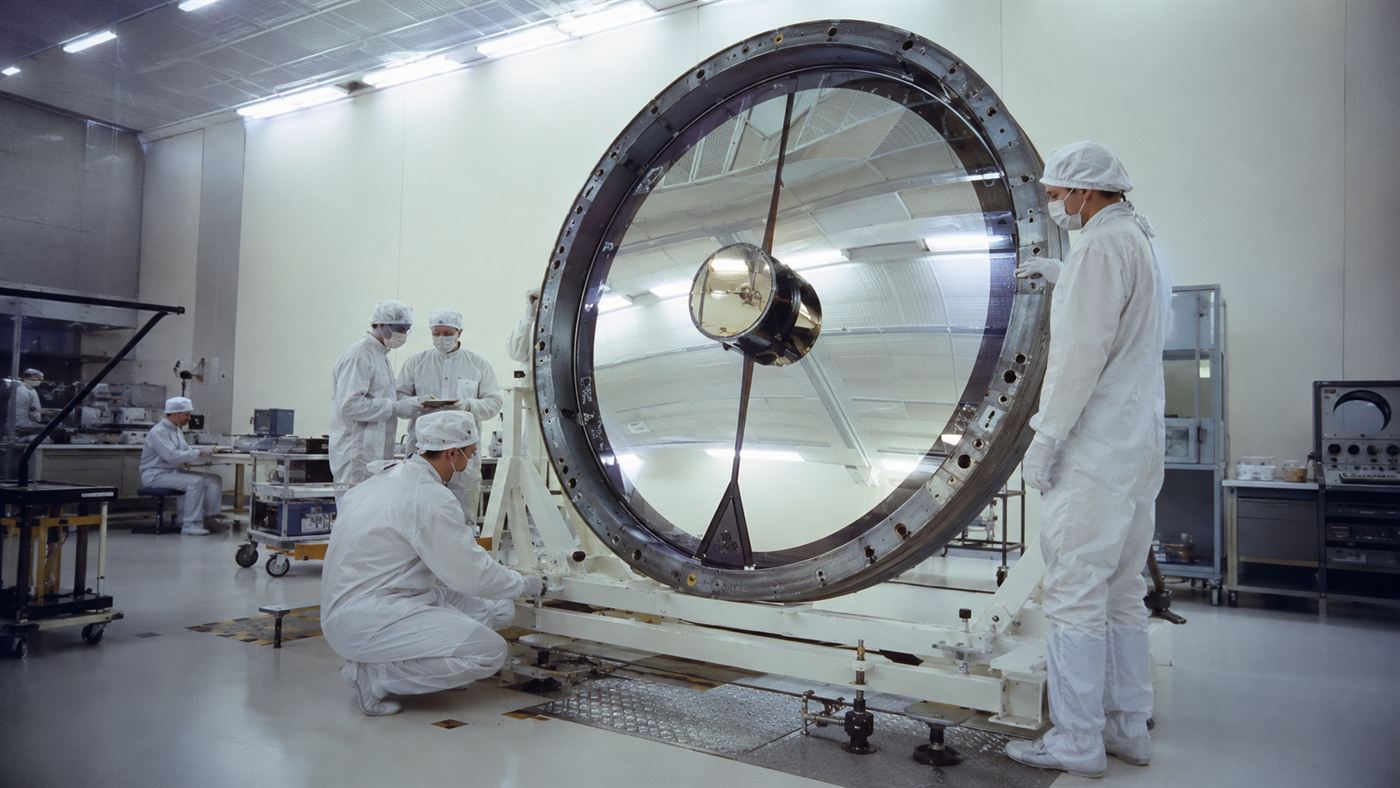
Could the blind Hubble Space Telescope be saved?
For a while, Hubble was a punchline. Late-night comedians and newspaper cartoonists had a field day, and the telescope became a symbol of expensive government failure. Bringing it back to Earth to fix was out of the question, and simply abandoning a 1.5 billion dollar flagship was unthinkable. The engineers needed another way.
Their salvation was hidden in the disaster itself. Because the mirror's flaw was so precise and so well understood, it could be canceled out. If you know exactly how a lens is wrong, you can grind a second set of optics that is wrong in exactly the opposite way, and the two errors erase each other. In other words, the Hubble Space Telescope did not need a new mirror. It needed glasses.
The astronauts who gave Hubble glasses
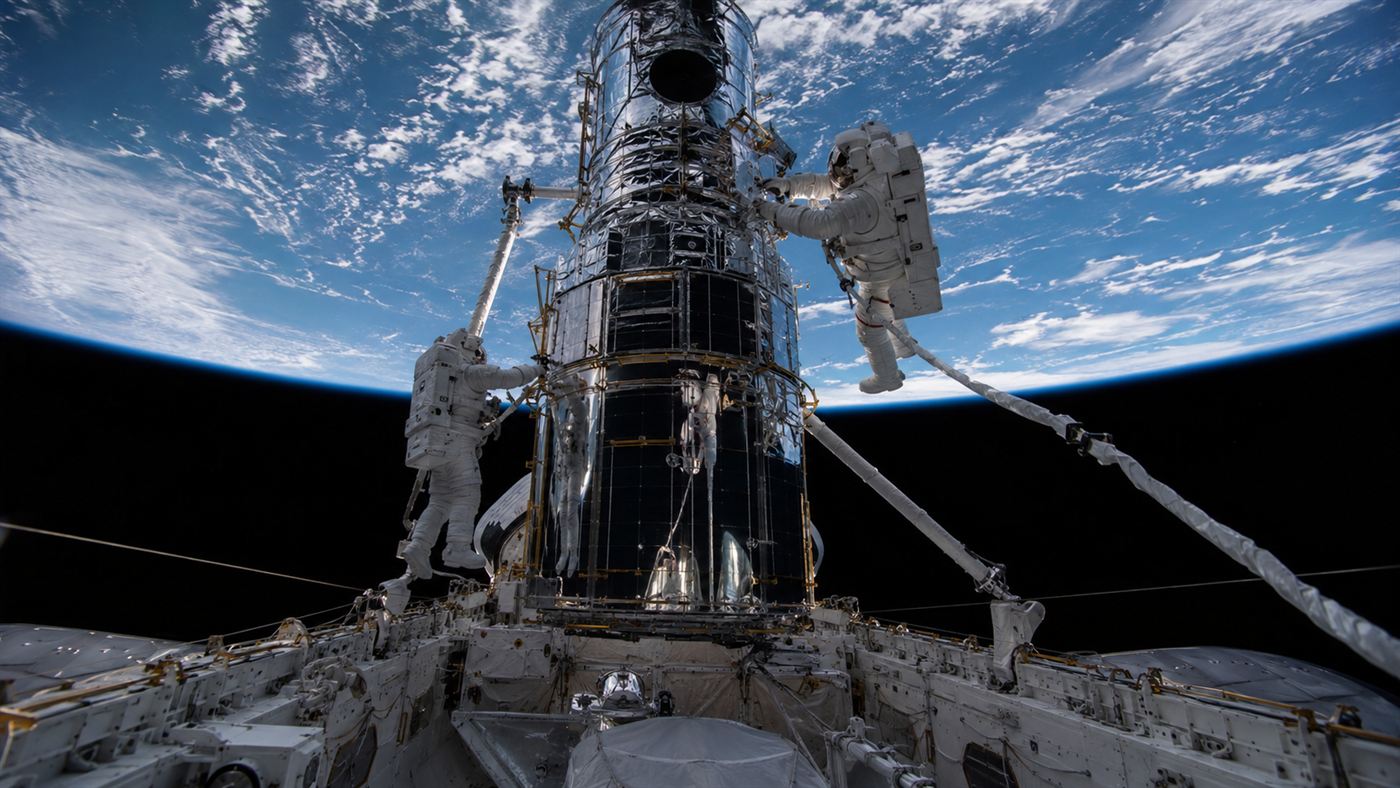
In December 1993, the shuttle Endeavour launched on the STS-61 servicing mission with a crew trained for one of the most demanding jobs ever attempted in orbit. Over five grueling spacewalks, the astronauts installed a device called COSTAR, a set of small corrective mirrors that canceled the spherical aberration in Hubble's light path, along with a new camera that had the correction built in.
It worked flawlessly. With COSTAR in place, the freshly corrected images came down and the fuzzy blobs snapped into crisp, brilliant points of light. The servicing mission had not just repaired a telescope; it had rescued NASA's reputation and proved that humans could perform delicate surgery on a spacecraft in the vacuum of space.
The honest catch
It is a wonderful comeback story, but it is worth being clear about the shape of it. Hubble was not fixed by a miracle so much as by a mistake being unusually well characterized. The same rigor that should have caught the flaw before launch is what made the flaw correctable afterward, which is a strange kind of consolation.
There is also a cost that the triumphant version glosses over. The repair worked, but it took a crewed shuttle flight, years of delay, and a fortune to fix an error that better testing on the ground would have prevented for almost nothing. Hubble's rescue is rightly celebrated, yet it stands just as much as a monument to the price of skipping a final check.
A flagship telescope launched nearly blind, became a national joke, and was saved by astronauts fitting it with a pair of glasses in orbit. Would you have gambled a crewed spacewalk to rescue it, or written off the most expensive mistake in space and started over? Tell us in the comments.
Related reading: the James Webb Space Telescope, Hubble's successor that folded like origami to see the first galaxies. See also the rise and collapse of the great Arecibo dish, and how NASA lost the Mars Climate Orbiter to a units mix-up.