In 1991 a single invisible particle slammed into the sky over Utah carrying the energy of a fast-pitched baseball, and physicists still cannot explain what in the universe could have made it
Cosmic rays hit our atmosphere constantly, and almost all of them are so tiny they pass unnoticed. Then, one October night above the Utah desert, a detector caught something that should not exist. A single speck of matter arrived carrying the punch of a thrown baseball. More than thirty years later, no one can say where it came from.
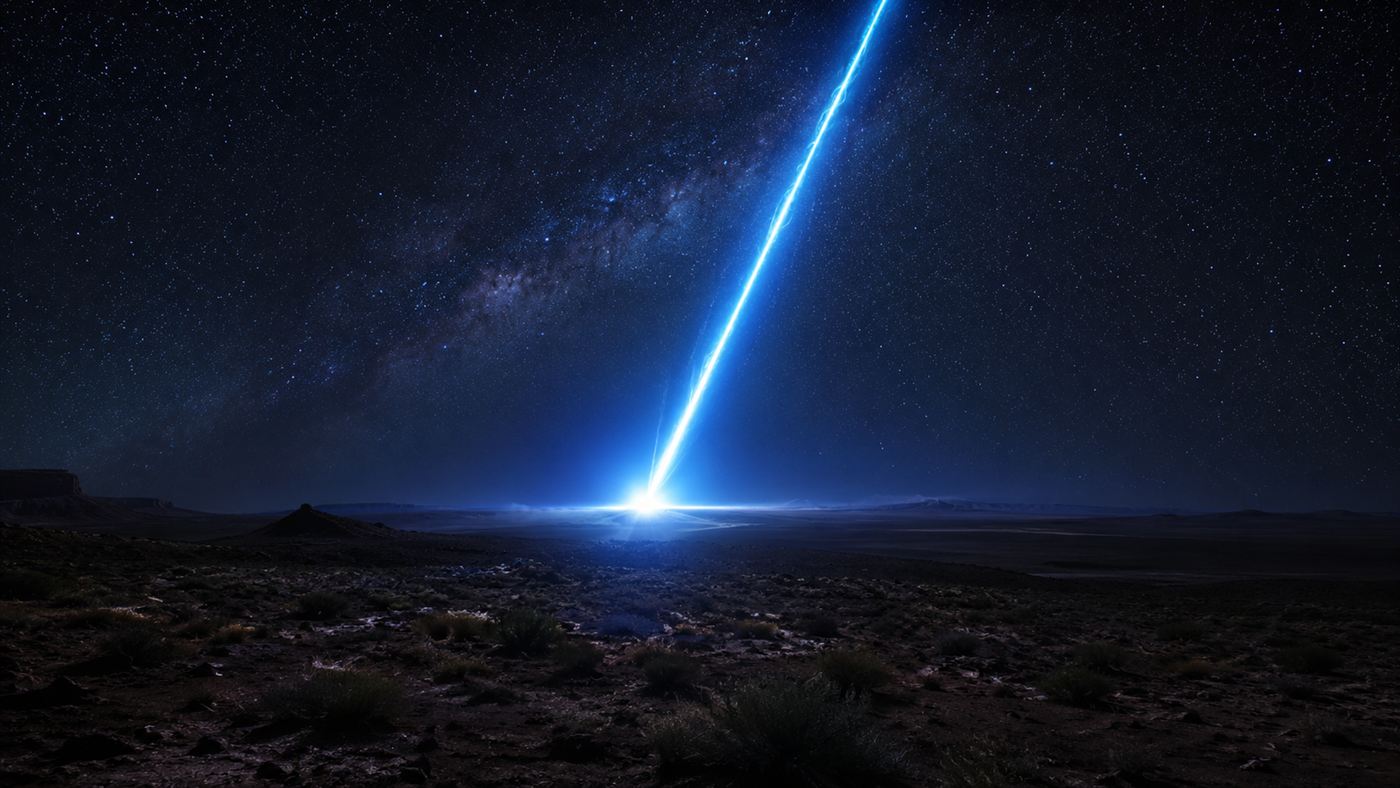
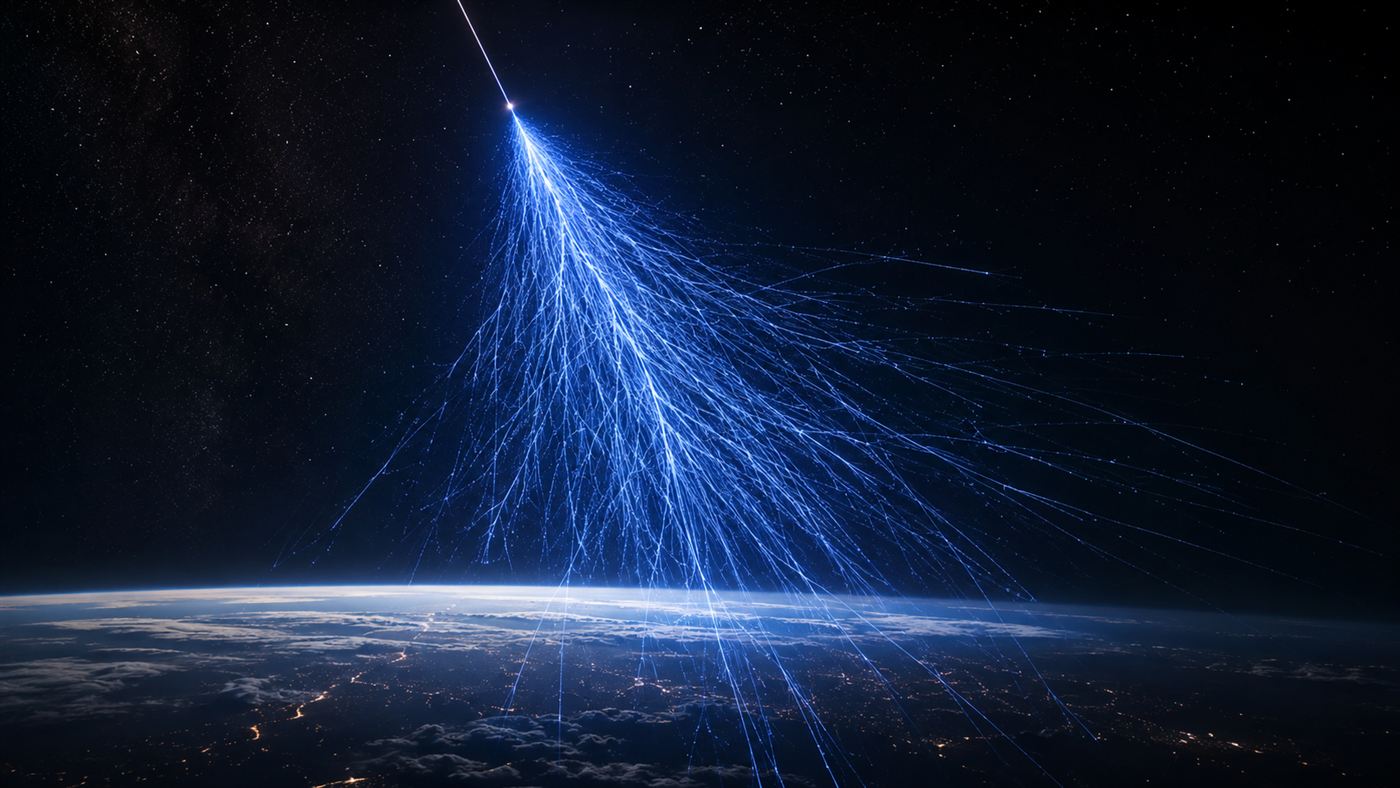
A single particle lit up the sky over Utah with impossible energy. Illustration: Watts & Wild.
On the night of October 15, 1991, a cosmic ray detector called the Fly's Eye, run by the University of Utah out at the Dugway Proving Ground, recorded a flash unlike anything it had seen before. When physicists worked out the numbers, they were so startling that the object earned a nickname that has stuck ever since: the Oh-My-God particle.
The reason for the shock was its energy. This was almost certainly a single subatomic particle, most likely one lonely proton, and yet it was carrying roughly 51 joules, about the same wallop as a hard-thrown baseball or a bowling ball dropped on your foot. For one invisible fleck of matter to hold that much energy is, by every rule we know, almost absurd.
The short version: in 1991 the Fly's Eye detector in Utah caught the Oh-My-God particle, an ultra-high-energy cosmic ray with the energy of a thrown baseball crammed into one proton. It remains the most energetic particle ever seen, it was moving at very nearly the speed of light, and no one can explain where it came from.
How much energy are we really talking about?
Numbers like 51 joules sound small until you remember the scale. A baseball is made of something like a trillion trillion atoms sharing that energy between them. The Oh-My-God particle carried the same energy in one particle, which means each tiny piece of it held tens of millions of times more energy than anything we can produce on Earth.
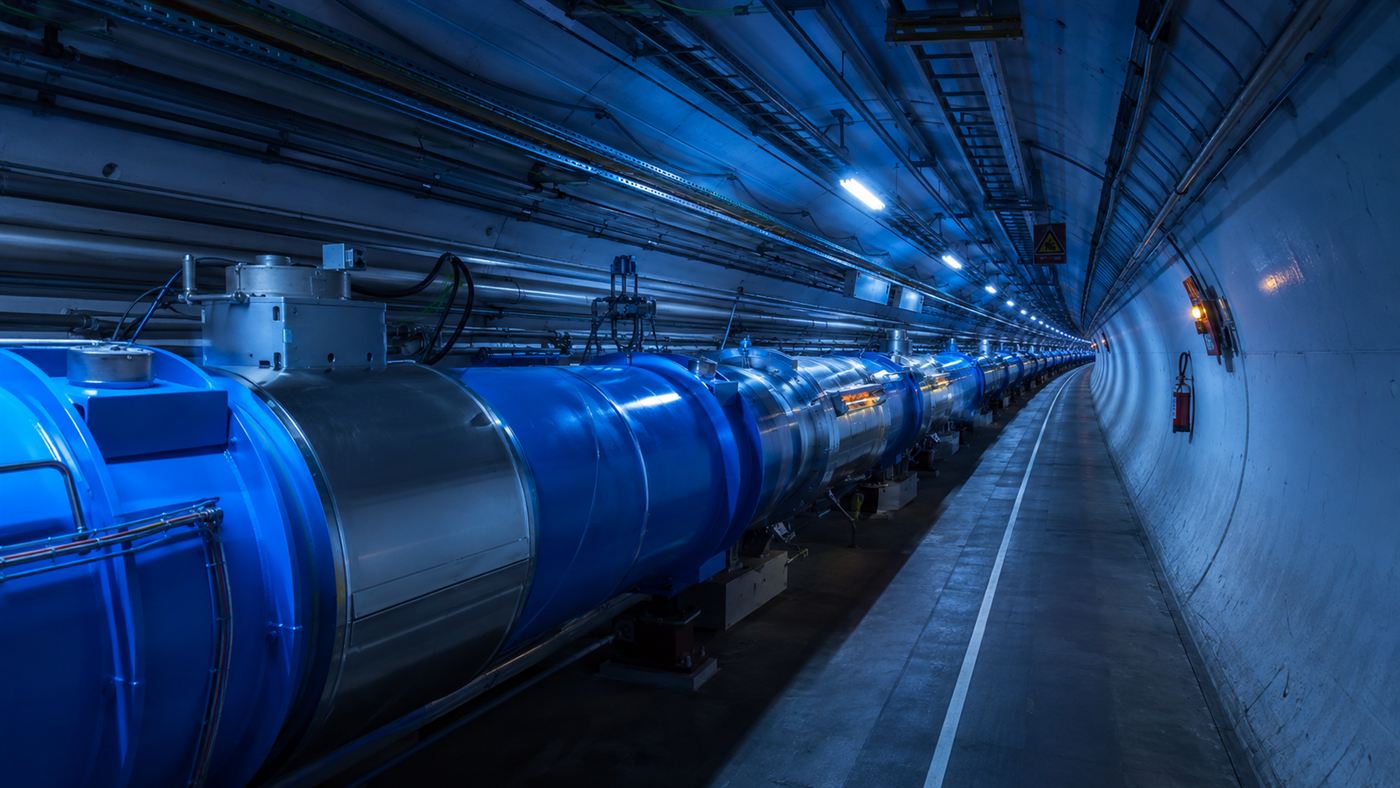
To put it bluntly, the most powerful machine humanity has ever built, the Large Hadron Collider, accelerates protons to energies about 40 million times lower than this one particle reached on its own. Nature, somewhere out in the dark, had built an accelerator that makes our greatest physics experiment look like a toy.
A particle moving at almost exactly light speed
All that energy went into speed. The Oh-My-God particle was traveling at so close to the speed of light that the difference is hard to write down: something like 99.9999999999999999999995 percent of it. If it had raced a beam of light across the galaxy, it would have lost by only the tiniest sliver after a hundred thousand years.
At that velocity, strange things happen to time and distance. From the particle's own point of view, the vast reaches of space it crossed would have been squashed almost to nothing, and a journey that looked like millions of years to us could have flashed by in an instant for it. It was, in every sense, a messenger from the extreme edge of physics.

Why the Oh-My-God particle should not exist
Here is the part that keeps physicists awake. There is a well-established speed limit for cosmic rays crossing the universe, called the GZK cutoff. Particles above a certain energy should collide with the faint afterglow of the Big Bang that fills all of space, bleeding off energy with every step, so they cannot travel far without slowing down.
That means the Oh-My-God particle should have come from somewhere relatively close by in cosmic terms, within a few hundred million light-years. The trouble is that when astronomers look in the direction it came from, there is nothing obvious there, no black hole, no exploding galaxy, no violent engine big enough to fling out a particle this fierce. The source is simply missing.
It happened again in 2023
For years, some wondered whether the 1991 event had been a fluke or a measurement error. Then, in 2023, a different Utah instrument, the Telescope Array, announced it had caught another monster, an ultra-high-energy cosmic ray nicknamed the Amaterasu particle after the Japanese sun goddess, with an energy of the same staggering order.
The Amaterasu particle deepened the mystery rather than solving it, because it too seemed to come from a patch of sky with nothing special in it. Whatever is making these things is real, it is still out there, and our best telescopes cannot find it. Two of the most energetic particles ever recorded both landed over the same stretch of American desert.
The honest catch
It is worth being careful about what we actually know. We never see these particles directly. What the detectors record is the enormous shower of secondary particles that blooms when a cosmic ray smashes into the upper atmosphere, and the original energy is reconstructed from that cascade. The headline numbers carry real uncertainty, and the very highest events are maddeningly rare.
Even so, the core mystery is solid and unsolved. Something in the cosmos is accelerating particles to energies we cannot match or even fully explain, and every few decades one of them happens to strike a detector instead of empty ground. The Oh-My-God particle is not a glitch. It is a genuine knock on the door from a physics we do not yet understand.
Somewhere out in the universe, an engine we cannot see is flinging single particles at us with the force of a thrown ball, and twice now one has landed over Utah. Does it thrill you or unsettle you that our best science still cannot say what made it? Tell us in the comments.
Related reading: the Wow! signal, another one-off cosmic event that has never been explained or repeated. See also how the Large Hadron Collider reaches its own record energies, still tiny next to this particle.