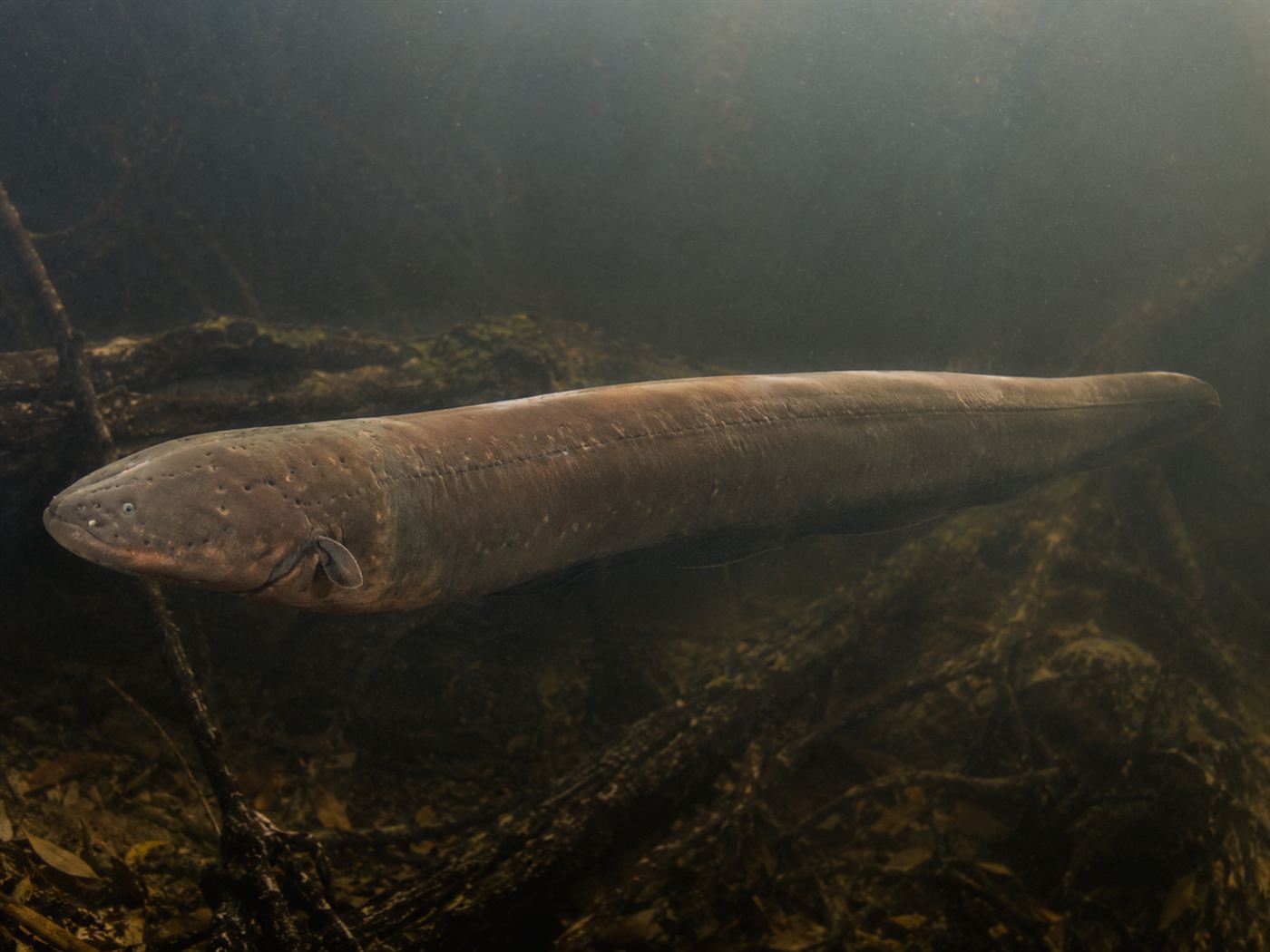
A 445-million-year-old animal has blue blood, and it quietly keeps your vaccines safe
The horseshoe crab has crawled the seafloor since long before the dinosaurs, and it carries a secret in its bright blue blood. Horseshoe crab blood can sense the faintest trace of dangerous bacteria, which is why it has quietly guarded the safety of nearly every injection and vaccine you have ever had.
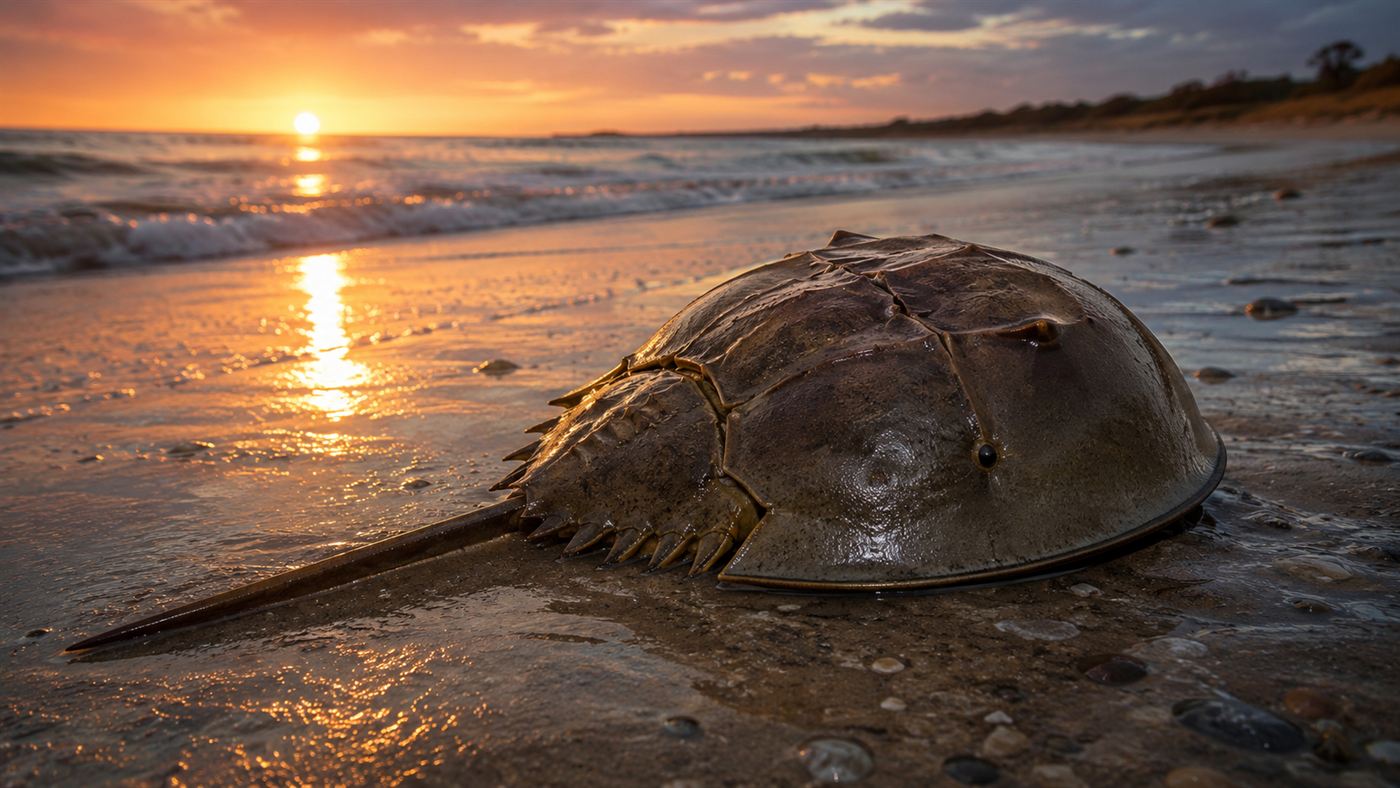
The horseshoe crab has barely changed in hundreds of millions of years. Illustration: Watts & Wild.
Some of the most important machines in modern medicine are not machines at all.
One of them is an armoured animal that looks like a war helmet dragging a spike, and it has been around far longer than we have.
Why is horseshoe crab blood so valuable? Horseshoe crab blood contains cells that clot the instant they meet toxins from bacteria. That reaction is turned into a test that checks vaccines, injectable drugs and medical implants for contamination, which makes the blood one of the most prized fluids in medicine.
A living fossil with blue blood
Horseshoe crabs have existed for some 445 million years, older than trees, older than the dinosaurs.
Despite the name they are not true crabs at all, sitting closer to spiders and scorpions on the family tree.
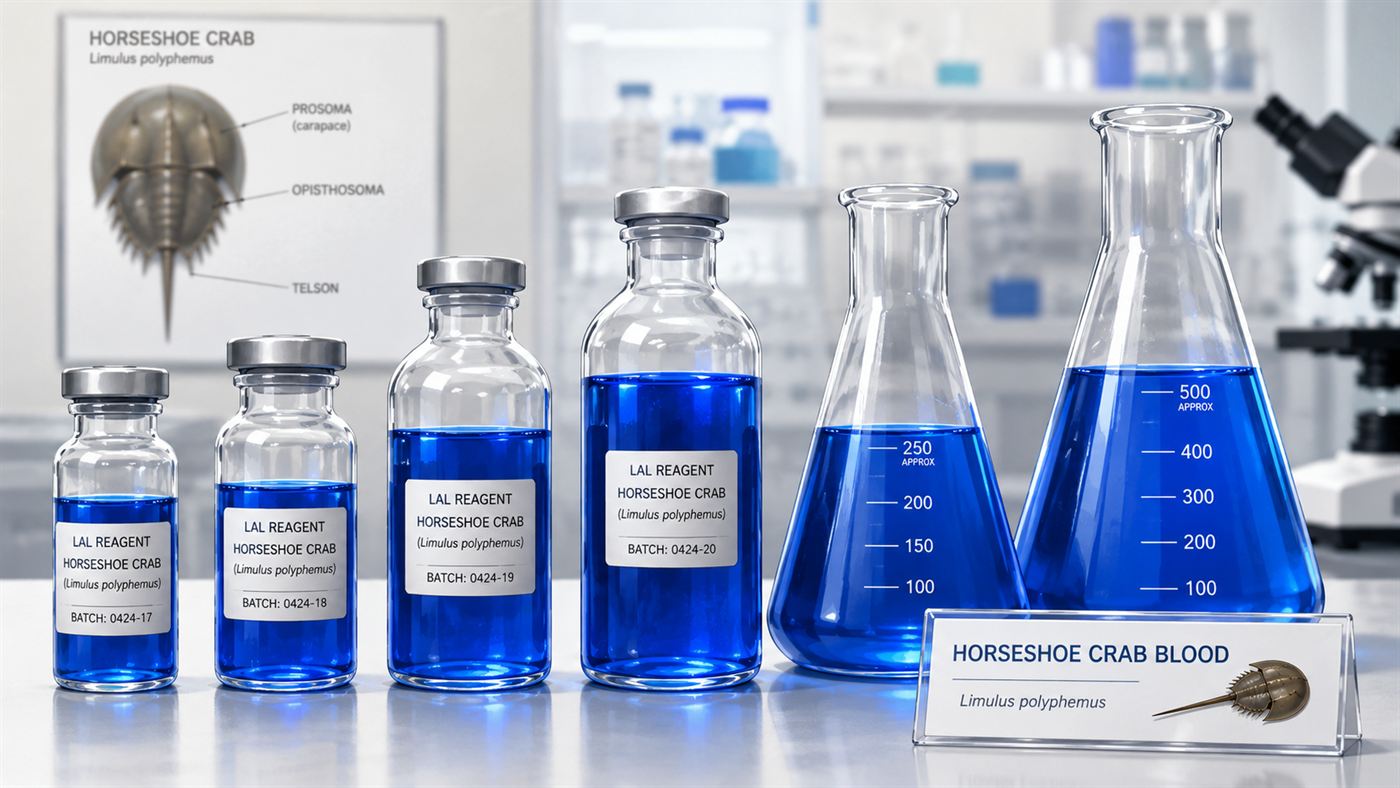
Their blood runs blue rather than red, because it carries oxygen with copper instead of iron.
When that copper-rich blood meets the air, it turns a vivid, almost unreal shade of blue.
It is the kind of creature that feels like a leftover from another planet, quietly outliving everything around it.
Horseshoe crab blood catches invisible poison
The real magic is what that blood does when it meets bacteria.
It carries cells that clot almost instantly around bacterial toxins called endotoxins, sealing off the threat.
Scientists turned that clotting reaction into a test known by the initials LAL.
Add a sample to the processed blood, and if it clots, the sample is contaminated with traces of bacteria too small to see.
Nothing else detected this invisible poison so quickly or so cheaply, so the test spread through the whole of medicine.
Inside almost every vaccine and drug
This is where a tide-pool animal touches almost every modern life.
Before a vaccine, an injectable drug or an implant can be used, it has to be checked for that bacterial contamination.
For decades, the standard safety test has relied on the clotting power of horseshoe crab blood.
That means the shots in your arm, very probably including recent vaccines, were cleared for safety with the help of this creature.
An animal most people have never touched has been silently standing guard over the world's medicine cabinets.
Bled and released
To get the blood, crabs are gathered from the sea and taken to special facilities.
There a portion of their blood is drawn, often around a third, before they are returned to the water.
The processed extract is staggeringly valuable, with prices for the lysate often quoted in the tens of thousands of dollars per quart.
For a while it looked like a tidy arrangement, a borrowed gift from an animal that could spare a little blood.
The truth, as usual, is more complicated.
The honest catch
It is worth being honest about the cost to the crabs.
A share of the bled animals die, with estimates ranging widely, and survivors can be left weakened and slower to spawn.
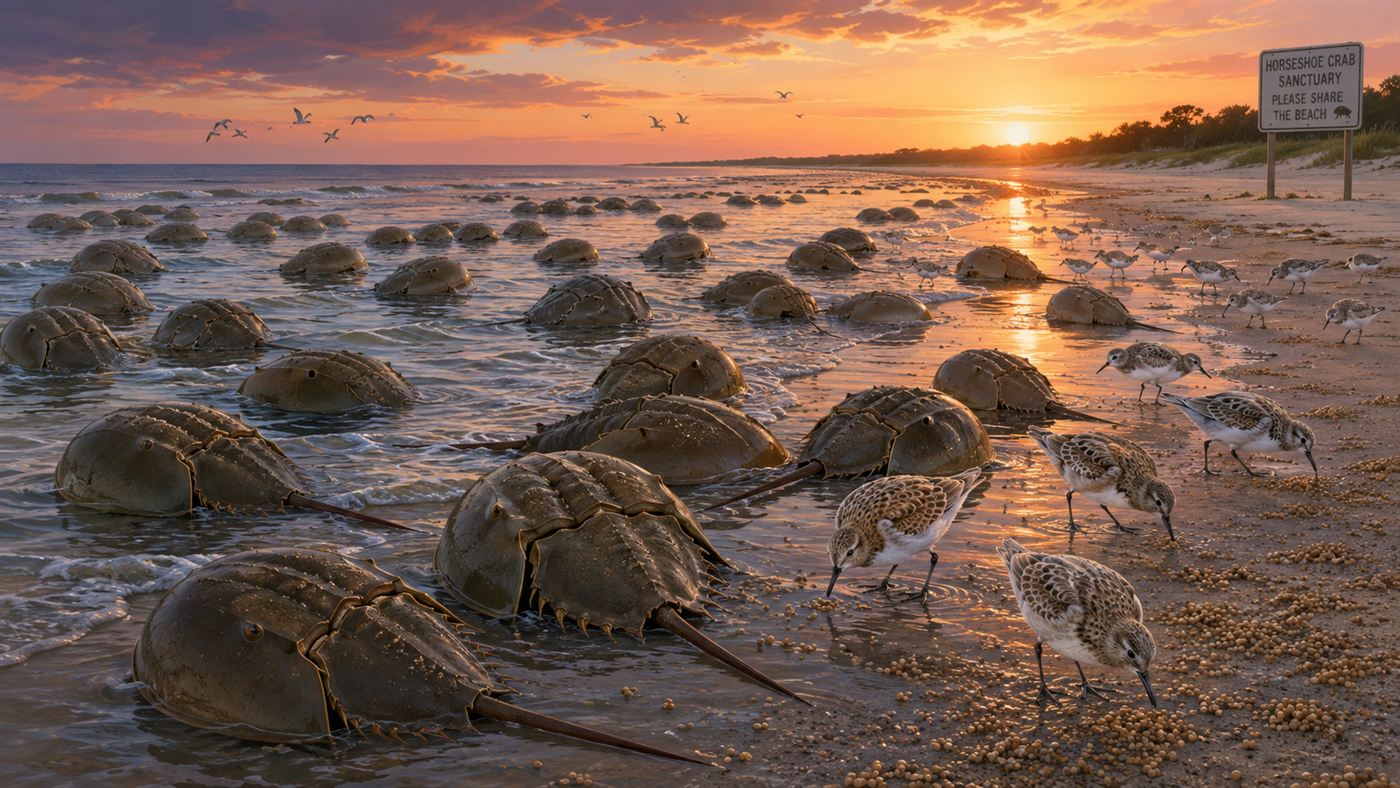
Horseshoe crab numbers have fallen in places, also because they are harvested as bait, and that hits the migratory shorebirds that fatten on their eggs.
There is now a synthetic substitute, a lab-made version of the active ingredient that needs no crab at all.
It is slowly being accepted, so the hope is that the next generation of vaccines can be kept safe while leaving this ancient animal in peace.
The horseshoe crab is a reminder that the natural world keeps solving problems we have not even thought to ask about yet.
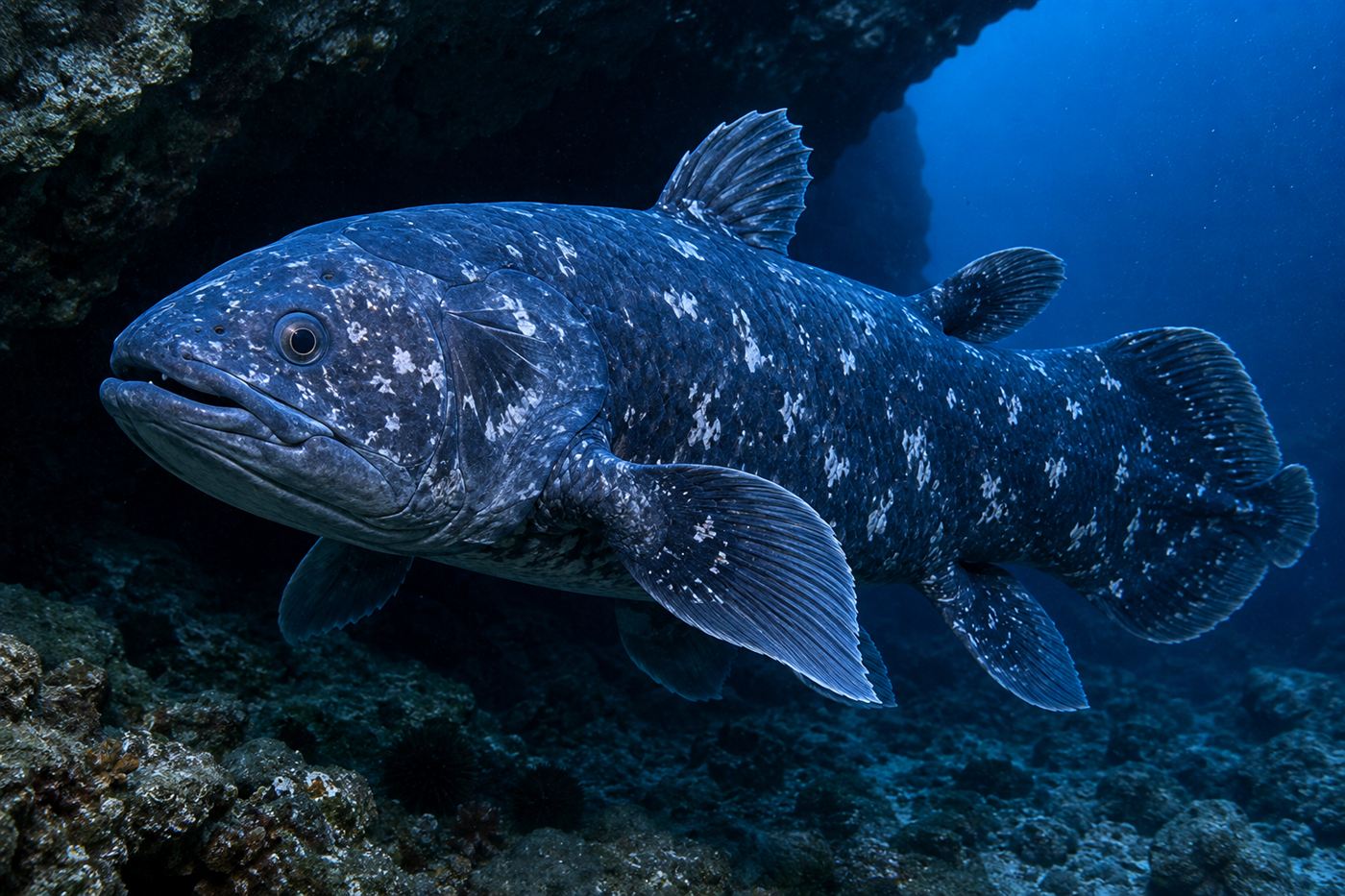
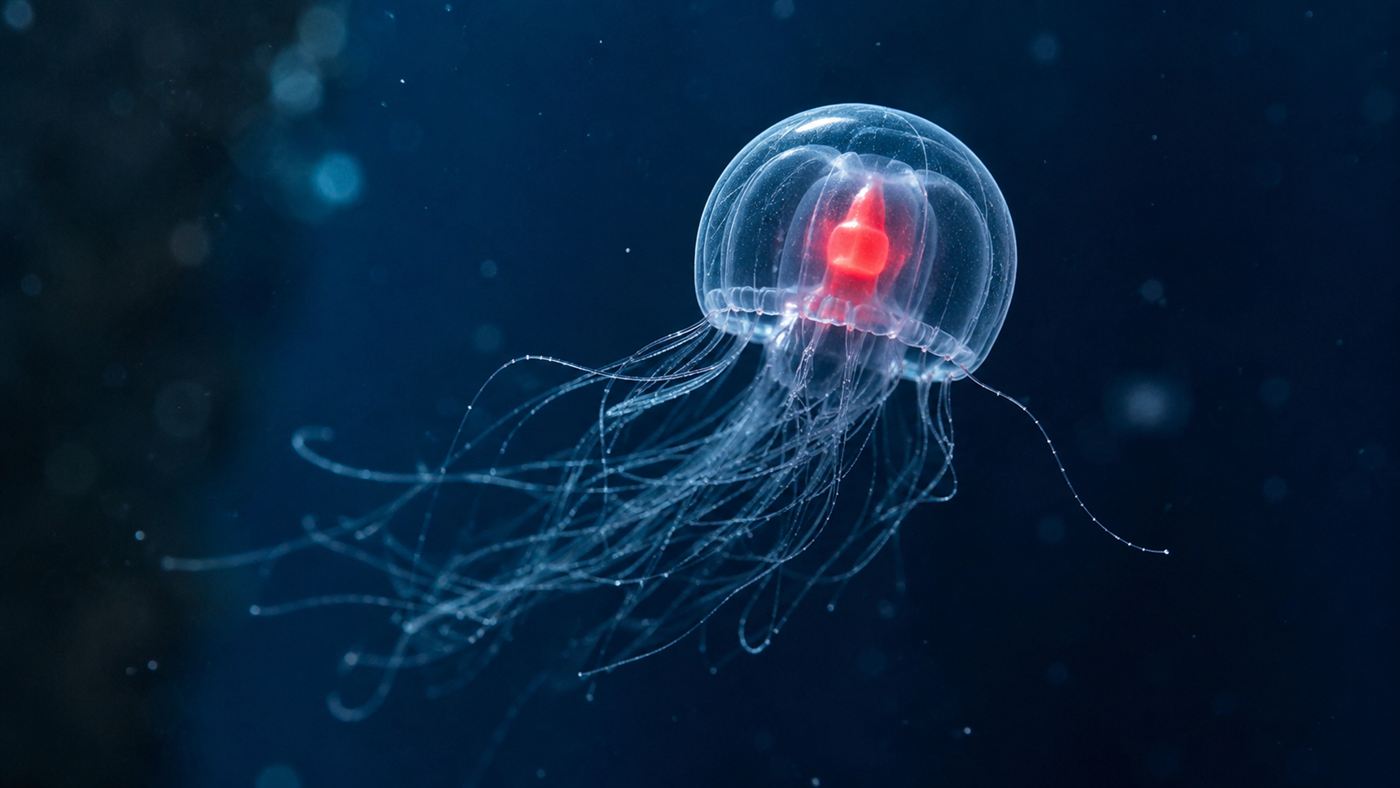
It belongs with the other ancient survivors that turned out to matter far more than anyone expected, from the fish that came back from 65 million years of supposed extinction to the jellyfish that can wind its own life backwards.
If a creature older than the dinosaurs has been guarding our vaccines all along, what other quiet debts do we owe to animals we barely notice, and should we keep borrowing their blood now that we can make our own? Tell us in the comments.