The Holland Tunnel solved a deadly new problem, how to stop a mile of car exhaust from poisoning drivers underwater, and it is named for the chief engineer the strain killed before it opened
Every day tens of thousands of cars pour under the Hudson River and come out the other side, and almost none of the drivers think about the invisible thing keeping them alive. The Holland Tunnel was a triumph not of digging, but of air.
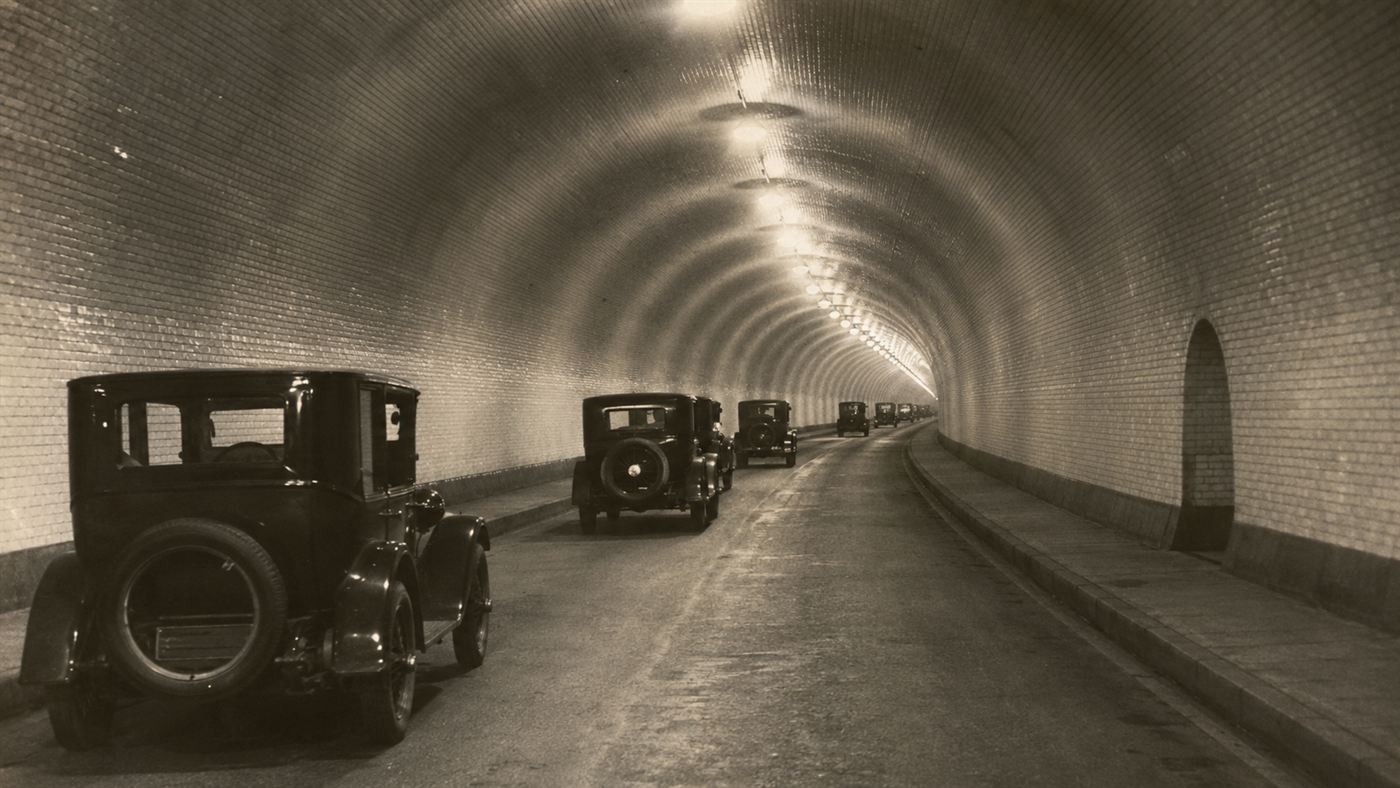
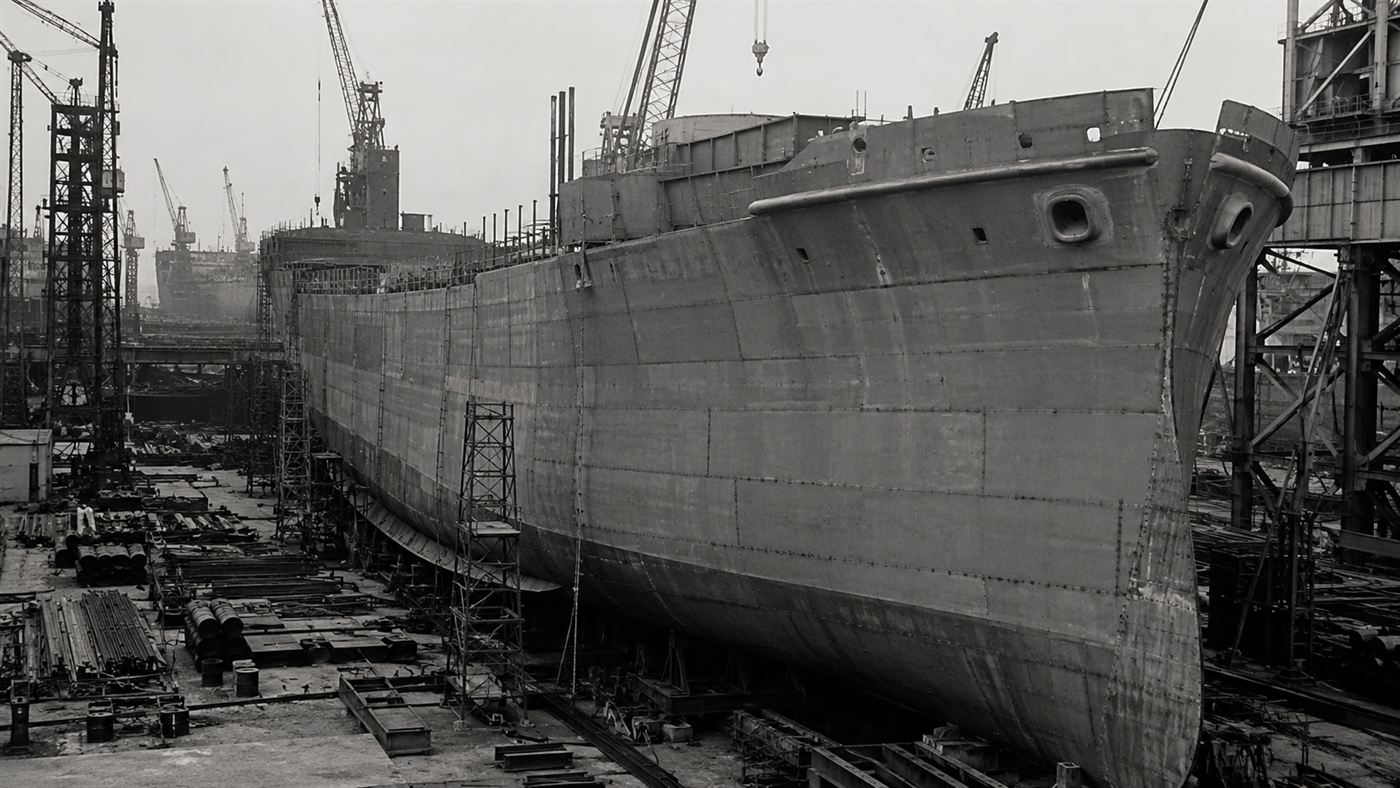
The Holland Tunnel's real innovation was invisible: the air itself. Illustration: Watts & Wild.
By the 1920s, engineers already knew how to dig a tunnel under a river. Railway and subway tunnels had been bored beneath cities and waterways for decades. So when New York and New Jersey set out to link Manhattan and Jersey City under the Hudson, the hard part was not supposed to be the hole. It was supposed to be a routine, if ambitious, dig.
Instead, the Holland Tunnel ran headlong into a problem nobody had ever had to solve, because it was the first long tunnel built not for trains but for cars. And cars, unlike trains, would fill that enclosed tube with their own poisonous breath. The story of how engineers beat that invisible danger, and of the man who died trying, is one of the great quiet dramas of American engineering.
The short version: The Holland Tunnel, opened in 1927 under the Hudson River, was the first long road tunnel built with a ventilation system to clear car exhaust. Its four towers and 84 giant fans replace all the air inside about every 90 seconds, keeping carbon monoxide safe. It is named for chief engineer Clifford Holland, who worked himself to death and died in 1924, two days before the tunnel was joined.
The problem no one had solved
A train tunnel is one thing. Steam and later electric trains passed through quickly and in limited numbers, and early tunnels could get by on natural airflow. But a tunnel full of automobiles was a completely different beast. Cars and trucks are essentially small furnaces, and every one of them pumps out carbon monoxide, an odorless, colorless gas that kills.
Pack a mile-long underwater tube with hundreds of idling and crawling engines, and without a solution you would create a lethal chamber, slowly gassing everyone trapped inside. No one had ever built a road tunnel long enough for this to matter, so no one actually knew how much fresh air was needed, or how to move it. The engineers were not just building a tunnel. They were inventing the rules for a kind of structure that had never existed.
A tunnel under the Hudson
The demand was impossible to ignore. In the automobile boom of the 1920s, the only ways across the Hudson between New Jersey and Manhattan were ferries, hopelessly overwhelmed by the flood of new cars. A fixed crossing was desperately needed, and a tunnel, running from Canal Street in Manhattan to Jersey City, was chosen over a bridge.
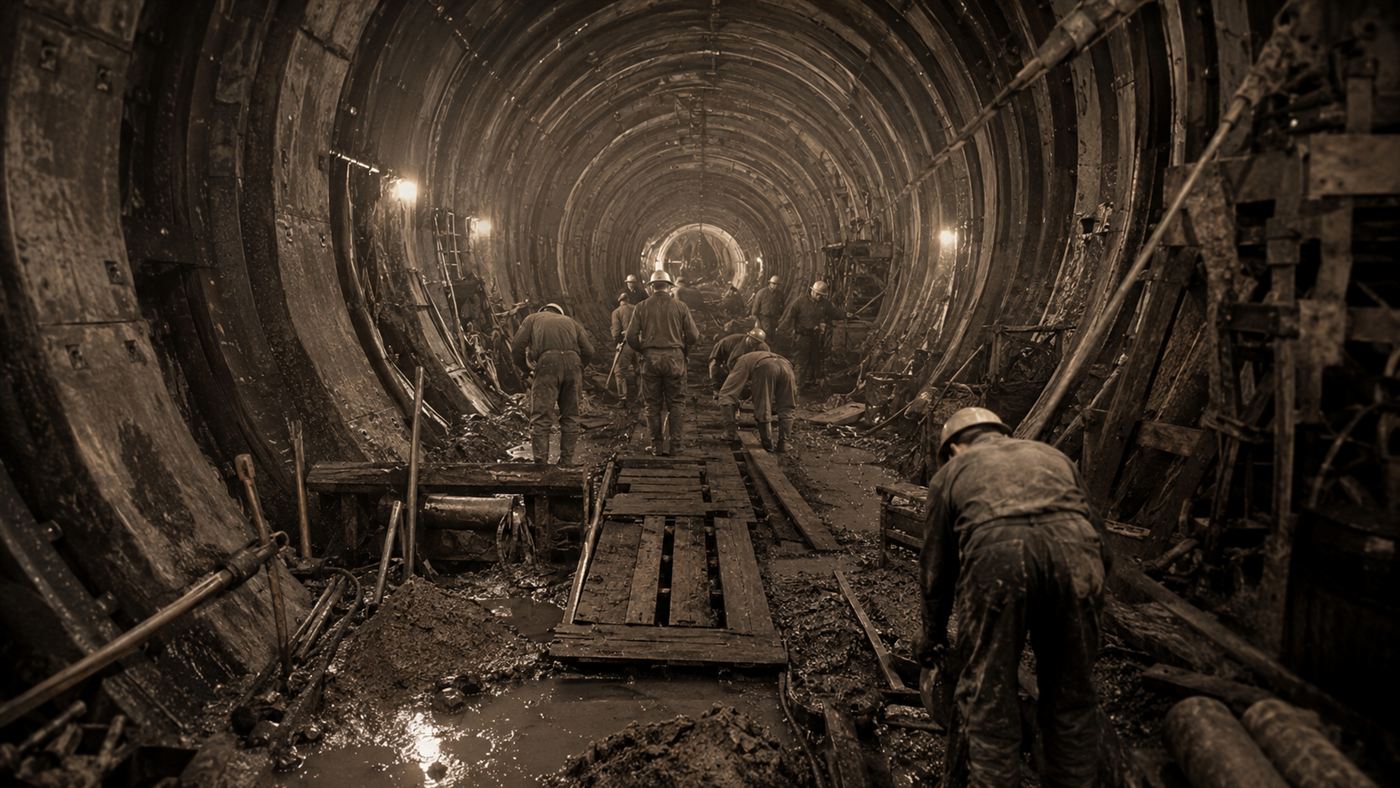
Work began in 1919 on twin tubes beneath the river, each carrying traffic in one direction, together stretching about a mile and a half. Digging through the soft river mud under enormous pressure was dangerous, brutal work in its own right. But hanging over the whole project was the question that would define it, the question of how anyone would breathe once the cars started rolling through.
The science of breathing underground
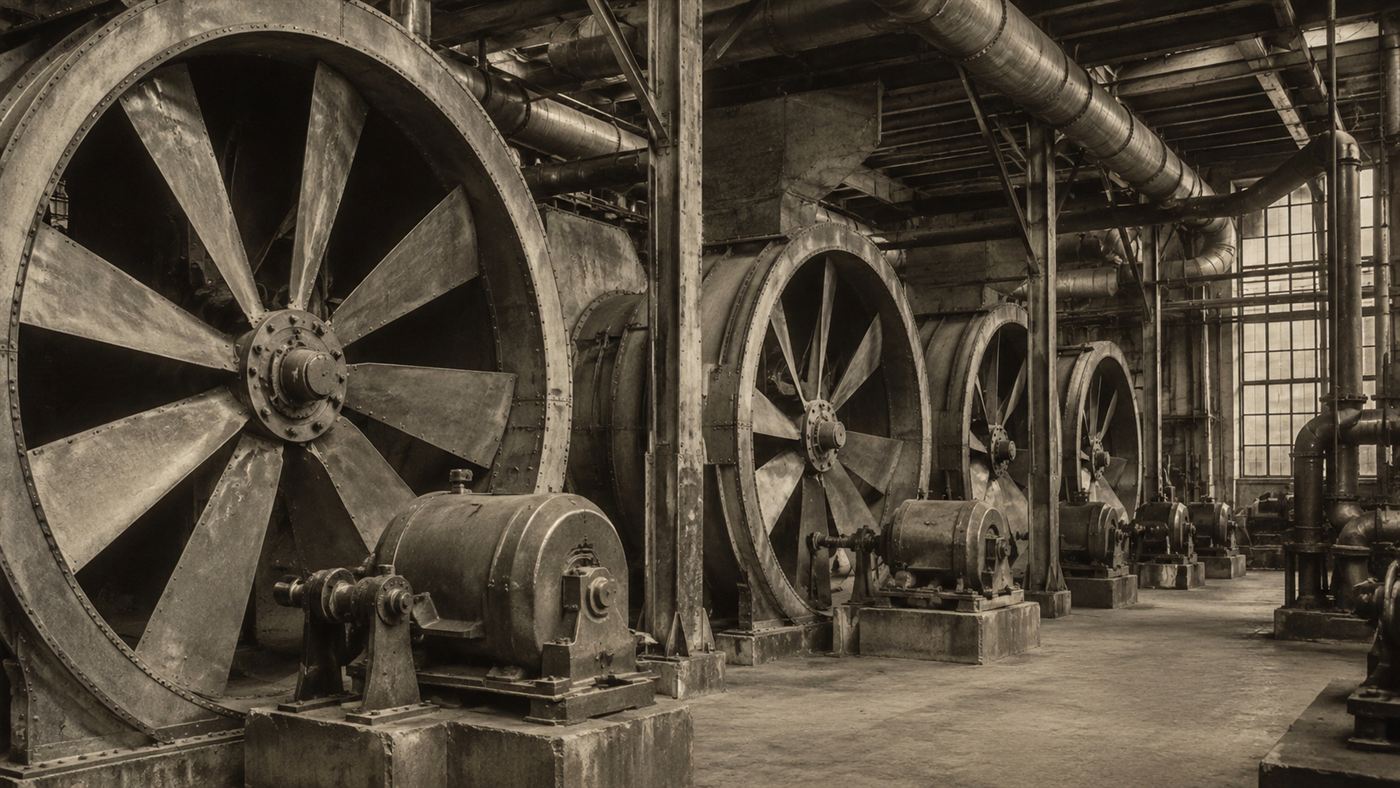
To solve the air, the engineers turned it into a full-blown research program. As the Port Authority describes, studies were carried out by the US Bureau of Mines on the makeup of exhaust, at Yale on the effects of carbon monoxide on people, and at the University of Illinois on the power a ventilation system would need. It was pioneering work on a question no one had ever quantified.
The answer was a transverse ventilation system, an elegant idea executed at colossal scale. Four great ventilation buildings house 84 enormous fans, driven by thousands of horsepower of electric motors. Fresh air is blown in through a duct beneath the roadway and foul air is drawn out above, so that clean air constantly washes across the traffic. The system can replace every bit of air in the tunnel roughly every 90 seconds, holding the carbon monoxide down to a safe trace. It worked, and it became the template for road tunnels everywhere.
The man the Holland Tunnel is named for
The engineer who led all this was Clifford Milburn Holland, appointed chief engineer in 1919 when he was still in his thirties. For five years he carried the crushing weight of a project that was inventing itself as it went, technically unprecedented, politically fraught and physically dangerous.
As the Linda Hall Library recounts, the strain destroyed his health, and Holland died of heart failure in October 1924, at just 41 years old, only two days before the two halves of the tunnel were due to meet beneath the river. He never saw the breakthrough moment, never rode through the finished tube, never witnessed the ventilation system prove itself. When the tunnel opened in 1927, it was named the Holland Tunnel in his memory, a monument to a man consumed by the thing that now bears his name.
The names history forgot
Holland was not the only one the project cost. His successor as chief engineer, Milton Freeman, took over the punishing role and died the very next year, in 1925. The job of actually finishing the tunnel then fell to a Norwegian-born engineer named Ole Singstad, who saw it through to completion and refined the ventilation system that made the whole thing possible.
Yet almost no one remembers Singstad's name today, and the tunnel is not called the Singstad Tunnel. It is a familiar pattern in the story of great works. A single name gets carved over the entrance, while the messy, collective, sometimes fatal reality of who actually built the thing fades into the background. The Holland Tunnel honors one man honestly enough, but it quietly stands for many.
The honest catch
The Holland Tunnel deserves its fame as a genuine landmark, the moment engineers learned to safely ventilate a road tunnel, a problem now solved routinely around the world. But a few honest notes round out the tale. The man in the name did not design the final system that works so well, and the engineer who did, Ole Singstad, is largely forgotten. Naming simplifies history, and it does not always do it justice.
There is a larger irony too. The tunnel was built to relieve congestion, and it was a triumph, yet its very success helped lock American cities into a future built around the automobile. Today the name Holland Tunnel is, for many, simply a byword for traffic jams, the endless queue of cars its brilliant ventilation keeps alive. The research that made it possible also included experiments exposing people and animals to carbon monoxide that would trouble us now. None of that erases the achievement. It just reminds us that even our cleverest solutions tend to carry the seeds of the next problem, and that behind a famous name there is almost always a crowd of forgotten ones.
A mile of drivers cross safely under a river every day thanks to a system most never notice, designed at the cost of at least one man's life. Should great works be named for a single figure, or is that a habit that quietly erases everyone else who built them? Tell us what you think in the comments.
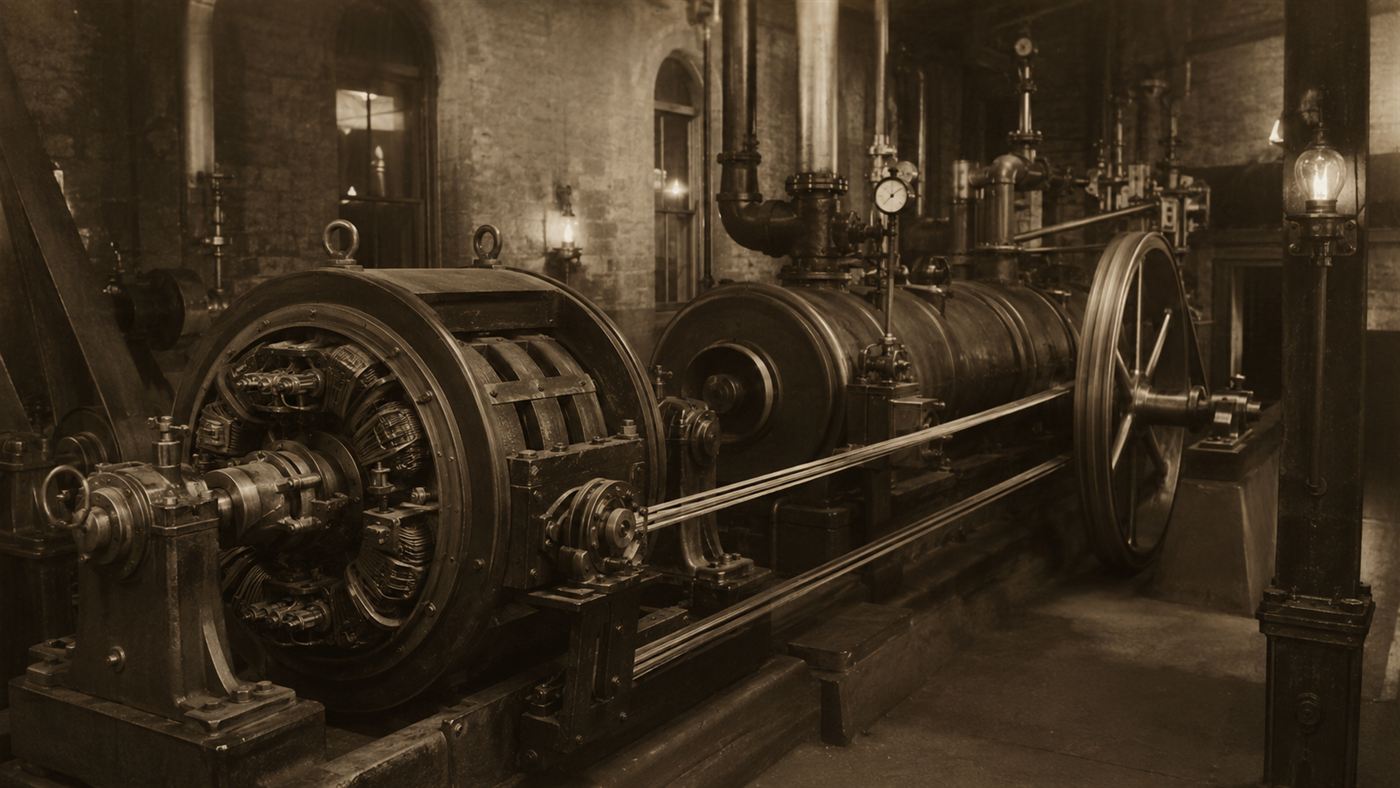
Related reading: the Corliss engine, another marvel that summed up an age of American engineering. See also the Boston subway, the first in America, dug under a historic common.
More from Watts & Wild
More in Industry & Mega-Builds →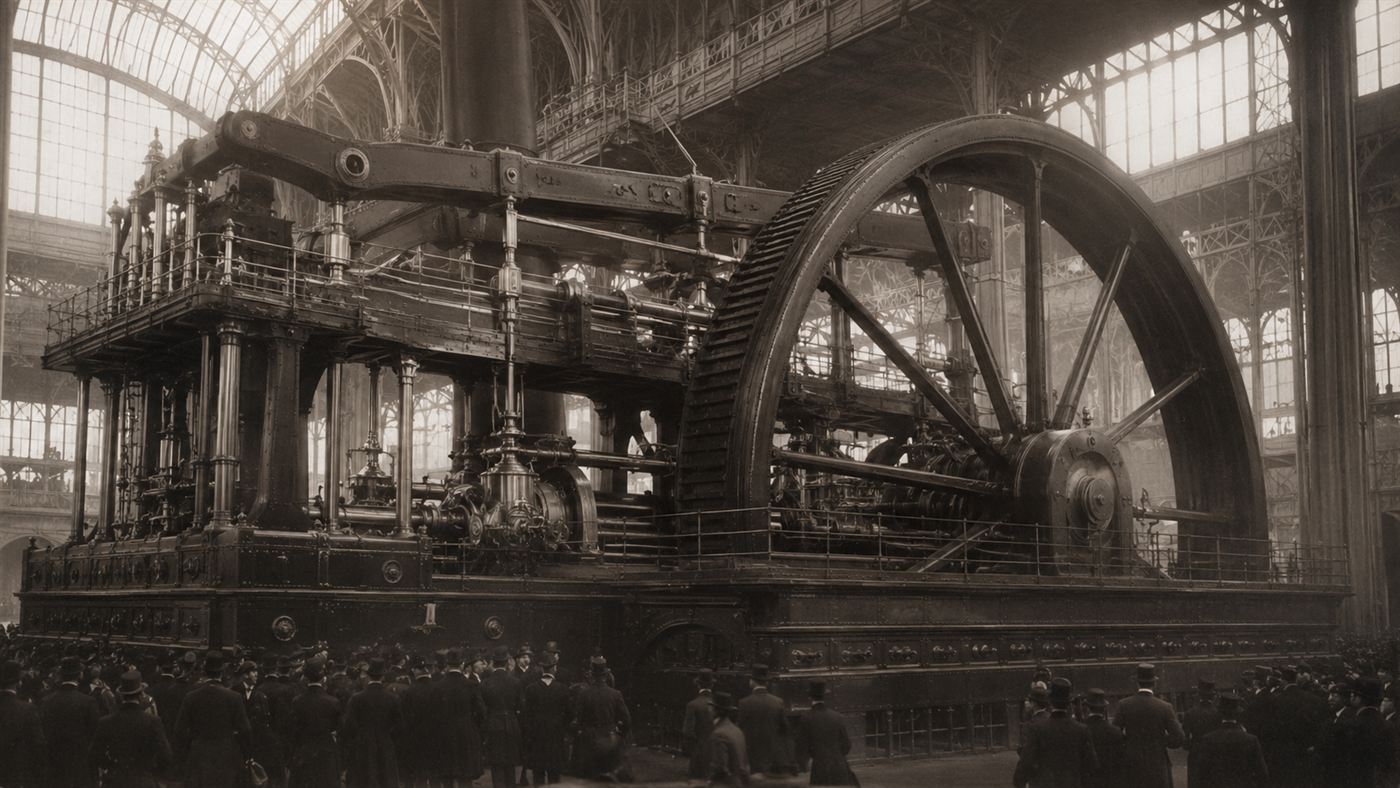

Bruno writes about energy, industry and the big machines that run the modern world, with an eye for the human story behind the engineering.