Long before New York, a city choking on its own streetcars dug the first subway in America, tunnelling under a historic park and its old graves while frightened riders wondered what waited below
The streets were so jammed with trolleys that people could walk faster than they could ride. The bold fix was to send the cars underground, into the dark, beneath a beloved old common where the dead had rested for centuries. Many thought it madness, and it turned out to be the start of American transit as we know it.
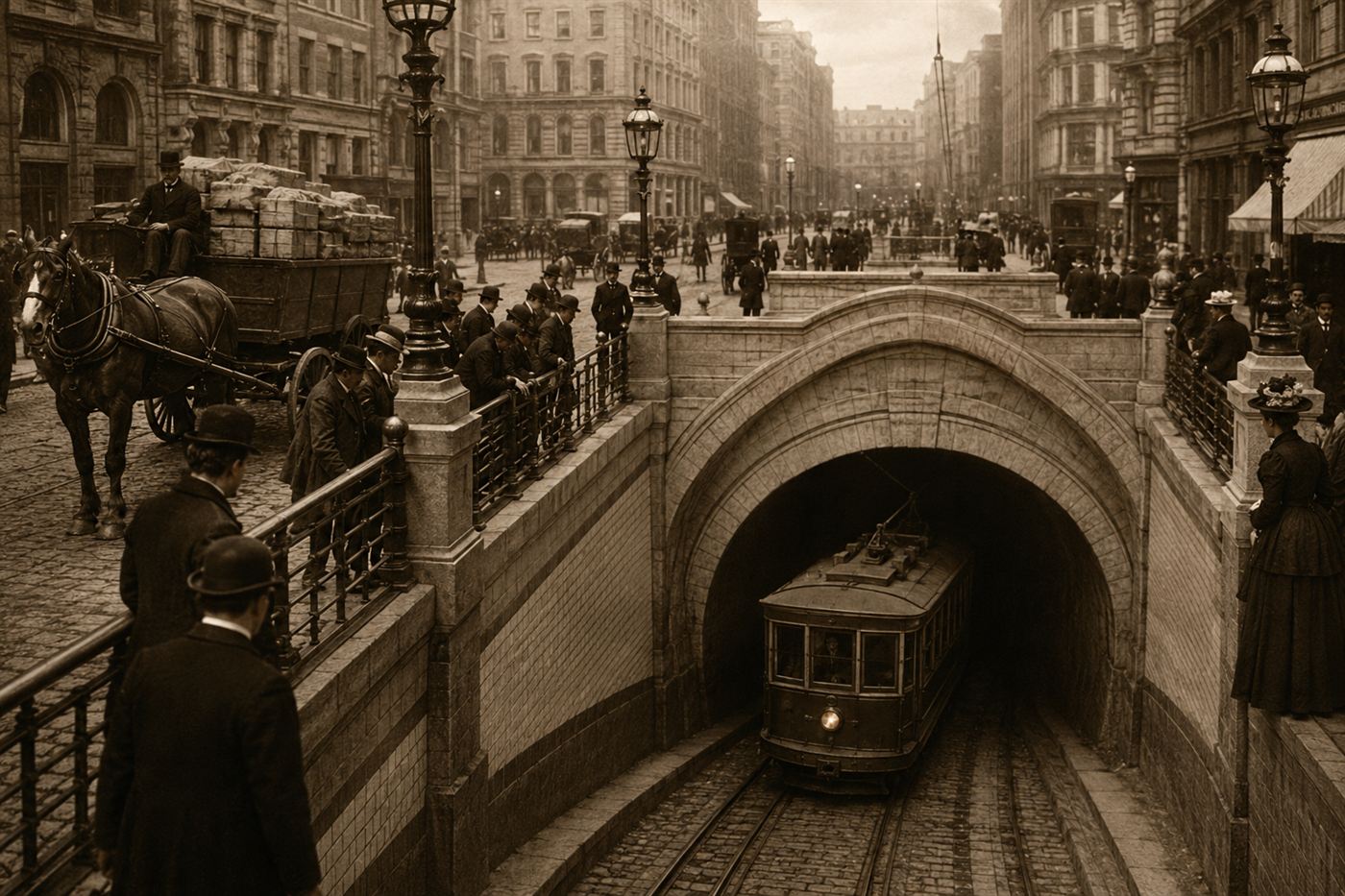
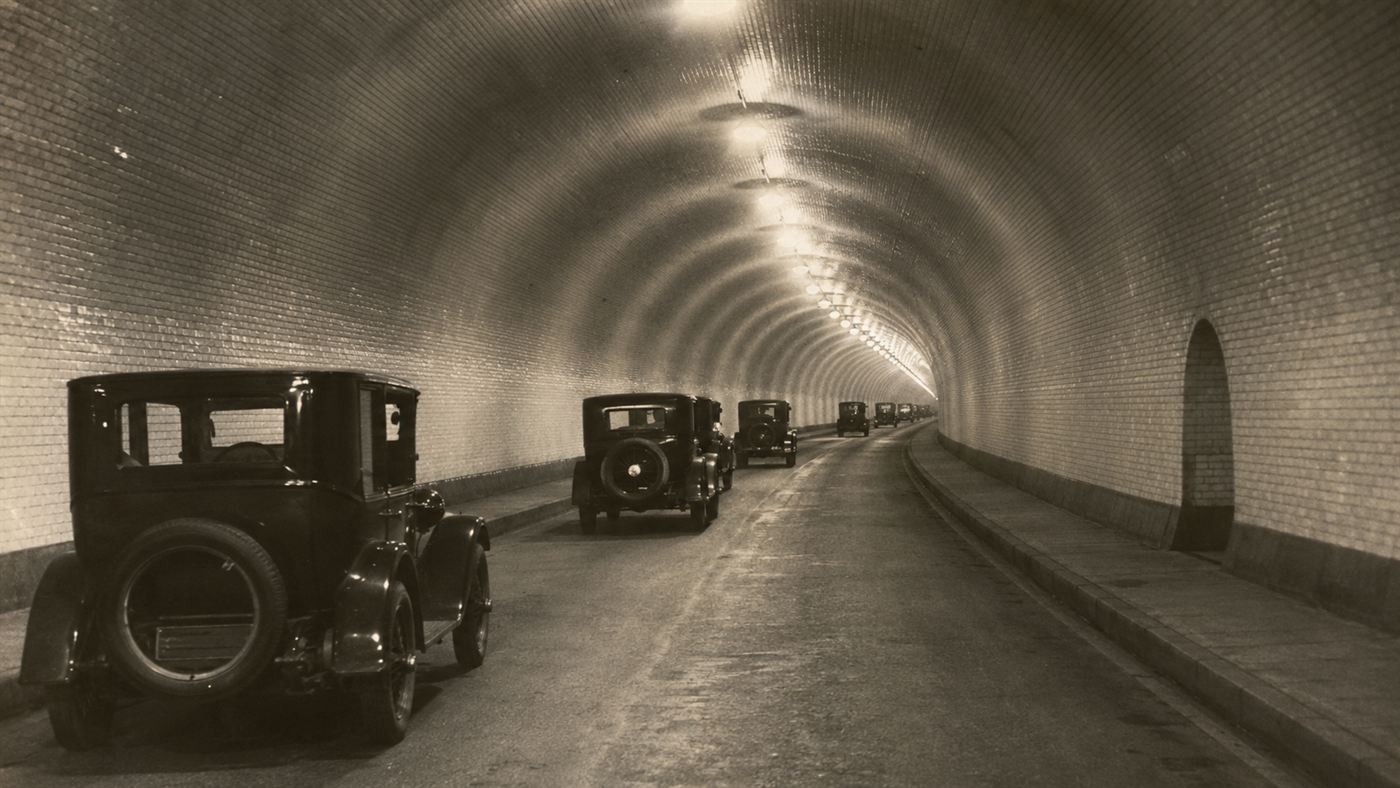
The Tremont Street Subway opened in 1897, seven years ahead of New York. Illustration: Watts & Wild.
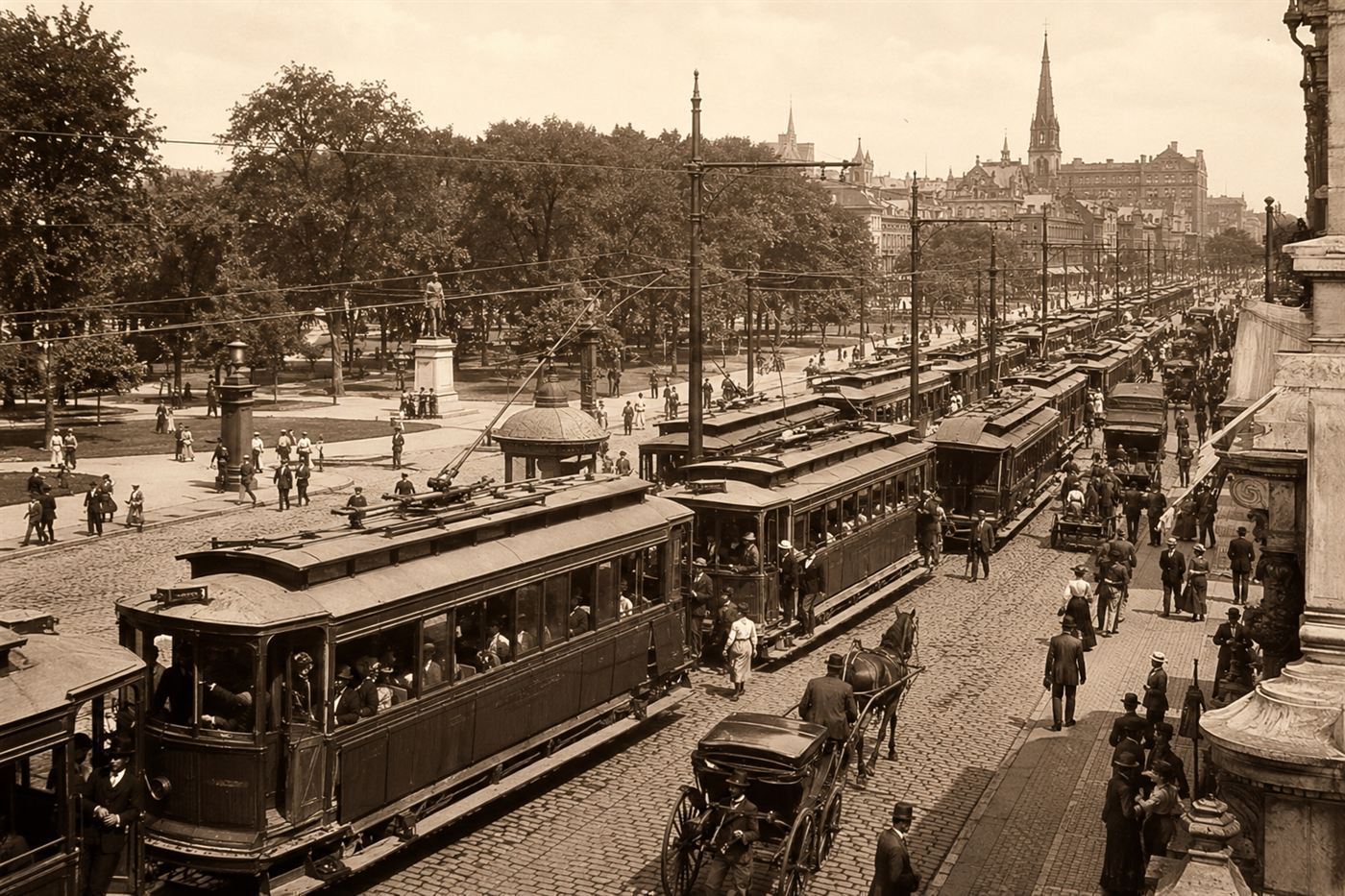
By the 1890s, downtown Boston had a problem that would sound familiar to any modern commuter. The narrow, crooked old streets were built for horses and carts, and now they were crammed with electric streetcars, hundreds of them, nose to tail, bells clanging, unable to move. On the busiest stretch, along Tremont Street beside the city's great park, the trolleys formed a solid, honking wall of metal.
The solution the city settled on was radical for America: take the worst of the congestion off the surface and put it underground. If the streetcars could dive into a tunnel and run beneath the gridlock, the theory went, the whole system would flow again. In 1897 that tunnel opened, and Boston had built the first subway in the United States.
The short version is that a traffic jam gave birth to American rapid transit. But getting there meant overcoming a deep public dread of the underground and disturbing ground that the city considered close to sacred.
Why Boston built the first subway
The pressure came from the streetcars themselves. Boston had embraced electric trolleys enthusiastically, and downtown had become their bottleneck, with lines from all over the city funnelling into the same few central streets and grinding to a halt. Business suffered, tempers frayed, and something clearly had to give.
Digging down was not an obvious choice at the time. London had a working underground railway, but no American city had tried it, and the plan to burrow beneath Boston felt strange and risky. Still, the sheer misery of the surface won the argument, and the city committed to sinking its busiest streetcar route into a tunnel under Tremont Street.
Digging under the dead of the common
The route ran along the edge of Boston Common, the oldest public park in the country and a place woven into the city's identity. Cutting a tunnel there meant tearing open ground that Bostonians treasured, and worse, it meant disturbing the past in the most literal way.
Parts of the ground held old burials from colonial times, and construction could not avoid them. Crews carefully exhumed and relocated around nine hundred sets of remains to make way for the tunnel, a grim and delicate task that unsettled many residents and gave the whole enterprise an eerie reputation before a single train had run.
Were people afraid to go underground?
Many were. The idea of descending into a dark tunnel to travel was genuinely unnerving to people who had never done anything like it. There were fears of the roof caving in, of foul air and fire in an enclosed space, and a superstitious shiver at the thought of riding through ground that had so recently held the dead.
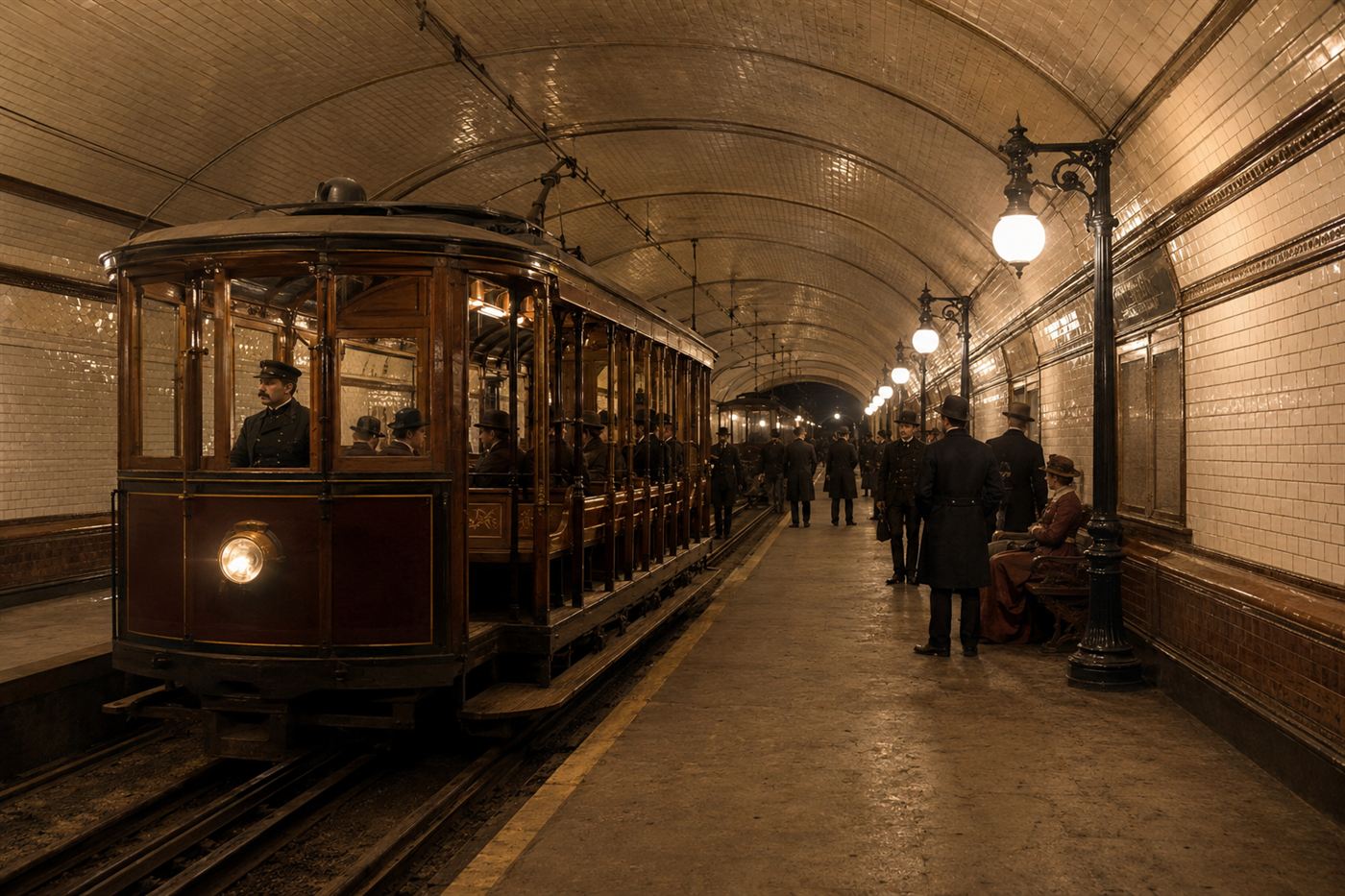
Those fears did not survive contact with the reality. When the subway opened on the first of September 1897, curious crowds poured in, and what they found was not a nightmare but a revelation: bright, tiled stations and streetcars that slid past the surface gridlock in a fraction of the time. The dread evaporated almost at once, replaced by delight at how much faster the underground was.
The little tunnel that started an era
By any modern measure the first subway was modest, a short stretch of tunnel carrying ordinary streetcars rather than a vast network of dedicated trains. Yet its importance is hard to overstate, because it proved that an American city could dig beneath itself and move people underground successfully.
New York, then still arguing about its own plans, would not open a subway until 1904, and other cities followed later still. Boston had shown the way, and the Tremont Street tunnel never stopped working; more than a century and a quarter on, trains of the modern system still rumble through the very passages dug in the 1890s.
The honest catch
Calling it simply the first subway needs a small footnote. It was really a tunnel for streetcars rather than a purpose-built rapid-transit railway of the kind that would come later, and there had been earlier underground curiosities elsewhere that never grew into real systems. Boston's claim rests on being the first practical, lasting subway in the country, which it genuinely was.
And the triumph carried a quiet cost that is easy to skip past. To build it, the city dug through a cherished park and moved the resting dead of earlier generations, trading a piece of its sacred ground and its peace for the promise of movement. It is a familiar bargain in the story of cities, progress bought with a little disturbance of the past, and Boston struck it first so that the rest of the country could follow underground.
A city so gridlocked that walking beat riding chose to burrow under its own dead to keep moving, and in doing so quietly invented American subways. Would you have been among the first curious riders in 1897, or one of the nervous ones who stayed above ground? Tell us what you think in the comments.
Related reading: the Holland Tunnel and the puzzle of breathing underground. See also the Eads Bridge, another daring nineteenth-century crossing, and the San Francisco cable cars born from a hillside tragedy.