When a US president and the emperor of Brazil turned two cranks in 1876, they woke the Corliss engine, a silent iron giant that single-handedly powered an entire world's fair
Picture a machine as tall as a four-story building, so smooth it seemed to run without effort, quietly turning the wheels of a thousand other machines at once. That was the Corliss engine, and for one summer it was the beating heart of America's vision of its own future.
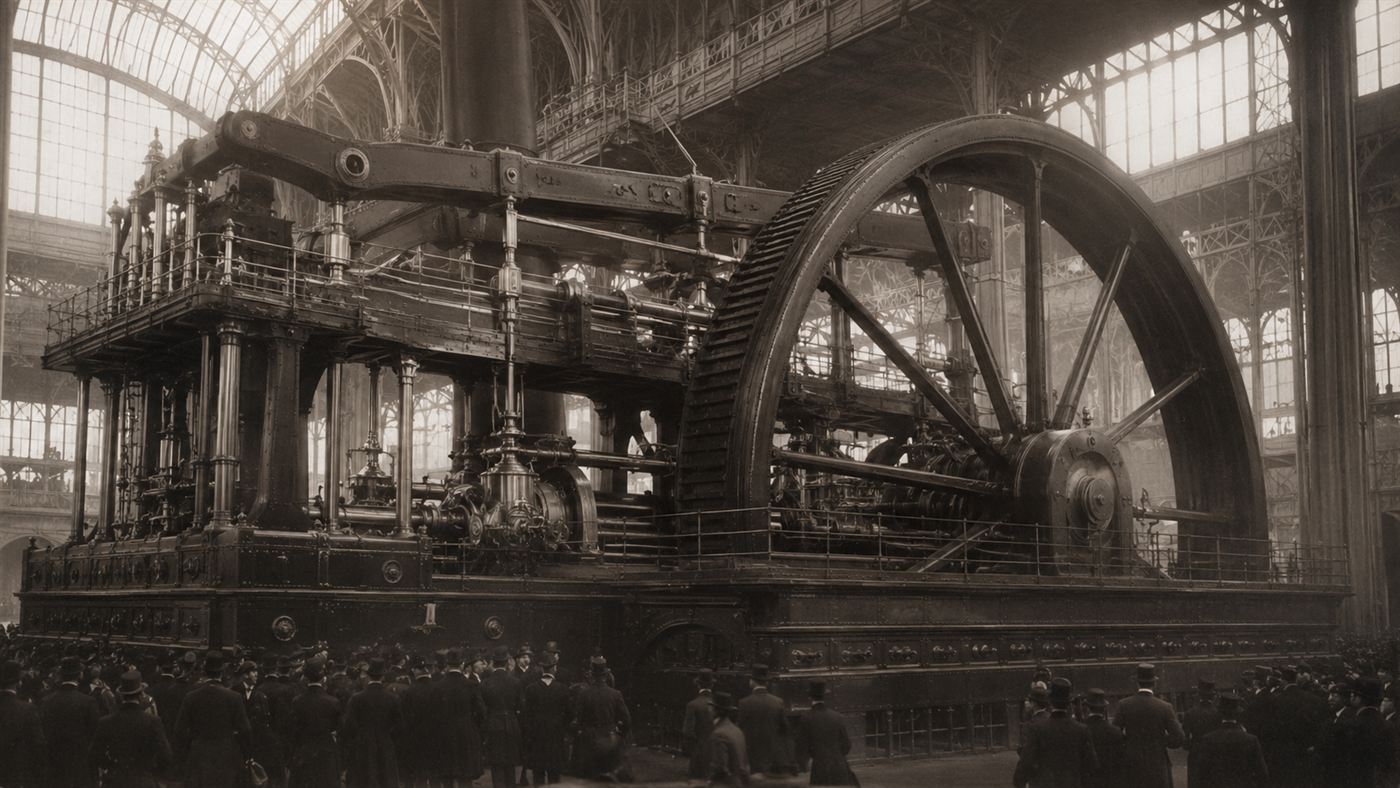
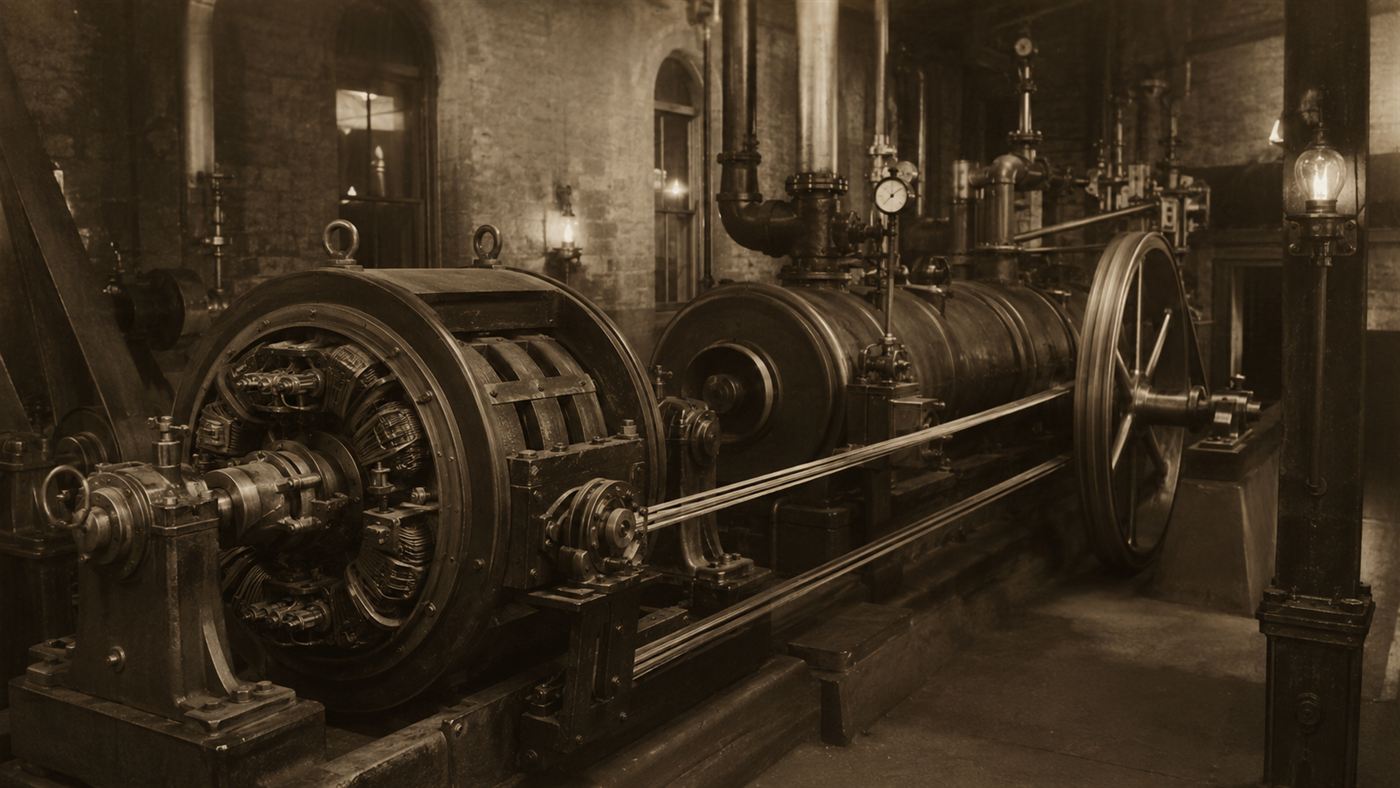
The Corliss Centennial Engine towered over Machinery Hall in Philadelphia. Illustration: Watts & Wild.
Every age has a machine that seems to sum it up, a single object that people point to and say, this is what we can do now. In 1876, as the United States celebrated a hundred years of independence, that machine was not a weapon or a ship or a building. It was a steam engine so enormous and so serenely powerful that visitors stood before it as if before an altar.
The Corliss engine did something no engine had done so publicly before. Instead of many small engines scattered across a fairground, one titanic machine sat at the center of it all and drove nearly everything, through miles of hidden shafts, as though an entire industrial world were being turned by a single calm heart. It is a story about the peak of the steam age, and, quietly, about its ending.
The short version: The Corliss Centennial Engine was a 45-foot-tall steam engine built for the 1876 Philadelphia Centennial Exhibition. Producing about 1,400 horsepower, it powered nearly every machine in the fair's giant Machinery Hall through more than a mile of shafting. It became the symbol of American industry, then was later sold off and scrapped as electricity made central steam engines obsolete.
One engine to move a fair
The Centennial Exhibition of 1876 was the first official World's Fair held in the United States, a sprawling celebration in Philadelphia meant to show the world that the young nation had become an industrial power. Its centerpiece was Machinery Hall, an enormous building packed with the latest inventions, from printing presses to pumps to early telephones.
All of those machines needed power, and the organizers made a bold choice. Rather than give each exhibit its own little engine, they installed a single colossal one and ran power out to everything else. Beneath the floor and overhead ran more than a mile of shafts and belts, all of it spun by the great Corliss engine standing at the hall's heart. It was industry imagined as one vast, connected organism.
Grant and the emperor of Brazil
The opening, on the tenth of May 1876, was pure theatre. Before an immense crowd, two men climbed the platform beside the silent engine, President Ulysses S. Grant of the United States and Emperor Pedro II of Brazil, who was touring the country. Together they took hold of the controls and started the giant.
With a low hush rather than a roar, the great flywheel began to turn, the mile of shafting came alive, and all across Machinery Hall the machines started to move as one. The crowd was stunned. In that single moment, a president and an emperor had woken a sleeping colossus, and the audience understood they were looking at the raw power of the coming century.
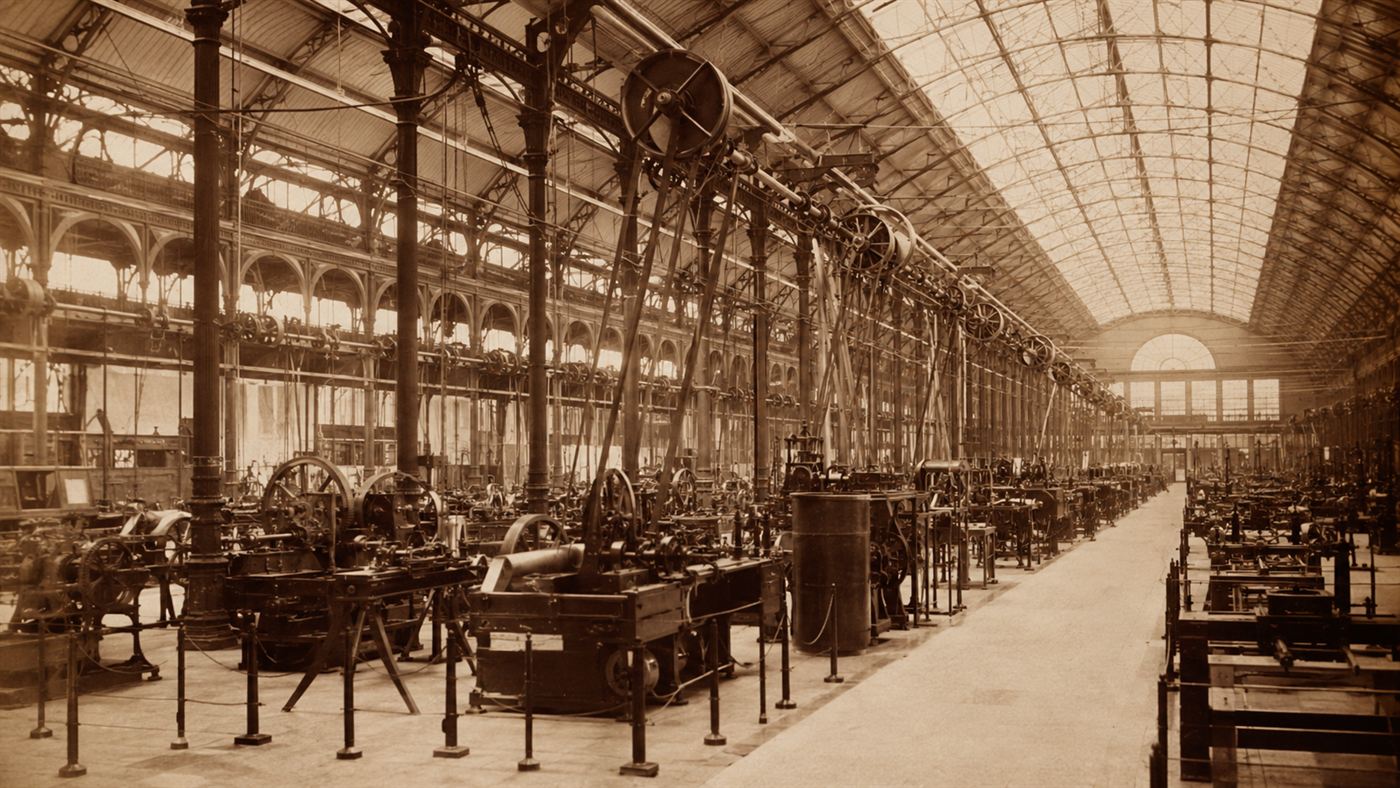
The machine that awed a nation
The scale of the Corliss engine is hard to overstate. It stood about 45 feet tall, its flywheel alone was 30 feet across and weighed dozens of tons, and it delivered around 1,400 horsepower. Yet what amazed people most was not its size but its calm. It ran with astonishing smoothness and quiet, without the shuddering and clatter expected of such a beast.
The writer William Dean Howells, whose account is preserved by Yale's Energy History project, described it as an almost living presence, an athlete of steel moving without visible strain. Visitors read into it everything they hoped about their nation, that American power could be immense and yet controlled, mighty and yet serene. The engine became, more than any speech or flag, the emblem of the country's industrial coming of age.
The quiet genius of George Corliss
Behind the spectacle stood a Rhode Island engineer named George Henry Corliss, and his real contribution was subtler than the showpiece suggested. Corliss had invented an improved system of valves, a clever mechanism that controlled how steam entered and left the cylinder far more precisely than earlier engines could manage.
That may sound like a small technical detail, but its effect was enormous. The Corliss valve gear made steam engines significantly more efficient, steadier and thriftier with fuel than the older designs descended from James Watt. It was this invention, licensed and copied around the world, that was Corliss's true legacy. The Centennial giant was the grand advertisement, but the everyday improvement in thousands of ordinary engines was the real revolution.
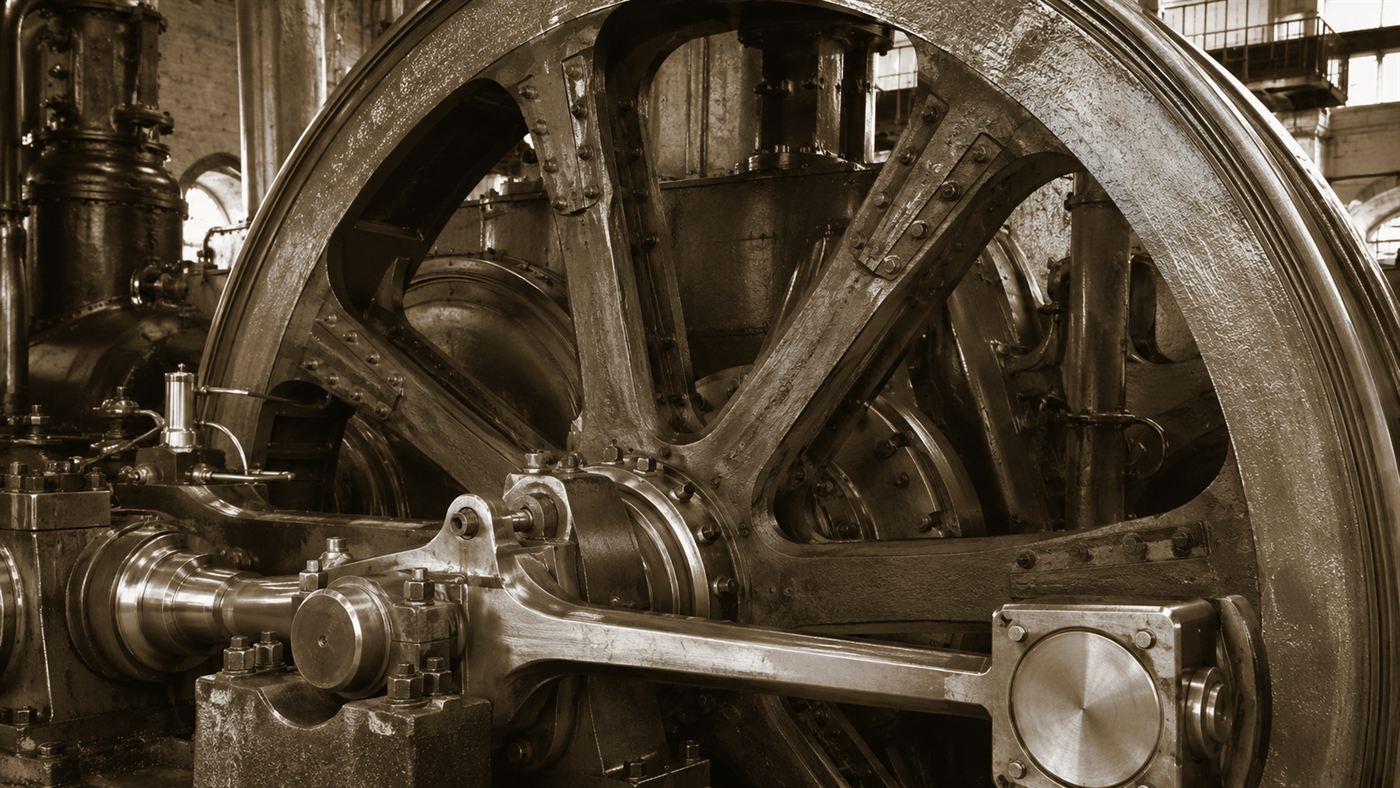
From icon to scrap
For all the awe it inspired, the great engine's afterlife was strangely humble. When the fair closed, the Corliss engine was taken apart and shipped back to its maker's works in Providence, Rhode Island, its moment as a national symbol over almost as soon as it began.
As the Pullman history site records, about seven years later the engine was sold to the railcar magnate George Pullman, who used it to power his factory near Chicago until around 1910. Then, its working life finished and its fame long faded, the colossus that a president and an emperor had once started together was sold for scrap and melted down. The emblem of an age quietly disappeared into the furnaces of the next one.
The honest catch
It is tempting to remember the Corliss engine purely as a dawn, the thunderous beginning of American industrial might. But the more honest reading is that it was closer to a sunset. The very idea it embodied, one giant central engine driving everything through a web of shafts and belts, was already living on borrowed time. Within a couple of decades, electricity would make it obsolete, letting each machine have its own small motor fed by wires from a distant power station.
There are other honest notes worth making. The engine's serene, effortless image owed something to showmanship, since it still burned coal steadily and demanded heavy maintenance. Corliss's lasting gift to the world was really his efficient valve gear, not this one magnificent monument. And the gleaming vision of progress on display in Machinery Hall was built on an age of coal smoke and brutal factory labor that the celebration politely ignored. The Corliss engine was a genuine marvel and a turning point, but it is best understood as the proud, final flourish of the steam age, standing tall just as the electric future was preparing to sweep it away.
A single silent giant once powered a whole world's fair, then vanished into a furnace as electricity took its place. Was the Corliss engine the dawn of the industrial age or its grandest farewell, and do we always mistake the peak of a technology for its beginning? Tell us what you think in the comments.
Related reading: Pearl Street Station, the electric power plant that would soon make giant engines like this obsolete, or the Holland Tunnel, named for the engineer it worked to death.
More from Watts & Wild
More in Energy →

Bruno writes about energy, industry and the big machines that run the modern world, with an eye for the human story behind the engineering.