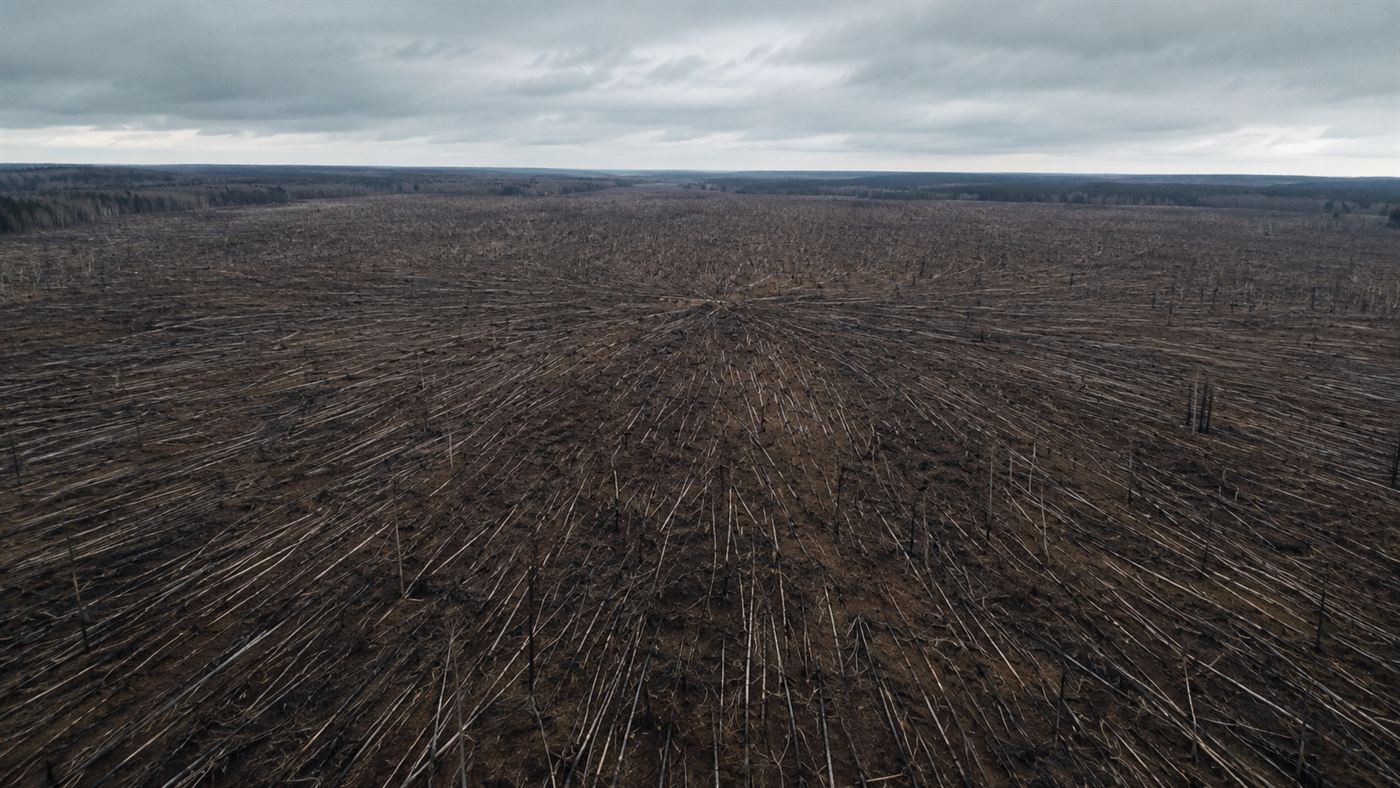
For forty years scientists have aimed cameras and radar at the Hessdalen lights over a Norwegian valley, and the best explanation is that the ground itself is a battery
The Hessdalen lights are one of science's stranger open cases: glowing orbs that have floated over a remote Norwegian valley for more than a century, sometimes dozens of times a week. For forty years researchers have studied them with real instruments, and the leading idea is that the valley is a giant natural battery.
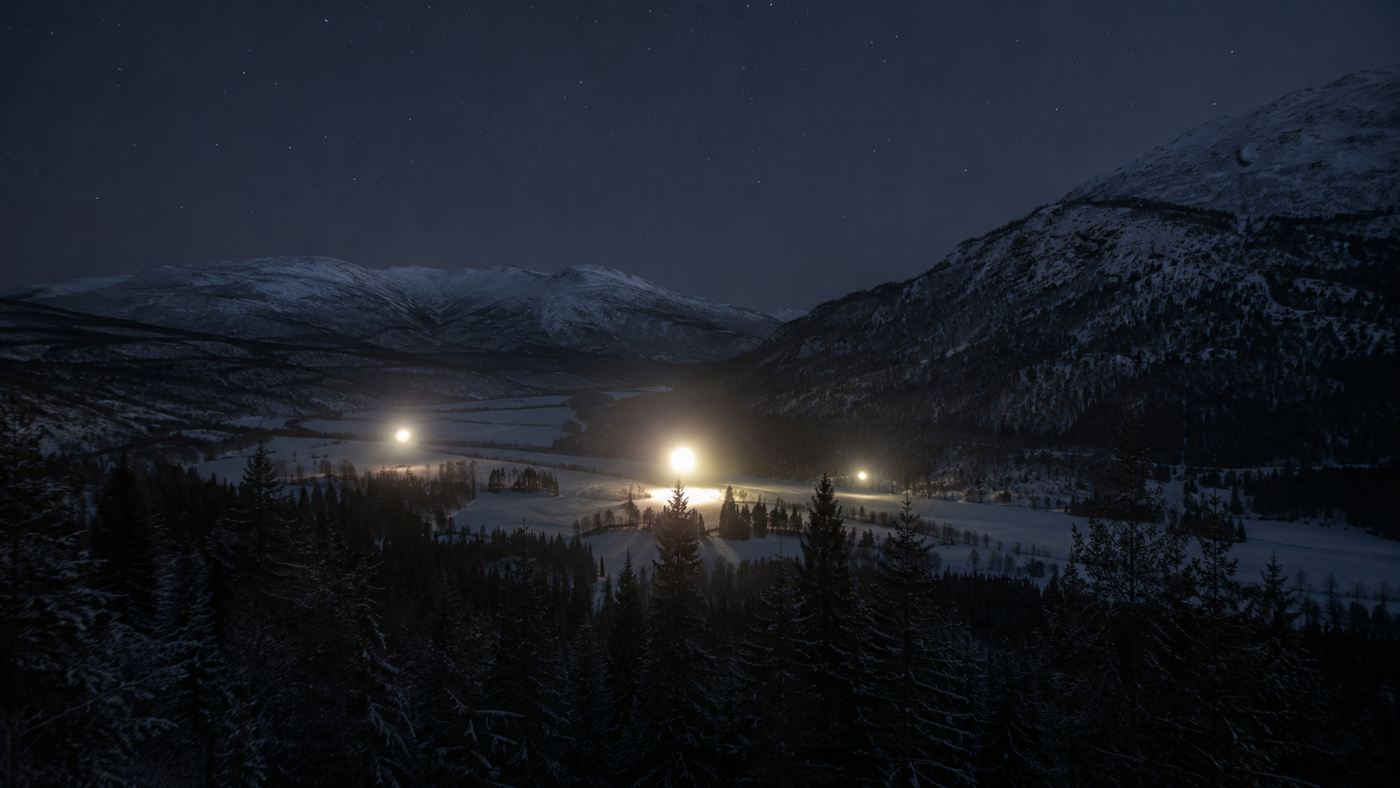
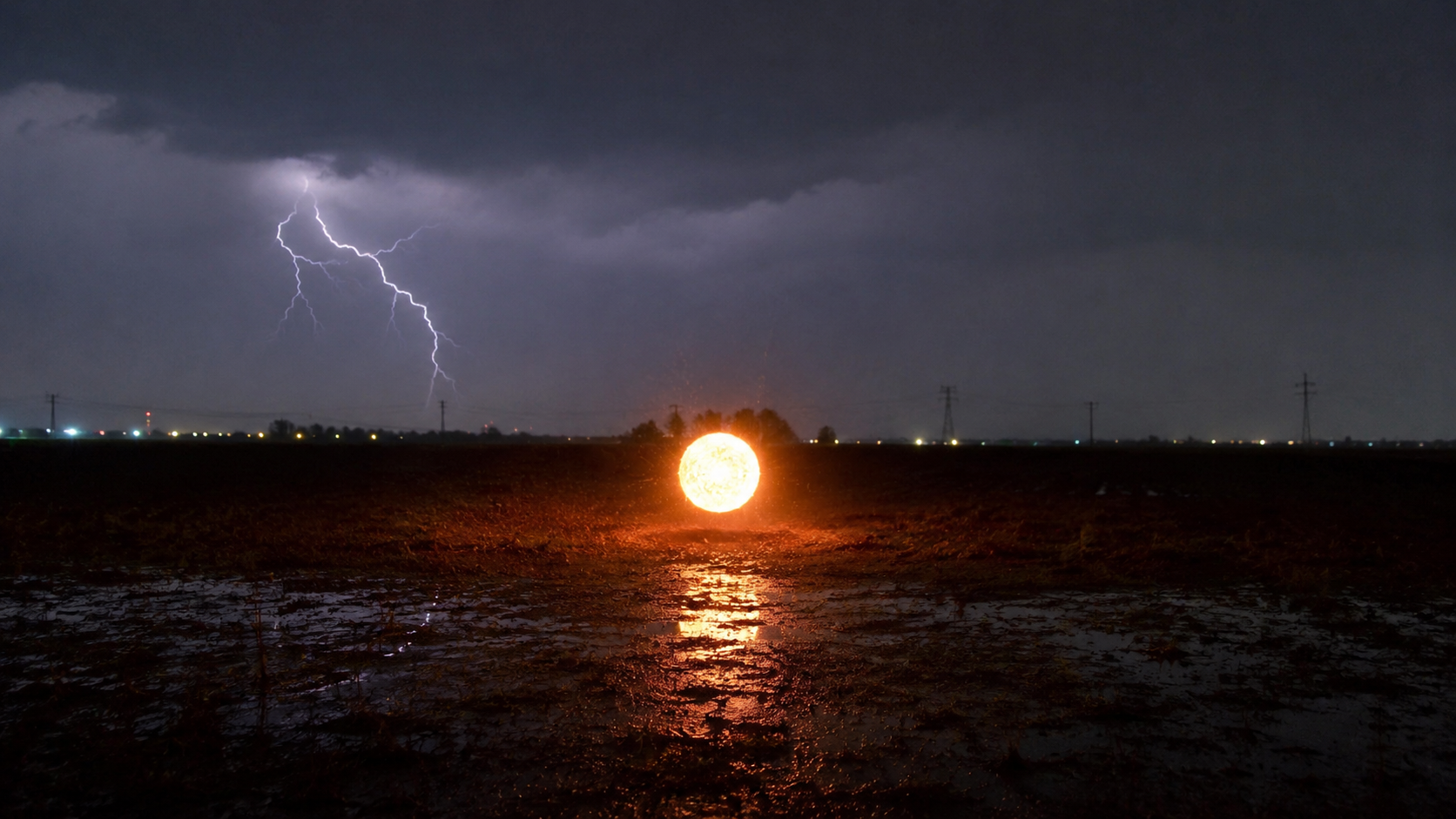
The Hessdalen lights hovering over the valley, a real phenomenon science still cannot fully explain. Illustration: Watts & Wild.
The Hessdalen lights are not a ghost story, though they sound like one. In a quiet valley in central Norway, balls of light appear in the night sky and behave in ways that make no easy sense: hovering for an hour, flaring suddenly bright, drifting low over the ground, or darting away at speed. Locals have reported them since the 1800s, and for a few astonishing years in the early 1980s they were turning up 15 or 20 times a week.
What sets Hessdalen apart from every roadside ghost light and flying-saucer tale is that scientists took it seriously and brought equipment. As documented in the long-running research effort, in 1984 a Norwegian named Erling Strand launched Project Hessdalen, dragging cameras, radar, magnetometers and spectrum analysers into the valley to record the lights rather than just marvel at them. They captured dozens of events on instruments, and the mystery has been a genuine scientific puzzle ever since.
What are the Hessdalen lights? The Hessdalen lights are unexplained luminous phenomena, glowing balls of light, that appear over a valley in central Norway. Documented since the 1800s and studied scientifically since 1984, they range from half a metre to tens of metres across. The leading natural theory is that the valley's geology acts like a giant battery, ionizing the air into plasma.
Hessdalen lights that behave like nothing else
Part of what keeps the Hessdalen lights from being explained away is how varied they are. Witnesses and cameras have recorded white, yellow, red and blue glows, some no bigger than a beach ball and some the size of a small house, anywhere from half a metre to thirty metres across. They can hang motionless in the air for up to an hour, far longer than any spark or flare, then accelerate off across the valley in a way no balloon or aircraft would.
That mix of long duration and high energy is exactly what rules out the easy answers. A hovering light that lasts an hour is not a meteor or a passing plane; a glow that suddenly shoots away is not a star or a distant headlight. The lights are clearly something physical and local to the valley, which is what drew serious researchers to a remote corner of Norway in the first place.
The scientist who brought cameras instead of belief
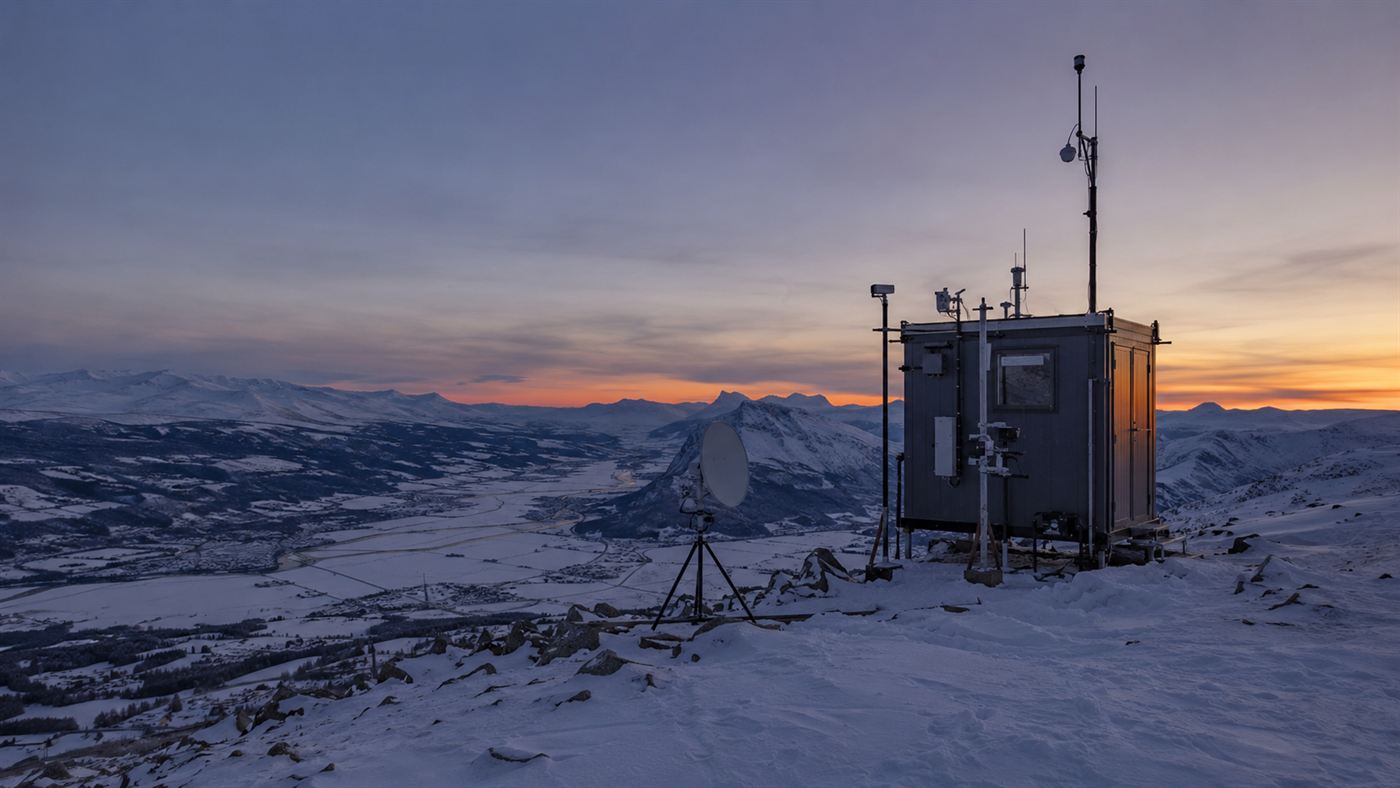
The figure who turned Hessdalen from folklore into fieldwork was Erling Strand, a lecturer at a Norwegian college who, in the mid-1980s, did the unfashionable thing and treated an "unidentified" phenomenon as a measurement problem. His Project Hessdalen documented 53 events in its first field campaign alone, using cameras, radar and magnetometers, and later set up an automatic monitoring station in the valley to watch for the lights around the clock.
Since 1996, Italian scientists have joined in through a series of campaigns known as the EMBLA project, bringing radio telescopes, spectrometers and more sensitive cameras. Their spectral analyses suggested that at least some of the lights are clouds of ionized gas, a plasma, glowing as their charged particles shed energy. That was a crucial step: it pointed away from anything supernatural and toward ordinary, if unusual, physics.
The valley that might be a battery
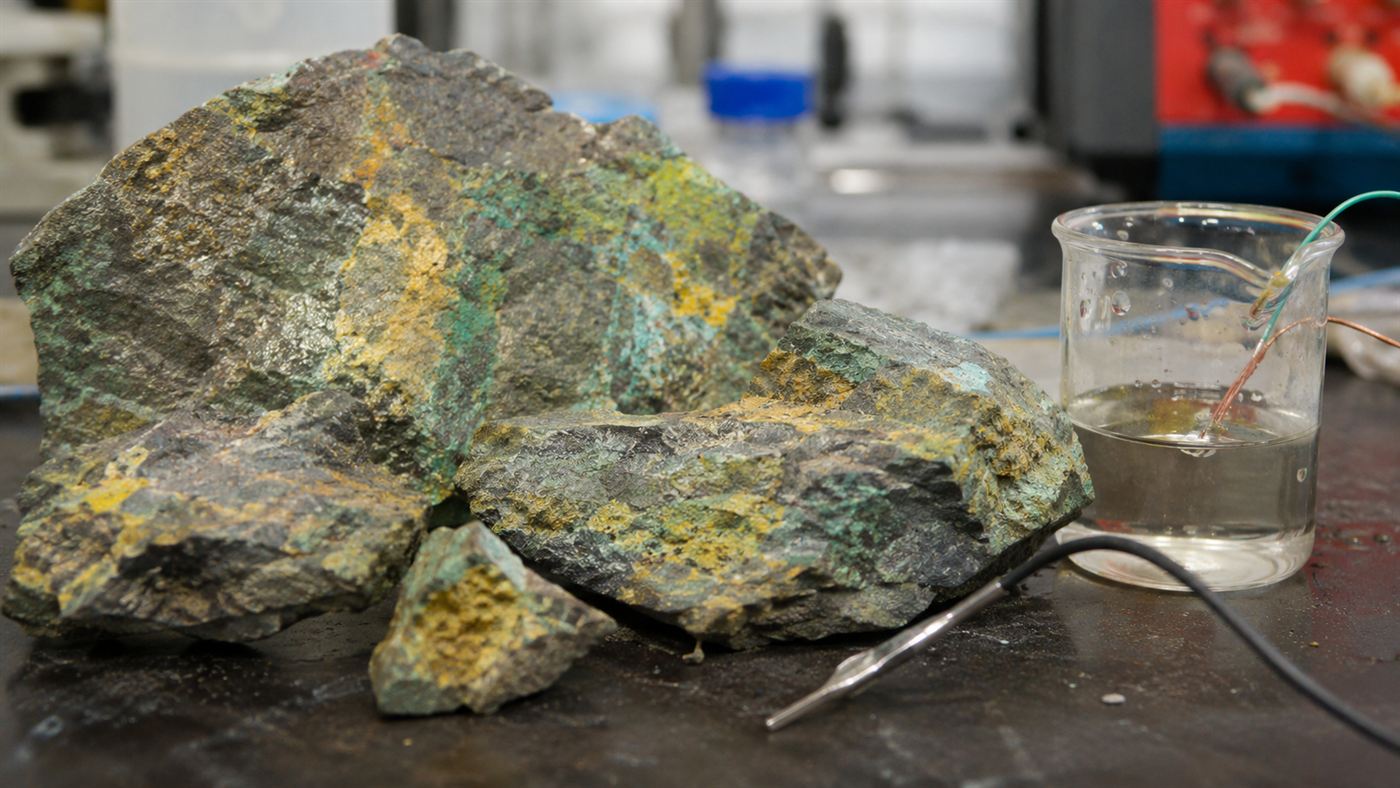
The most intriguing explanation comes straight out of the rocks. The Italian geologist Jader Monari studied the geology of the valley and proposed that Hessdalen is, in effect, a colossal natural battery. The hills on one side are rich in copper and zinc, the bedrock holds sulphur, and a slightly acidic, sulphurous river runs through the middle. Put a metal-rich rock, an acidic fluid and a second metal together, and you have described the basic recipe for an electrochemical cell.
On that view, the whole valley quietly generates electrical current, like a battery the size of a landscape, and that current could ionize dust and gas in the air into the glowing plasma people see. To test the idea, Monari reportedly built a small working battery using rock samples from Hessdalen itself, which produced a measurable voltage. It is the perfect Watts & Wild twist: a stretch of Norwegian ground that may literally be powering its own light show.
Other ideas, and what we still don't know
The natural-battery hypothesis is the most elegant, but it is not the only one, and none is proven. Some researchers point to piezoelectricity, the charge that certain rocks release when stressed by movements in the crust; others to radon gas decaying and ionizing the air, or to pockets of burning gas. The plasma readings fit several of these, but no single model neatly accounts for everything the Hessdalen lights do, especially their long lifetimes and sudden, controlled-looking movements.
So the honest status is "partly understood." Decades of data have turned the lights from an inexplicable wonder into a constrained physics problem, with a short list of plausible mechanisms and a leading favourite. What is missing is the clean, repeatable experiment that would settle which one is right, and the lights, frustratingly, no longer appear often enough to make that easy.
The honest catch
It is worth being careful here, because Hessdalen sits on a fault line between real science and wishful thinking. The valley has long been a pilgrimage site for UFO enthusiasts, and a fair amount of "footage" turns out, on inspection, to be ordinary aircraft, car headlights bouncing off the hills, or planets low on the horizon. Treating every glow as a genuine anomaly is exactly the mistake good researchers avoid.
What is left after that filtering is still real, and still unexplained, which is the interesting part. The serious work on the Hessdalen lights is not about aliens; it is about taking a strange, repeatable natural effect and refusing to either dismiss it or mystify it. Ball lightning was treated as a peasant superstition for centuries before science accepted it. Hessdalen may be another such case, a genuine phenomenon waiting, patiently, for its plain explanation to be nailed down.
For over a century a Norwegian valley has been lighting up the night with glowing orbs that science can describe but not quite explain, and the best guess is that the ground beneath is a natural battery. Does an answer like "the valley is a battery" make the Hessdalen lights more wonderful or less? Tell us what you think in the comments.
Related reading: The Venezuelan lake where lightning strikes almost every night of the year.