Ball lightning, the glowing sphere that drifts through storms and even walls, killed a scientist in 1753 and still has no explanation science fully agrees on
For hundreds of years, people have sworn they watched a glowing ball of light drift silently through a thunderstorm, slip through a closed window, hover in a room, and then vanish or burst. For most of that time, science flatly refused to believe them. Then, in 2012, a team in China accidentally caught one on camera.
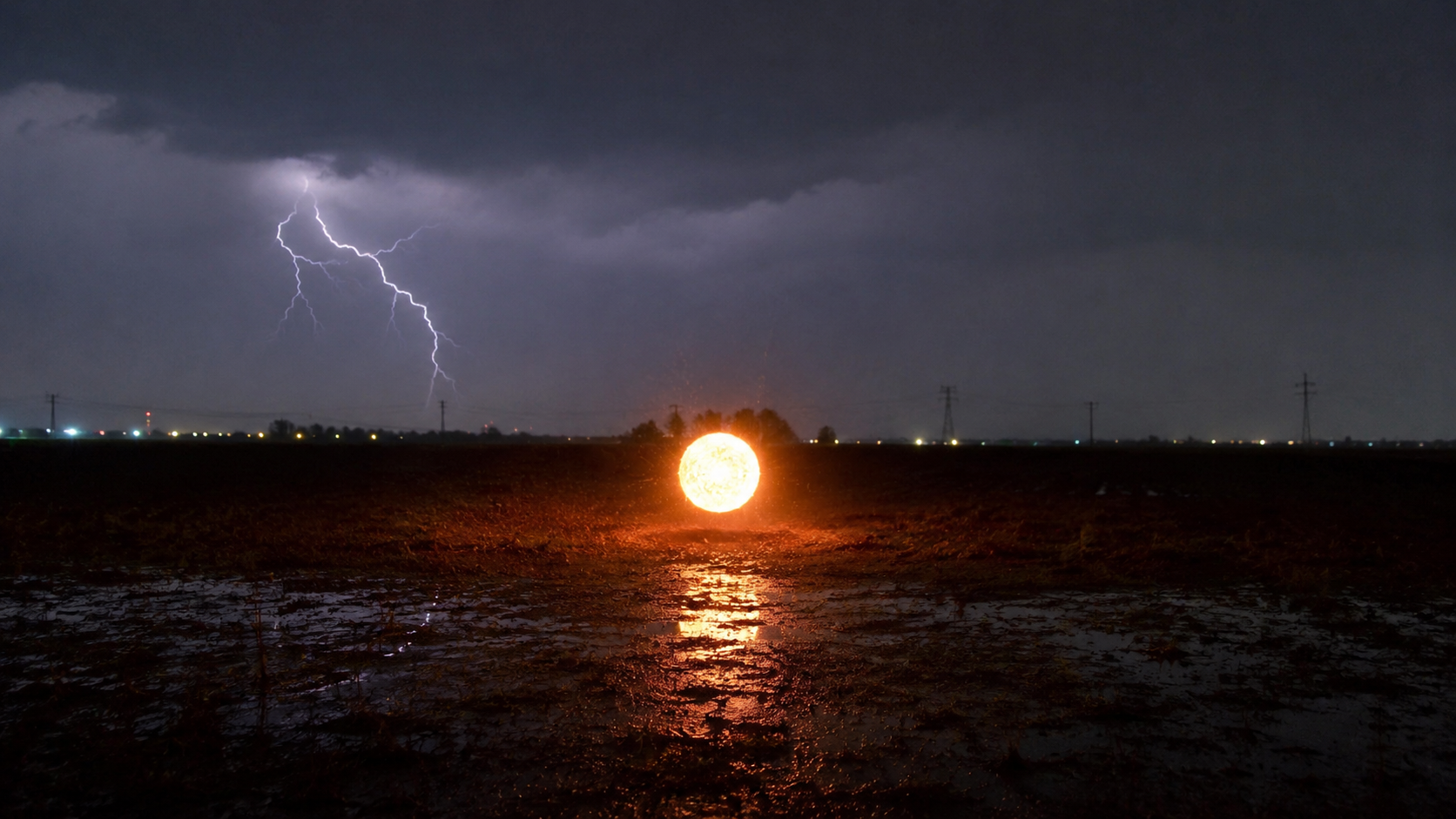
A glowing orb that floats, drifts and vanishes: one of nature's great unsolved puzzles. Illustration: Watts & Wild.
ball lightning is one of the strangest entries in the whole catalogue of weather, a phenomenon so odd that for centuries serious scientists assumed the witnesses were either lying, drunk, or hallucinating. And yet the reports kept coming, from sailors and farmers and physicists alike, all describing more or less the same impossible thing: a luminous sphere, often the size of a grapefruit or a football, behaving in ways that ordinary lightning simply does not.
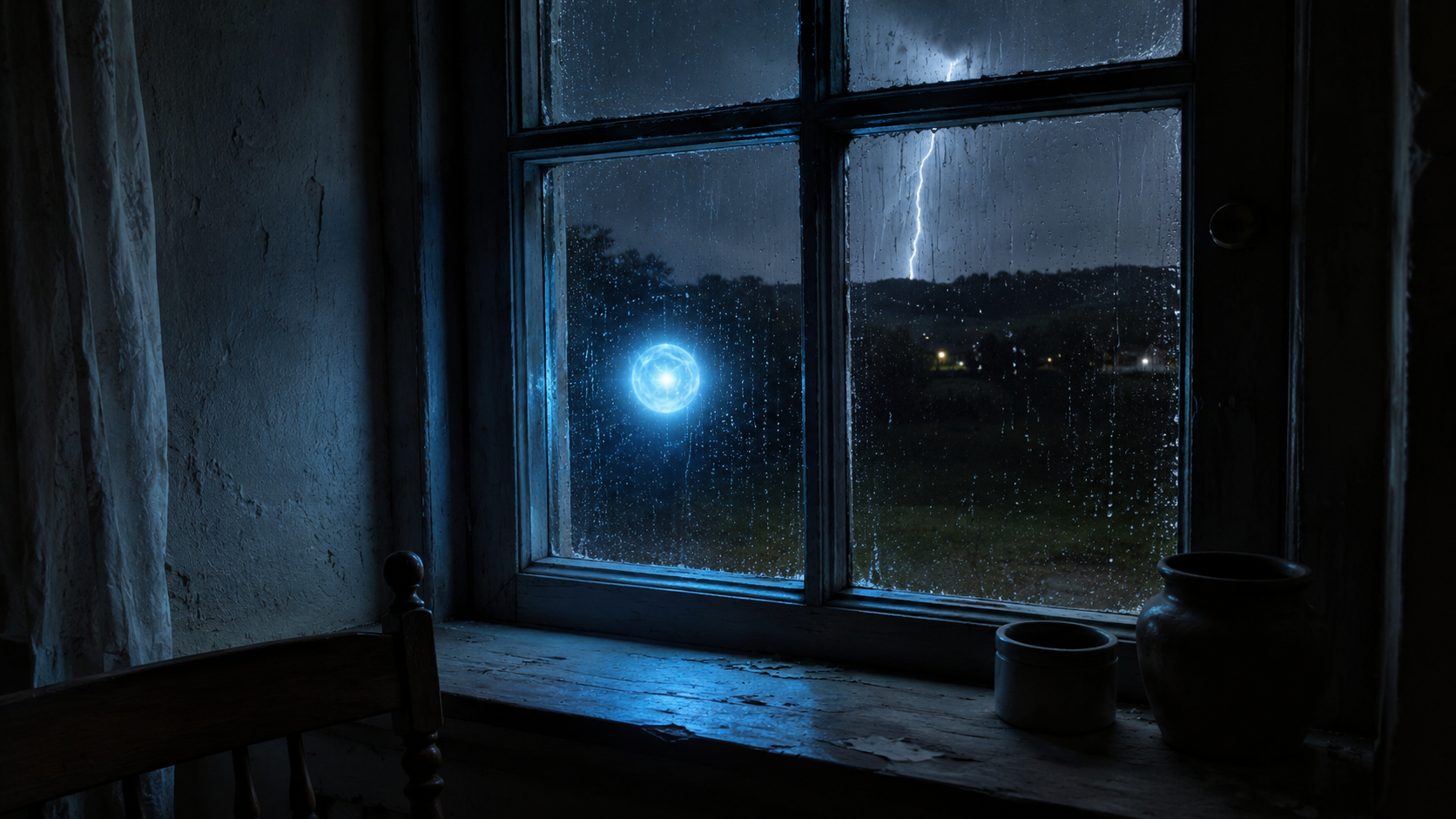
The descriptions are remarkably consistent. The ball appears during or just after a thunderstorm, glows orange, white or blue, floats rather than falls, and lasts for a second or several before fading quietly or exploding with a bang. Sometimes it rolls along the ground; sometimes it drifts through a window or down a chimney into a room full of terrified people.
What is ball lightning?
The honest answer is that nobody is completely sure, which is exactly what makes it so fascinating. It is not a bolt, not a flash, and not St Elmo's fire, the harmless glow that clings to ships' masts. It is a discrete, free-floating object made of light and, apparently, something more, and it can leave scorch marks, smells of sulphur or ozone, and damaged objects behind it.
What sets it apart from almost every other natural phenomenon is that it has resisted explanation for so long. We have mapped the human genome and landed probes on comets, but a glowing ball that drifts out of a storm cloud and through someone's kitchen still does not have a single agreed-upon cause.
The scientist killed by a glowing ball
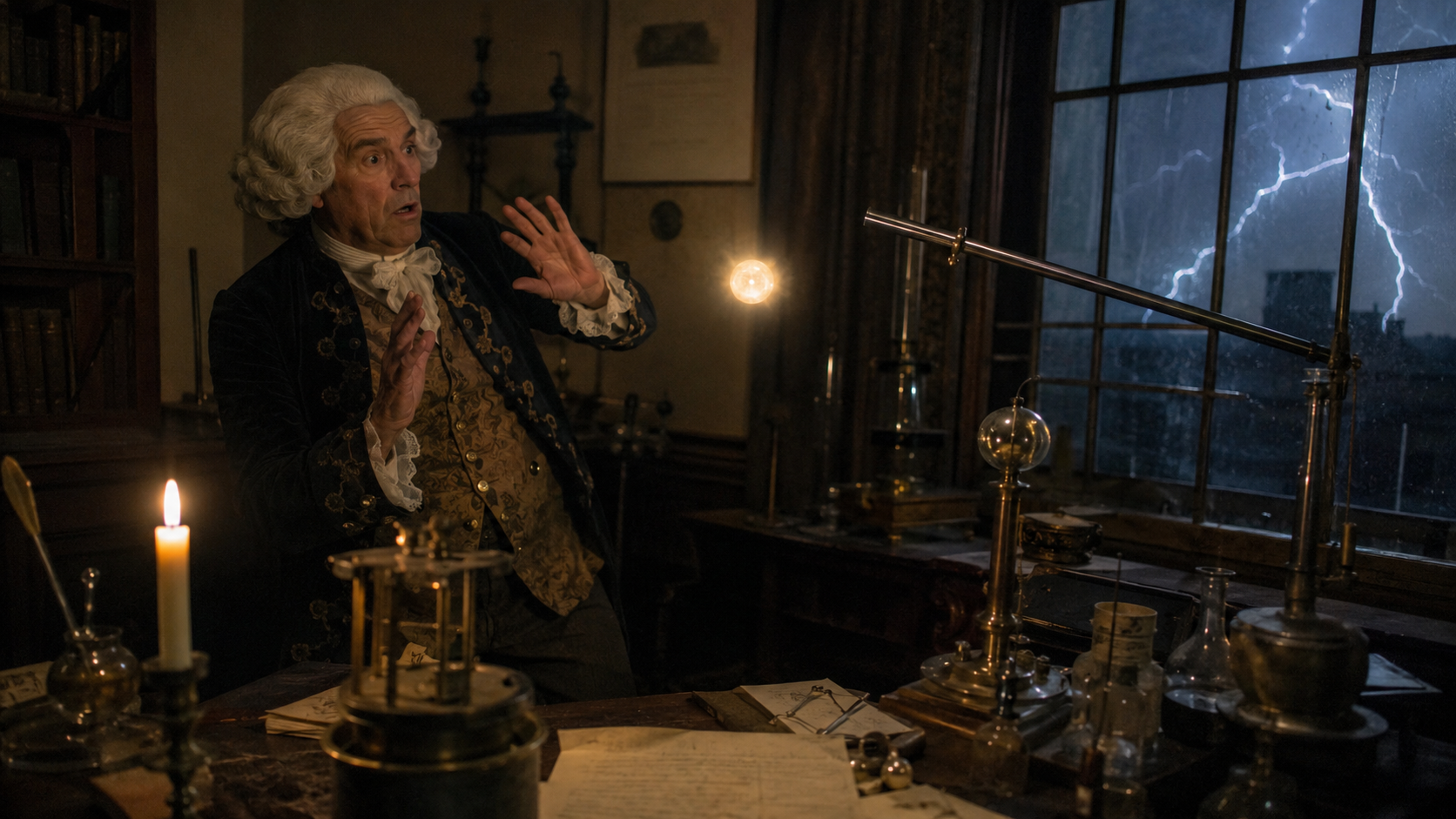
The most famous historical encounter is also the most chilling. In 1753, in Saint Petersburg, the physicist Georg Wilhelm Richmann was studying electricity in storms, inspired by Benjamin Franklin's experiments with kites and lightning. Richmann had rigged up an apparatus to draw electrical charge from the sky into his laboratory.
During a thunderstorm, as he leaned in to take a reading, witnesses said a pale glowing ball detached from his apparatus, leapt to his forehead, and killed him instantly, leaving a red mark, blown-open shoes and singed clothes. Richmann is often called the first person to die conducting an electrical experiment. A dramatic engraving of the glowing ball striking him helped fix the image of ball lightning in the public mind for generations.
Caught on camera at last
For more than two centuries, ball lightning lived in that uncomfortable space between folklore and science, too widely reported to ignore but never captured by an instrument. That changed by sheer luck on the Tibetan Plateau in July 2012.
Researchers from a university in Lanzhou had set up spectrometers and high-speed cameras to study perfectly ordinary lightning. During one storm, a bolt struck the ground about a kilometre away, and out of the strike rose a glowing ball that hung in the air for under two seconds before vanishing. By pure chance, their instruments were pointed right at it, giving science its first ever spectrum and high-speed video of natural ball lightning. The mystery suddenly had hard data.
So what is it made of?
The 2012 spectrum carried a huge clue. The glowing ball contained the same elements as the local soil, chiefly silicon, iron and calcium. That fit beautifully with a theory proposed in 2000 by the New Zealand chemist John Abrahamson. His idea: when lightning slams into the ground, the intense heat vaporises silicon compounds in the soil, and the resulting cloud of silicon nanoparticles floats up and slowly burns in the air, glowing as it oxidises. In other words, ball lightning might be a puff of dirt, set alight.
It is an elegant explanation, but it is not the only one, and it does not fit every sighting. Other researchers favour a self-contained knot of plasma held together by its own magnetic fields, or pockets of microwave energy trapped inside a thin plasma shell. The truth is that ball lightning is probably not one single thing at all, but a label we have pinned on several different rare events that happen to look alike.
The honest catch
Scepticism is healthy here, and worth keeping. Even Richmann's celebrated death was very probably caused by an ordinary lightning strike through an ungrounded conductor, not a true floating ball, however good the engraving looks. Many "ball lightning" reports are surely misidentified afterimages, electrical arcs, or simple tricks of a frightened mind during a violent storm.
There is even a serious hypothesis that some sightings are not external objects at all. The powerful, rapidly changing magnetic fields near a lightning strike can stimulate the brain's visual cortex directly, making a person "see" glowing shapes that are not really there. Some ball lightning, in other words, may happen entirely inside the witness's own head. That does not explain the scorch marks and the spectrum, but it is a reminder to hold the whole subject loosely.
Why ball lightning still matters
In an age when we feel we have measured and explained almost everything, ball lightning is a small, humbling rebuke. Here is a phenomenon ordinary enough that thousands of people have watched it in their own homes, and yet science still cannot say for certain what it is or reliably make one in a lab. It sits at the edge of what we understand about electricity, plasma and the storm.
That is its real charm. Nature still keeps a few glowing secrets close, drifting through our kitchens and across our fields, daring us to work out what they are before they wink out and are gone. Ball lightning has been seen for centuries, killed at least one careful scientist, and finally posed for the camera, and it is still, gloriously, unexplained.
A glowing ball drifts out of a storm, through a wall, across a room, and science still can't fully say what it is. Have you, or someone you know, ever seen something like ball lightning during a storm? Tell us what you saw in the comments.
Related reading: In one Norwegian valley, strange glowing lights appear so often that scientists have built instruments just to watch for them.