For decades, half of a Minnesota river poured into a hole at Devils Kettle and seemed to vanish, and people threw in dye, balls and logs trying to find where it went
At Devils Kettle, a waterfall in northern Minnesota, half the river tumbles downstream and the other half pours into a dark hole in the rock and disappears. For generations nobody could say where that water went, and the things people threw in to find out never came back.
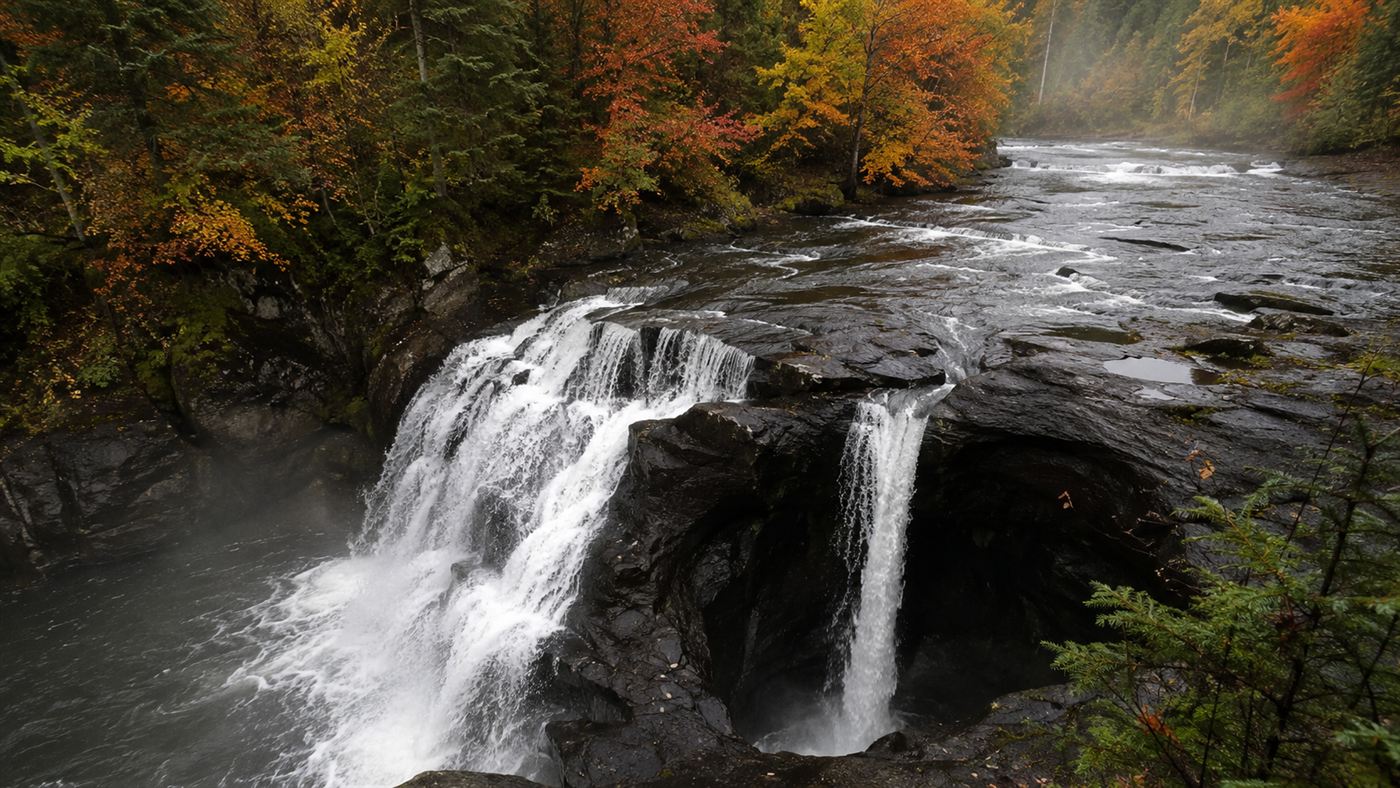
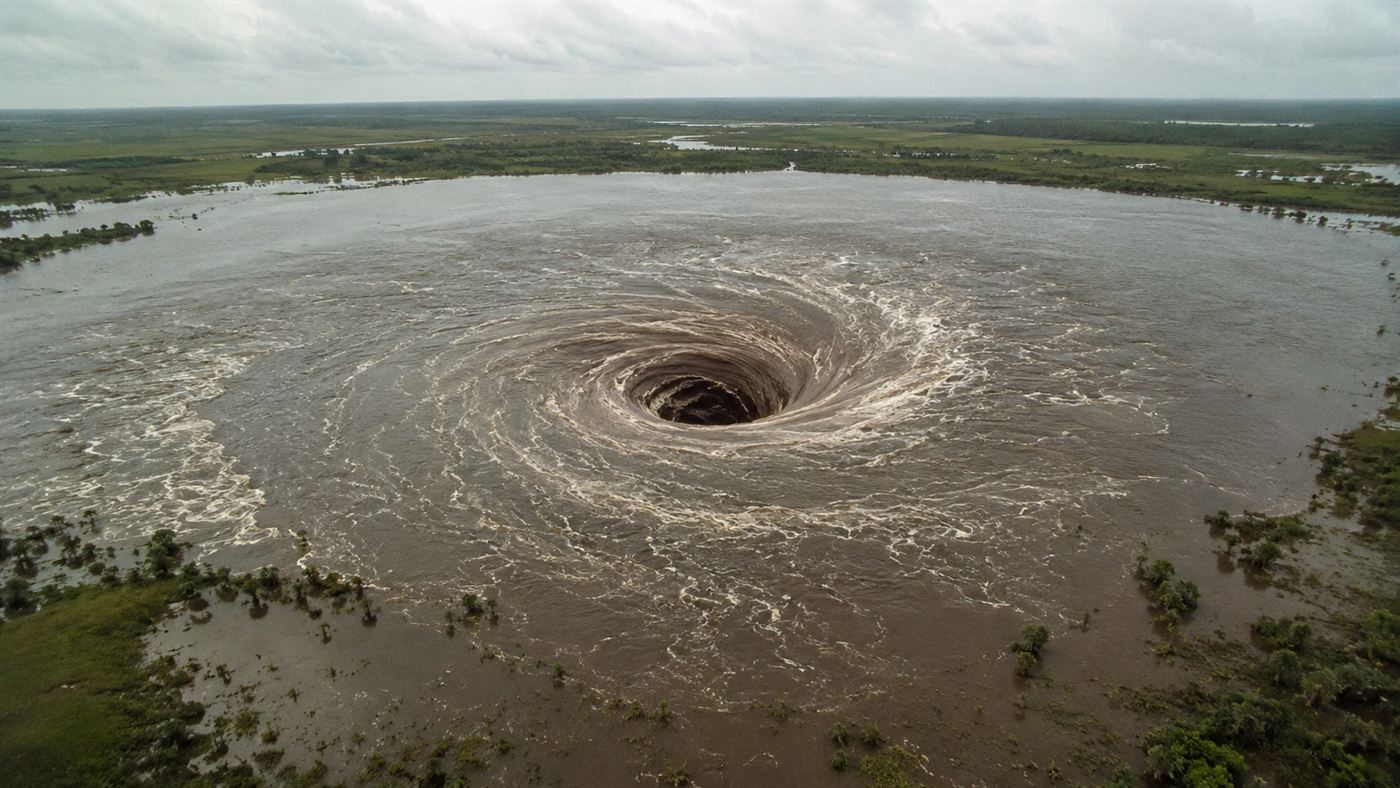
Devils Kettle, where half the Brule River drops into a hole and seems to vanish. Illustration: Watts & Wild.
Devils Kettle is one of the strangest sights on the North Shore of Lake Superior. On the Brule River, inside Judge C.R. Magney State Park, the water reaches a knuckle of hard volcanic rock and splits in two. One half drops down an ordinary-looking waterfall and carries on toward the lake. The other half plunges straight into a deep pothole in the stone and, as far as anyone could tell for decades, simply ceased to exist.
The hole looked bottomless, and the question of where its water went hardened into local legend. As MPR News reported when the puzzle was finally addressed, curious visitors had spent years trying to solve it the obvious way, by dropping things in and watching downstream for them to reappear: ping-pong balls, coloured dye, logs, even, the stories go, an old car. Nothing ever came back. That silence convinced people the river must vanish into some vast hidden cave.
Where does the water at Devils Kettle go? It rejoins the river. In 2017, Minnesota hydrologists measured the river's flow above and below the falls and found the amounts nearly identical, then confirmed with a dye test that the water pouring into the kettle travels a short distance underground and resurges in the same river just downstream.
The waterfall that swallows half a river
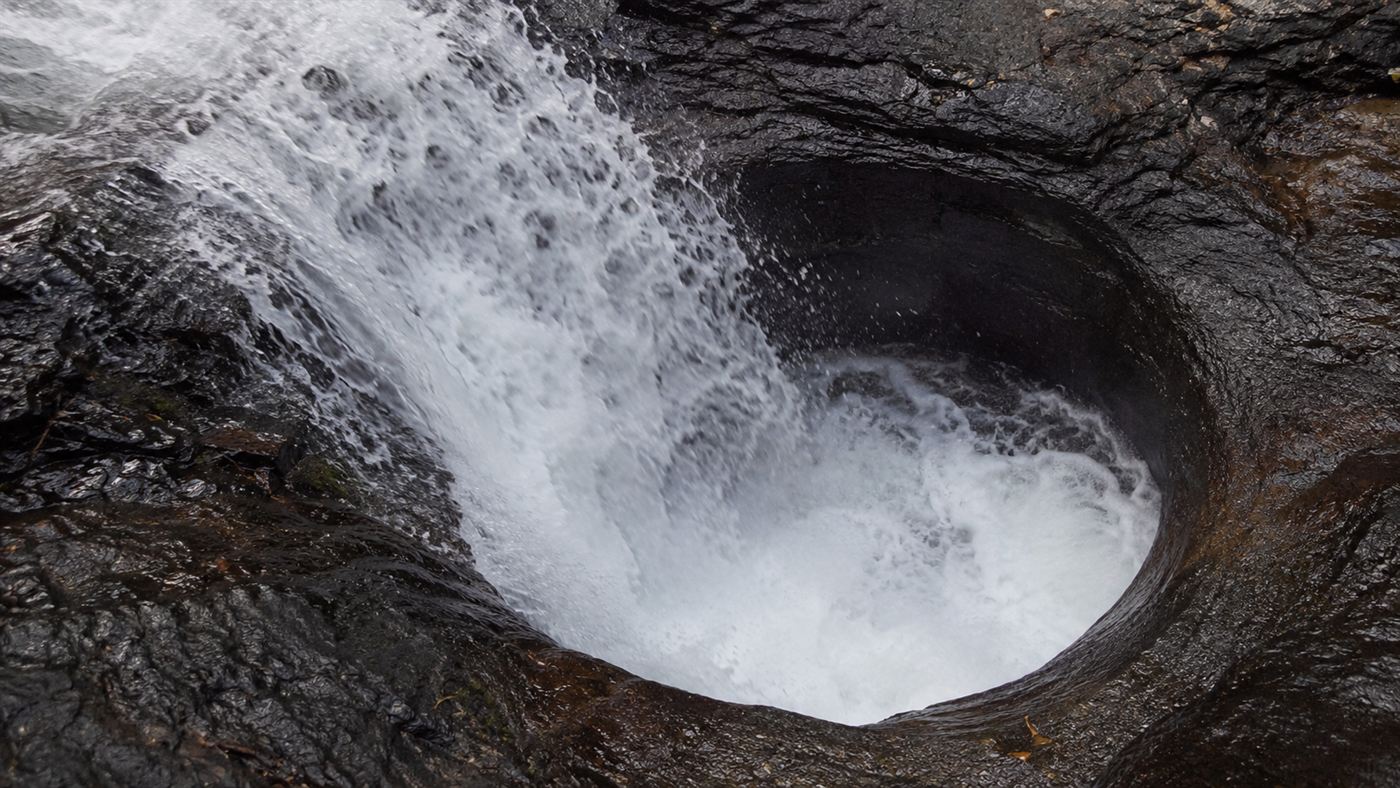
Up close, the scale of it is unnerving. Half of a real river, not a trickle, pours over the lip of the Devils Kettle and vanishes into a churning black hole, throwing up spray and noise and going, apparently, nowhere. There is no visible outlet, no second waterfall lower down where the missing water might burst back out, just the main branch of the Brule River carrying on with what looks like only half of what went over the top.
That stark image is what powered the legend. People imagined an underground river running for kilometres, a cave system draining straight into Lake Superior, even a passage to the centre of the earth. The wilder ideas thrived precisely because the obvious test, throw something in and wait, kept failing, which seemed like proof that the water was going somewhere strange and far away.
Why nothing thrown in ever came back
The flaw was never the water; it was the experiment. The pothole below the waterfall is a violent, recirculating cauldron, and objects dropped into it do not sail cleanly through to the other side. Light things like ping-pong balls get caught spinning in the churn or trapped against the rock, and heavier debris is battered, waterlogged and pinned down rather than flushed out intact. Things thrown in vanish from view because the kettle holds onto them, not because they are whisked off to a secret cave.
The geology made the cave theories even less likely. The rock here is rhyolite, hardened volcanic lava, not the soft limestone in which long cave systems and underground rivers usually form. There was simply no plausible plumbing for a kilometres-long hidden channel. The mystery, in other words, was built on a bad method and a misread of the rock, not on anything genuinely impossible.
How hydrologists solved Devils Kettle
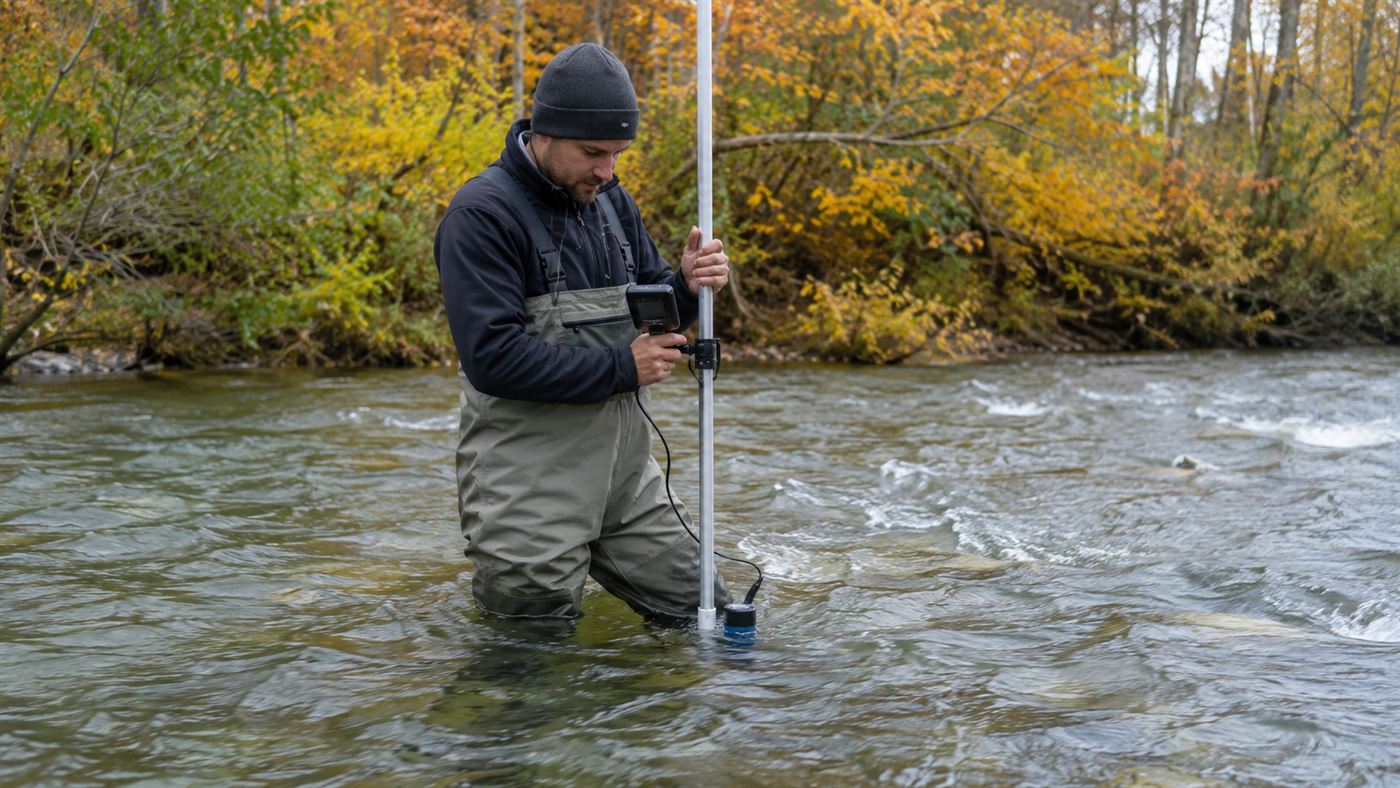
The answer came not from cameras or divers but from a simple, clever piece of measurement. In late 2016, hydrologists with the Minnesota Department of Natural Resources gauged the Brule River's flow above the falls at about 123 cubic feet per second, then measured it again a few hundred feet below at about 121. In the world of stream gauging, those numbers are effectively identical, within the margin of the instruments. Almost no water was being lost. Whatever poured into the kettle was rejoining the river just downstream.
To be sure, the following year the team ran a dye trace, with mapping hydrologist Jeff Green pouring a harmless coloured dye into the pothole and watching where it re-emerged. It surfaced in the river below, exactly as the flow numbers had predicted. The water at Devils Kettle was not draining to Lake Superior or to the centre of the earth; it was taking a short underground shortcut and popping straight back into the same stream.
What the mystery really was
The solution is almost comically ordinary, and that is part of its charm. The famous disappearing river of Devils Kettle travels only a short distance through the rock before resurfacing, the kind of thing a few careful measurements could have shown at any point in the previous century. The exact route the water takes underground still has not been mapped in detail, but the big question, where does it go, has a clear and unmysterious answer: a little way down, and then back into the river.
What had really been missing all those years was not an explanation but the right tool for the question. Generations of visitors tried to read a hydrology problem by eye, and the river quietly defeated them every time. It took people who measure water for a living, and a bottle of dye, to turn a legend back into plain physics.
The honest catch
It is worth being precise about what was and was not solved. The headline question is genuinely answered: the water rejoins the river, and there is no secret cave to Lake Superior. But the fine detail, the exact shape of the channel the water follows through the rock, has not been mapped, so a sliver of real mystery remains for anyone who wants it. Solved does not quite mean fully explained.
And some of the legend deserves a raised eyebrow. The tales of cars and countless logs swallowed whole are mostly unverified folklore, polished by retelling, and approaching the kettle to test it yourself is genuinely dangerous; people have died in northern waterfalls doing far less. The real lesson of Devils Kettle is quieter than the myth: that a famous unsolved mystery can turn out to be an ordinary river and a badly chosen experiment, waiting decades for someone to measure instead of guess.
A river that seemed to swallow half of itself into a bottomless hole turned out to be taking a short detour through the rock and rejoining itself a few metres downstream. Are you a little disappointed the answer was so ordinary, or relieved that science finally caught up with the legend? Tell us what you think in the comments.
Related reading: The day a Louisiana lake drained into a salt mine and reversed a river.