The Great Wall of China is not one wall, you cannot see it from space, and it repeatedly failed to keep invaders out, the most misunderstood mega-build on Earth
Almost everything the average person knows about the Great Wall is wrong. It is not a single wall. It is not visible from the Moon. And for all the staggering labour poured into it, it did not actually keep China's enemies out. The truth is stranger and far more human than the postcard, and it is written across more than 21,000 kilometres of stone and earth.
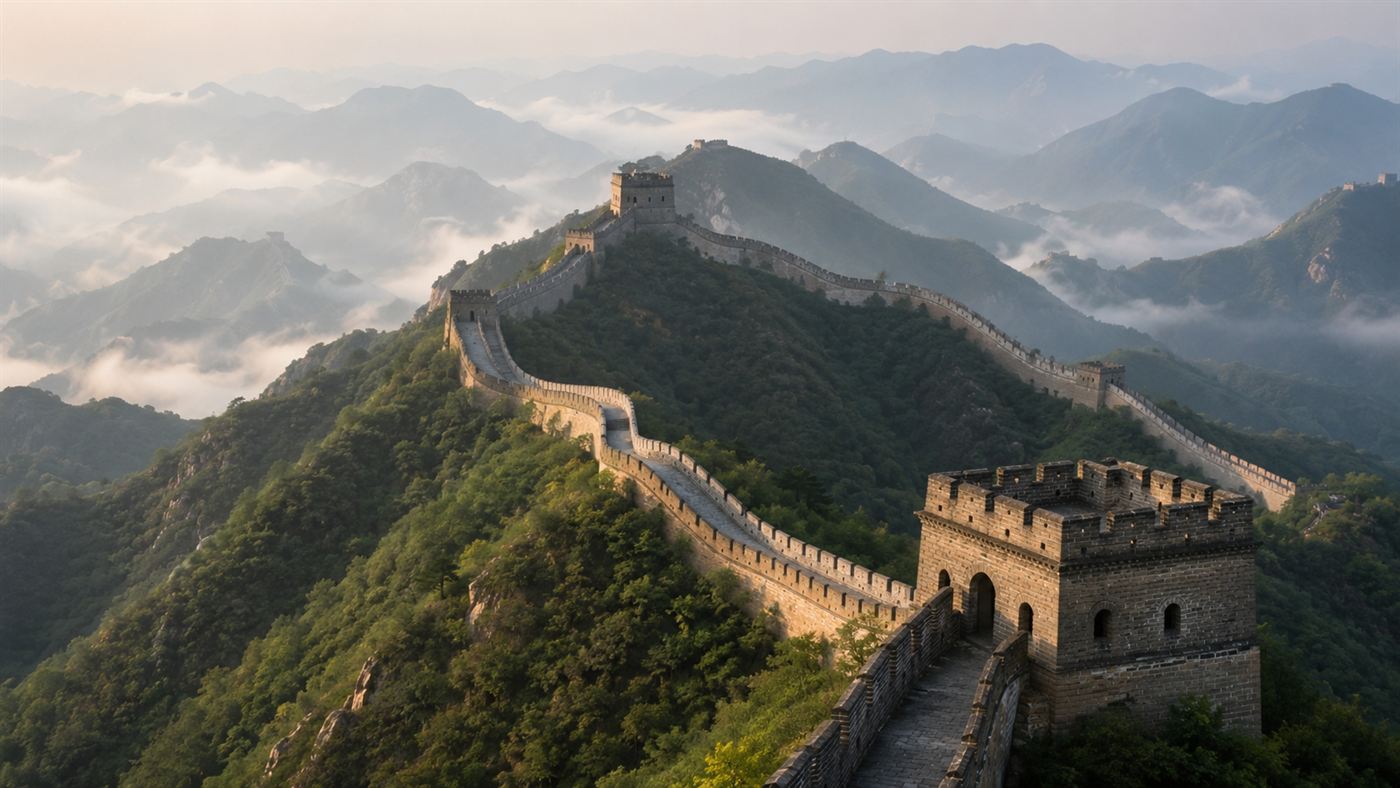
A patchwork of walls built over two thousand years, not one single structure. Illustration: Watts & Wild.
The Great Wall of China is the most famous structure humans have ever built, and probably the most misunderstood. We picture a single, continuous ribbon of stone marching neatly across the north of China, a perfect barrier that did its job for centuries. Almost every part of that image is a myth, and the real story is far more interesting precisely because it is messier.
Let us take the legends down one by one.
What is the Great Wall of China, really?
The first surprise is that there is no single "Great Wall." What we call the Great Wall is actually a vast, overlapping collection of walls, ramparts, ditches and natural barriers, built and rebuilt by many different dynasties over more than two thousand years. The first emperor, Qin Shi Huang, linked up older walls in the third century BC, but most of the famous, photogenic stone wall that tourists visit today is much later, built by the Ming dynasty between the fourteenth and seventeenth centuries.
When Chinese authorities carried out a comprehensive survey, counting every section ever built, the total length came out at a staggering roughly 21,000 kilometres, more than half the circumference of the Earth. But almost none of that is one connected wall; it is thousands of separate pieces, many now crumbled to rubble or vanished entirely. The tidy single line on the map simply does not exist.
The myth you can see it from space
This is the big one, the "fact" everyone has heard: that the Great Wall is the only human structure visible from space, or even from the Moon. It is completely false, and rather wonderfully, the myth is older than spaceflight itself. It seems to trace back to a 1923 magazine claim that the wall would be visible from the Moon, made decades before any human had left the planet to check.
The physics makes it impossible. The wall is at most a few metres wide, and from the Moon, a quarter of a million miles away, it is around ten thousand times too thin for the human eye to resolve; you would have a better chance of seeing a single human hair from two miles off. Even from low Earth orbit it is extraordinarily hard to spot, because it is narrow and made of materials the same colour as the land around it. When China's first astronaut, Yang Liwei, orbited the Earth in 2003, he looked for the Great Wall specifically, and reported that he simply could not see it.
The longest cemetery on Earth
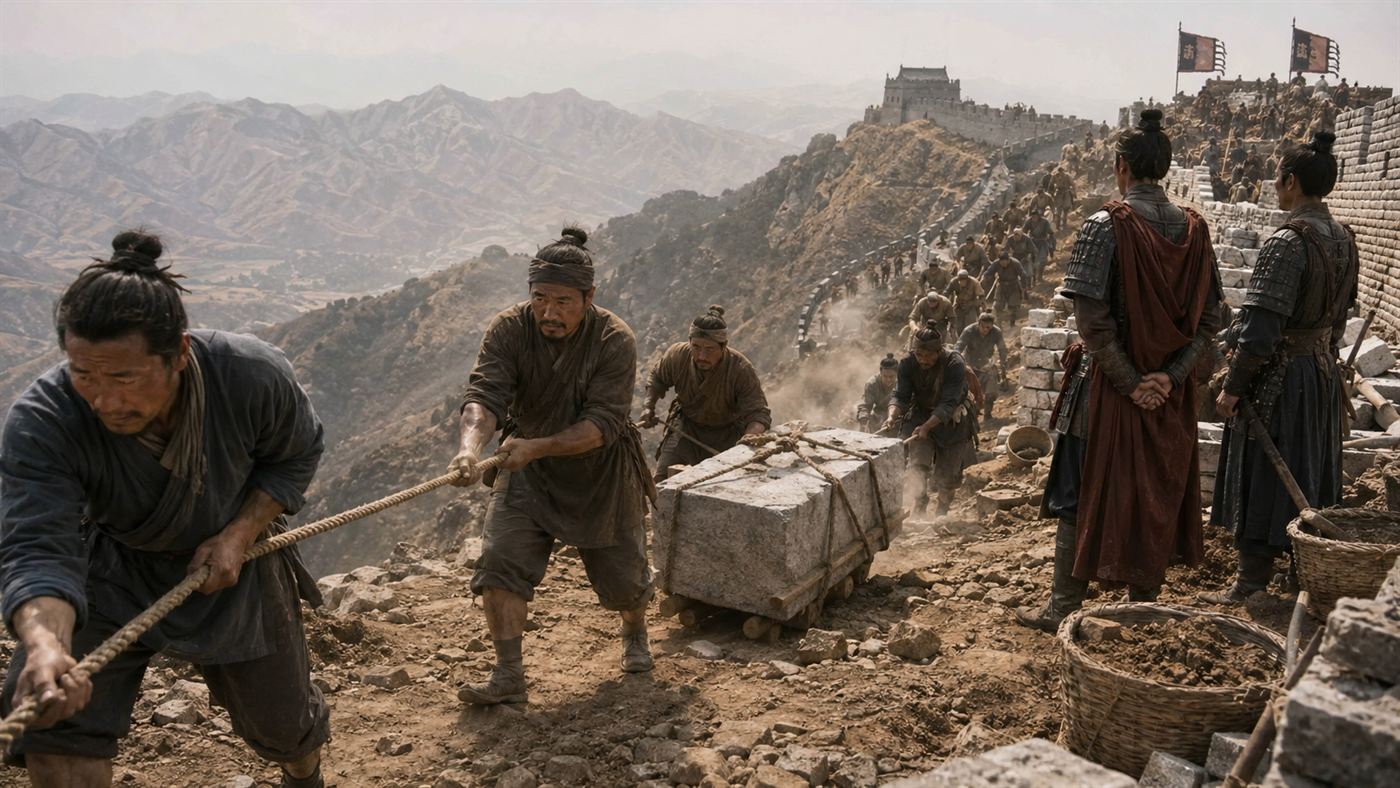
Behind the romance of the wall lies an enormous human cost. Building thousands of kilometres of fortification across mountains and deserts, by hand, over centuries, consumed armies of conscripted peasants, soldiers and prisoners. The work was brutal and often fatal, from cold, exhaustion, accidents and starvation.
By some estimates, as many as 400,000 people died building the various walls over the ages, which has earned the Great Wall the grim nickname "the longest cemetery on Earth." There is a popular and ghoulish belief that the dead were entombed inside the wall itself as building material. That part is a myth: the bodies of dead workers were generally buried nearby, not mixed into the masonry. The truth is sad enough without it; the wall is a monument to imperial power built on a foundation of ordinary lives.
Did the Great Wall actually work?
Here is the most uncomfortable myth of all. The Great Wall is celebrated as an impregnable shield, but as a piece of military hardware it has a decidedly mixed record. Against small bands of raiders it worked well, slowing them down and channelling them toward defended gates. Against a determined, full-scale invasion, it repeatedly failed.
Time and again, the wall was beaten not by brute force but by human weakness. Invaders bribed the guards, found undefended gaps, or simply marched around the ends, and in 1644 the Manchus took China after a Ming general opened a key gate and let them through. The mightiest wall ever built was undone, in the end, by a man with a key. It is a brutal lesson that a barrier is only ever as strong as the loyalty of the people standing on it.
The honest catch
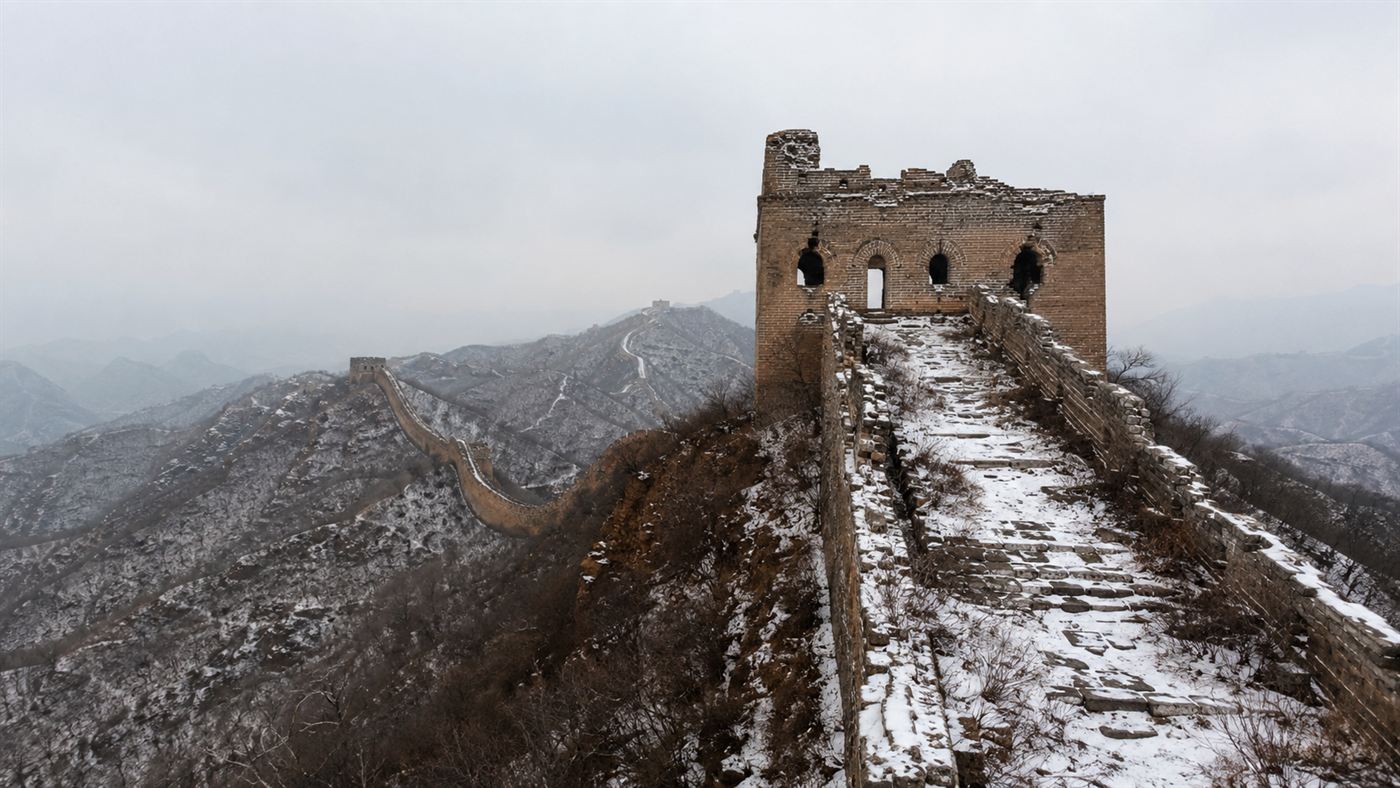
In debunking the myths, it is only fair not to overcorrect into cynicism. The Great Wall was a genuine and astonishing feat of engineering and organisation, and its builders were ingenious; Ming masons, for instance, mixed sticky rice into their mortar, creating a binding so strong that parts of it have survived earthquakes and centuries of weather. And the wall did have real military value against the constant low-level raiding that plagued China's frontier.
It is also worth being honest that some of the debunking gets exaggerated too. Under rare, perfect conditions some astronauts have reported glimpsing the wall from low orbit with aid, and the death-toll figures are rough estimates, not hard counts. The point is not that the Great Wall is a fraud, but that the real thing, a sprawling, imperfect, blood-soaked patchwork, is far more fascinating than the flawless myth we were sold.
Why the Great Wall of China still matters
Stripped of its legends, the Great Wall becomes something more powerful than a postcard. It is the physical record of two thousand years of fear, ambition and human labour, a reminder of how much a society will spend, and how many lives it will burn, to feel safe behind a barrier. That impulse is anything but ancient history.
And its ultimate lesson is one every age has to relearn. You can pour centuries and fortunes and hundreds of thousands of lives into the greatest wall the world has ever seen, and still be defeated by a bribe and an open gate, because no barrier can fix a problem that is really about people. The Great Wall of China is magnificent, and it is also one of history's grandest, saddest illustrations of the limits of walls.
The greatest wall ever built was beaten by a bribe and an open gate, and you can't even see it from space. If the mightiest barrier in history still failed, what does that say about every wall we keep trying to build? Tell us what you think in the comments.
Related reading: China's other record-breaking mega-build, the Three Gorges Dam, is so massive it measurably slowed the Earth's rotation.