Bite this ancient fish and it drowns your gills in slime, then ties itself in a knot to escape
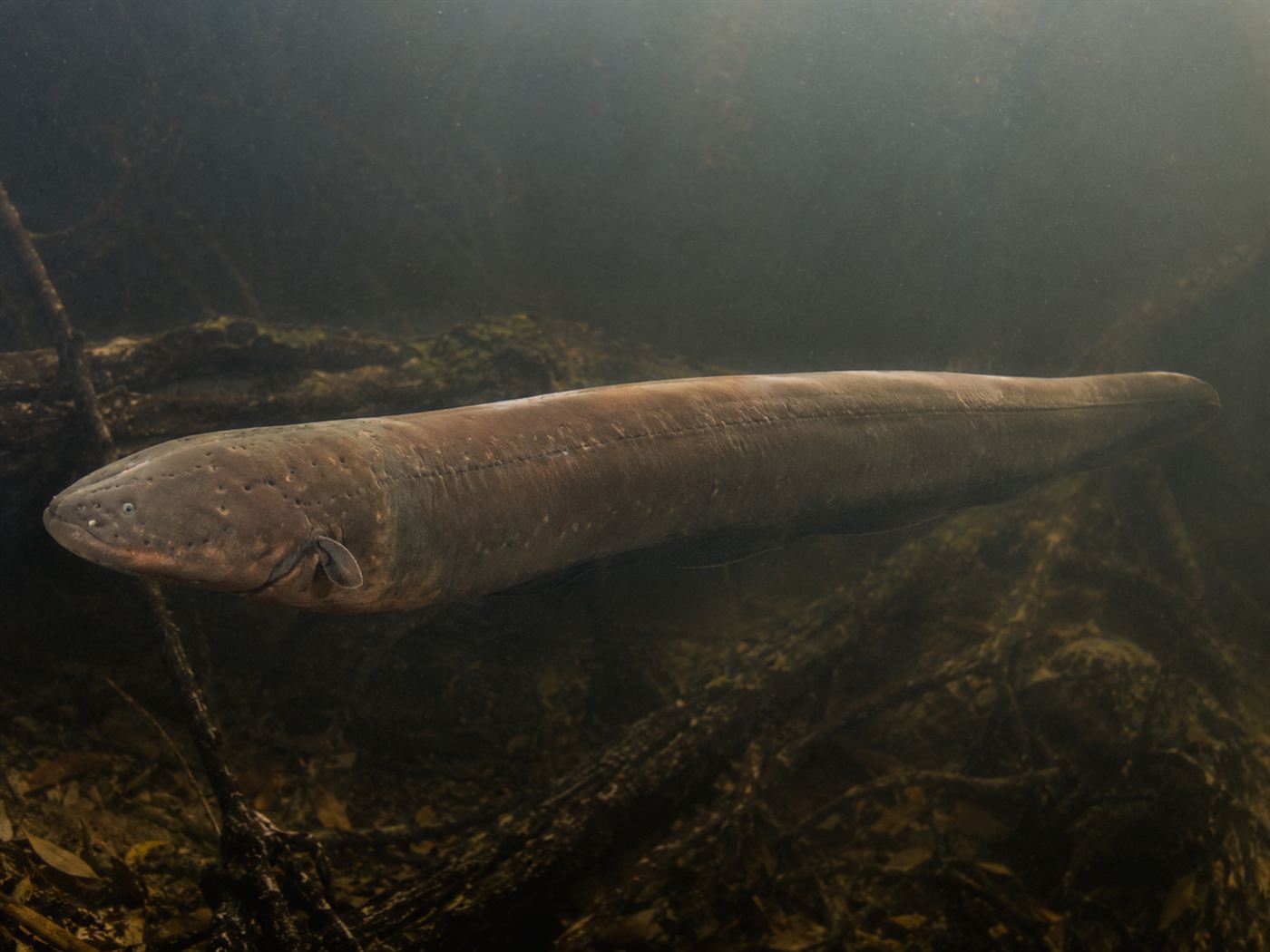
It looks like a grey, eyeless eel, slow and harmless on the dark seafloor. But attack one and it unleashes a defence so strange and so effective that almost nothing in the ocean wants a second try. The hagfish can turn a few drops of fluid into buckets of slime in the blink of an eye, choking a shark from the inside out.
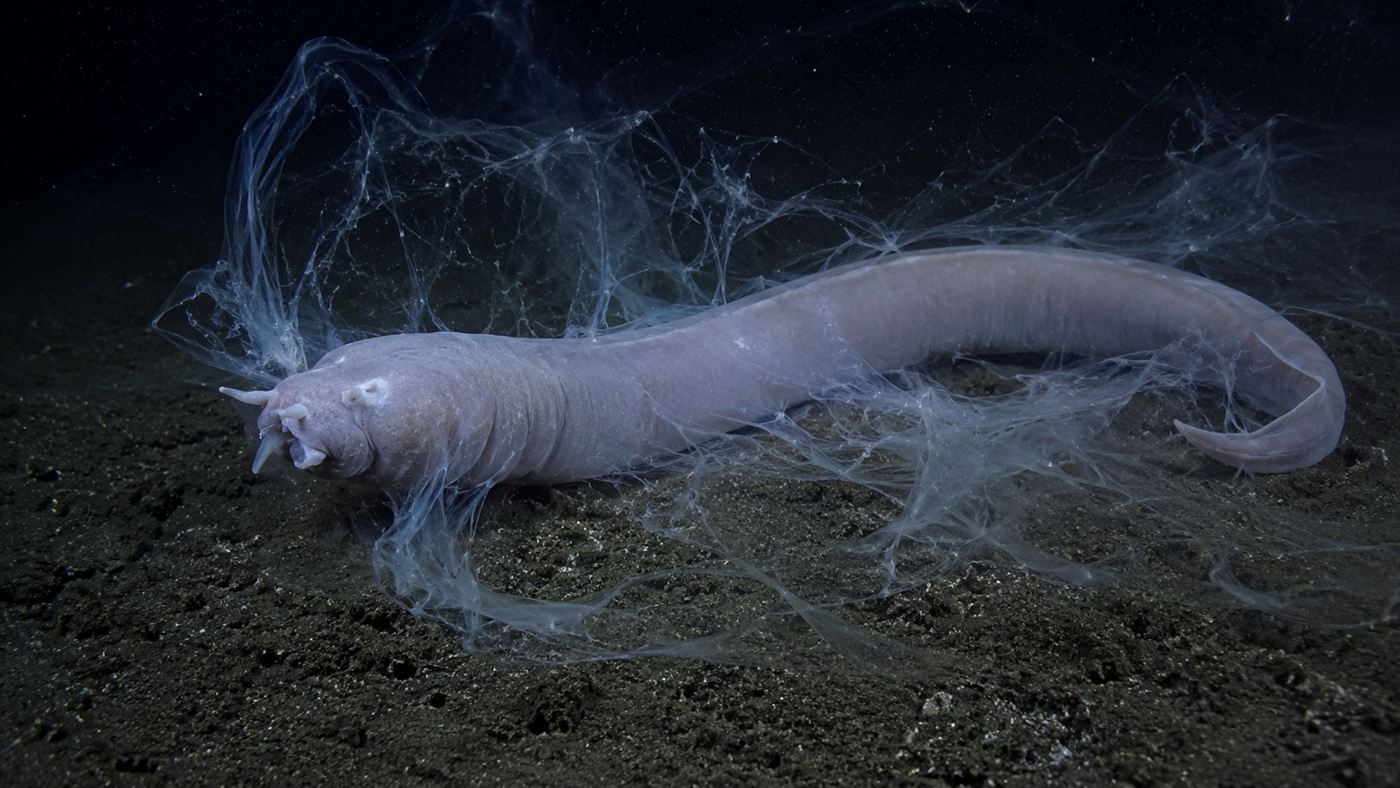
A few drops of fluid, and the water around the hagfish becomes a cloud of choking slime. Illustration: Watts & Wild.
Some animals fight with teeth or venom. The hagfish, one of the oldest kinds of fish on Earth, fights with mucus, and it has turned that humble weapon into one of the most remarkable defences in nature. It is so good at it that the creature is often called, with a mix of disgust and admiration, the slime eel.
That slime is not just a party trick. It is fast enough to save the fish's life, strange enough to need a knot to deal with, and special enough that scientists now want to copy it.
The day a slime monster closed a highway
Most people met the hagfish for the first time in July 2017, when a truck carrying thousands of pounds of live hagfish overturned on a highway in Oregon. Stressed by the crash, the panicking animals did what hagfish do, and the road and several cars were buried under a thick blanket of pale, stretchy slime.
The images went around the world, equal parts horrifying and hilarious, and for a moment everyone was asking the same question: what on earth is a hagfish, and why does it ooze like that? The answer is one of the best stories in the sea.
How the hagfish drowns an attacker in slime
The defence is built for speed, because a fish being bitten does not have time to spare. Running along each side of the hagfish's body are scores of tiny glands, each holding a packet of coiled protein threads and mucus. When a predator strikes, the hagfish squirts out a small amount of this fluid, and on contact with seawater it explodes into litres of stringy, clinging slime in a fraction of a second.
For a shark or other fish, this is a disaster. To breathe, they must pass water over their gills, and the slime is almost perfectly designed to clog those gills solid. Footage shows sharks biting a hagfish, then gagging, shaking their heads and fleeing with their mouths full of goo, while the hagfish swims calmly away unharmed. It is one of the few animals that can make a shark regret an attack instantly.
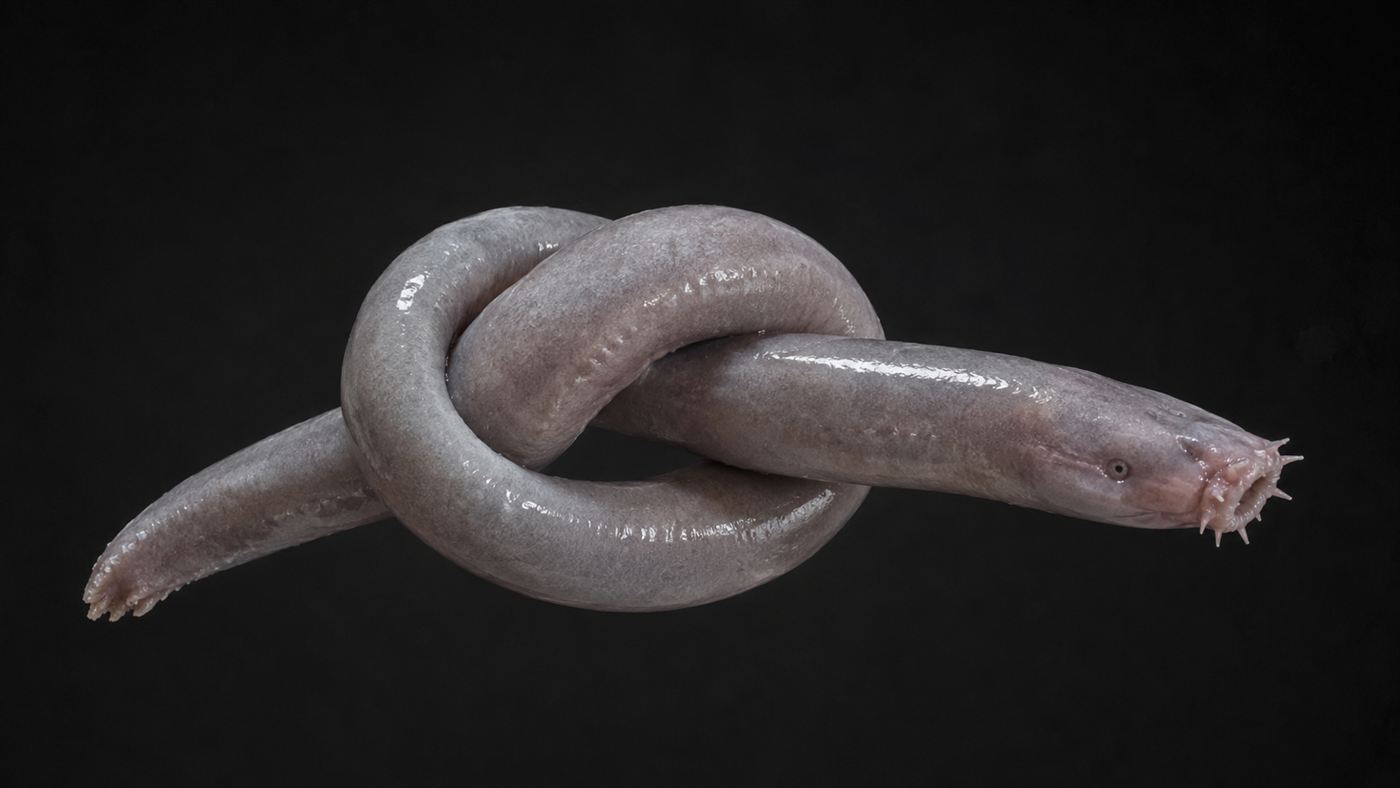
Tying a knot to escape its own slime
There is an obvious problem with drowning your enemy in slime: you are right in the middle of it. The hagfish has an elegant answer. It ties its own body into a simple overhand knot and slides that knot from its head down to its tail, wiping the slime off in a single clean motion, using itself as a living squeegee.
The same knotting trick has other uses. By bracing a knot against a carcass, the hagfish gains the leverage to tear off chunks of food despite having no jaws, and if something grabs it, it can knot up and pull itself free. A boneless, flexible body that ties into knots on demand turns out to be a surprisingly powerful tool.
Slime stronger than spider silk
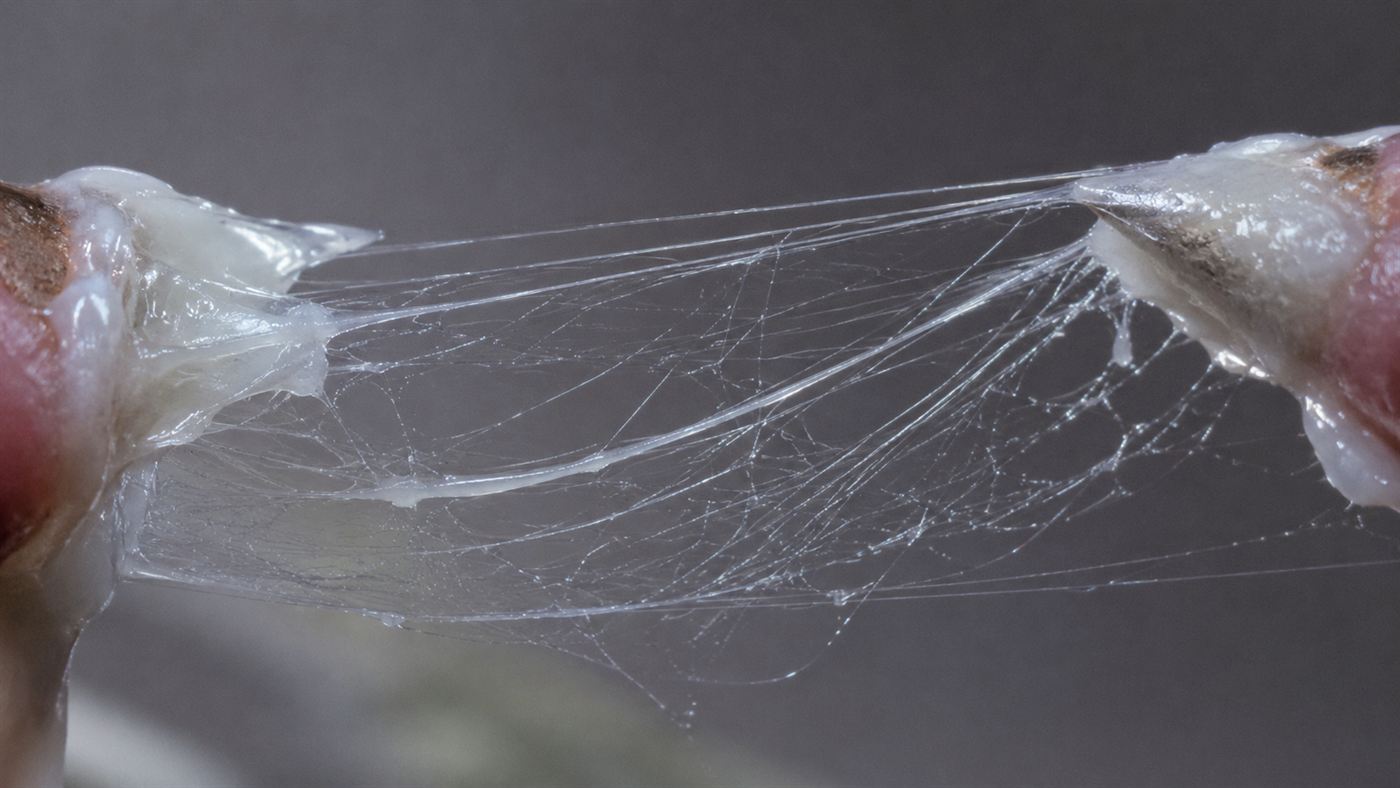
Here is where the hagfish stops being merely gross and becomes genuinely useful. The strength of the slime comes from those protein threads, each only a fraction of a hair's width but several centimetres long, wound up tight inside the gland cells and released to unspool in the water. These threads behave a lot like spider silk, one of the strongest natural fibres known, and researchers are studying them as a model for tough, sustainable materials.
The dream is a fibre as strong and light as spider silk but easier to produce, grown from proteins rather than pumped out of oil. If it works, the descendants of hagfish slime could end up in fabrics, ropes or safety gear. An animal best known for sliming a highway might quietly help us make better materials, which is exactly the kind of unlikely link between the wild and the workshop that we love.
Is the hagfish really a living fossil?
You will often read that the hagfish is 300 million years old and unchanged since before the dinosaurs. That needs a gentle caveat. The hagfish lineage really is ancient, going back hundreds of millions of years, but the animals alive today are not frozen relics; they have kept evolving like everything else, even if their basic body plan has stayed reliably simple.
What has not changed is how well the design works. The hagfish has no jaws, poor eyes and a body like a sock, and yet it has outlasted countless flashier creatures by being a patient scavenger with the best emergency exit in the ocean. Sometimes the humble, slimy solution is the one that survives.
A jawless, eyeless fish that floods sharks with slime and may hand us a new super-fibre is proof that nature keeps its best ideas in the strangest places. Would you rather we copied the hagfish's slime to replace oil-based fabrics, or just left the slime monster to its quiet life on the seafloor? Tell us what you think in the comments.
Related reading: the anglerfish, the deep-sea hunter that fishes with a glowing lure it cannot even light itself, or the velvet worm, which hunts by firing a net of slime.