The velvet worm looks like a soft, harmless caterpillar with too many legs, but it hunts by firing two jets of slime that whip back and forth to net its prey
Deep in the damp litter of the forest floor lives a small, soft, slow-moving creature that seems utterly defenseless. But when night falls, the velvet worm becomes one of the most surprising predators on Earth, armed with a weapon that reads more like physics than biology.
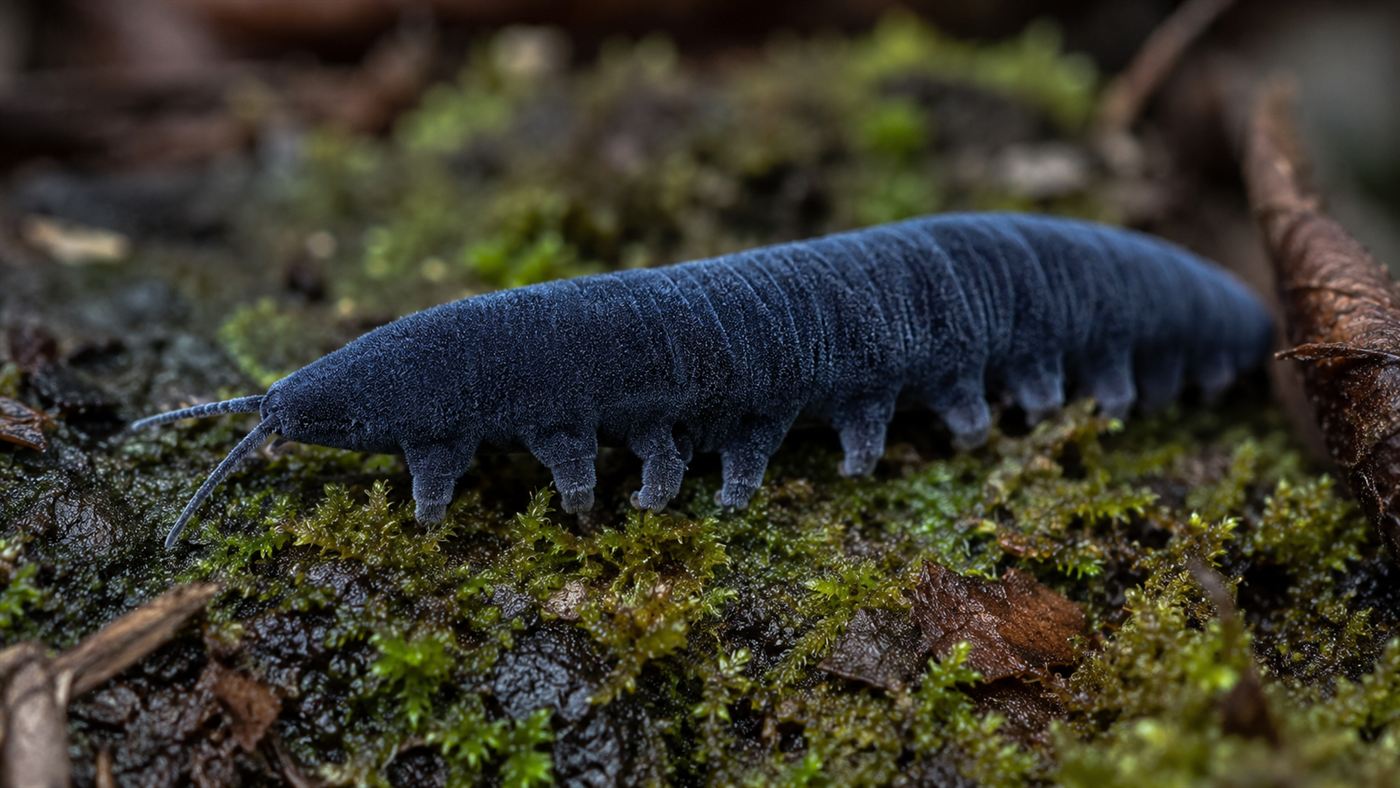
The velvet worm looks harmless, right up until it fires. Illustration: Watts & Wild.
Some animals hide their strangeness well. Look at a velvet worm and you see something that looks like a caterpillar crossed with a slug, a plump, velvety little body trundling along on rows of tiny stubby legs. It has no obvious teeth, no claws worth fearing, no venomous sting on display. It seems like exactly the sort of soft, slow creature that other animals eat, not the other way around.
And yet the velvet worm is a hunter, and its method of killing is so bizarre that it took modern science with high-speed cameras to fully understand it. It does not chase its prey or overpower it, but instead paints it out of the air with a net of slime, fired from its own head. Once you know how that slime works, this humble forest creature turns out to be one of the most remarkable animals alive.
The short version: The velvet worm belongs to an ancient animal group, the phylum Onychophora, and is not a true worm. It hunts by squirting two jets of sticky slime from nozzles beside its mouth. As they fly, the jets whip rapidly from side to side, forming a net that traps small insects and spiders, which the worm then bites and eats. Strangest of all, that whipping motion is powered by physics, not muscle.
Not a worm at all
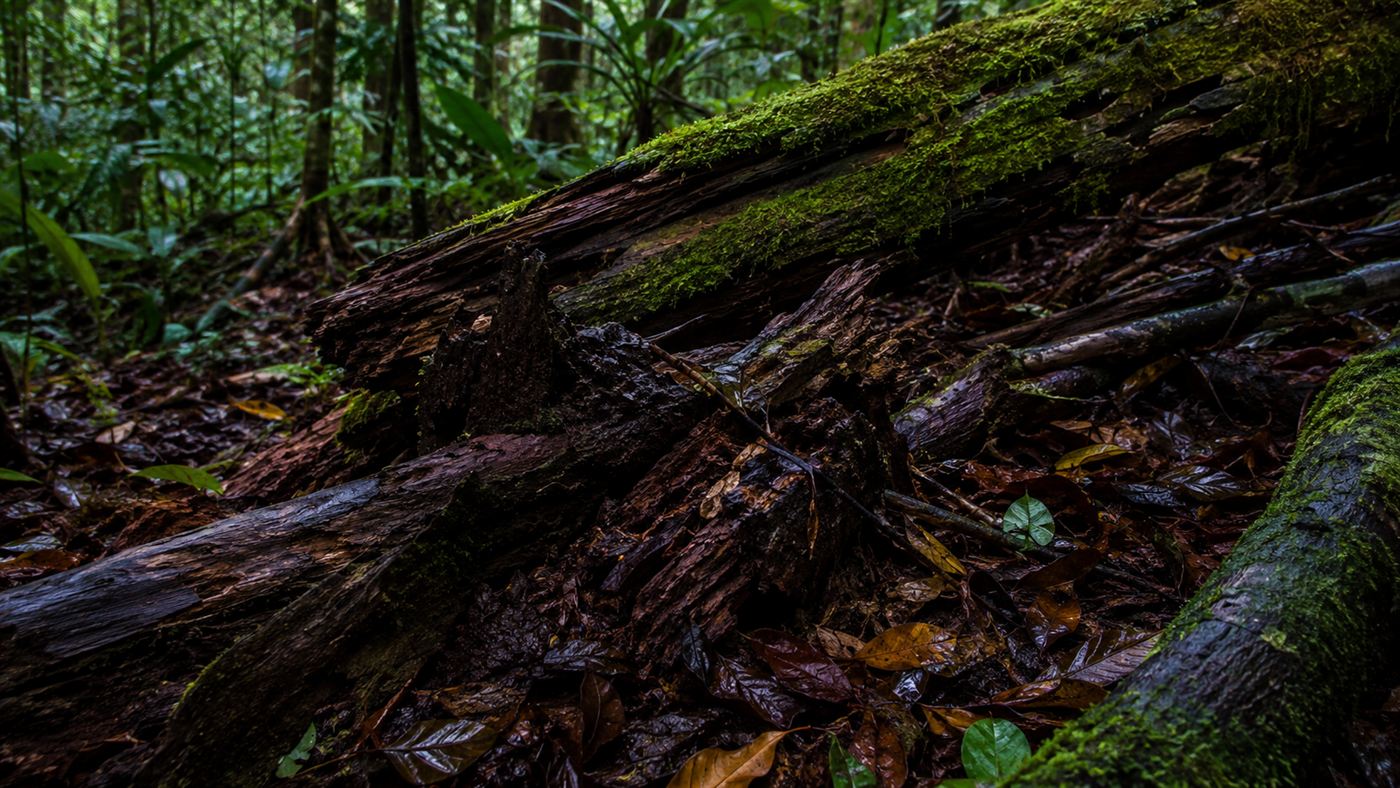
The first surprise is that the velvet worm is not really a worm. It belongs to its own separate branch of the animal kingdom, the phylum Onychophora, and its closest relatives are not earthworms but the arthropods, the great group that includes insects, spiders and crustaceans. There are around 200 species, living in humid forests across the tropics and the southern continents, tucked into rotting logs and damp leaf litter.
Its body plan is so ancient that it has barely changed in hundreds of millions of years, making it a living link to a world long before the dinosaurs. Soft and velvety to the touch, it walks on dozens of short, unjointed legs that ripple along in waves. To survive it needs constant damp, because it loses water easily through its skin, which is why you will only ever find one in the moistest, most sheltered corners of a forest.
The slime cannon
The velvet worm's weapon sits on its head, in the form of two small nozzles, one on each side of the mouth. When it senses prey nearby, usually a small insect or spider, it creeps closer with painstaking care until it is only a few centimetres away. Then, in a sudden burst, it fires.
Two streams of sticky slime shoot out and, crucially, they do not travel in straight lines. The jets thrash violently from side to side as they fly, crossing over each other and spreading into a chaotic, glue-like net that rains down over the target. The slime hardens on contact into a tangle of threads, pinning the prey in place. Only then does the slow-moving worm close in, bite through the victim's armor, inject digestive saliva, and settle in to feed, eating the nutritious spent slime along with its meal so that nothing is wasted.
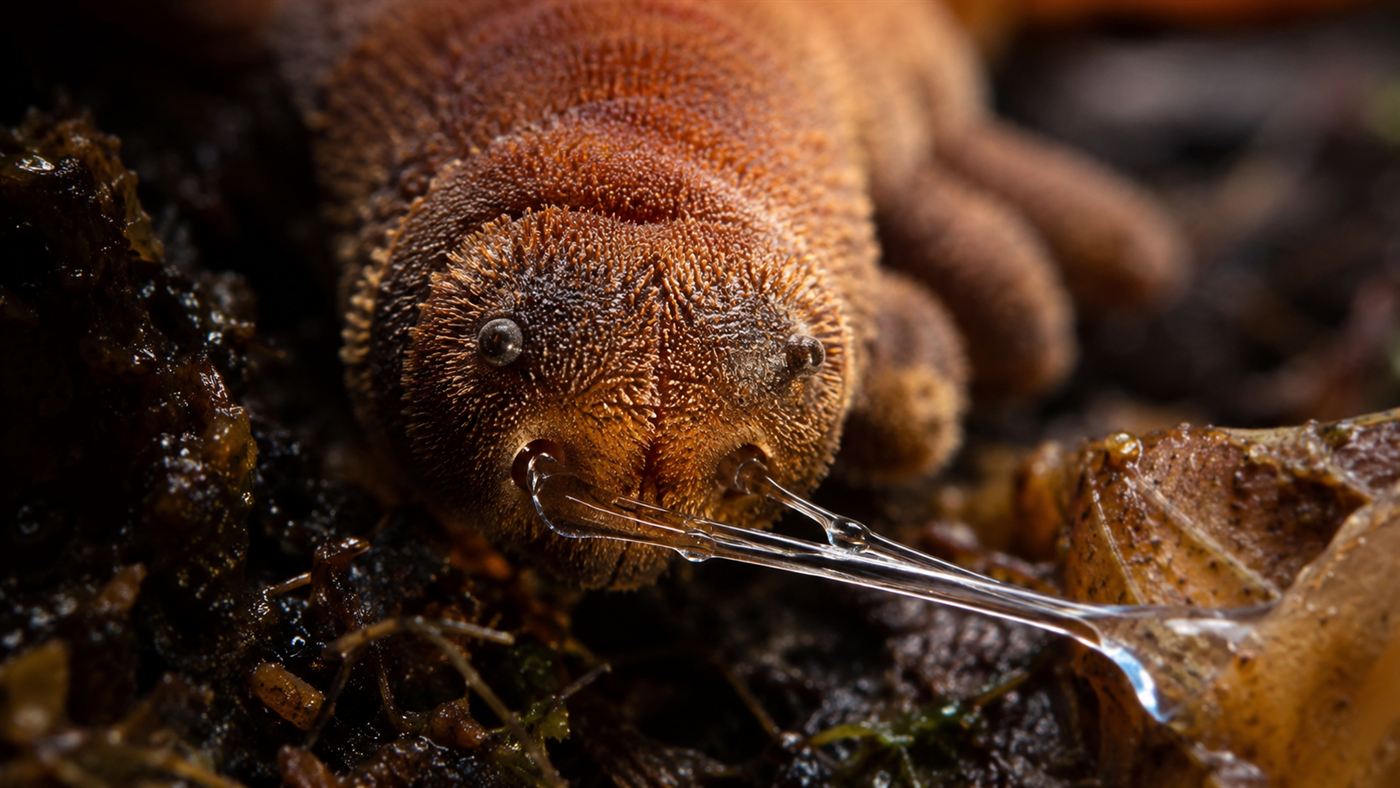
How the velvet worm's slime whips itself
For a long time the wild oscillation of the slime was a mystery. It seemed to demand fast, precise muscles flicking the nozzles back and forth, but the velvet worm simply does not have muscles fast enough to do that. In 2015, scientists finally worked out the trick, and the answer is beautiful.
As researchers reported in Nature Communications, the slime jets oscillate at around 30 to 60 times a second through a passive physical instability, not muscular control. The worm uses a slow squeeze of muscle to push slime through a soft, elastic nozzle, and once the fluid passes a critical speed, the nozzle itself begins to flap wildly on its own, like a loose garden hose turned on full blast. In other words, the animal supplies only a slow, gentle push, and the laws of fluid physics do the fast, violent whipping for free. It is an elegant piece of natural engineering that human designers of soft, spraying machines have studied with envy.
An ambush predator of the night
All of this unfolds under cover of darkness. The velvet worm is a nocturnal ambush predator, emerging at night to creep through the leaf litter in search of prey it detects mostly by touch and air currents. It is patient and secretive, relying on stealth to get within firing range before its target ever knows it is there.
There is a social twist, too. In some species, velvet worms live in small groups led by a dominant female, and they will hunt and feed together in a loose hierarchy, which is a rare and sophisticated behavior for such a simple-looking creature. A soft, blind-seeming little animal that most people would mistake for a slug turns out to coordinate, ambush and deploy a physics-powered weapon, all in the dark.
The honest catch
As with so many wonders of nature, the velvet worm is even more interesting once you strip away the exaggerations. It is often called a living fossil, and while its lineage truly is astonishingly old, that phrase is misleading. The animal has not stopped evolving. What is ancient is its overall body plan, not a frozen, unchanged existence, and modern velvet worms are their own thoroughly up-to-date species.
A couple of other clarifications keep the story honest. The slime does not fire across the room, as some breathless accounts suggest, but only a few centimetres, and it does not kill on its own. It entangles, and the bite that follows does the real work. And for all its ancient pedigree and clever weaponry, the velvet worm is a fragile thing. It cannot hold in its own moisture, so it is utterly dependent on damp habitat, and the clearing and drying of forests threatens it far more than any predator ever could. It is a powerful reminder that surviving for hundreds of millions of years does not make an animal tough, only lucky, for as long as its quiet, wet little world holds together.
A soft, slow creature older than the dinosaurs hunts by letting fluid physics whip a net of slime out of its own head. Does the velvet worm change how you think about the small, overlooked animals in the leaf litter beneath your feet? Tell us what you think in the comments.
Related reading: the hagfish, which drowns attackers in a flood of slime of its own.
More from Watts & Wild
More in Energy & the Wild →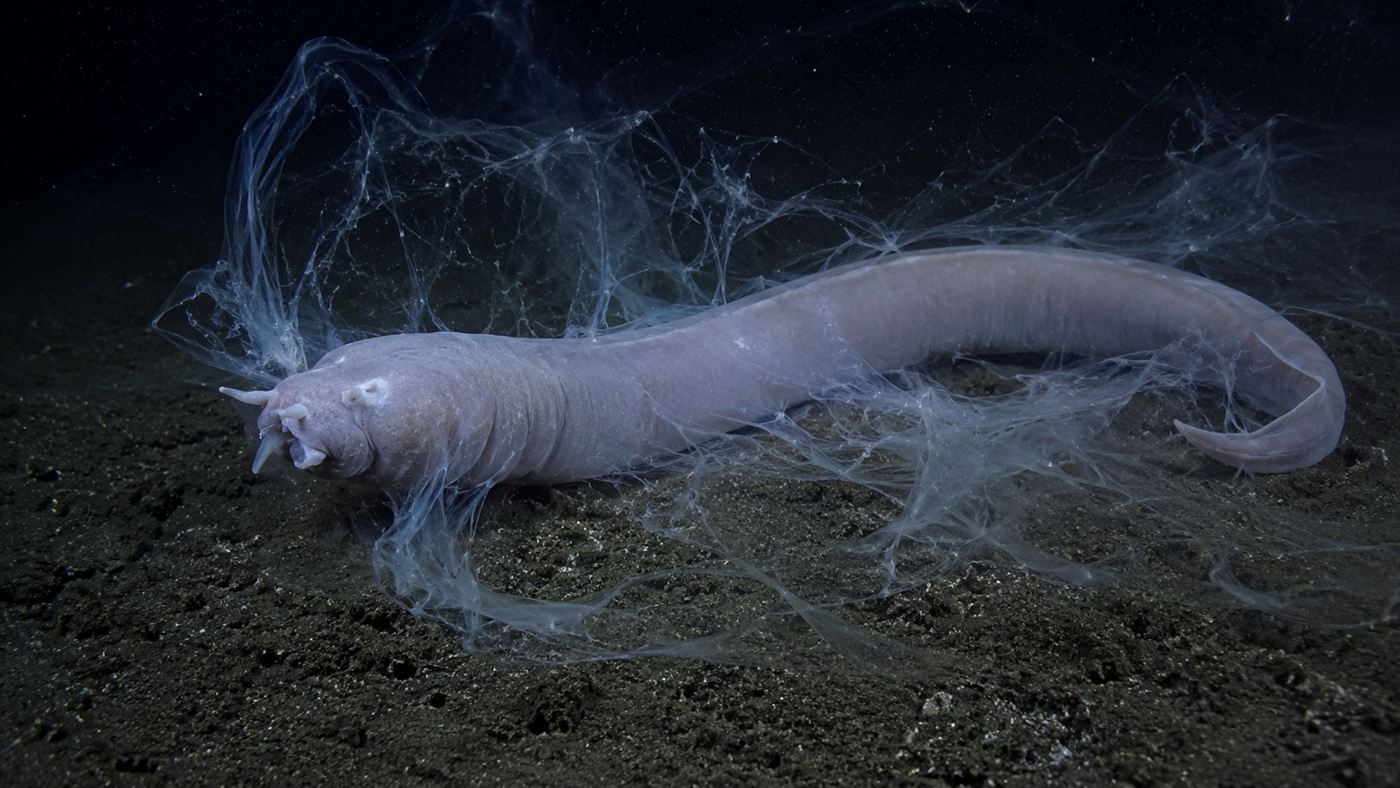

Maria writes about wildlife, ecology, and the strange places where nature and human history collide. She is based in Brazil.