To turn itself nearly invisible while it sleeps, the glass frog performs a trick that should be deadly, it hides almost all of its red blood inside its own liver
Turning transparent sounds like a superpower from a comic book, but a tiny rainforest amphibian does it for real, every single day. The glass frog pulls off its vanishing act by doing something to its own blood that would put almost any other animal in mortal danger.
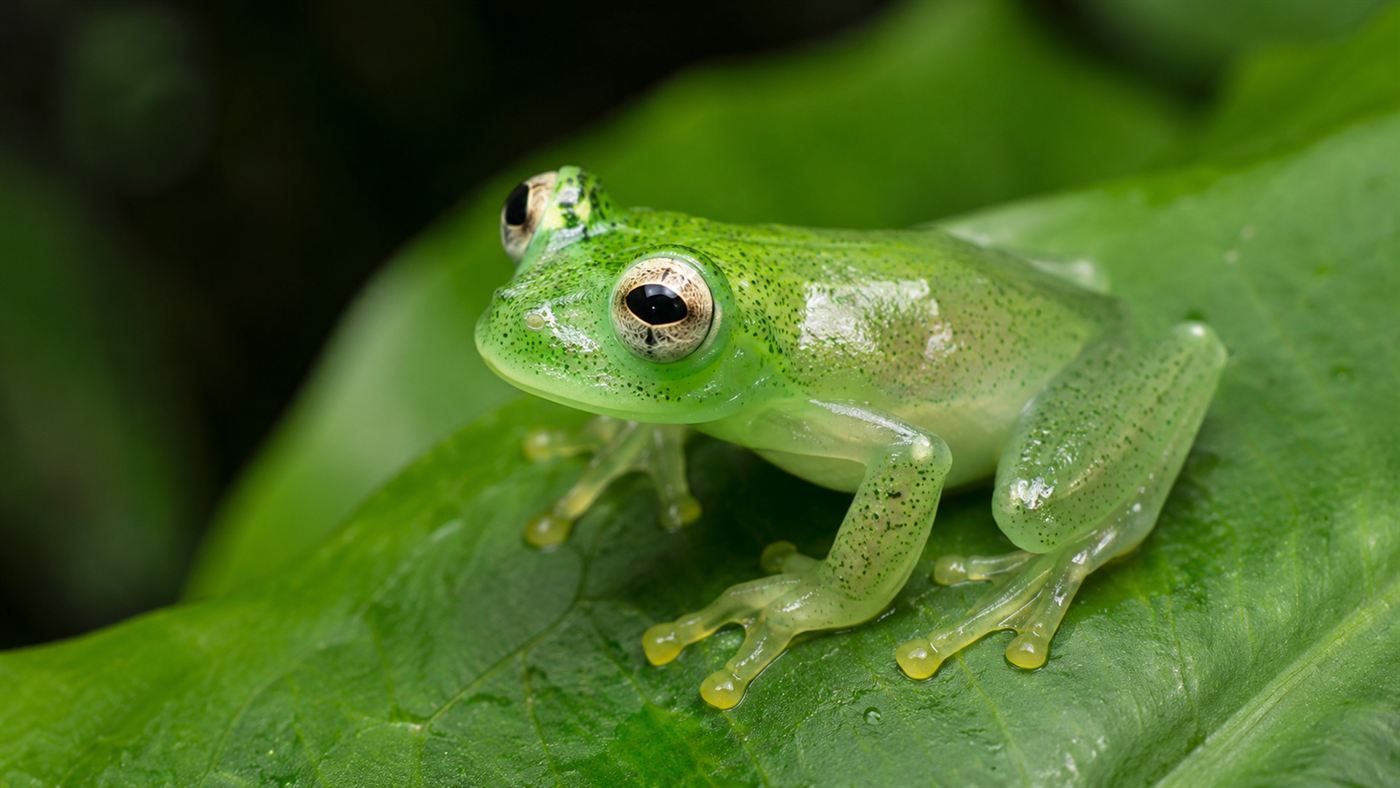
The glass frog's skin is so translucent you can glimpse the workings inside. Illustration: Watts & Wild.
Invisibility is one of nature's rarest tricks, at least on land. In the open ocean plenty of creatures turn themselves to living glass, because water and flesh bend light in similar ways. But out in the air, among leaves and sunlight, becoming see-through is fiendishly difficult, and very few land animals have ever managed it. The glass frog is the celebrated exception.
For years, the glass frog presented biologists with a puzzle. Its skin might be translucent, but blood is stubbornly, brilliantly red, and a body full of it should glow like a warning light to any passing predator. So how does the frog manage to all but disappear? The answer, uncovered only recently, is one of the strangest solutions in the animal kingdom.
The short version: Glass frogs are translucent rainforest amphibians. A 2022 study found that when they sleep, they concentrate nearly 90% of their red blood cells into their liver, which hides the red and makes them two to three times more transparent, erasing their outline against a leaf. Remarkably, they pack and unpack that blood daily without the clots it should cause.
A frog you can see through
Glass frogs are small tree frogs of the family Centrolenidae, found in the rainforests of Central and South America. Seen from above they look like ordinary little green frogs. But turn one over, and its belly skin is so clear that you can peer straight through it and see the heart beating, the loops of the gut, even the outline of the bones. It is a living anatomy lesson.
These frogs are nocturnal, active in the cool and dark, and they spend the bright daylight hours asleep, clinging to the undersides of leaves. That is exactly when they are most vulnerable, exposed to sharp-eyed birds and other hunters that would happily snap up a resting frog. And that is precisely when their transparency switches into its highest gear.
The problem with being transparent
To understand the frog's trick, you have to understand why transparency is so hard in the first place. You can, in principle, make skin and tissue fairly clear. The real obstacle is blood. Red blood cells are superb at absorbing light, especially the green light that bounces off leaves and fills a forest, which is exactly why blood looks so vivid to us.
A transparent body still carrying its normal load of red blood would betray itself instantly, a bright network of red vessels glowing against the green. For the glass frog to truly disappear, it is not enough to have clear skin. It has to somehow get its own blood out of the way, and that is the problem evolution had to solve.
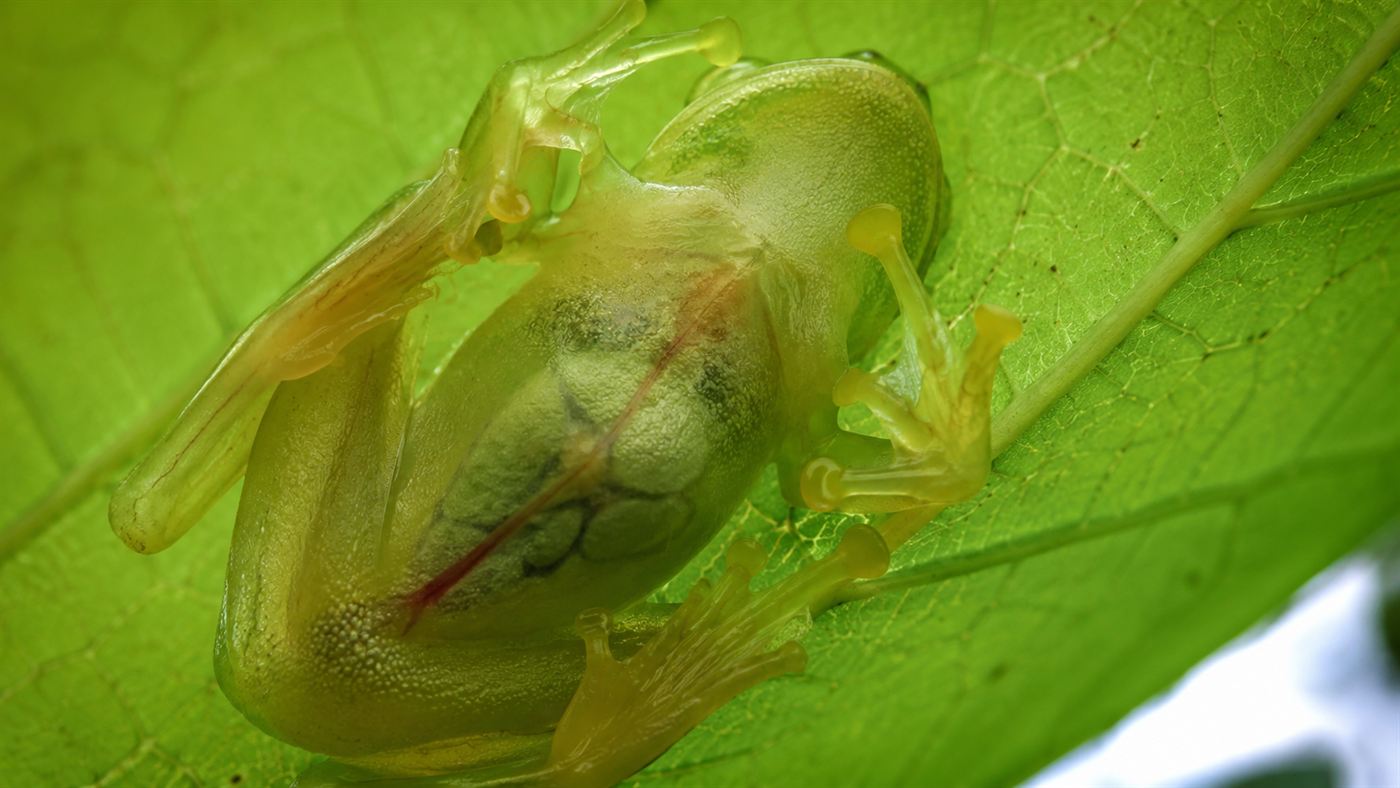
How the glass frog vanishes
In 2022, scientists finally caught the glass frog in the act. As researchers from Duke University and the American Museum of Natural History reported, a sleeping glass frog concentrates nearly 90% of its red blood cells into its liver, which is lined with a reflective coating that conceals the red. With most of its blood tucked away out of sight, the frog becomes two to three times more transparent, and its body and telltale shadow nearly melt into the leaf.
When night falls and the frog wakes to hunt, it simply releases the stored blood back into circulation and goes about its business, red-blooded and ordinary again. Its invisibility is not permanent but scheduled, a daytime disguise it puts on to survive the dangerous hours of sleep and takes off again at dusk. It is camouflage achieved not with color, but by hiding its own life fluid.
The clot that never comes
The most astonishing part is not the disappearing act itself, but that it does not kill the frog. In almost any other animal, crowding red blood cells together that tightly, day after day, would be a recipe for disaster, forming the kind of clots that in humans cause strokes and deadly blockages.
As Live Science reported, the glass frog packs and unpacks about 90% of its red blood cells every single day with no sign of clotting, a feat that leaves scientists genuinely baffled. If researchers can work out how the frog manages it, the discovery could open new avenues in the study of human blood clots, one of the leading causes of death worldwide. A tiny frog hiding from birds may, strangely, hold a clue to saving human lives.
Seen without being disturbed
Part of what makes this discovery so clever is how it was made. The trick only works while the frog is calm and asleep, because the moment it is stressed or active, it pumps its blood back into circulation and loses its transparency. That meant scientists could not simply grab a frog and study it, since handling it would undo the very thing they wanted to see.
Instead they used gentle imaging techniques, including a method that maps blood using sound, to peer inside a peacefully sleeping frog without waking it. In a sense, the frog's disguise had hidden the secret from us for as long as we kept prodding at it. Only by leaving it undisturbed could we finally watch it disappear, and understand how.
The honest catch
It is tempting to call the glass frog invisible, but that oversells it. The transparency is partial and works best on the belly side, at rest, against the right leafy background. Up close, or from the wrong angle, the frog is still visible, and its greenish back is more about ordinary color-matching than true glass. This is superb camouflage, not a genuine cloak of invisibility.
A couple of other honest notes matter. The clotting mystery is a tantalizing lead, not a delivered cure, and it would be wrong to promise that glass frogs will soon solve human blood clots. And their transparency is a whole-body system, involving skin, tissues and that mirror-like liver, not just a blood-hiding party trick. Perhaps most importantly, being hard to see does not make a species safe. Many glass frogs are threatened by the clearing of the rainforests they depend on, and no amount of vanishing can hide an animal from the loss of its home. The glass frog is a genuine marvel, but its cleverest disguise is no defense against a bulldozer.
A frog disappears each day by hiding its own blood, and in doing so quietly avoids the clots that would kill us. Should we look to strange animals like the glass frog for medical breakthroughs, or is that hope we place on nature too often overblown? Tell us what you think in the comments.
Related reading: the mimic octopus, a master of a very different kind of disguise. And in 2026, DNA revealed that a single fanged frog is really many hidden species.
More from Watts & Wild
More in Energy & the Wild →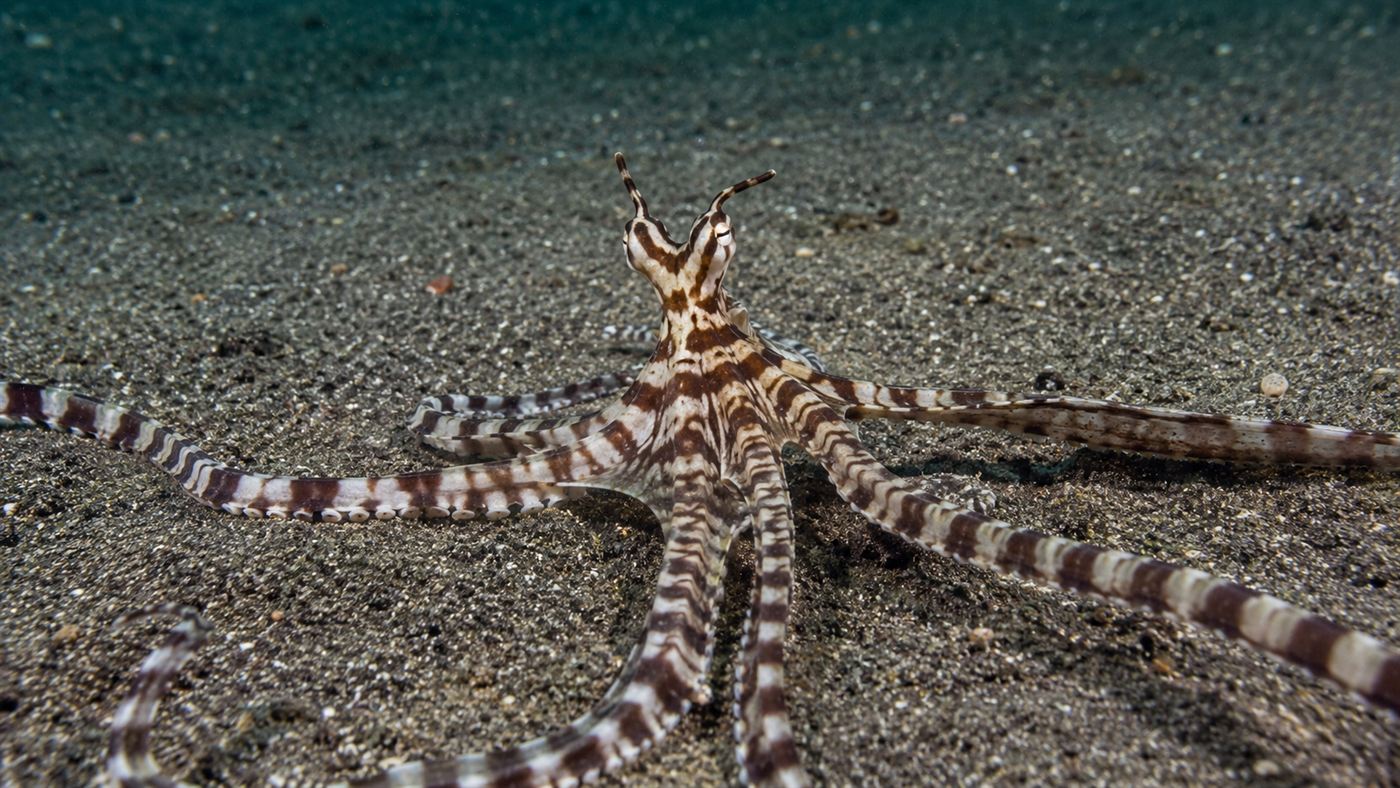


Maria writes about wildlife, ecology, and the strange places where nature and human history collide. She is based in Brazil.