They beat the Nazis with rubber tanks, sound effects and a thousand artists
Somewhere in France in 1944, German scouts watched an American armoured division roll into position: tanks, trucks, the rumble of engines, the chatter of radios. Almost none of it was real. The Ghost Army was a unit of artists and engineers whose only weapons were illusions, and they used them to fool one of the most dangerous armies on Earth.
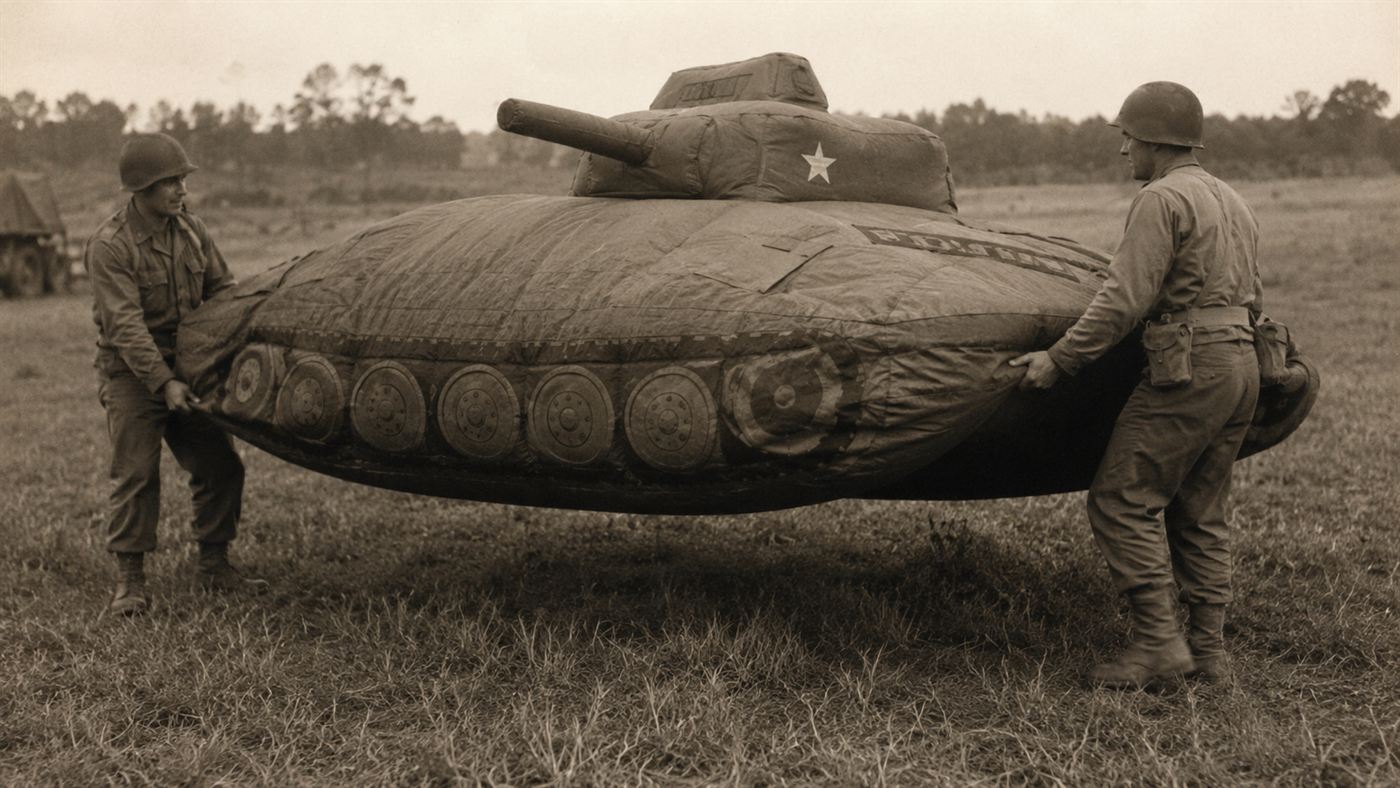
A full-size tank that two soldiers could lift: the inflatable decoys looked real from a distance or from the air. Illustration: Watts & Wild.
War stories usually celebrate firepower. This one celebrates the opposite, a small band of men who carried paint, rubber and loudspeakers instead of heavy guns. The Ghost Army, officially the 23rd Headquarters Special Troops, was the first unit in American history built entirely to deceive the enemy rather than to fight it. Roughly 1,100 strong, it pretended to be tens of thousands.
For decades almost no one knew it had existed at all. The men were sworn to silence, the files locked away, and the story only began to surface long after the war was won.
How the Ghost Army faked whole divisions
The idea was simple and audacious: convince the Germans that powerful forces were where they were not. To do it, the unit blended several kinds of trickery at once. They inflated life-size rubber tanks, trucks and artillery pieces, arranged them in convincing formations, and left just enough showing to be spotted by enemy aircraft and scouts.
Up close the illusion fell apart, since a strong soldier could lift a tank over his head, but from a distance or from the air the decoys looked like the real thing. The men also faked tyre tracks in the mud, lit fake campfires, and impersonated officers from real divisions in nearby towns, dropping hints in cafes to make sure the right rumours reached the wrong ears.
Recorded battles played at full volume
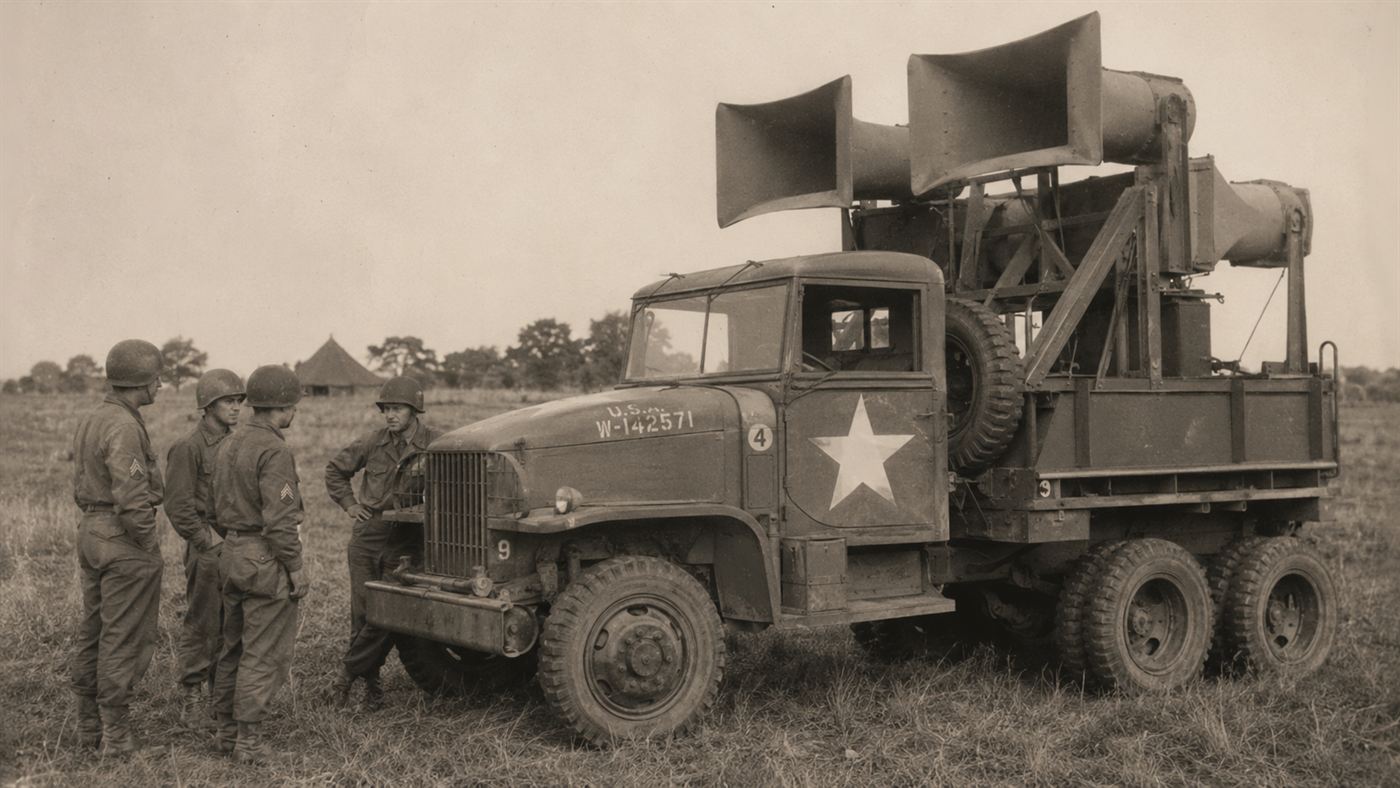
Sight was only half of it. A specialist company handled sound, and their work was startlingly modern. With help from engineers at Bell Labs, they recorded the noises of real tanks and marching men onto records, then blasted them through enormous speakers mounted on trucks, loud enough to be heard up to fifteen miles away.
By mixing and layering these recordings, they could conjure the sound of an entire armoured column moving through the night where there was nothing but a few trucks and some loudspeakers. A third group worked the radio, sending fake Morse traffic in the exact style of the units they were imitating, so that German listeners building a picture from the airwaves saw a whole army that did not exist.
An army of artists
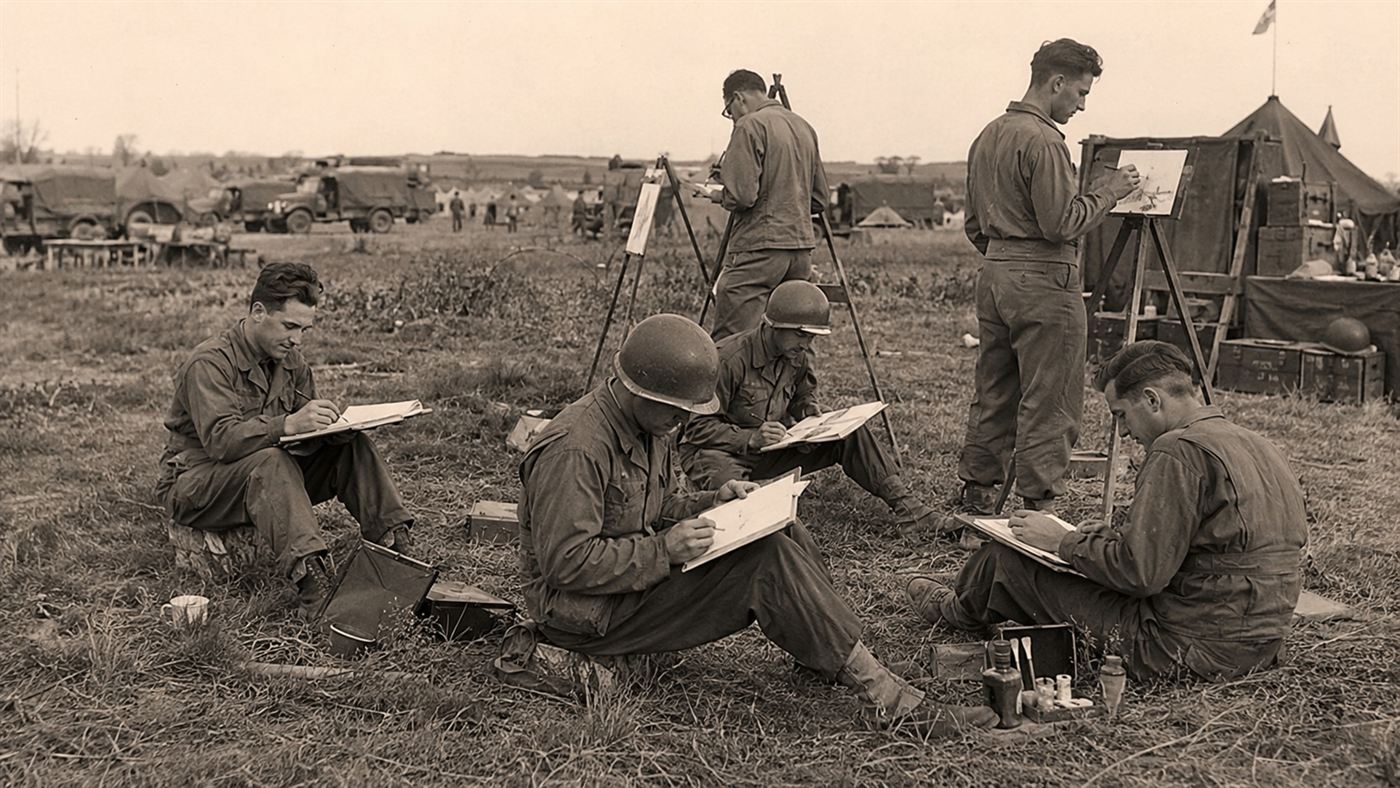
The strangest thing about the Ghost Army was who filled its ranks. Because the work was visual and creative, the unit recruited heavily from art schools and design studios, and its camouflage battalion was packed with painters, illustrators and designers. Among them were future giants of American culture, including the fashion designer Bill Blass and the painter Ellsworth Kelly, sketching and scheming their way across Europe.
Between deceptions, these soldier-artists filled notebooks with drawings of the towns and people around them, leaving behind a remarkable record of the war seen through an artist's eye. They fought with imagination as much as with rubber and wire, and several of them went on to shape the look of postwar fashion, painting and photography.
Did the Ghost Army really work?
It worked again and again, in more than twenty operations from the beaches of Normandy to the crossing of the Rhine. The most daring came in the final push into Germany, when the unit faked a river crossing at one point to pull German defenders away from the place the real assault would land. By drawing fire and attention onto empty fields, the illusionists are thought to have helped save thousands of lives among the genuine units they shielded.
Honesty demands a caveat: the exact number of lives saved can never be counted, and the Ghost Army was one piece of a much larger Allied effort to deceive Hitler about where blows would fall. But its record of fooling a professional enemy, time after time, with little more than theatre, is hard to overstate.
Why was the Ghost Army kept secret?
A trick only works while it stays a secret, so the unit was classified during the war and stayed buried long after. The records were not declassified until 1996, which is why a unit that fought across Europe was almost unknown to the public for half a century. Many of the men went to their graves having never told their families what they really did.
Decades late, the survivors were finally recognised, with the Ghost Army awarded the Congressional Gold Medal for a war fought with imagination instead of firepower. It is a rare kind of heroism, winning battles by making the enemy believe in an army that was never there.
An army of painters and sound engineers beat real tanks with rubber and noise, then kept the secret for fifty years. Is a battle won by deception any less heroic than one won by force, when both save the same lives? Tell us what you think in the comments.
Related reading: the Big Inch, the buried pipeline America built to beat the U-boats that were sinking its oil at sea. See also Operation Mincemeat, the British plot that fooled Hitler with a dead man and a briefcase of lies.