A monk facing death promised to write a book in one night, and a portrait of the Devil hides inside it
In a quiet display case in Stockholm sits a book so enormous it takes two people to lift, written eight hundred years ago by a single hand. Halfway through its pages, between the words of the Bible, a full-page picture of the Devil himself stares out at the reader. The story of how it got there is one of the strangest in the history of books.
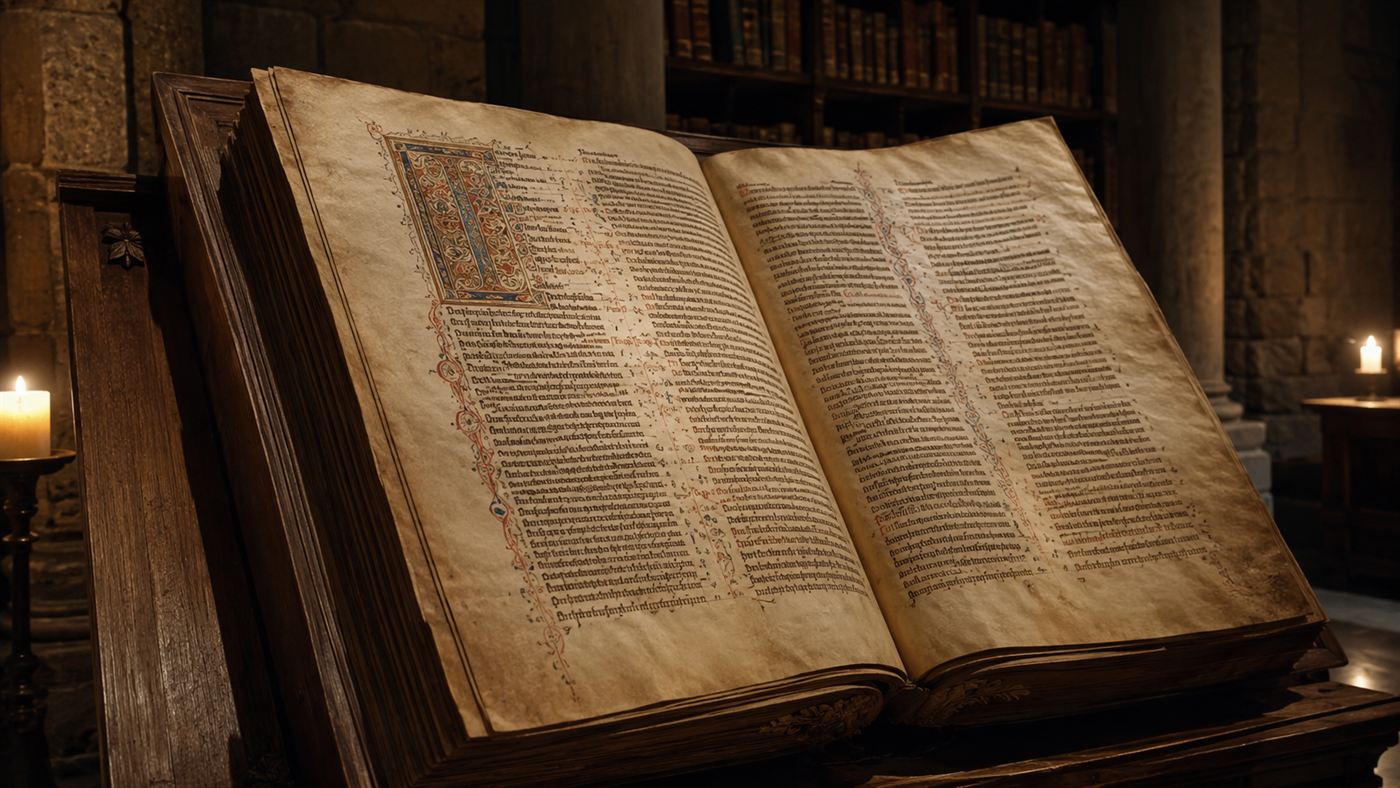
The Codex Gigas is so large that lifting it is a job for two. Illustration: Watts & Wild.
The book is the Codex Gigas, which simply means the giant book, and it is the largest surviving medieval manuscript in the world. It stands about 92 centimetres tall, half a metre wide, and weighs around 75 kilograms. Its 310 pages of vellum are said to have used the skins of some 160 animals, an entire herd turned into a single volume. Just making the blank book was a feat. Filling it was something close to a miracle, and people have argued for centuries over what kind.
It was created in the early thirteenth century at a Benedictine monastery in Bohemia, in what is now the Czech Republic. Inside is the complete Latin Bible, but also a whole small library bound in with it: histories, an encyclopedia of all known things, medical texts and a chronicle, a deliberate attempt to gather human knowledge into one colossal object.
A book it takes two people to lift
To understand the legend, you first have to grasp the sheer physical scale of the thing. This was not a book to be slipped into a bag. It was furniture, a monument in vellum and ink, and producing it consumed an extraordinary amount of skill, time and material. Every line of its enormous Bible was written by hand, and the script stays remarkably even and consistent from the first page to the last.
That uniformity is part of what unsettled people. A book this big, this perfect and this strange seemed too much for one ordinary person to have made. To medieval minds, a work that pushed so far past the human felt as though it must have had help from somewhere beyond the human, and a story grew up to explain it.
The monk, the deadline and the Devil
The legend, already told in the Middle Ages, goes like this. A monk at the monastery had broken his sacred vows, and his punishment was the most terrible the order could give: to be walled up alive and left to die. In his desperation he made a wild promise, that if he were spared, he would write in a single night a book containing all human knowledge, a wonder that would glorify the monastery forever. As midnight passed and the impossible task crushed him, he gave up on God and prayed instead to Lucifer, offering his soul in exchange for finishing the book.
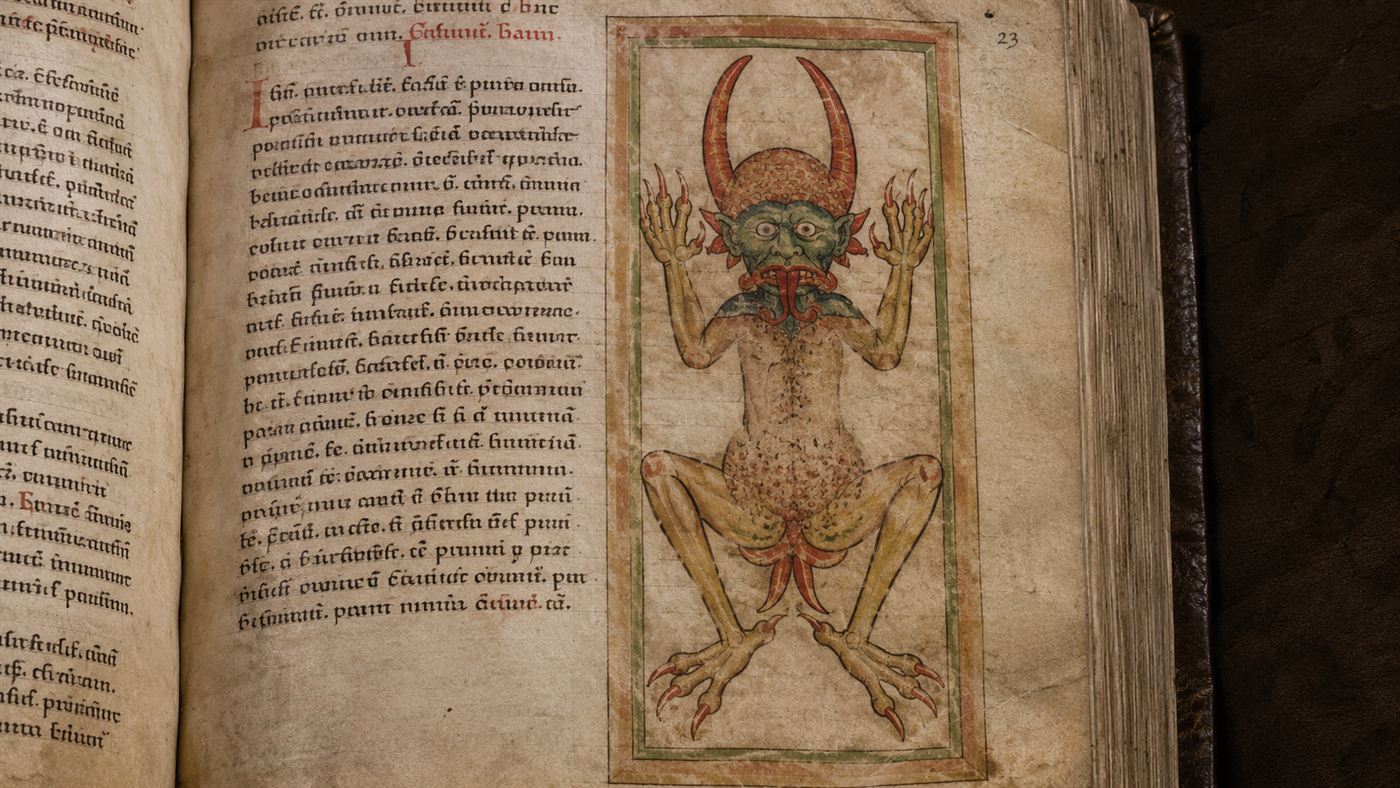
In the legend the Devil completed the manuscript, and the grateful monk, in thanks, painted a portrait of his unholy collaborator into the pages. It is a perfect medieval horror story: a man trading eternity for one night's salvation, and leaving the evidence in ink for the rest of us to find.
Why the Codex Gigas is called the Devil's Bible
The nickname comes from a single page. About halfway through the Codex Gigas, the reader turns a leaf and meets a large, lurid illustration of the Devil, a crouching horned figure with clawed feet, almost half a metre tall, unlike anything else in medieval manuscripts. Directly opposite him, on the facing page, is an equally grand picture of the heavenly city, so the book quite literally puts paradise and the Devil face to face.
No one is entirely sure why a Bible would contain such a thing, and that mystery has kept the legend alive. Whatever its true purpose, the image is so striking that it gave the entire giant book its dark and enduring name, the Devil's Bible, and turned a monastery's labour of devotion into an object people whisper about.
The truth is stranger than the legend
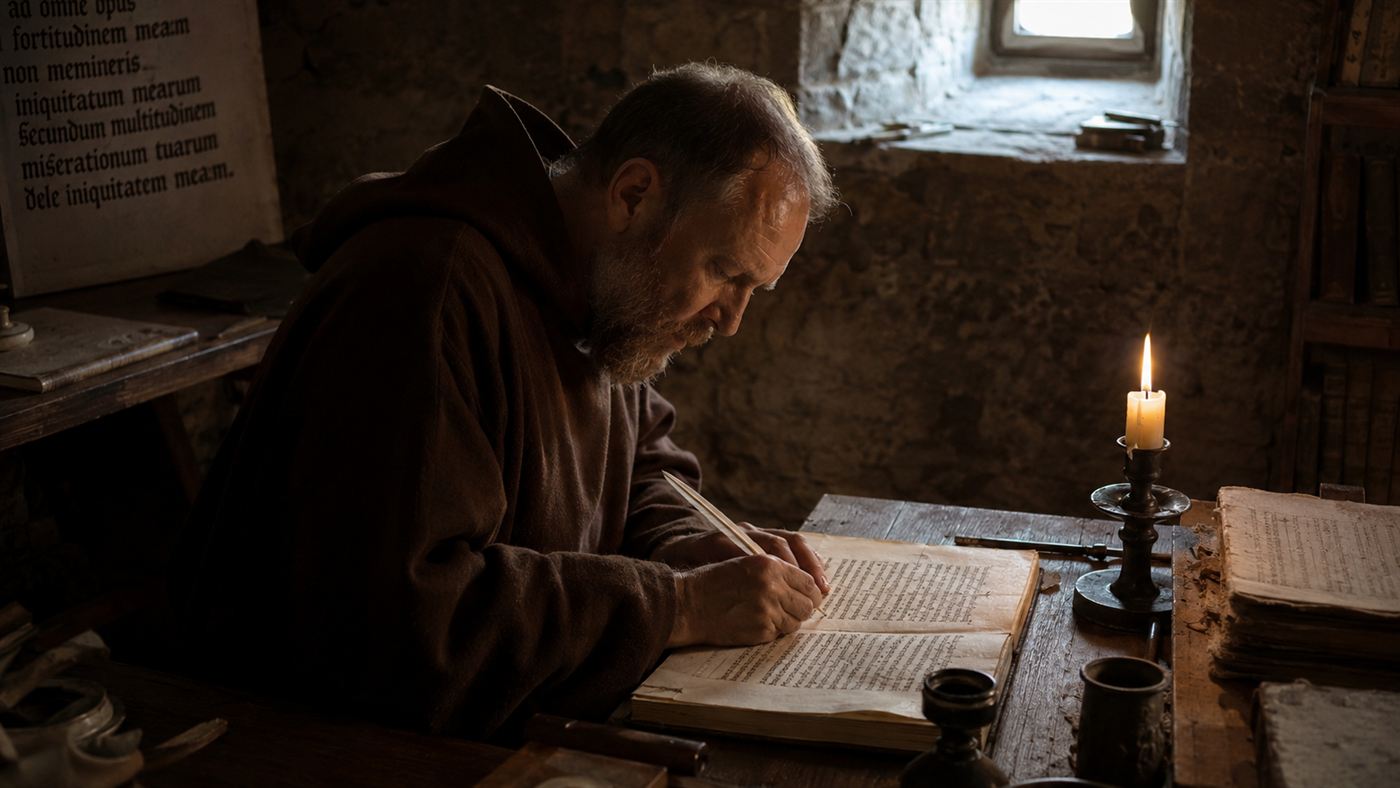
Here is the part that should impress you more than any pact with Lucifer. The handwriting really does point to a single scribe, who tradition remembers as a monk called Herman the Recluse. But far from being written in one night, the Codex Gigas is thought to have taken that one man something like twenty or thirty years of patient labour, very possibly most of his adult life. One human being, alone, kept their hand so steady and their style so constant across decades that the finished book looks almost machine-made.
That, when you sit with it, is more astonishing than the myth. The legend asks you to believe the Devil worked fast. The reality asks you to believe a single person worked slowly, faithfully and beautifully for half a lifetime on one impossible book. The supernatural version is a thrill; the human version is a quiet marvel of devotion and endurance.
The honest catch
A few honest notes round out the tale. The number of animal skins and the exact years of work are estimates, and the identity of the scribe rests on tradition as much as proof. The book is also, for the most part, an ordinary if gigantic Bible and reference collection; it is one extraordinary page, not occult contents, that earns its fearsome reputation. The Devil's Bible is far less devilish than its name suggests, which is rather the point.
And like so many treasures, it has wandered far from home. The Codex Gigas passed through Bohemian monasteries to the collection of an emperor in Prague, and then, in 1648, Swedish soldiers carried it off as plunder at the close of the Thirty Years' War. It has lived in Stockholm ever since, a Czech masterpiece held in a Swedish library, still drawing crowds who come less for the scripture than for one crouching figure painted by a man who, the story says, had run out of time.
A book so huge it takes two to lift, with the Devil hidden in its pages, and one patient human behind the whole thing. Which version do you prefer, the monk who bargained with the Devil, or the one who simply never gave up? Tell us what you think in the comments.
Related reading: the Voynich manuscript, the medieval book in a language no one has ever been able to read.