In 1848 two teenage sisters in a New York farmhouse pretended to talk to a ghost through mysterious knocks, and accidentally launched a worldwide religion of the dead that millions came to believe in
It started as a prank to frighten their mother. Two young sisters made strange knocking sounds in the dark and claimed a spirit was answering them. Within a few years that childish trick had grown into a global movement with millions of followers, and the girls at the heart of it were famous the world over.
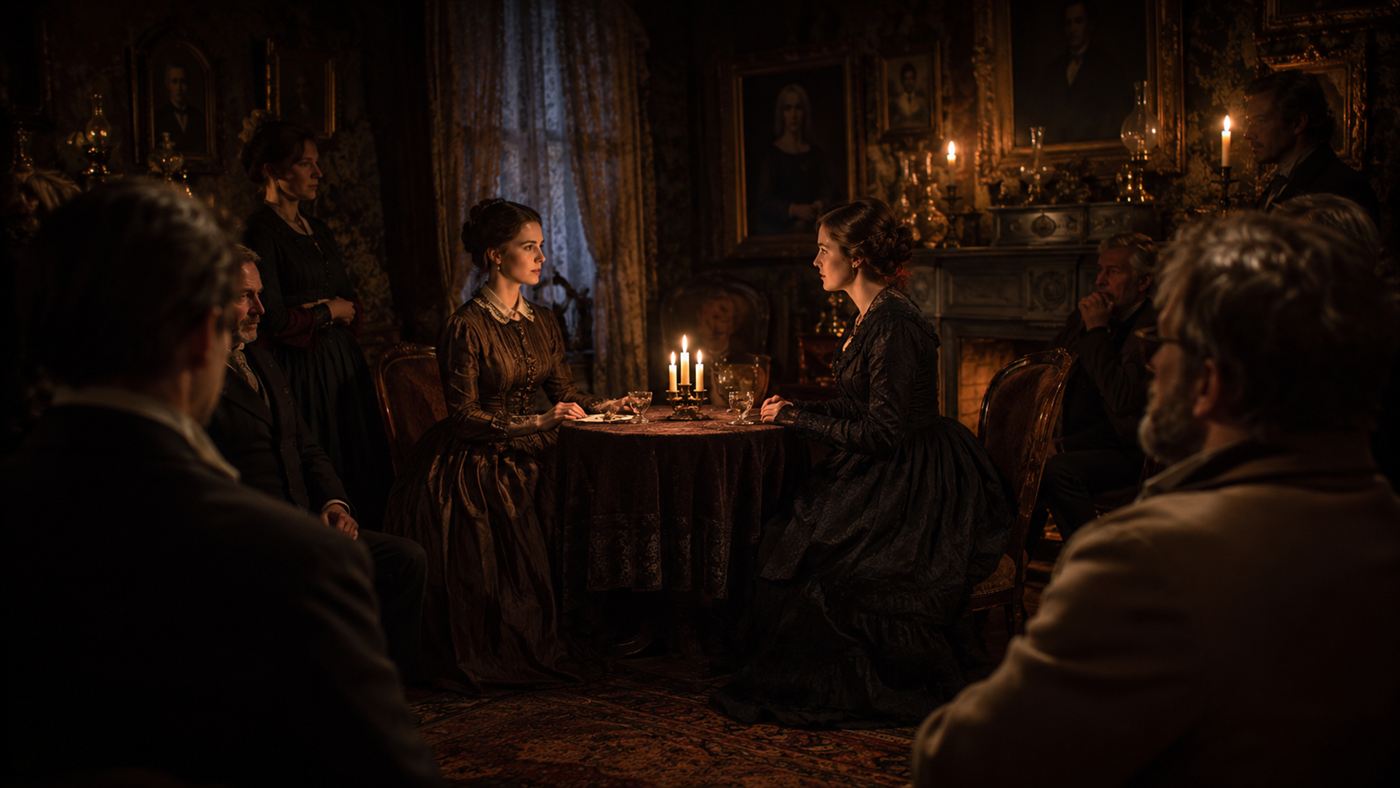
Candlelit sittings where the dead seemed to knock back. Illustration: Watts & Wild.
In the spring of 1848, in the small hamlet of Hydesville in upstate New York, the two youngest Fox sisters, Kate and Maggie, began to complain of odd rappings in their family's farmhouse. Their parents were baffled, and the girls started to insist the sounds were not random at all, but the answers of a spirit.
What happened next is one of the most astonishing chain reactions in American history. From that one farmhouse and those few knocks grew Spiritualism, a belief that the living could talk to the dead, which within a generation had swept across the United States and Europe and claimed millions of devoted followers.
The short version: the Fox sisters convinced their neighbours, then the world, that they could speak with the dead through mysterious raps. It made them celebrities and helped found a whole religion, and forty years later one of them stood on a stage and revealed exactly how the trick was done.
The night the knocking began
The story the girls told was suitably spooky. They said the rappings came from the spirit of a peddler who had been murdered and buried in the cellar of the house, and they worked out a way to talk to him: one knock for no, two for yes, and a system for spelling out words letter by letter.
Neighbours crowded in to witness it, and the sisters answered questions with an eerie accuracy that left grown adults shaken. Word spread from the little hamlet of Hydesville outward, and their older sister Leah quickly saw the possibilities, taking charge of the two girls and turning their strange gift into public performances.
How two girls started a religion
The timing was perfect for the message. Nineteenth-century America was hungry for proof of life after death, and the idea that ordinary people could receive knocks and signs from departed loved ones was intoxicating. The Fox sisters were living proof, or so it seemed, that the veil between the living and the dead could be lifted.
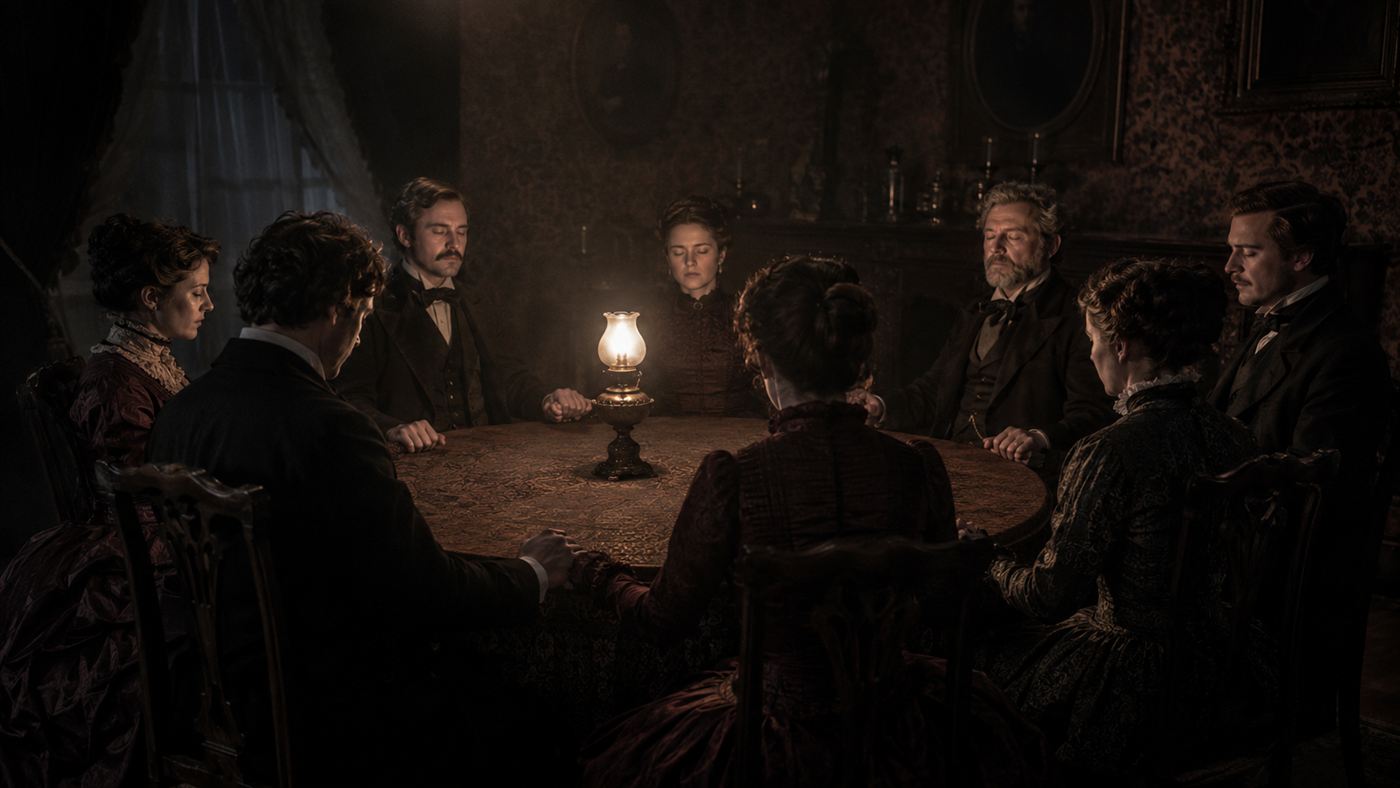
From their performances grew the entire practice of Spiritualism, complete with mediums, dark rooms and the seances that would define the era. Within a few years there were reportedly millions of believers, and respectable, educated people among them, all convinced that the dead were tapping out messages to anyone who knew how to listen.
A grief the movement was built to answer
Spiritualism did not sweep the world by accident. It offered something almost unbearably precious: the promise that death was not the end and that the people you had lost were still near, still reachable, still able to say they loved you. In an age of high child mortality and, soon, the mass slaughter of the Civil War, that was a message millions ached to hear.
That is the key to why the Fox sisters caught fire when countless other oddities faded. They did not just perform a trick, they answered a deep and universal grief, and a promise like that is very hard for a grieving heart to give up, no matter what the evidence later says.
Did the Fox sisters really talk to the dead?
Almost certainly not, and the most damning witness was one of the sisters herself. In 1888, four decades after it all began, Maggie Fox appeared before a packed New York theatre and confessed that the entire thing had been a fraud from the very start, a prank that spiralled wildly out of their control.
She then showed the audience how it was done. The raps, she explained, were made by cracking the joints of her toes and knees, a knack the double-jointed girls had discovered as children, producing sharp knocks that seemed to come from the walls and furniture. She demonstrated it live, and the mysterious spirit of Hydesville was exposed as a party trick.
The honest catch
It would be tidy to end there, but the truth is messier. Within a year Maggie took her confession back, and by then both she and Kate were desperately poor, unwell and, by many accounts, drinking heavily, which makes it genuinely hard to know which of her statements to trust most. She may have been telling the truth, or been paid or pressured, at either moment.
Yet the deeper point does not really depend on the confession. Whether or not those particular raps were toe-cracks, Spiritualism itself rolled on, because it was never truly about two girls in a farmhouse. It was about millions of people who needed to believe, and that need did not vanish just because the Fox sisters admitted their part was a game.
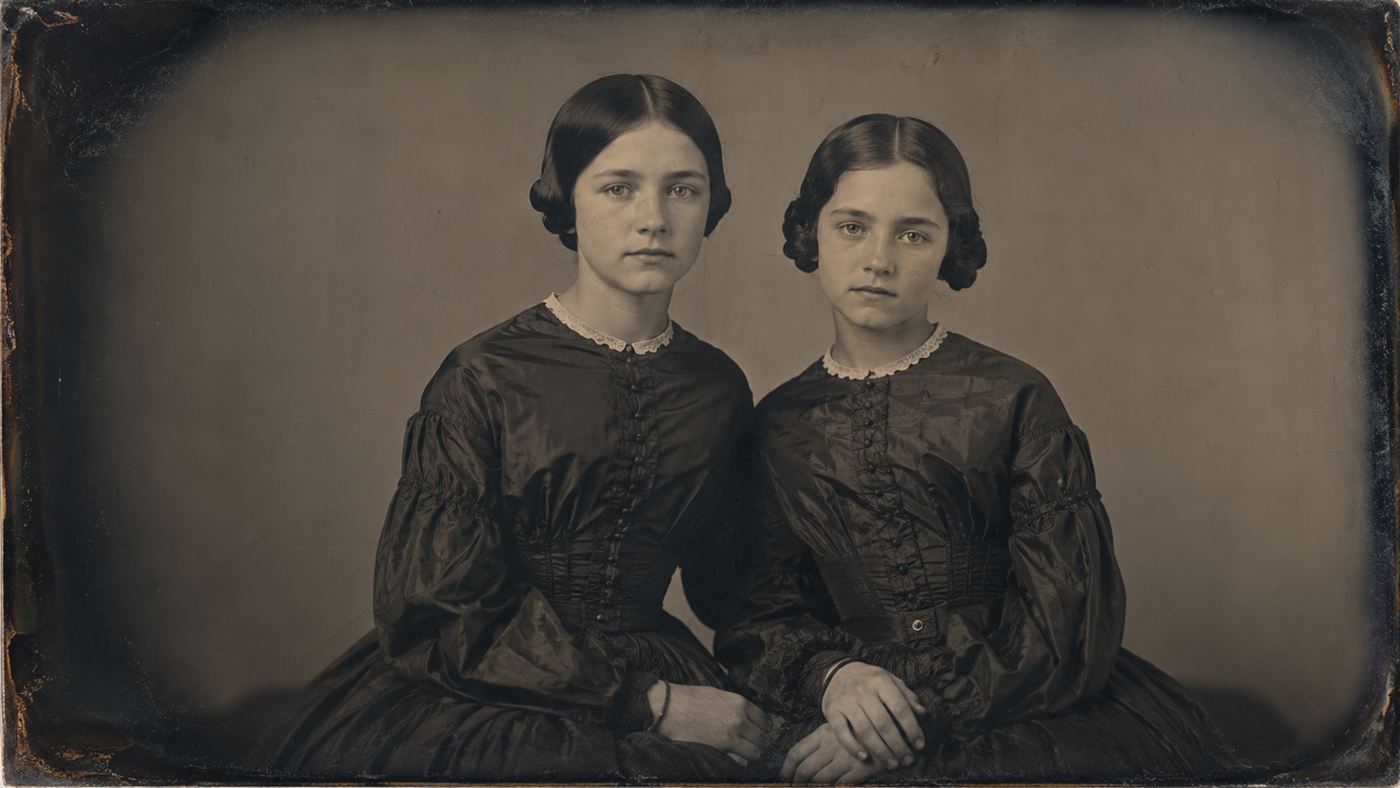
What became of the sisters
For all the fame and fortune that passed through their hands, the story did not end kindly. The Fox sisters slid into poverty and ill health, their celebrity long faded, and both died within a few years of the confession, largely forgotten by the movement they had unwittingly created.
And that movement, astonishingly, outlived them and continues in quiet corners even now. A prank invented by two bored children in 1848 became a faith that comforted millions, survived the confession of its own founder, and left behind everything from seances to the Ouija board. Few jokes in history have ever echoed so long or so far.
Two children cracked their toes in the dark and ended up founding a religion that outlived their own confession that it was fake. Why do you think a belief can survive even the people who invented it admitting they made the whole thing up? Tell us what you think in the comments.
Related reading: the giant stone man that fooled thousands into believing in petrified giants. See also the newspaper that convinced a nation there were bat-men on the Moon, and the mansion a grieving widow built for 38 years to appease spirits. See also Mercy Brown, the girl her village dug up believing she was a vampire.