After a bridge collapse killed 75 people, terrified Scotland demanded a bridge that could never fall, and the Forth Bridge was deliberately over-built into an icon
Most great structures are designed to be as light as they can safely be. The Forth Bridge is the opposite: a vast, almost defiant tangle of steel, built far stronger than it needed to be, because a nearby disaster had taught Scotland exactly what happens when a bridge is not strong enough.
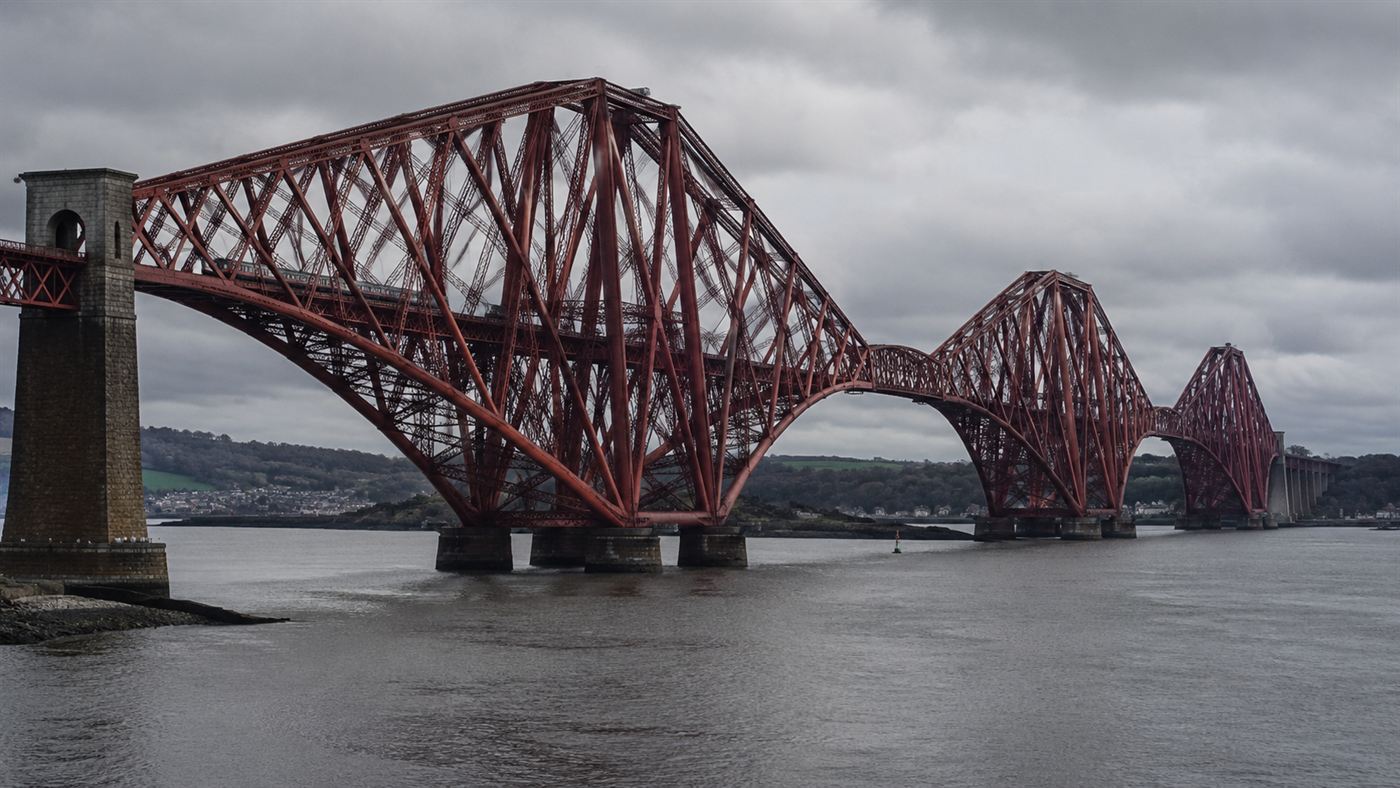
The Forth Bridge looks impossibly heavy on purpose: it was built to reassure a public terrified by an earlier collapse. Illustration: Watts & Wild.
The Forth Bridge, striding across the Firth of Forth near Edinburgh on its three great red towers, is one of the most recognisable structures in the world and a symbol of Scotland itself. Opened in 1890, it was for years the longest cantilever bridge ever built, and it still carries trains today. But its most interesting feature is not its size. It is the fear baked into its design.
This is a bridge engineered, quite consciously, to look indestructible, because the people who built it were working in the shadow of one of the worst engineering catastrophes of the age. To understand why the Forth Bridge is so massive, you have to start a few years earlier and a little to the north, with a different bridge that fell down.
The Forth Bridge is a giant cantilever railway bridge over the Firth of Forth in Scotland, opened in 1890. It was deliberately over-engineered after the 1879 Tay Bridge disaster, in which an earlier bridge collapsed and killed about 75 people, and was designed by John Fowler and Benjamin Baker to look and be unfailingly strong.
The disaster that haunted the Forth Bridge
On the stormy night of 28 December 1879, the first Tay Bridge, a long, slender structure carrying the railway across the Firth of Tay, collapsed as a train was crossing it. The central spans gave way in the gale and plunged into the freezing water, taking the train and everyone aboard with them; around 75 people died. The Tay Bridge disaster remains one of the most infamous structural failures in British history.
The shock was profound, and it landed directly on the plans for the Forth. The same engineer behind the doomed Tay structure, Thomas Bouch, had been preparing to build a bridge across the Forth too, and his design was promptly abandoned. The Tay Bridge disaster had shown, in the most horrifying way, that Victorian confidence in slender iron bridges could be fatally misplaced, and nobody was willing to gamble again on the wider, deeper Forth.
A bridge designed to look unbreakable
The job went instead to the engineers John Fowler and Benjamin Baker, who chose a completely different approach: the cantilever. Instead of a delicate span, they built three enormous balanced towers, each holding out arms of steel that reach toward the next, with lighter girders slung between them. The two main spans stretch 521 metres each, which at the time made it the longest cantilever bridge in the world.
Crucially, Benjamin Baker designed it with deliberate, visible excess. After the Tay Bridge disaster, calculations for wind pressure became an obsession, and the Forth was built to withstand forces far beyond anything it would realistically meet. The result is a structure that looks almost too heavy, a deliberate visual statement that this bridge, unlike the Tay, would never be blown into the sea. Its strength was as much about public reassurance as pure engineering.
The chairs that explained the cantilever
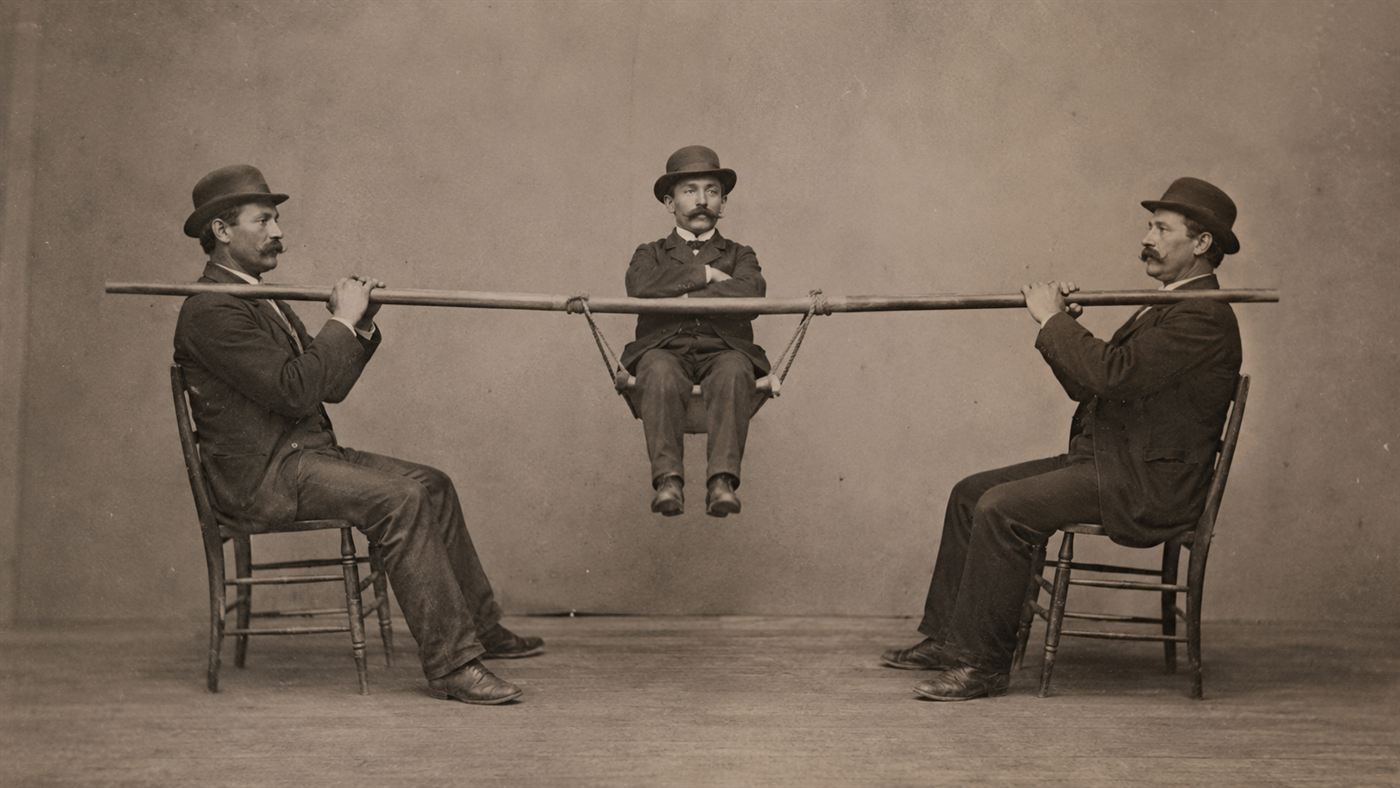
The cantilever principle was unfamiliar to the public, so in 1887 Benjamin Baker staged one of the most charming demonstrations in engineering history. Two men sat on chairs, leaning back and gripping poles, their outstretched arms in tension, acting as the cantilever towers. Between them, supported only by that human framework, sat a young Japanese engineer named Kaichi Watanabe, representing the load on the central span.
The image became famous because it made an abstract idea instantly clear: the weight in the middle is held up by the balanced tension and compression running out to the supports on either side. That is exactly how the Forth Bridge stands, with each tower counterbalancing the loads reaching out from it. It was Victorian science communication at its best, turning a frightened public's doubt into understanding.
The men who built it, and the men it killed
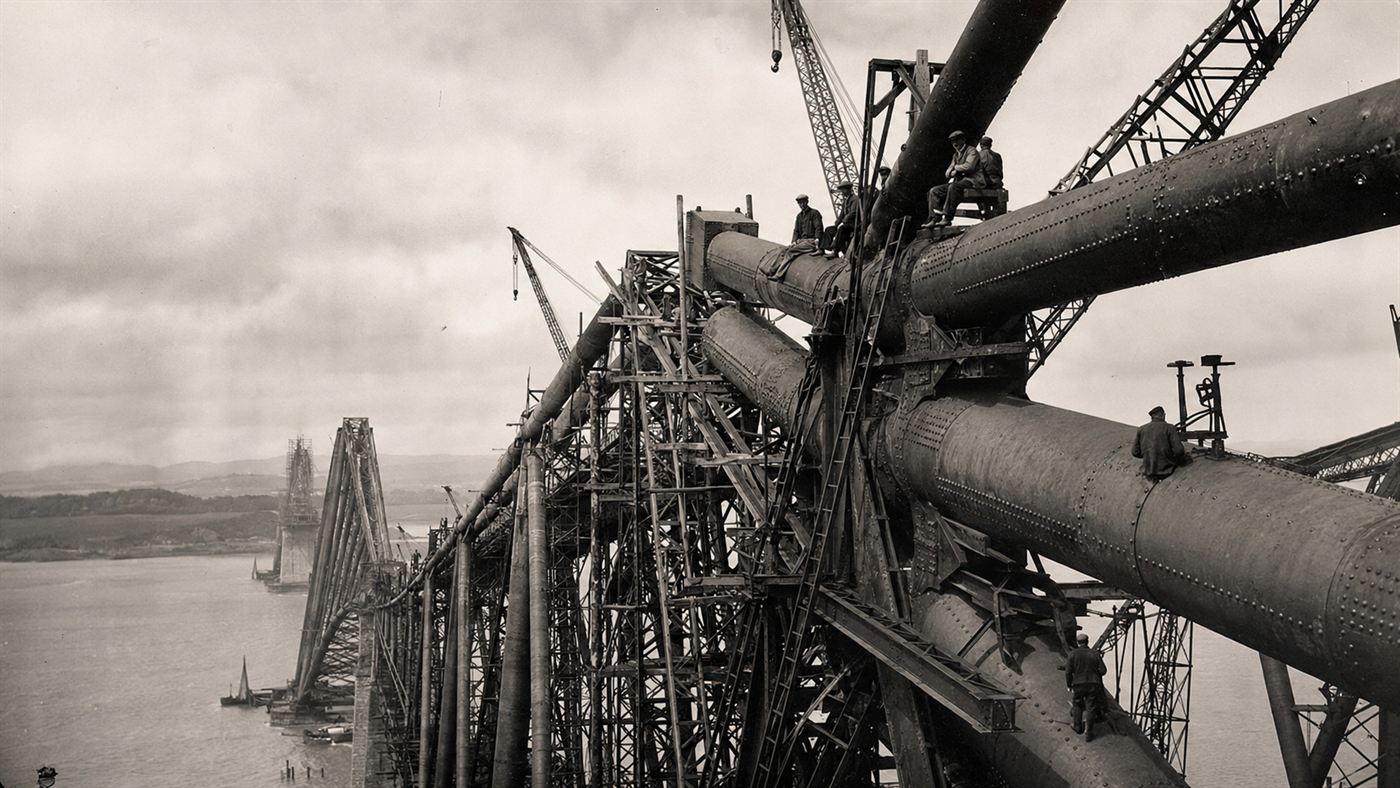
Building the Forth Bridge was a colossal and dangerous undertaking. At its peak around 4,600 workers, known as the briggers, swarmed over the steel, riveting it together by hand and by gaslight through bitter Scottish winters. The bridge swallowed roughly 54,000 tonnes of steel and some six and a half million rivets, an industrial effort on a scale rarely seen.
It came at a heavy human price. At least 73 men died during construction, killed by falls, drowning, and accidents in conditions that offered little protection, a toll that for a long time went largely unacknowledged before memorials were finally raised to them. The soaring red icon over the Firth of Forth is also, quietly, a monument to the workers who did not live to see it open.
Painting the Forth Bridge forever
The bridge gave the English language an idiom. For more than a century, gangs of painters worked constantly to protect its vast surface area of steel from the salt-laden Scottish air, and the legend grew that by the time they reached one end of the Forth Bridge, it was already time to start again at the other. "Painting the Forth Bridge" became shorthand for any job that can never truly be finished.
Like many good legends, it was a bit of an exaggeration, but it pointed at a real truth about the relentless maintenance such a structure demands. The endless cycle was finally broken in 2011, when a major restoration applied a high-performance coating designed to last at least twenty-five years. The bridge that was built never to fall had finally, after more than a hundred years, also been painted in a way that would not need redoing tomorrow.
The honest catch
The heroic story has a few honest edges. The Forth Bridge's over-engineering, often praised as far-sighted, was driven at least as much by raw fear and the need to calm a traumatised public as by cool calculation, which is a more human and less flattering motive than pure genius. And the famous "cantilever that could never fall" was, like all records, eventually outdone, surpassed in span by Canada's Quebec Bridge in 1917, itself the site of a terrible collapse.
Most importantly, the romance of the icon should not bury the 73 men who died building it, whose names were left off the story for far too long. Even so, the core achievement endures. Faced with the horror of the Tay Bridge disaster, Victorian engineers chose not to abandon the crossing but to build something so robust it has carried trains for well over a century. The Forth Bridge still stands over the Firth of Forth, exactly as Benjamin Baker promised it would.
Scotland answered a deadly collapse not by giving up on the crossing but by building something almost defiantly strong. Is over-engineering out of fear a flaw, or exactly the kind of caution we should want in the things we trust our lives to? Tell us in the comments.
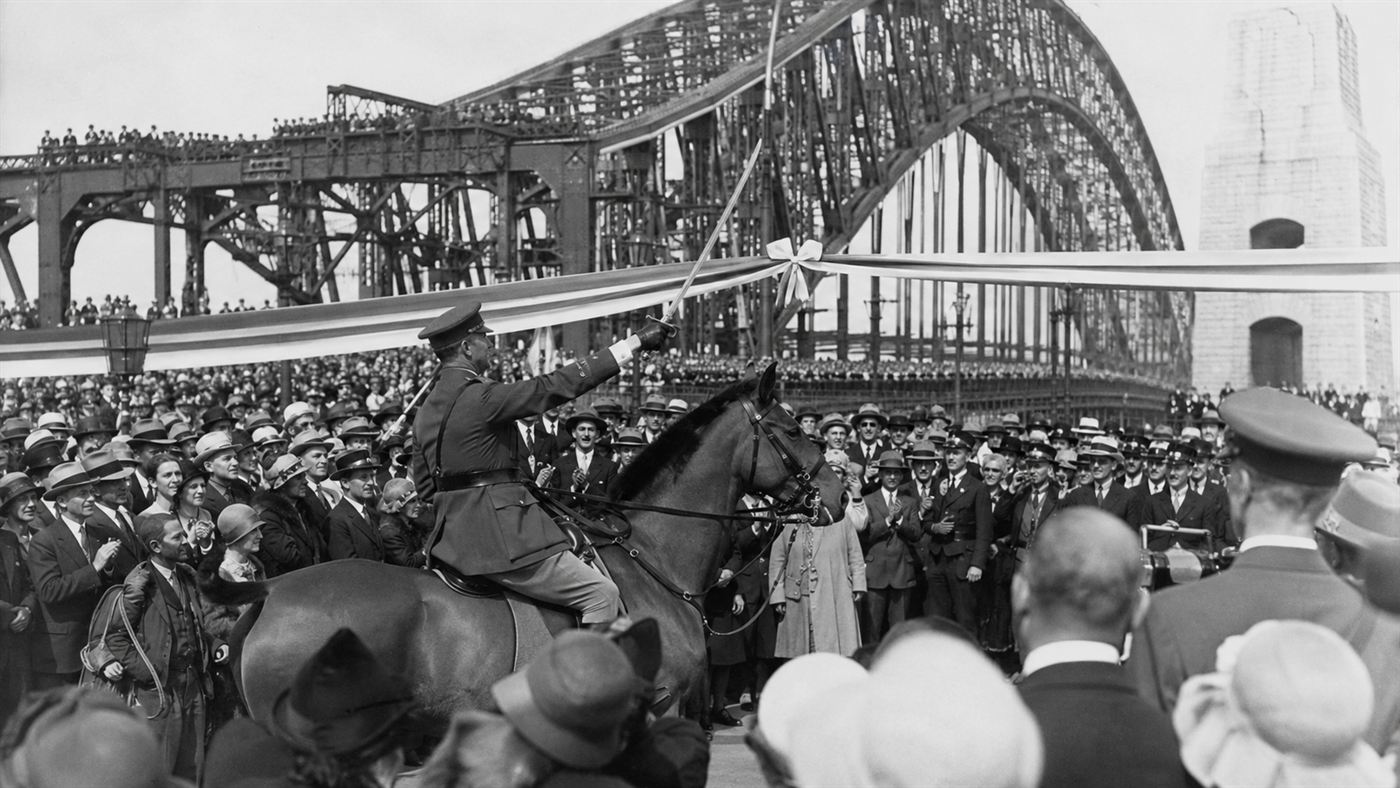
Related reading: The 1932 opening of the Sydney Harbour Bridge was hijacked by a man on horseback who slashed the ribbon with a sword. See also the Tay Bridge disaster, the 1879 collapse that taught engineers to fear the wind.