The age of electric trains began as a fairground ride in 1879, a tiny locomotive pulling crowds in circles around a Berlin exhibition
Every subway, tram and electric train on Earth traces back to a single, slightly silly afternoon attraction. At a Berlin trade fair in 1879, a German inventor sat visitors on open benches behind a toy-sized engine and ran them round and round a little loop. That novelty was the world's first electric railway, and it quietly started one of the great revolutions in how people move.
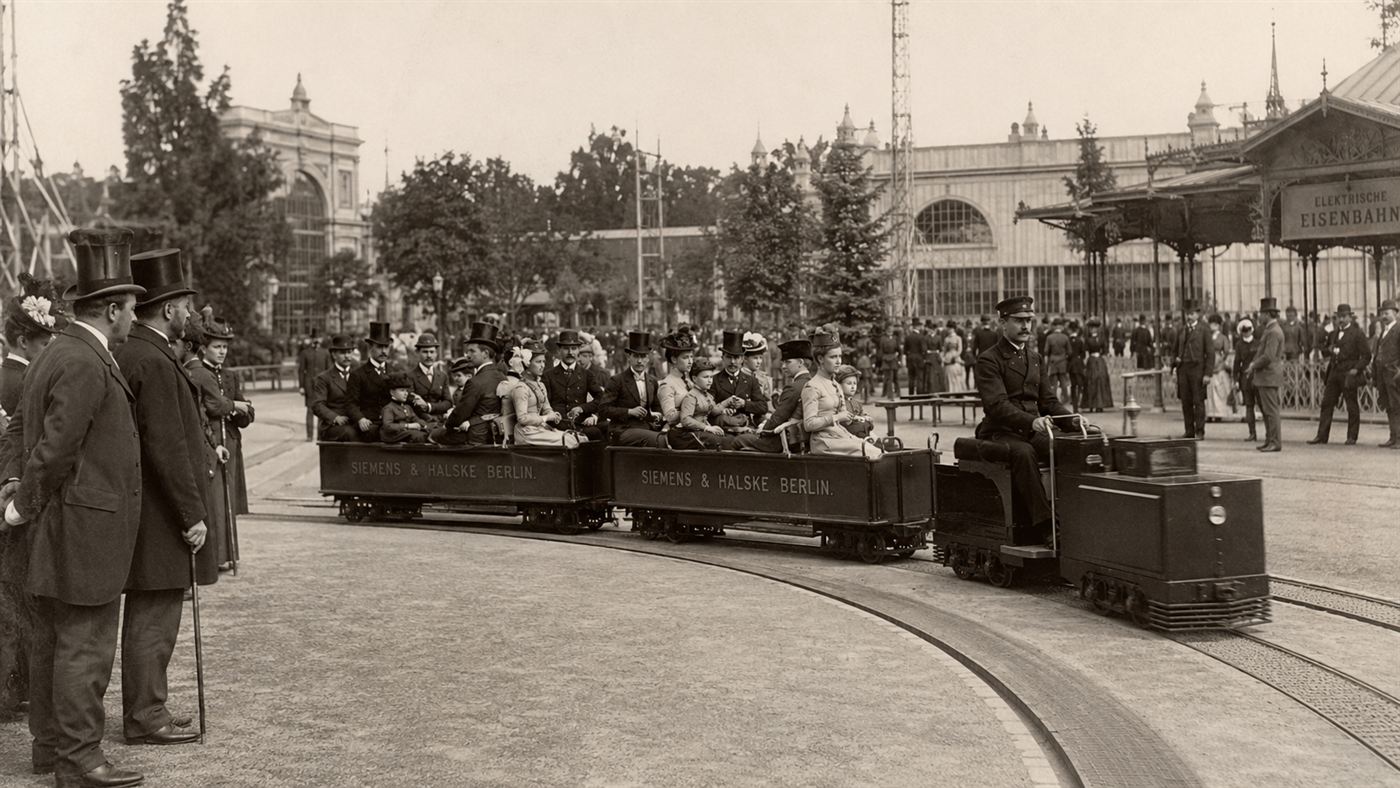
The first electric railway carried visitors in loops at the 1879 Berlin Industrial Exhibition. Illustration: Watts & Wild.
The man behind it was Werner von Siemens, an engineer and industrialist whose company would grow into one of the giants of the electrical age. At the Berlin Industrial Exhibition, which ran from late spring to autumn of 1879, he set up a small oval track about three hundred metres around and put a little electric locomotive on it, no bigger than a garden bench, with a tiny three-horsepower motor.
Behind the engine ran three open carriages, each holding six passengers, who trundled around the loop at a gentle walking-to-jogging pace. There was no smoke, no boiler, no coal, just a quiet hum, which in 1879 was astonishing. Over the four months of the fair, something like ninety thousand people climbed aboard for a ride, making it one of the hits of the show.
How the first electric railway actually worked
The clever bit was where the power came from. Earlier inventors had tried electric locomotives, but they had lugged their energy around in heavy, short-lived batteries that made the whole thing impractical. Siemens did away with the batteries entirely. As Siemens recounts in its own history, his locomotive drew its current from a raised rail running down the middle of the track, fed by a generator off to the side, and sent it back through the wheels and the running rails.
That idea, power delivered continuously through the track rather than carried on board, is the principle that still drives electric railways today, from a city tram to an underground train. The little loop at the Berlin fair was, in miniature, the blueprint for the third rail under every metro system in the world.
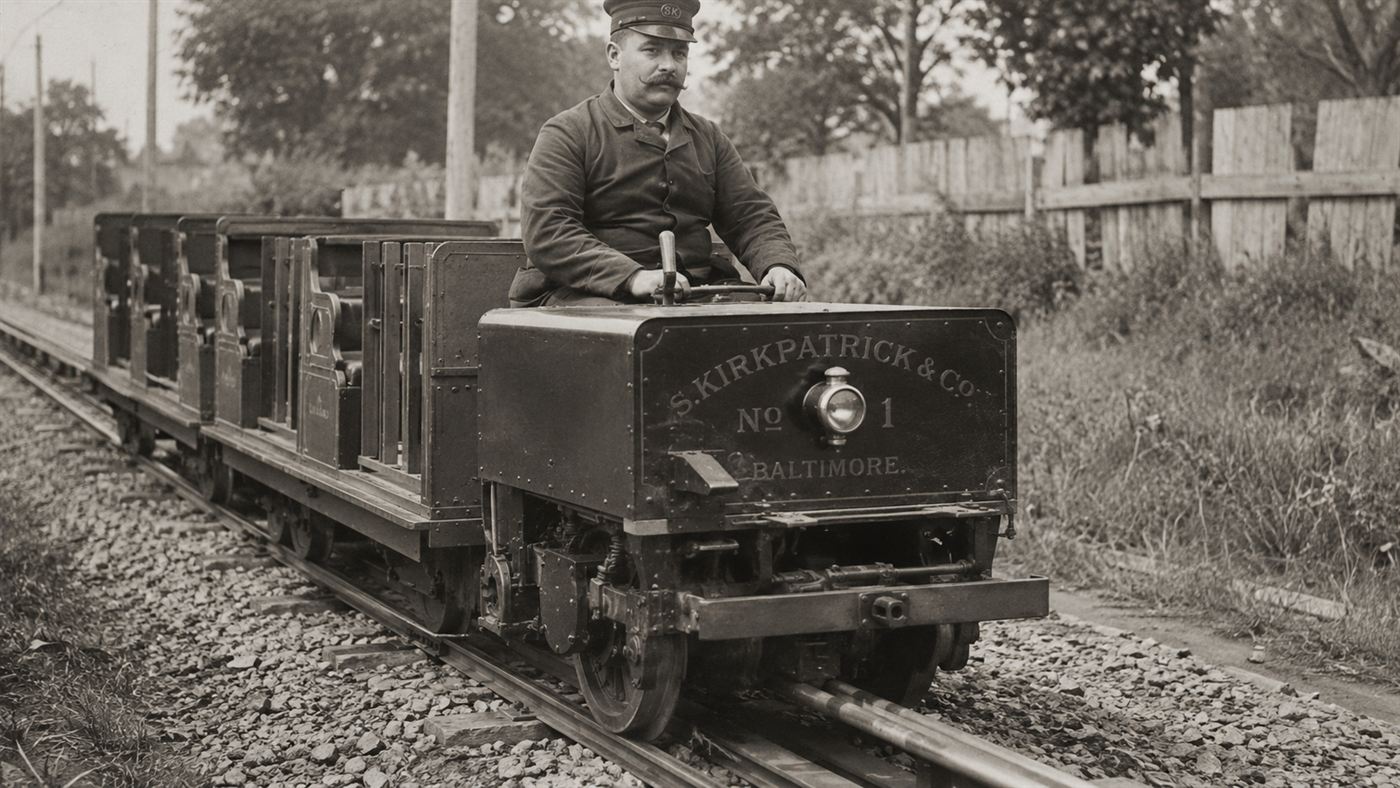
From a fairground loop to the first tram
A ride at a fair is one thing; a real transport service is another, and Siemens moved quickly to the next step. Two years later, in 1881, he opened a proper electric tramway in Gross-Lichterfelde, a suburb of Berlin. It ran a couple of kilometres along an ordinary street, carrying ordinary passengers about their day, and as Guinness World Records notes, it is generally counted among the first electric trams in regular public service.
From there the idea spread with extraordinary speed. Within a couple of decades electric trams had replaced horses in cities across Europe and North America, electric trains were burrowing under London and New York, and the smoky, sooty business of urban transport was being quietly electrified. All of it grew out of that first little loop.
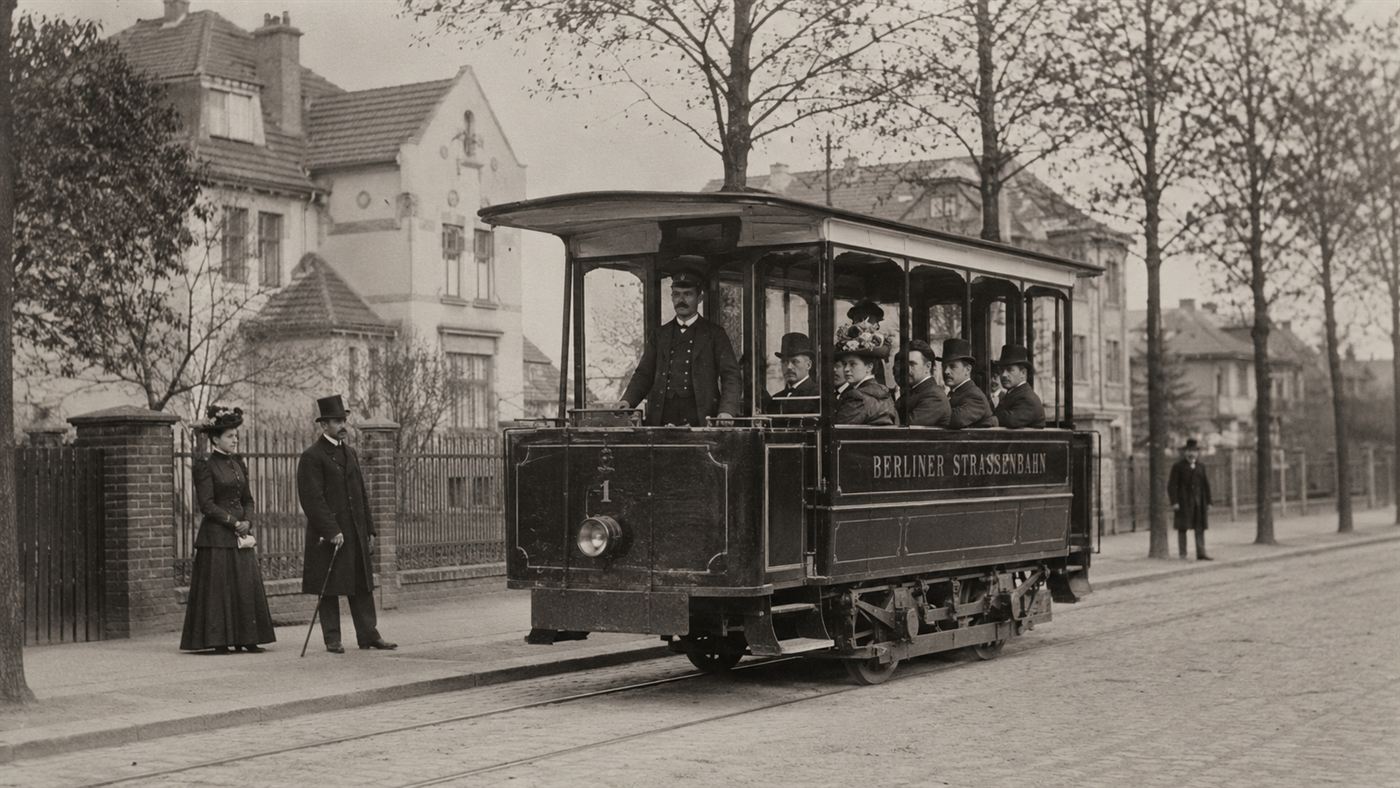
What was the first electric railway?
In short, a demonstration that worked far better than a demonstration had any right to. Siemens's 1879 railway was the first to carry fare-paying passengers using electricity drawn from the track, and its success is what convinced engineers and city planners that electric traction was not a laboratory toy but the future of transport. Everything from the Tube to a modern high-speed line is a descendant of that loop.
The honest catch
As ever, "first" needs a little care. People had built electric locomotives before 1879, including a battery-powered one in Scotland decades earlier, so Siemens did not invent the electric motor on rails out of nothing. What he did, and what makes the 1879 railway the real turning point, was solve the problem that had defeated the others: instead of dragging heavy batteries about, he fed power to the train continuously through the track, and that is the move that made electric railways practical. It is also worth saying he did not do it alone; his company and its engineers built and ran the thing. And the wider story has its shadows, as cheap electric transport reshaped cities in ways both good and ruinous over the following century. But the core of it is a lovely truth: the trains that move billions of us, cleanly and quietly, every single day began life as a curiosity at a fair, going nowhere in particular, round and round.
The whole electric-rail age began with a toy-sized train going in circles to amuse a crowd. Does it change how you see your daily commute to know it started as a fairground ride in 1879? Tell us what you think in the comments.
Related reading: A decade later, the man who turned that idea into the streetcars and elevators that built the modern city.