The eHighway hangs tram-style overhead wires above the motorway so that long-haul trucks can raise a pantograph and drive on electricity without hauling a giant battery
Battery trucks struggle on long hauls, because the batteries get impossibly heavy. The eHighway borrows a trick from the railways: string electric wires above the road, let trucks reach up with a pantograph, and power them straight from the grid as they drive.
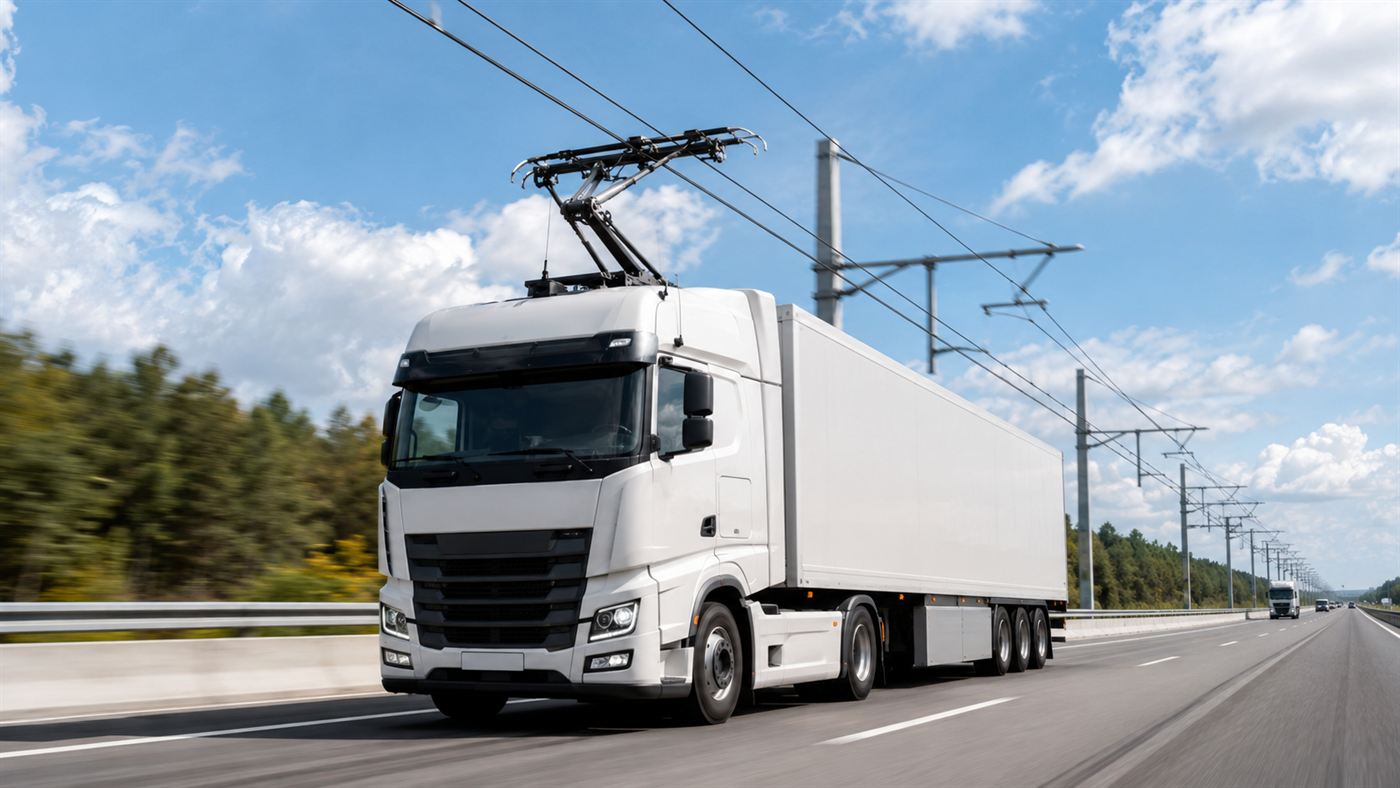
A truck drawing power from overhead wires on an eHighway test stretch. Illustration: Watts & Wild.
The eHighway is what you get when a freight truck meets a tram. For more than a century, trains and trolleybuses have drawn their power not from heavy batteries but from wires strung overhead, reaching up to them with a sprung arm called a pantograph. The eHighway, developed by Siemens, takes that old and proven idea and lifts it onto the motorway, so that an ordinary-looking heavy truck can roll down a lane of highway and run on grid electricity the whole way.
It looks slightly surreal the first time you see it: a line of pylons and wires marching along above a fast road, and a truck beneath them with a frame on its roof quietly touching the cable. As Siemens describes the system, the overhead contact line makes power available along the road, and an active pantograph on the truck transfers that energy to its electric motor. The truck is, in effect, driving and charging at the same time.
What is an eHighway? An eHighway is a stretch of road fitted with overhead electric wires, like a tram or train line, that hybrid trucks tap with a pantograph on the roof to draw power as they drive. It lets heavy trucks run on electricity without carrying an enormous battery.
The eHighway, a tram line for trucks
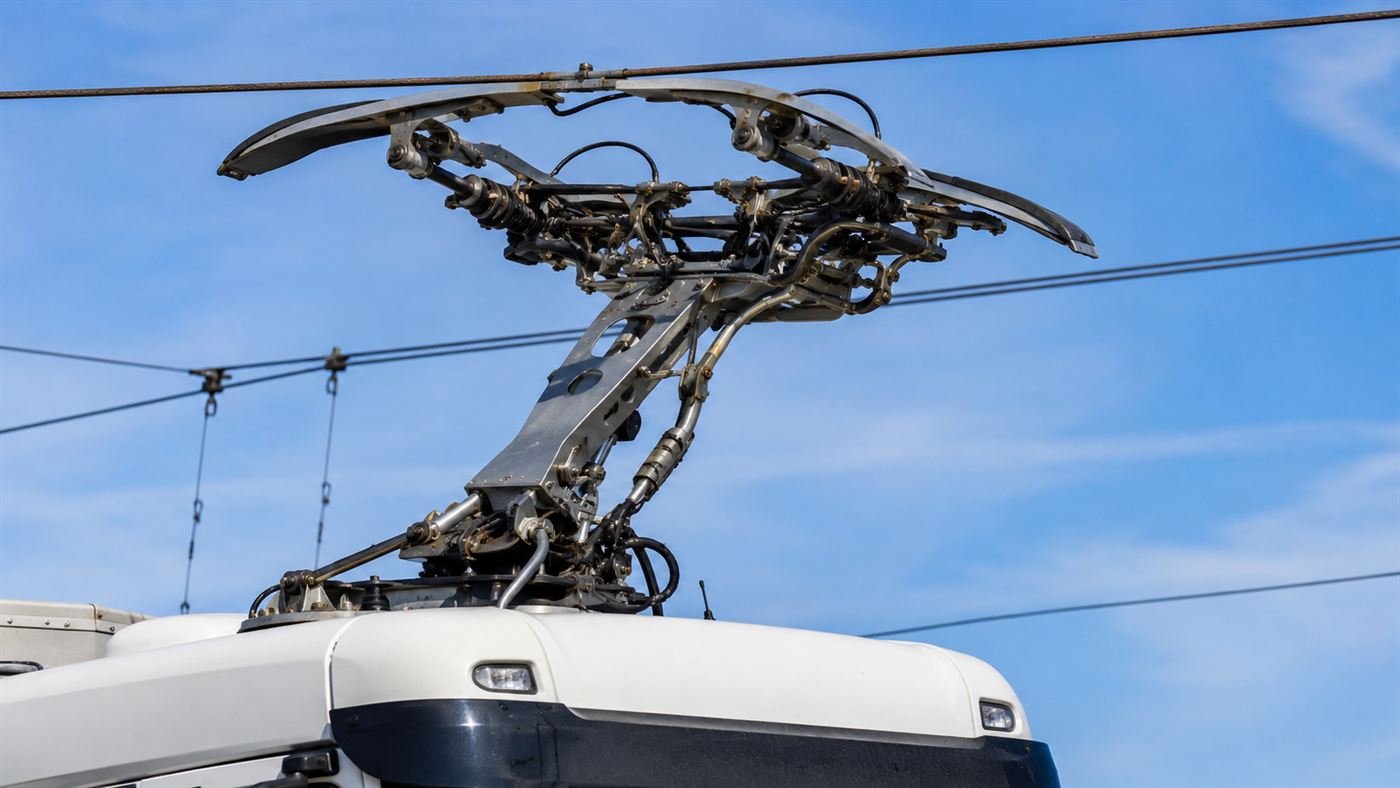
The heart of the eHighway is the contact line, the same basic technology that powers electric railways, hung above one lane of the road. A truck fitted for the system carries a pantograph on its roof that rises to meet the wire, and once connected it draws electricity directly, running its electric drive and, on some versions, topping up an onboard battery as it goes. There is nothing exotic in the physics; the novelty is purely in putting it over a road full of trucks rather than a railway track.
The reason to bother is freight. Lorries are among the hardest vehicles to electrify, and electrifying them matters, because heavy trucks burn a disproportionate share of transport fuel and foul the air along the busiest routes. If the wires can do the work, the truck does not have to.
Why not just use batteries?
The obvious question is why a truck on an eHighway does not simply carry a big battery like an electric car. The answer is weight. The energy a long-haul truck needs to move tonnes of cargo for hundreds of kilometres is enormous, and a battery big enough to store it would be heavy and bulky enough to eat seriously into the payload the truck is paid to carry. Every kilogram of battery is a kilogram of freight you cannot haul.
An electrified road sidesteps that. If the busiest motorway corridors carry the wires, a truck can run on grid power for most of its journey while carrying only a modest battery, or none at all, for the stretches in between. The infrastructure holds the energy, not the vehicle, exactly as it does for a train.
The clever pantograph
The part that makes the eHighway work on a real road, rather than a fixed track, is a smart pantograph. Unlike a tram, which is locked to its wire, an eHighway truck must be able to change lanes, overtake and leave the route at will. So its pantograph connects and disconnects from the overhead line automatically, guided by sensors, even while the truck is moving at speed. When the truck wants to pull out and pass, the arm simply drops; when it returns under the wire, the arm reaches back up.
Off the wires, the trucks keep going as hybrids, running on diesel, natural gas or battery power, so they have the same freedom as any normal lorry and are never stranded by the end of a cable. Siemens has claimed the system can roughly halve a truck's energy use compared with burning fuel, and save substantial money over the high mileage these vehicles cover.
From a Swedish highway to the Los Angeles ports
The eHighway has been built and driven, not just drawn. In 2016 Siemens switched on the world's first eHighway on a public road, a short stretch of highway in Sweden, with hybrid trucks running beneath the wires. Germany followed with longer test sections of autobahn, where electrified trucks shared the road with ordinary traffic at full speed.
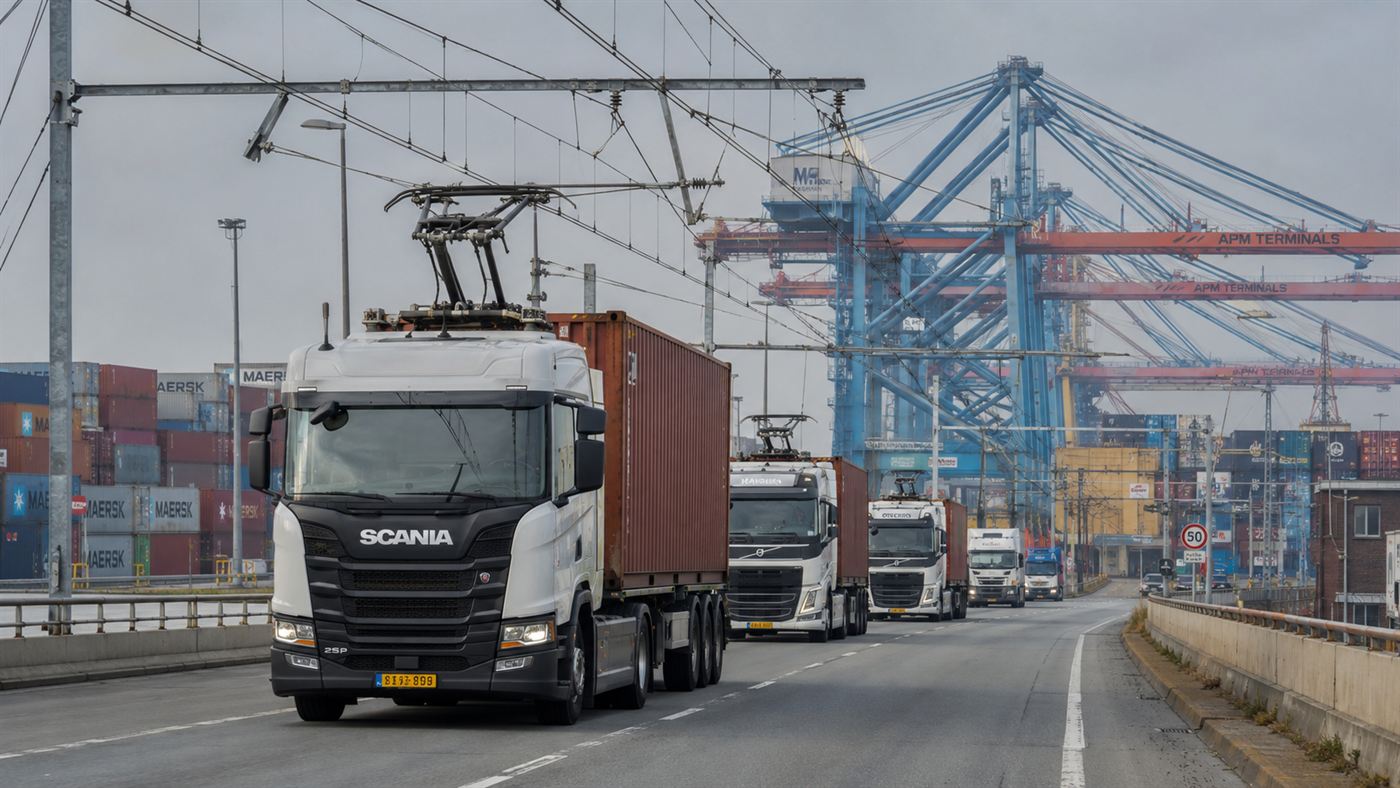
Perhaps the most pointed trial was in California, on a short demonstration stretch near the ports of Los Angeles and Long Beach. That corridor is one of the busiest and most polluted truck routes in the United States, thick with diesel lorries serving the docks, and the people who live alongside it breathe the consequences. An eHighway there is not an abstract efficiency exercise; it is aimed squarely at the dirty air of a real neighbourhood.
The honest catch
For all its cleverness, the eHighway remains a demonstration rather than a system anyone runs at scale. Every trial so far has been measured in a handful of kilometres, and the great difficulty is obvious: to be useful, the wires would have to be strung along thousands of kilometres of motorway, an enormous and expensive piece of infrastructure that someone has to pay for and maintain. That is a very large bet to place on one technology.
And while the wires were being tested, batteries kept getting better. Heavy electric trucks with big packs and fast, high-power charging have advanced quickly, and they need no special road at all, which makes the case for hanging wires over the motorway harder to argue than it was a decade ago. The eHighway proved that trucks really can run cleanly off an electrified road, and on the right corridor, a port approach, a busy freight artery, it is a genuinely efficient idea. Whether the world builds it, or simply waits for the battery to win, is still an open question.
A motorway with overhead wires, so heavy trucks can run electric without lugging a giant battery. Would you string wires over the highways, or just wait for better batteries? Tell us in the comments.
Related reading: The electric car that charges in five minutes, and what it means for trucks.