A self-taught engineer who had never built a bridge spanned the mighty Mississippi with an untried metal, silenced the doubters with an elephant, and the result still carries traffic today
In the 1870s, crossing the lower Mississippi meant a ferry and a prayer, and everyone knew the river was too wide, too deep and too wild to bridge. One man disagreed, a riverboat salvager with no engineering degree, and what he built was so far ahead of its time that people needed an elephant to believe it was safe.
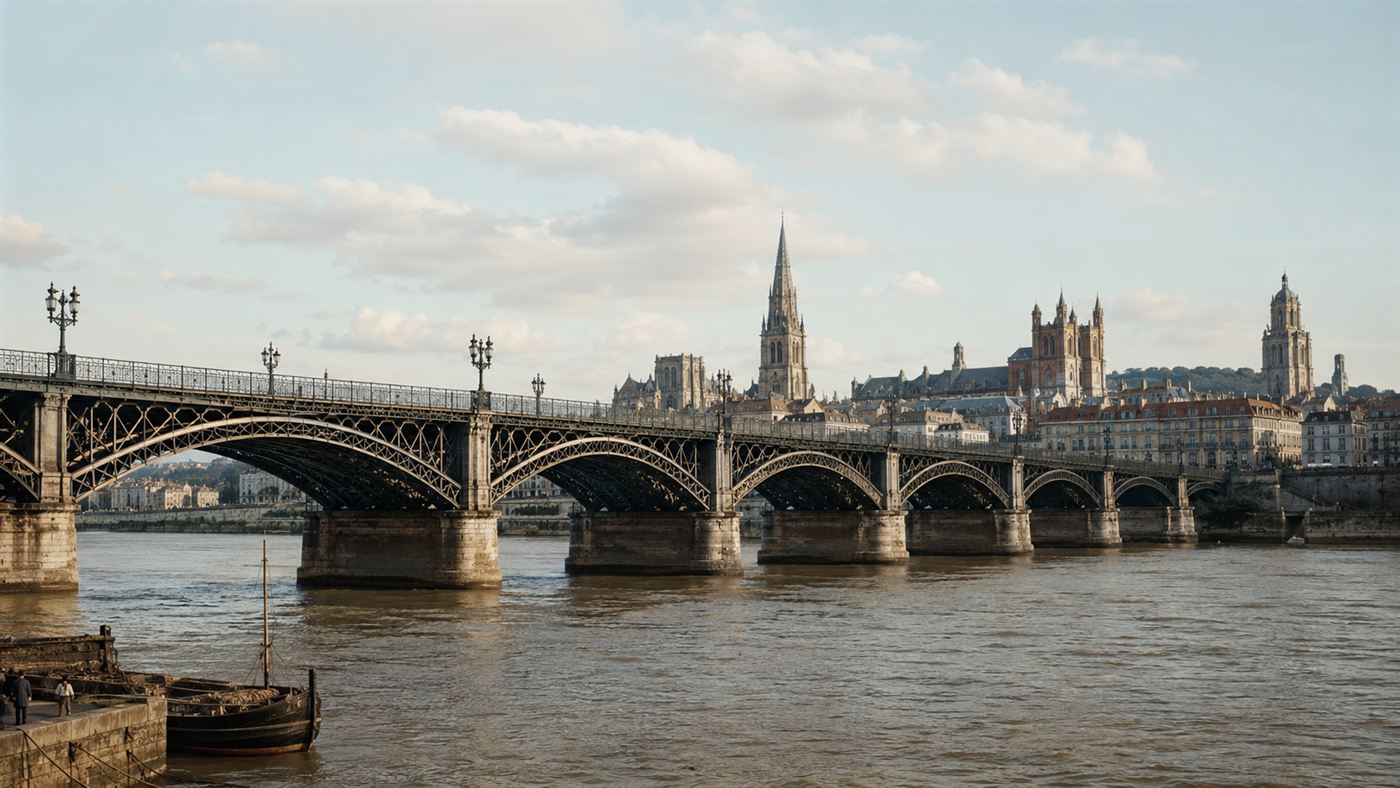
The Eads Bridge crosses the Mississippi on long steel arches, and still stands after 150 years. Illustration: Watts & Wild.
By the middle of the nineteenth century, St Louis was a booming river city with a serious problem. The Mississippi River split it from the railroads pushing west, and the only way across was by ferry, which froze in winter, flooded in spring and choked the city's growth. A bridge seemed the obvious answer, and just as obviously impossible, since no one had ever spanned the great river this far down.
The man who took it on was James Eads, and he was an unlikely choice. He had no formal training as an engineer at all; he had made his fortune and his reputation salvaging sunken steamboats and their cargo from the bed of the very river he now proposed to bridge, learning its moods and its currents from below.
The short version is that Eads promised something almost nobody believed he could deliver, a bridge of a new material, sunk to bedrock through deep river mud, and then delivered it. The catch is that this triumph of confidence and steel was paid for, in part, by the bodies of the men who dug its foundations.
The river nobody could bridge
The lower Mississippi is a monster to build in. It is wide and powerful, its bed is deep soft sand and mud rather than solid rock, and its channel must stay clear for the tall steamboats that were the lifeblood of trade. Any bridge would have to reach far down for firm footing, arch high enough for the boats, and span distances no one had attempted here before.
James Eads answered every objection with an audacious plan. Rather than clutter the river with piers, he would leap it in a few enormous arches, and rather than build them from tried and tested iron, he would use steel, a material so new and so distrusted for big structures that many engineers thought him reckless for even proposing it.
Why the Eads Bridge should not have worked
Almost everything about the design pushed past what was considered safe. Steel was barely understood as a structural material, and Eads demanded a quality of it that the mills of the day could scarcely produce, rejecting batch after batch until it met his standards and helping to drag the young steel industry forward in the process.
The arches themselves were built in a way that looked like a magic trick, reaching out from the piers into empty air with nothing beneath them, meeting in the middle over the water. To a public used to solid stone bridges, the finished Eads Bridge looked far too slender and daring to trust, and the doubts did not fade just because the last piece had been fitted.
The deadly price under the water
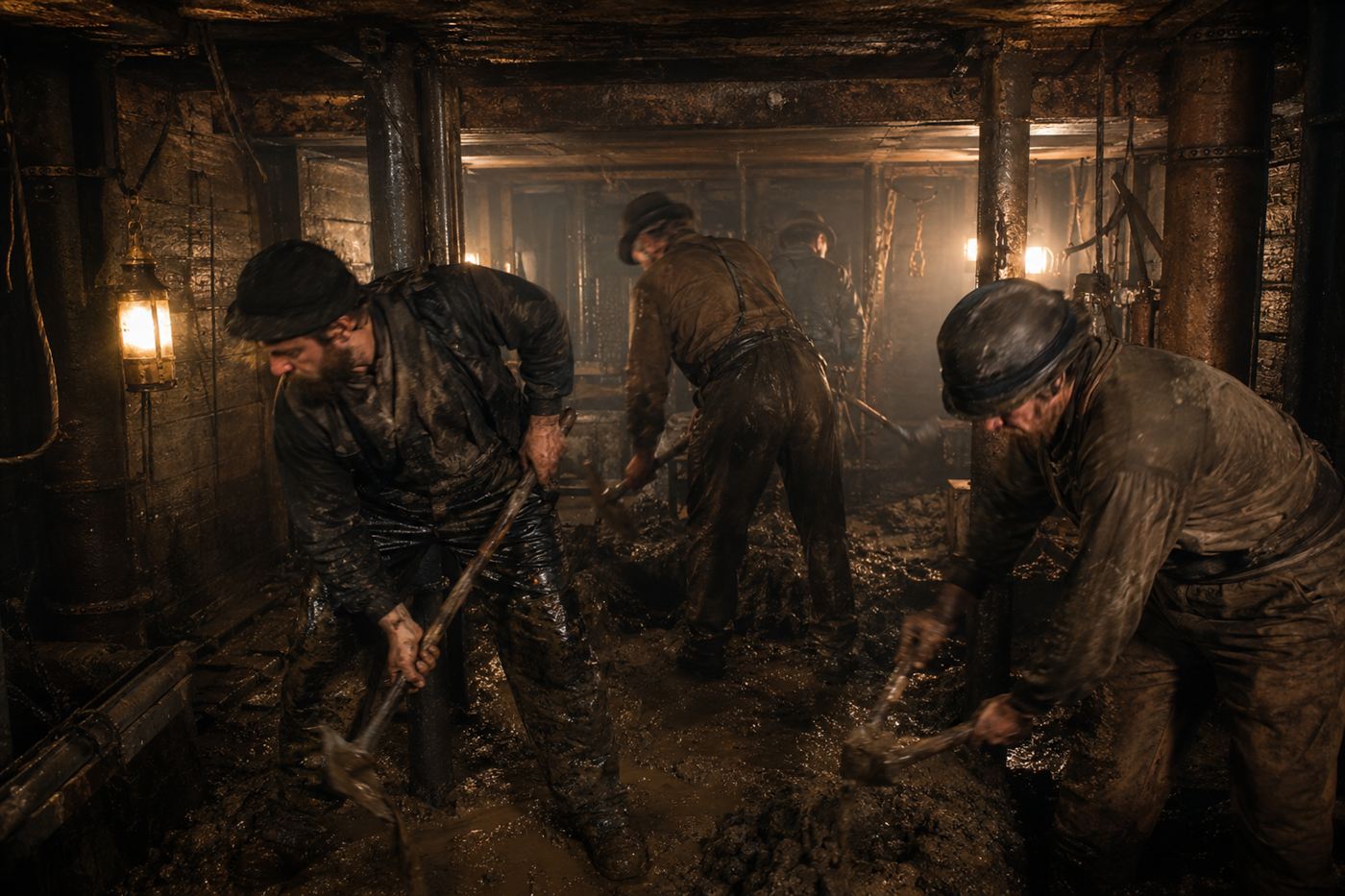
The most dangerous work happened where no spectator could see it. To reach solid rock, crews descended into caissons, sealed chambers pumped full of compressed air to hold back the water and mud while they dug by hand at the riverbed far below the surface.
Down there the pressure was crushing, and when the men rose back to the surface too fast, they were struck by a strange and terrifying illness. Their joints screamed, they were seized by cramps and paralysis, and some died. This was caisson disease, what divers now call the bends, and at the time almost no one understood that it came from gas bubbling out of the blood on too quick an ascent. Several workers on the Eads Bridge were killed and many more were left crippled.
How do you prove a bridge is safe?
When the bridge opened in 1874, the engineering was sound, but public nerves were not, and Eads faced a very practical problem: how to convince ordinary people to walk and ride across a slender steel span over a deadly river. The answer he reached for was pure theatre, and it worked perfectly.
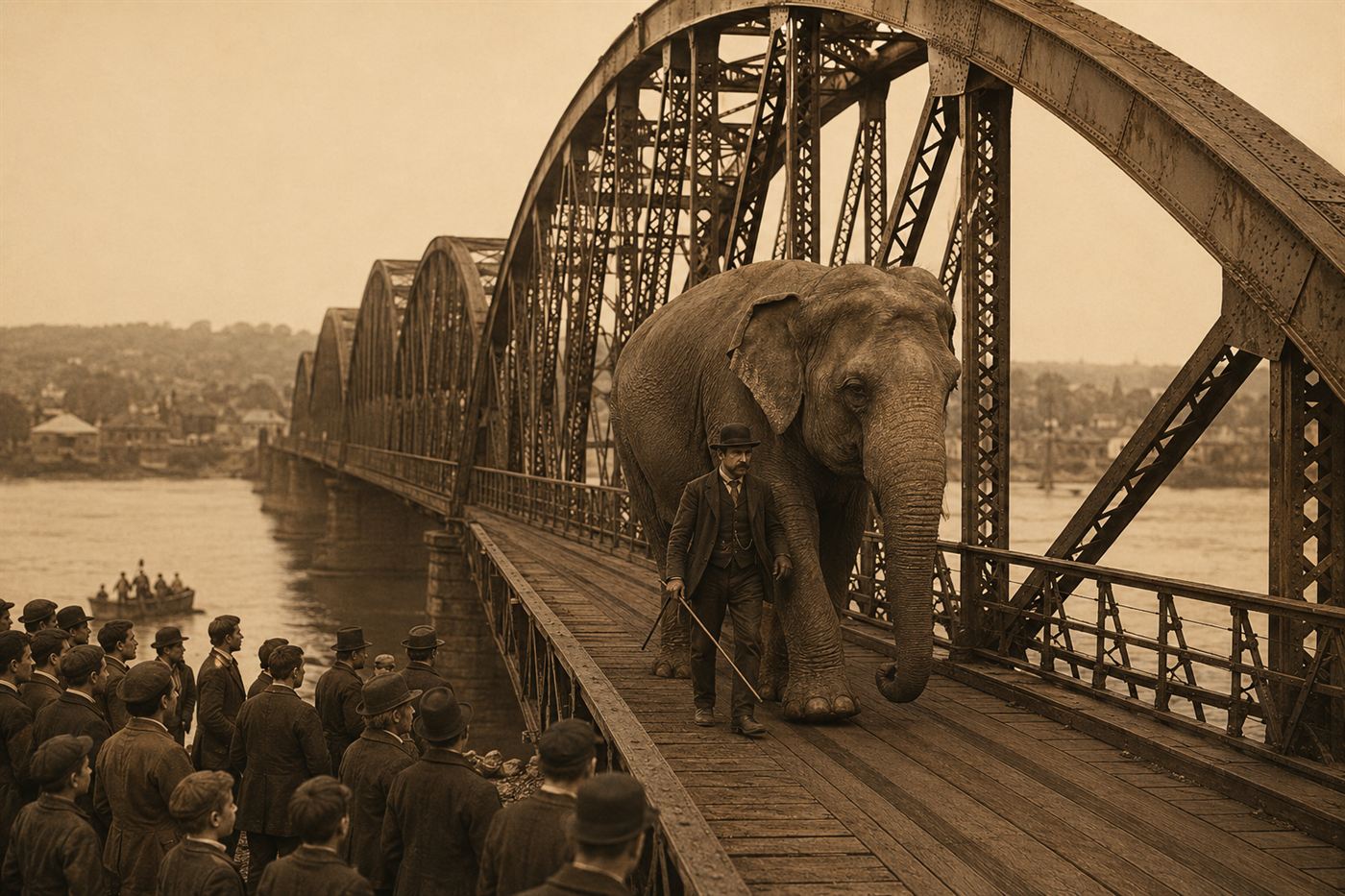
A popular belief held that an elephant would never set foot on an unsound structure, trusting some animal instinct for danger. So a circus elephant was led out onto the bridge before a watching crowd, and when the great animal ambled calmly across, the people cheered and their fears eased. Behind the showmanship, the real test came soon after, when a line of heavy locomotives was run across at once to prove the steel would hold.
The honest catch
It is a wonderful story of a self-made genius proving the experts wrong, and most of it is true, but two things deserve a clearer light. The elephant was never real proof of anything; it was a marketing stunt playing on a folk belief, and the genuine evidence was the far less charming test with the locomotives. The showmanship has simply outlived the engineering in memory.
More soberly, the bridge's glory sits on top of real suffering. The men in the caissons paid a brutal price for a science that did not yet exist, dying and being maimed by caisson disease, an illness no one could explain, and their ordeal is too often left out of the triumphant version. The Eads Bridge's glory still carries road and rail across the Mississippi River a century and a half on, a marvel of nerve and steel, and also a quiet monument to the people who were hurt building it.
A man who had never built a bridge crossed a river everyone feared, using a metal everyone doubted, and proved it with a circus animal while workers suffered unseen below. Does knowing the human cost under the water change how you look at a beautiful old bridge? Tell us what you think in the comments.
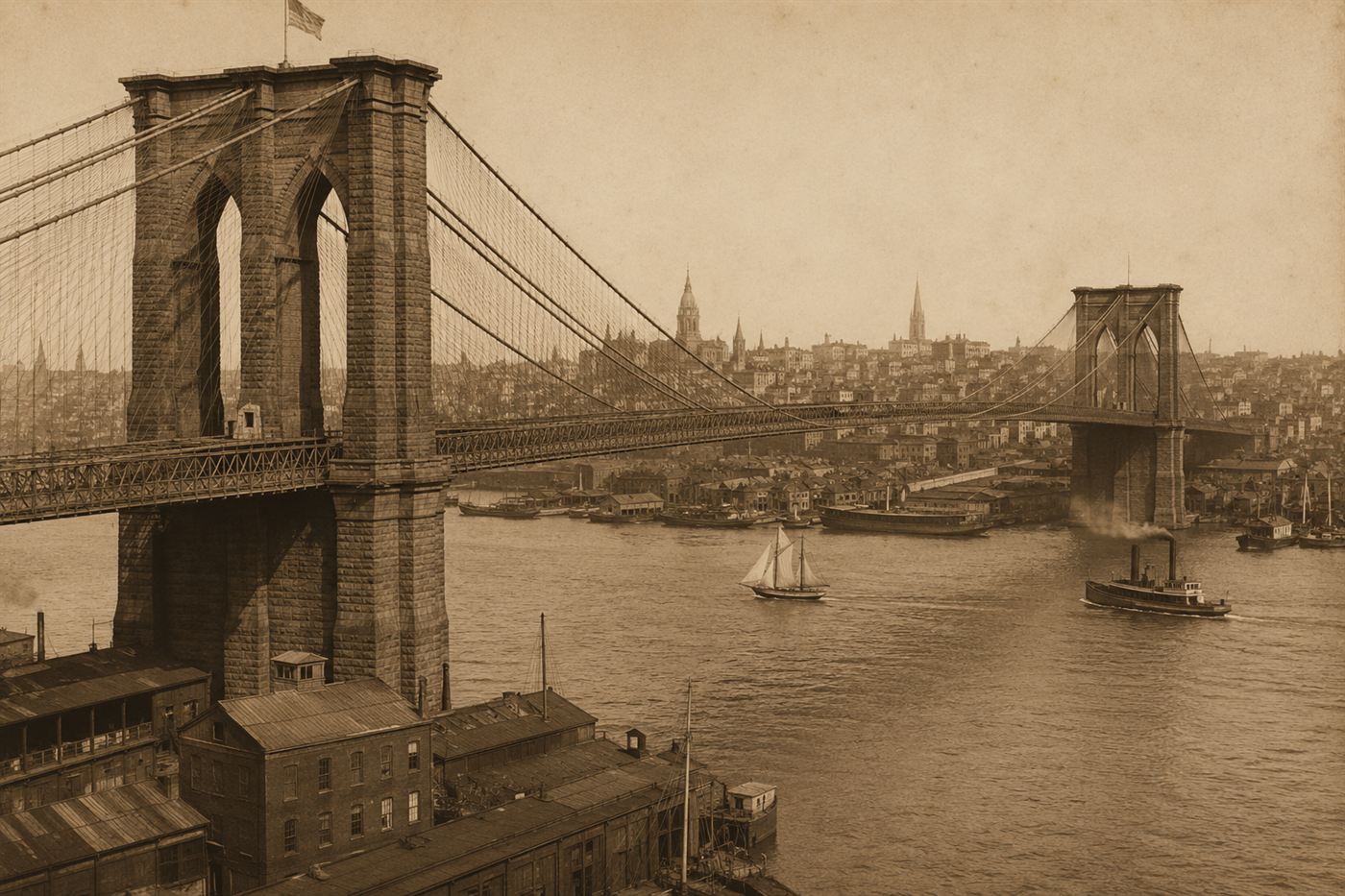
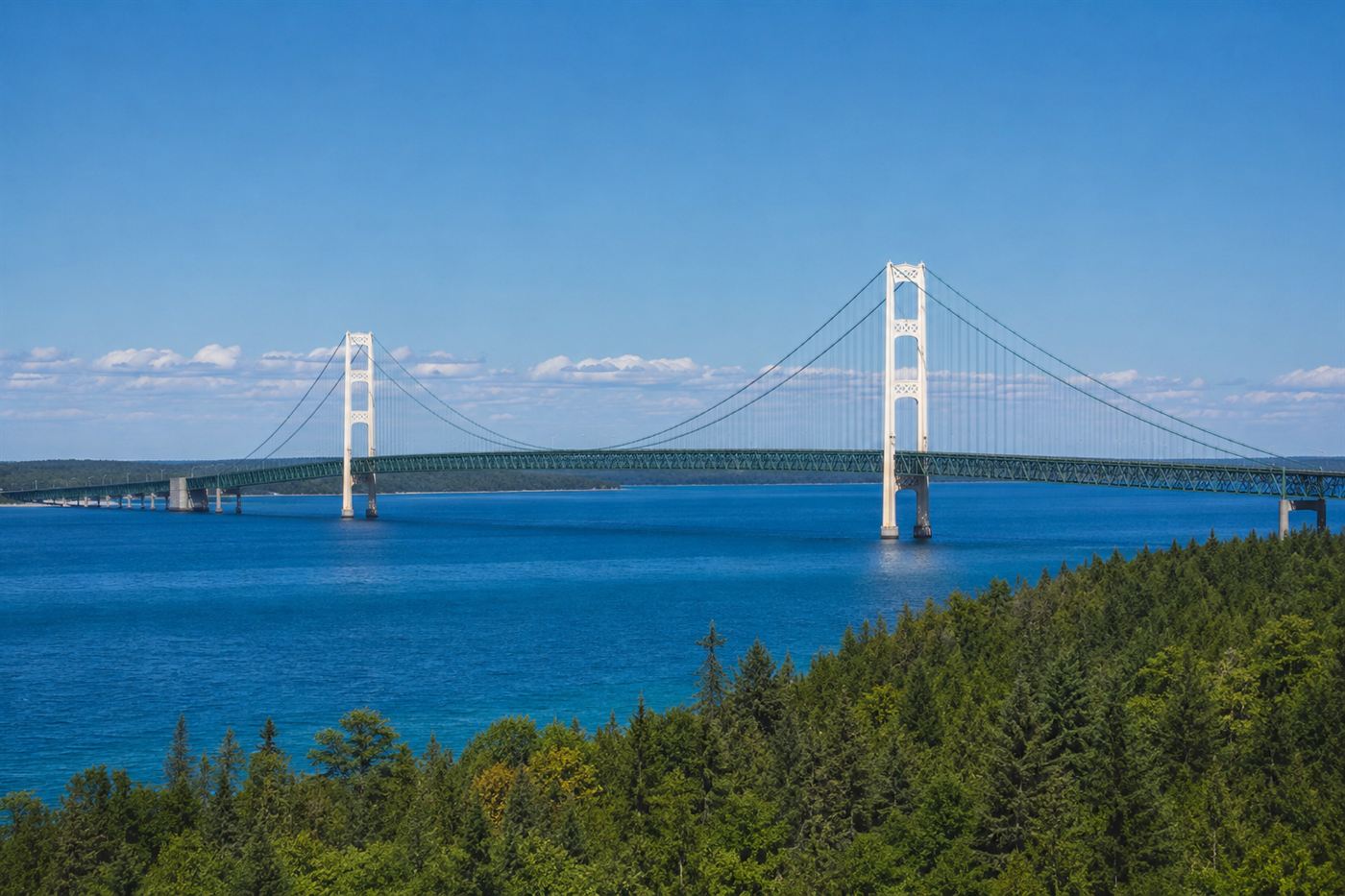
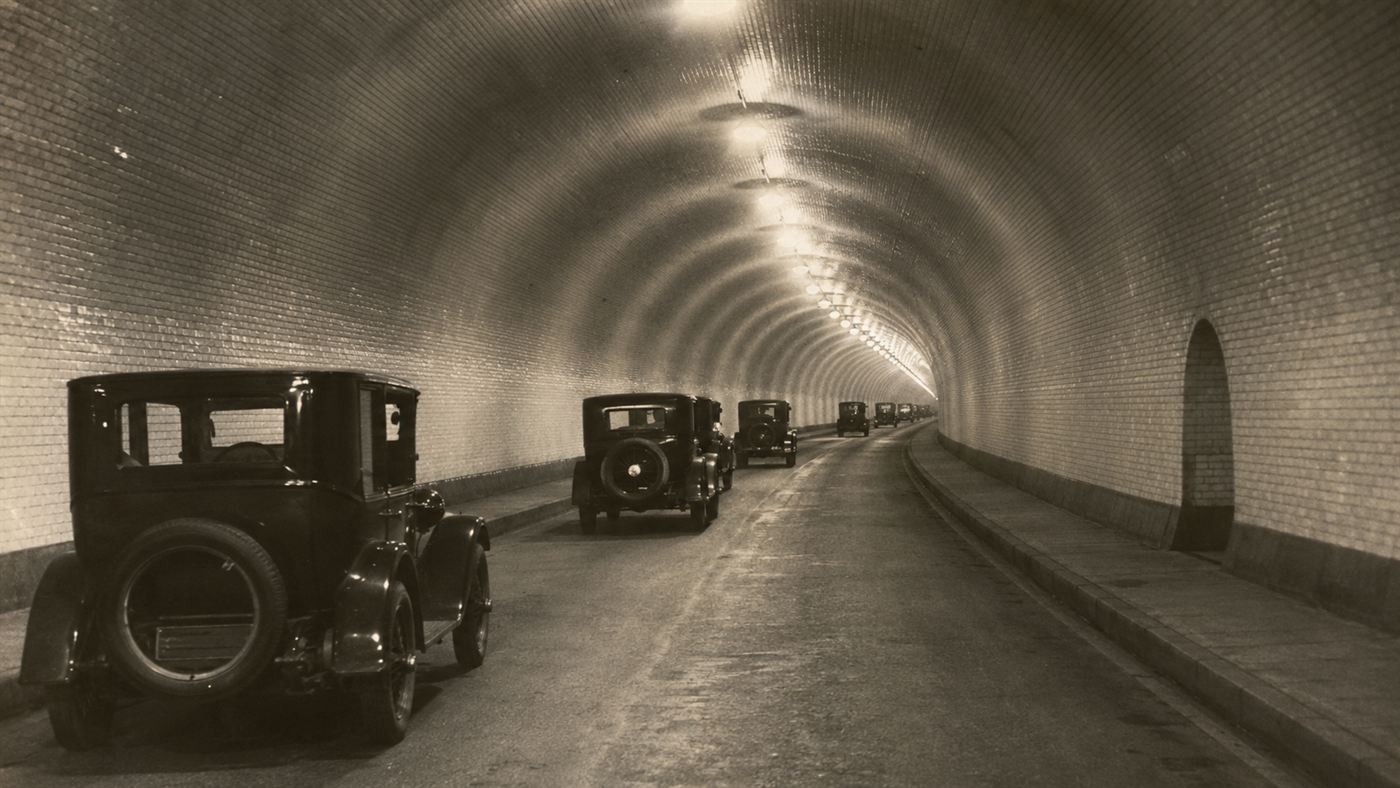
Related reading: Emily Roebling, who finished the Brooklyn Bridge and knew the bends firsthand. See also the Mackinac Bridge built to bend in the wind, and the Holland Tunnel that solved the problem of breathing underground. See also the Otis safety elevator, the brake that made the skyscraper possible.