Fifteen years after the wind tore a suspension bridge to shreds, engineers built an even bigger one across one of America's stormiest straits, and made its five-mile deck bend on purpose
The water it crosses is famous for savage winds, crushing ice and vicious currents, the kind of place that had swallowed a suspension bridge whole not long before. So the men who built here did something that sounds like madness. They designed the great span to sway, and that decision is exactly why it still stands.
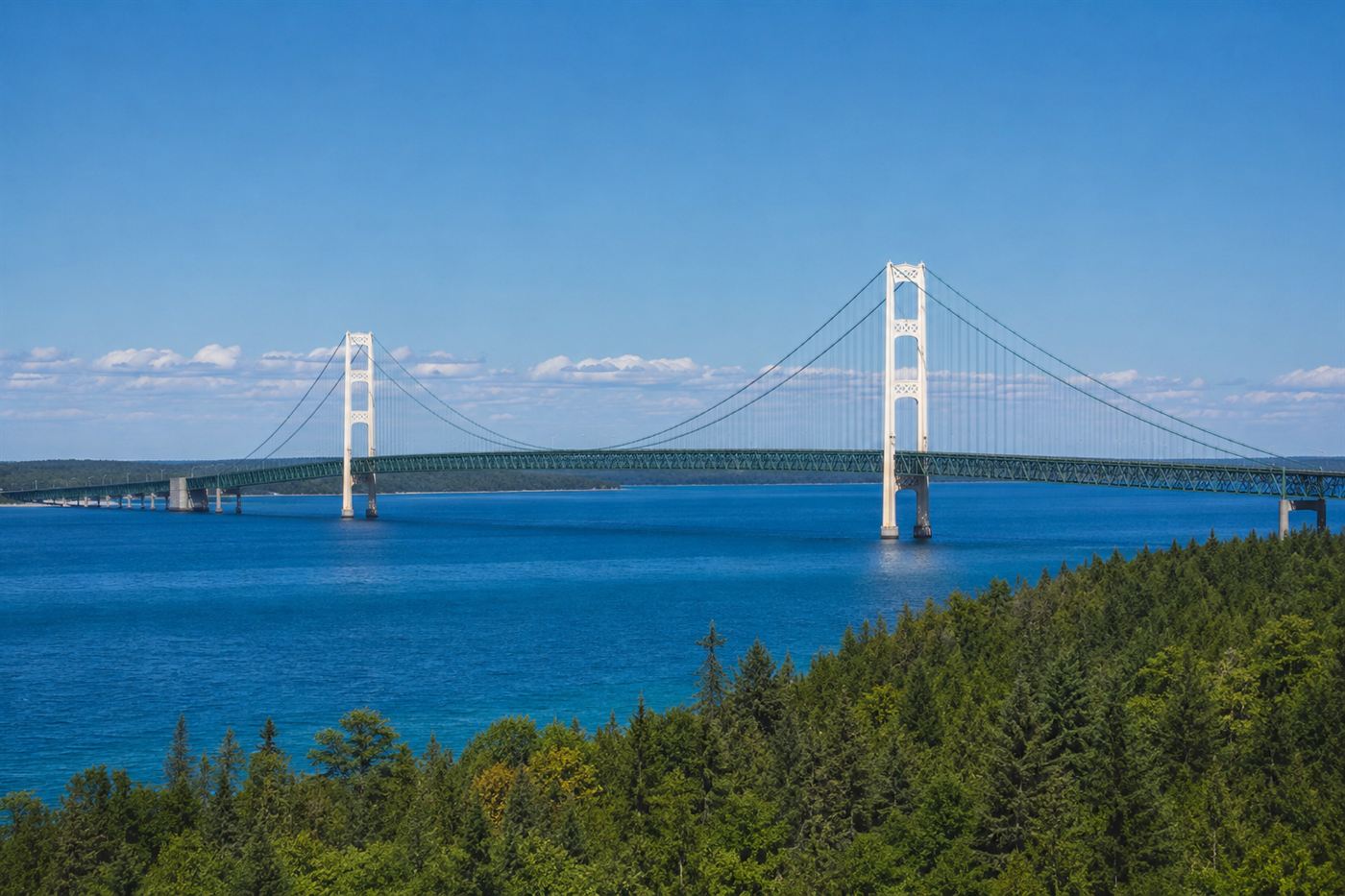
The Mackinac Bridge stretches five miles across the wind-lashed straits. Illustration: Watts & Wild.
Between the two peninsulas of Michigan lies the Straits of Mackinac, a narrow, brutal stretch of water where Lakes Michigan and Huron meet. For generations the only way across was by ferry, and in busy seasons cars would wait for hours or even days to make the crossing. The dream of a bridge over the straits had been talked about for the better part of a century.
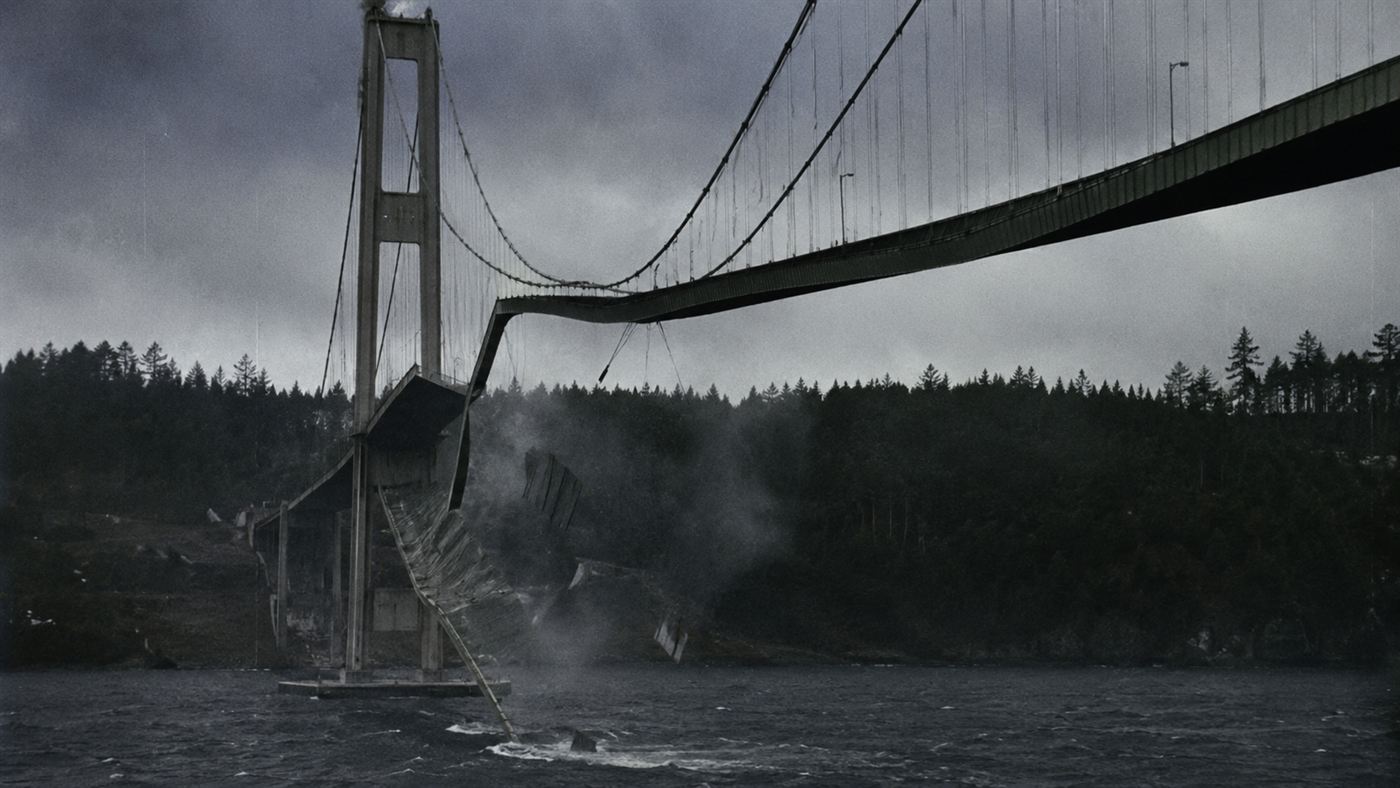
The problem was that the straits are a nightmare for builders. The winds there can howl for days, winter packs the water with grinding ice, and the currents run hard and deep. And there was a fresh, terrifying warning in every engineer's mind, because in 1940 a brand-new suspension bridge at Tacoma Narrows had twisted itself to pieces in nothing more than a stiff breeze.
The short version is that the builders did not try to make their bridge stiff enough to defy the wind. They did something cleverer and braver: they built the Mackinac Bridge to give a little, to move with the storm rather than fight it, and that is the secret of how it has stood for almost seventy years.
The strait that defeated the ferries
By the middle of the twentieth century, the ferry crossing had become an unbearable bottleneck. Michigan's Upper Peninsula was cut off from the rest of the state by a few miles of water, and the queues of waiting cars, especially during hunting season, stretched for miles and swallowed whole days.
A bridge was the obvious answer, and yet for decades it had seemed impossible, too long, too exposed, too expensive for such a hostile place. It took determined backers, new financing and a bold engineer to finally turn the century-old dream into a real plan for a crossing of the Straits of Mackinac.
Why the Mackinac Bridge was built to move
That engineer was David Steinman, one of the great bridge designers of his age, and he understood the lesson of Tacoma Narrows better than almost anyone. That earlier disaster had not been about brute strength failing; it had been about a deck that caught the wind like a sail and began to twist and gallop until it destroyed itself.
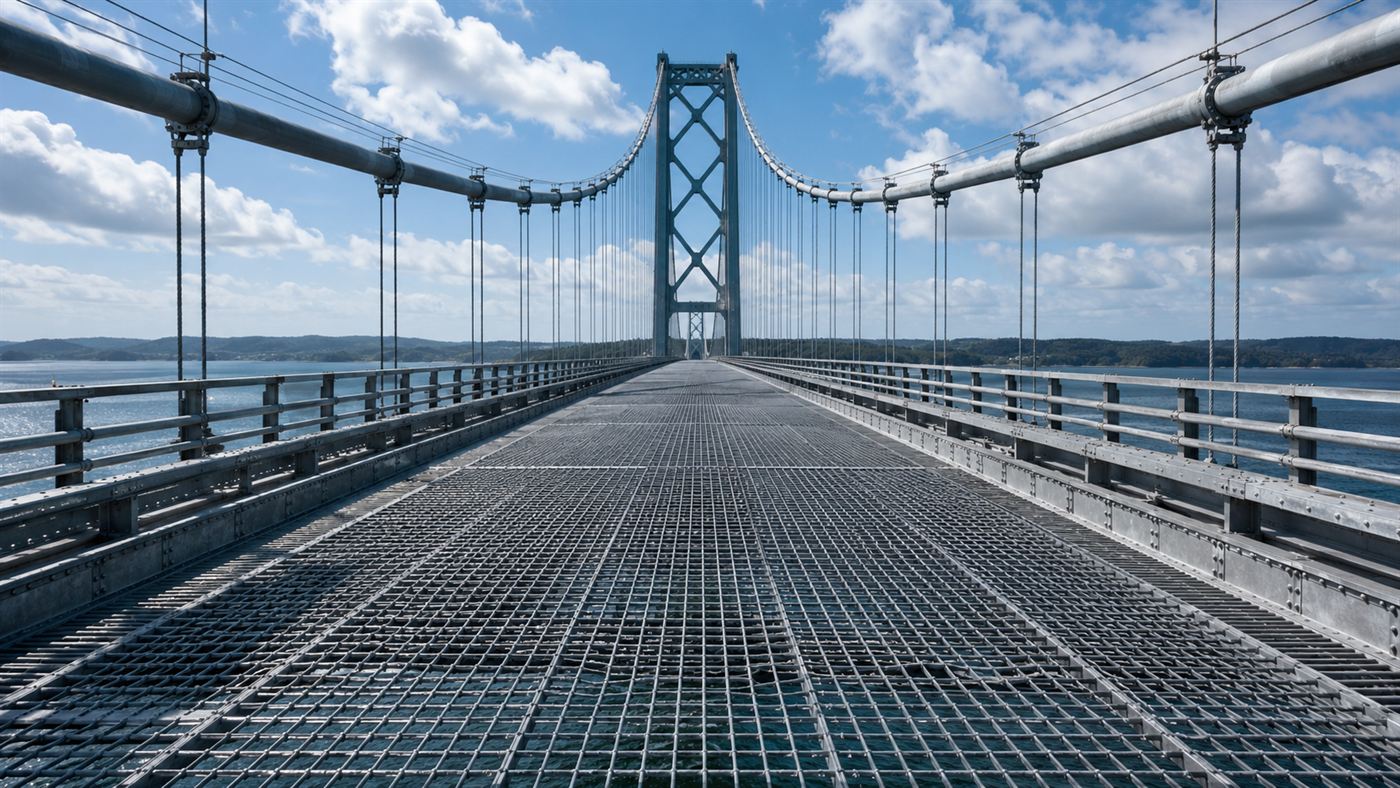
David Steinman's answer was to let the air through and let the bridge breathe. The center of the roadway is an open steel grid rather than solid pavement, so wind blows straight through it instead of pushing against a wall, and deep, stiff trusses run beneath the deck to calm any tendency to twist. The Mackinac Bridge was engineered not to resist the wind at all costs, but to work with it.
How much does the bridge really sway?
The result surprises people who expect a bridge to feel like solid ground. In a strong storm, the center of the Mackinac Bridge can shift many feet sideways, swinging slowly as the gusts push and release it. This is not a flaw or a warning sign; it is the design doing precisely what it was meant to do.
A rigid structure would have to absorb all that force in its bones, straining every joint until something gave. By flexing instead, the bridge sheds the load the way a tall tree bends in a gale rather than snapping. What can feel alarming to a driver crossing in high wind is, in truth, the safest thing the span could possibly be doing.
The redemption of the suspension bridge
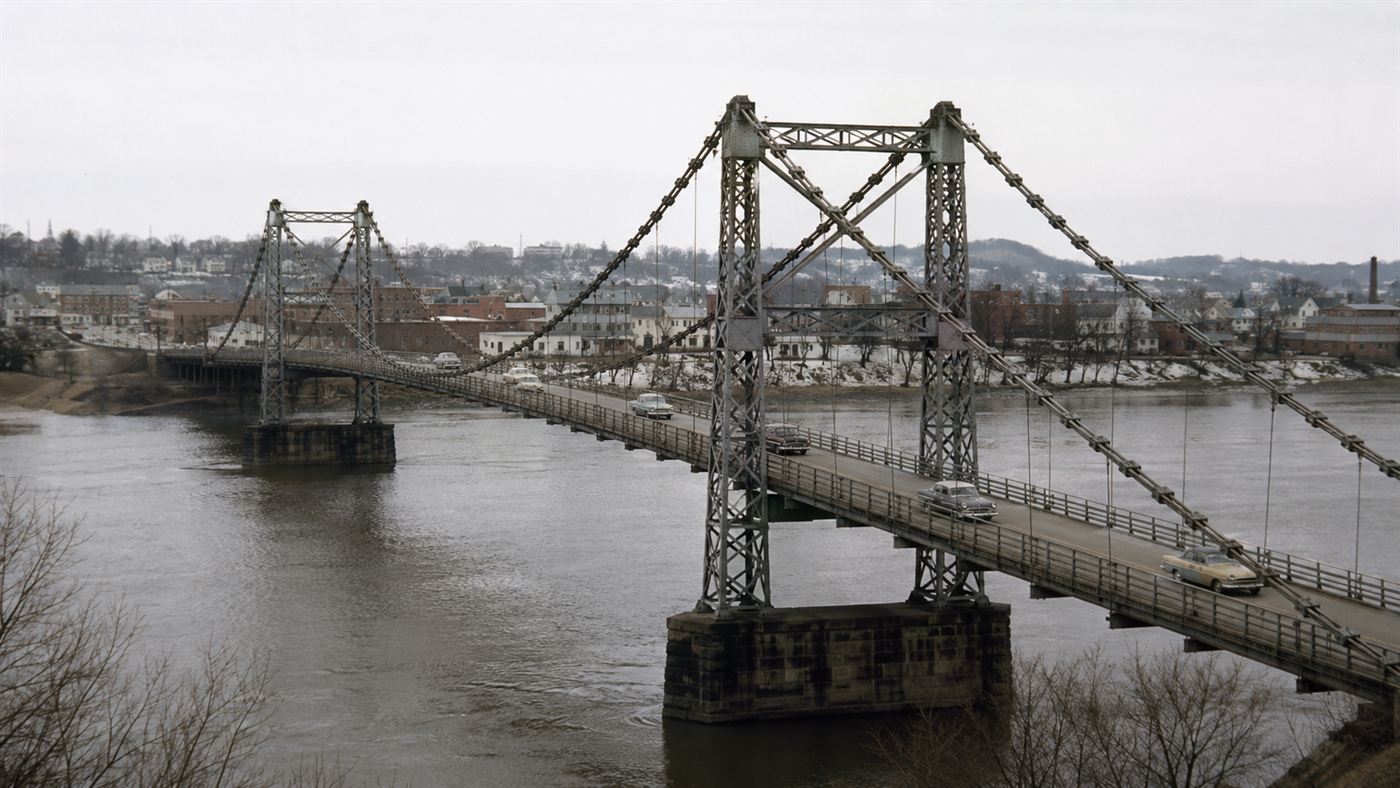
When it opened in 1957, the Mackinac Bridge was among the longest suspension bridges on Earth, and its success carried a meaning beyond Michigan. After Tacoma Narrows, some had wondered whether enormous suspension bridges could ever be trusted in wild weather at all. Standing firm across one of the country's fiercest straits, this one answered that doubt.
It proved that the lightweight elegance of a suspension bridge, the very quality that had doomed Tacoma Narrows, could be tamed by understanding the wind instead of ignoring it. The disaster had taught engineers a brutal lesson, and here was that lesson standing five miles long over open water, carrying traffic through storms that would have terrified the builders of a generation earlier.
The honest catch
It is tempting to call the Mackinac Bridge unshakable, but that is exactly the wrong word, and getting it wrong misses the point. The bridge is not rigid and immovable; its strength is that it is flexible, and in a hard blow it moves a great deal on purpose. The image of an unbending fortress against the wind is the opposite of what actually keeps it up.
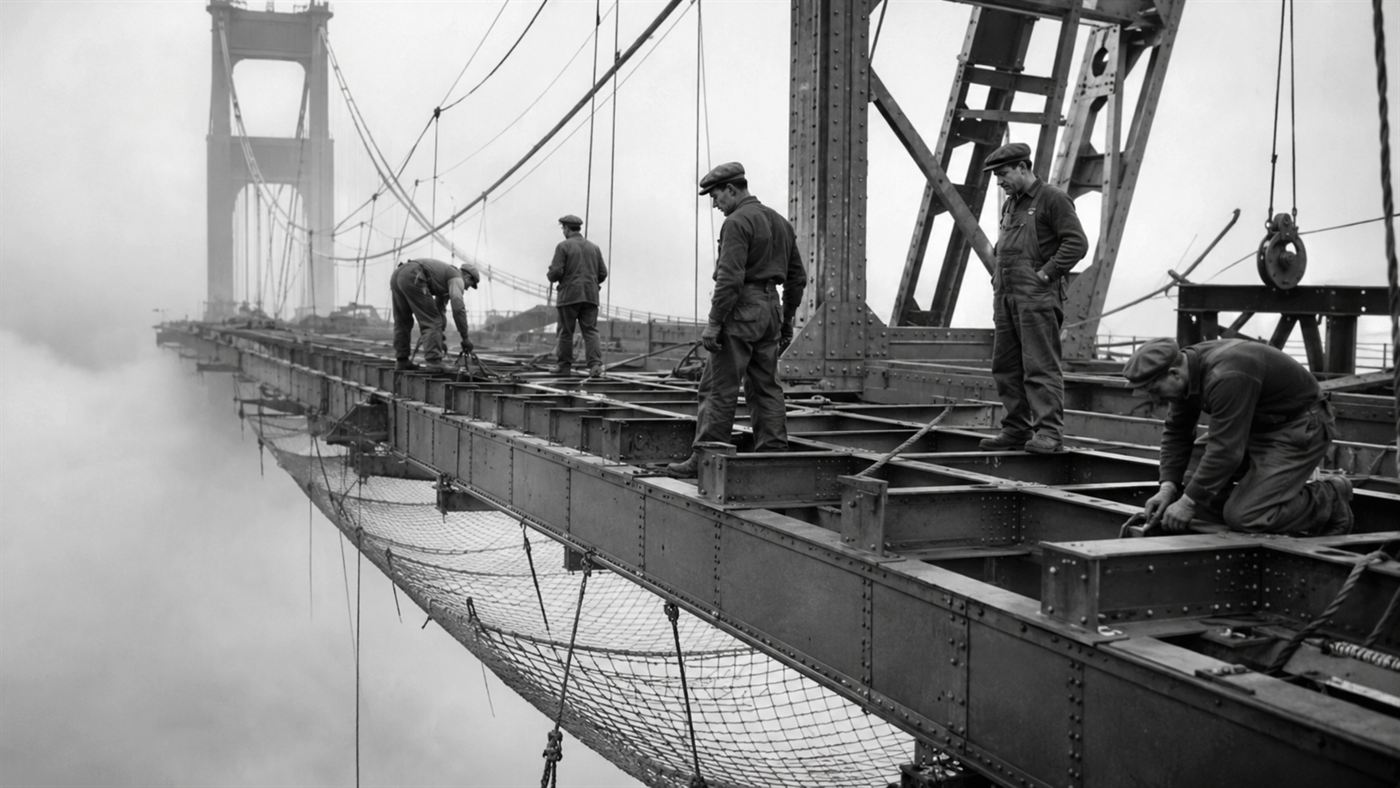
Nor is it beyond all danger. Building it cost the lives of several workers, and in extreme weather it has to be treated with respect; on rare, ferocious days a vehicle has even been blown from the deck, and the authorities sometimes close it or escort drivers across. The real lesson is a humble one. The bridge survives not by pretending to be stronger than nature, but by bending, carefully and by design, to a force it can never simply overpower.
A bridge born from the wreckage of another one's failure now sways calmly through storms that would have terrified its makers, precisely because it was built to bend rather than to stand rigid. Would you feel safer on a bridge that holds perfectly still, or one that you can feel gently moving with the wind? Tell us what you think in the comments.
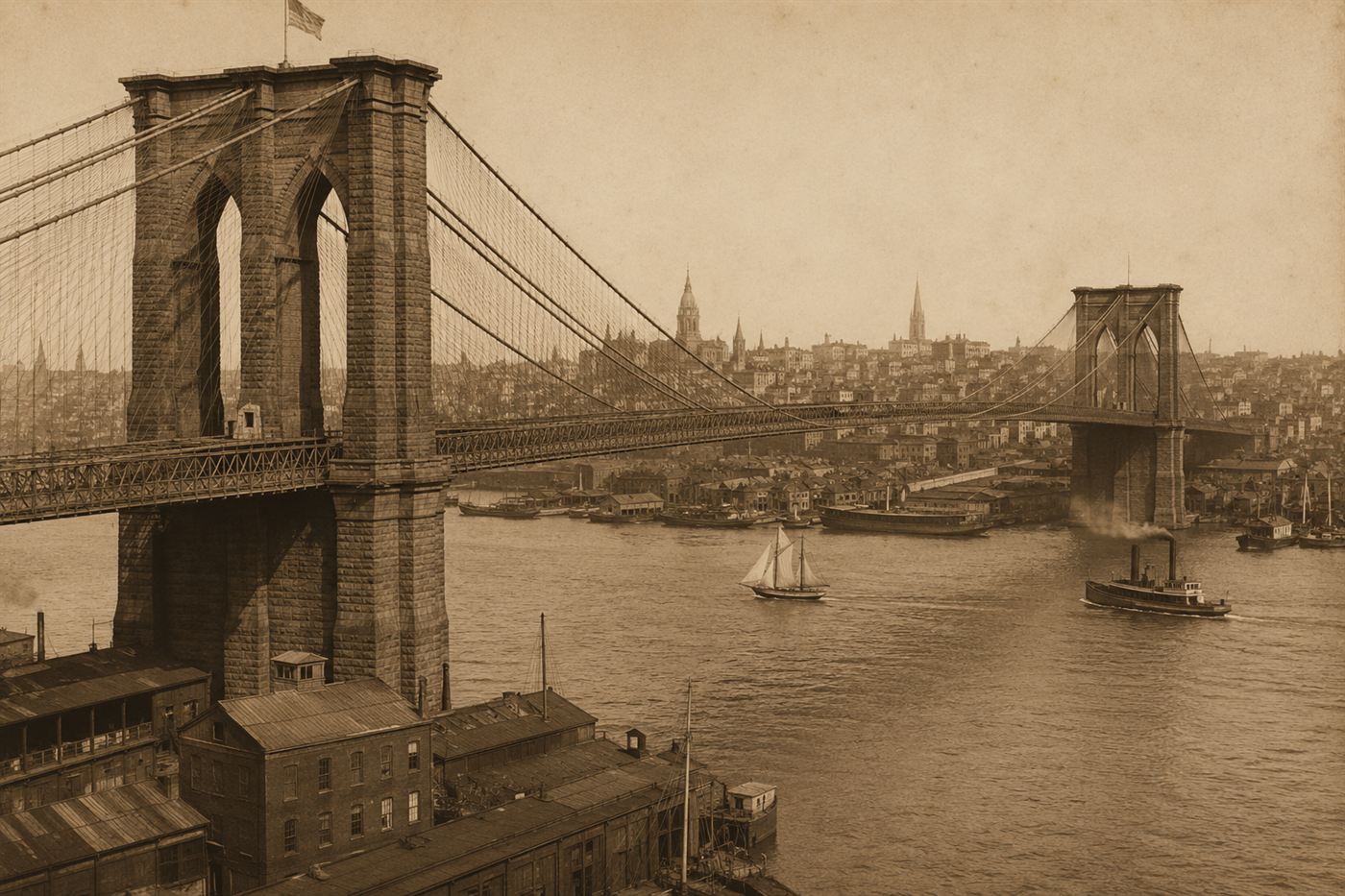
Related reading: the Tacoma Narrows bridge that shook itself to pieces in the wind. See also the Golden Gate Bridge and the net that saved its builders, and how Emily Roebling finished the Brooklyn Bridge.