A man stood on a high platform, had an axe cut the only rope holding him up, and did not fall, and that stunt made the modern city possible
The skyscraper is usually credited to steel and ambition. But no one will live or work forty floors up if reaching them means forty flights of stairs, and the real key to the tall city was the safety elevator, proven by a humble, terrifying little trick on a stage in 1854, when a man deliberately cut the rope beneath his own feet.
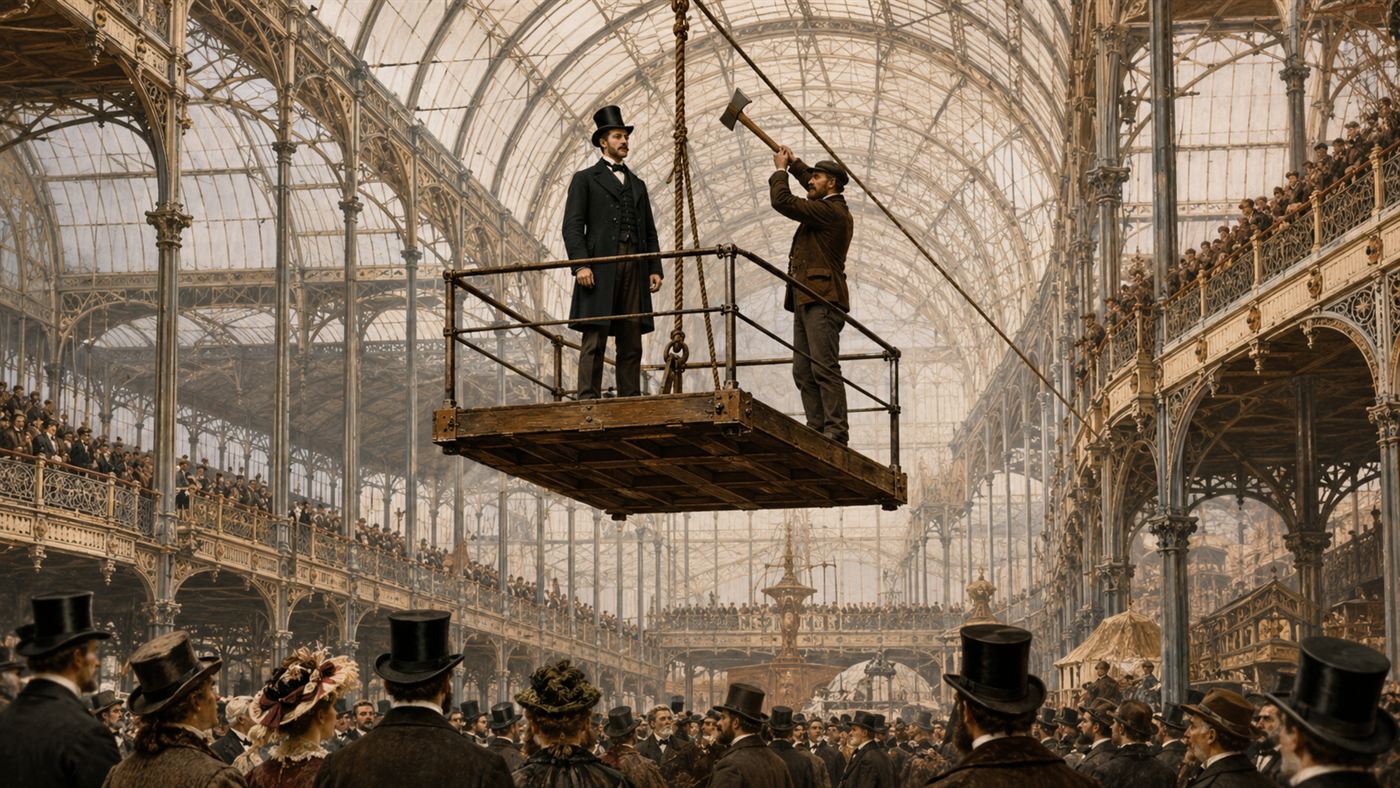
Otis rode his platform high above the crowd, then had the rope cut. Illustration: Watts & Wild.
Here is the fact that surprises people: Elisha Otis did not invent the elevator. Machines for hoisting loads up and down had existed for centuries, in mines, warehouses and mills. The problem was never lifting things. The problem was what happened when the rope broke, because then the platform and everyone on it plunged to the bottom.
That single danger kept elevators as brute tools for cargo, not people. No sensible person would ride a box hung from a rope that might snap, so buildings stayed short, limited by how many flights of stairs a body could reasonably climb. The tall city was impossible not because we could not lift people, but because we could not lift them safely.
The short version is that Otis solved not the elevator but the falling, and to prove it he staged one of the boldest sales pitches in the history of invention.
What Elisha Otis actually invented
Working as a mechanic in the early 1850s, Elisha Otis designed a safety brake for the hoist. The idea was elegant. He fitted toothed guide rails along the shaft and a strong spring at the top of the platform, held under tension by the hoisting rope itself as it took the weight.
As long as the rope was intact, all was normal. But if that rope ever broke, the spring would instantly snap outward and drive locking pawls into the teeth of the rails, seizing the platform in place before it could fall. The genius was that the very failure everyone feared was exactly what triggered the safety.
The day he cut his own rope
An invention like that is only worth anything if people believe it, and in 1854 Otis found the perfect stage: a great exhibition in New York, crowds milling beneath a soaring glass hall. He had himself hoisted high into the air on an open platform, in full view of the doubtful onlookers below.
Then, on his signal, an assistant swung an axe and cut the single hoisting rope. The crowd gasped as the platform dropped, but it fell only a few inches before the safety brake bit into the rails and held it fast. Otis looked down at the upturned faces and delivered the line that made him famous, calling out that all was safe.
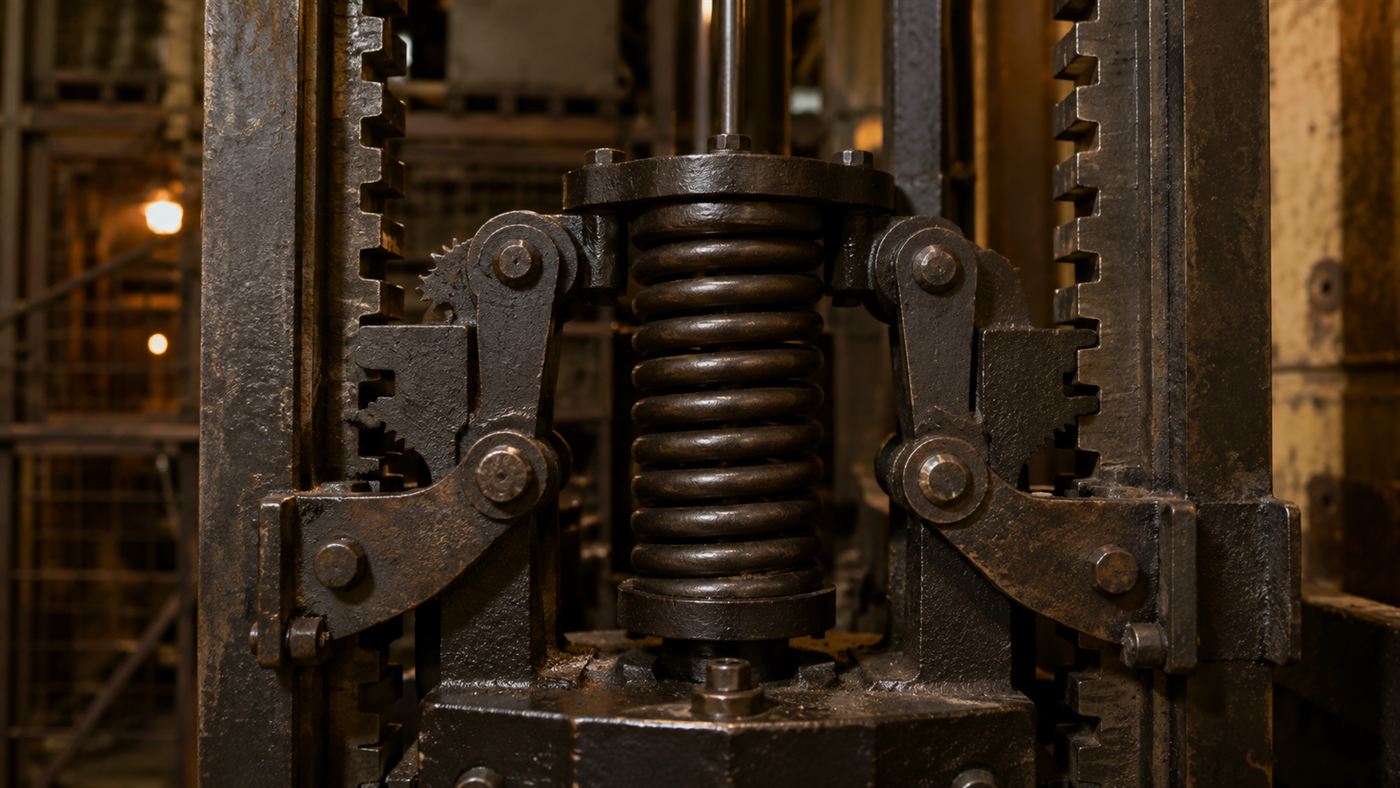
How the safety elevator changed the skyline
That short drop and sudden stop changed everything. Once people trusted that a cut rope would not kill them, the passenger elevator became possible, and the first ones were soon carrying shoppers and office workers upward in New York. The ceiling on how tall a building could usefully be simply lifted away.
Combined a few decades later with the steel frame, the safety elevator let cities climb into the sky. There is a reason the skyscraper and the reliable elevator appear in history at almost the same moment, because one could not exist without the other. Otis had quietly removed the invisible cap that had held human buildings down for all of time.
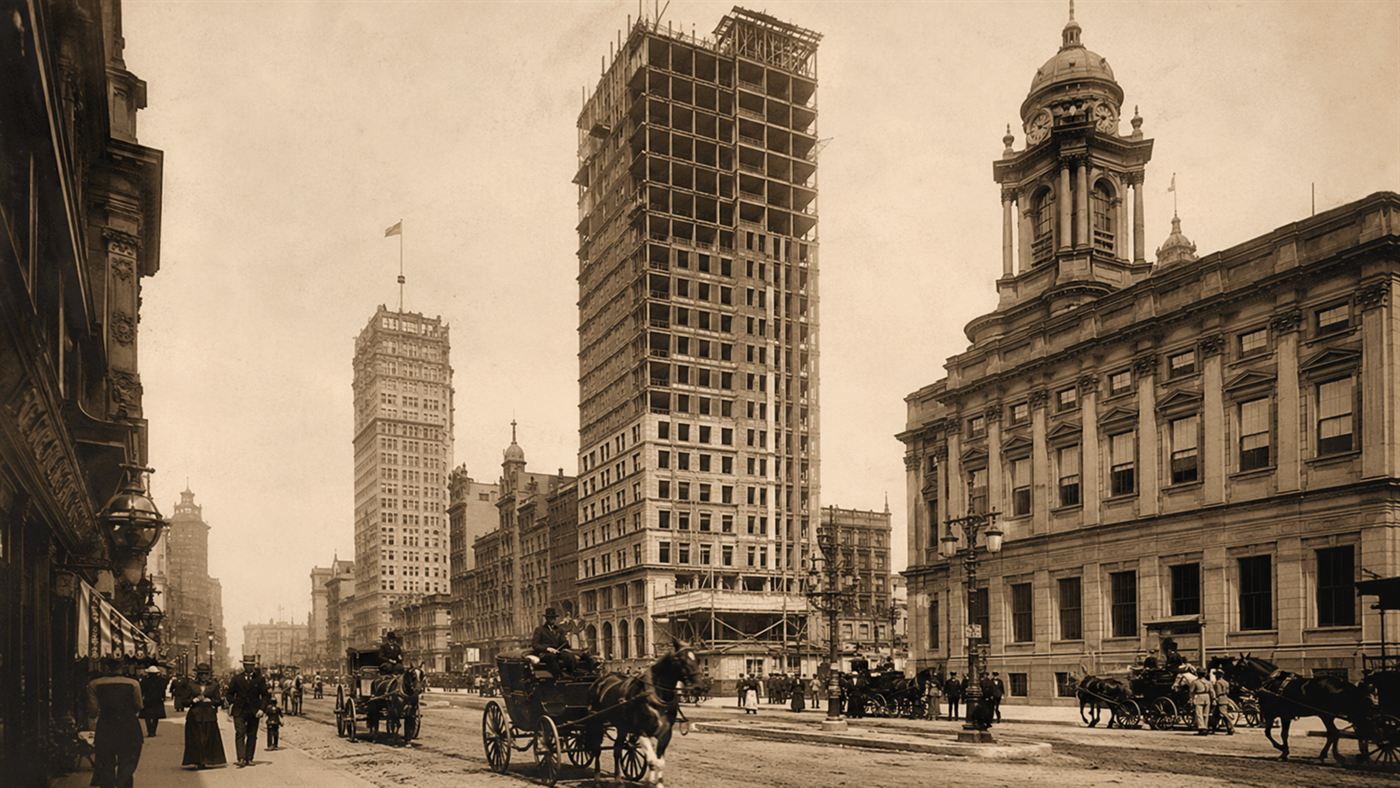
Why did it flip which floor was best?
The elevator did something sneakier too: it turned the whole logic of a building upside down. Before, the top floor was the worst place to be, a long, breathless climb reserved for servants, storage and the poor, while the wealthy took the easy lower floors.
Once a smooth ride carried you up in seconds, that snobbery inverted. The high floors, with their light, quiet and views, became the prized ones, and the word penthouse turned from a humble rooftop shed into a symbol of luxury. A safety brake in a shaft had rearranged the social ladder of the city, floor by floor.
The honest catch
The story of the axe and the rope is real and wonderful, but it flatters a single hero, and that deserves trimming. Otis was a showman as much as an engineer, others had tinkered with elevator safety before him, and his dramatic demonstration was as much marketing as proof. The lone-genius version tidies away a messier truth.
And the skyscraper was never his doing alone. It needed cheap steel, it needed electric power to run tall, and it needed the reliable elevator, all arriving together, so crediting the whole vertical city to one man on a platform is too neat. Still, the deeper point holds beautifully. The thing that unlocked the modern skyline was not a way to lift people higher, which we already had, but a way to make falling impossible, and it took a man risking his own neck to make the world believe it.
The tall city we live in exists because one man made falling impossible and then dared a crowd to watch him try. Would you have stood on that platform and given the signal to cut the rope? Tell us what you think in the comments.
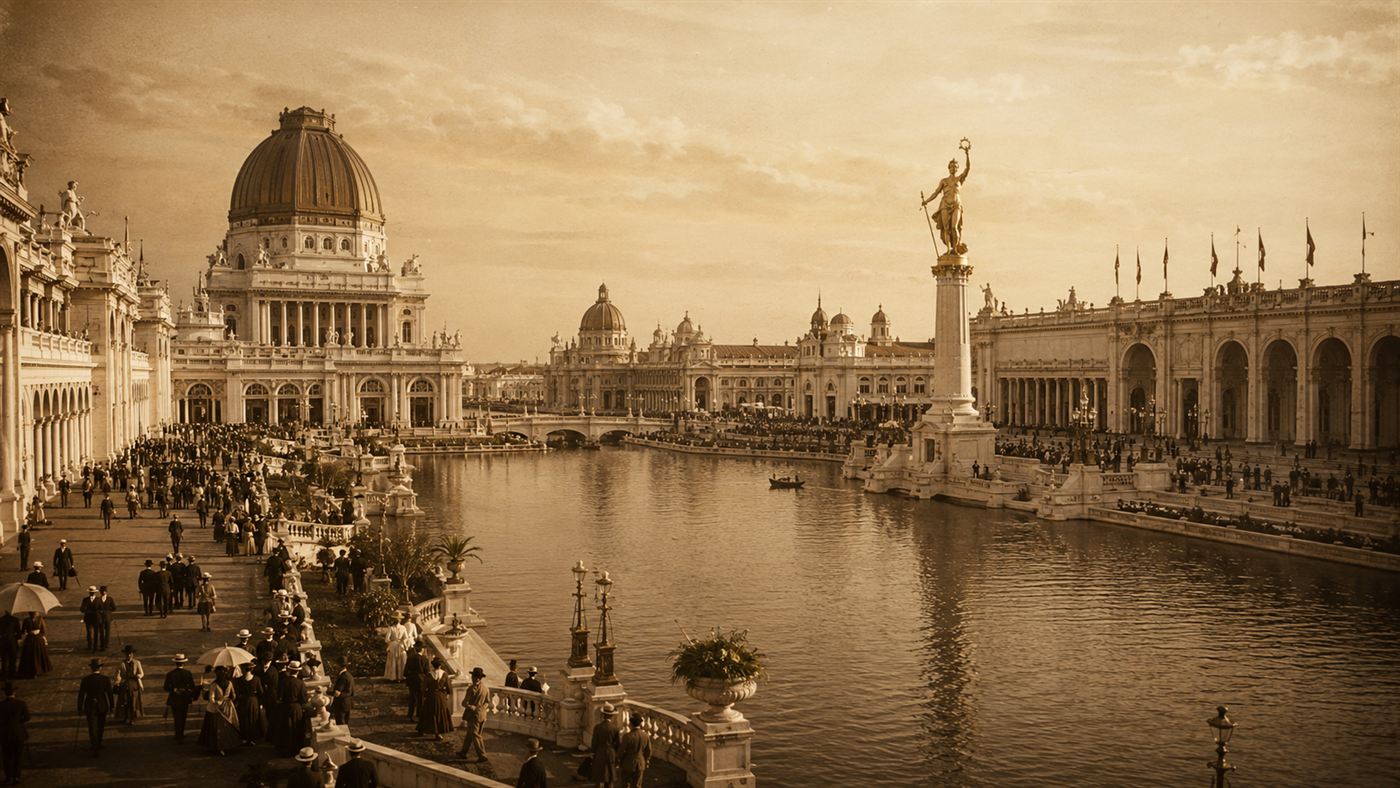
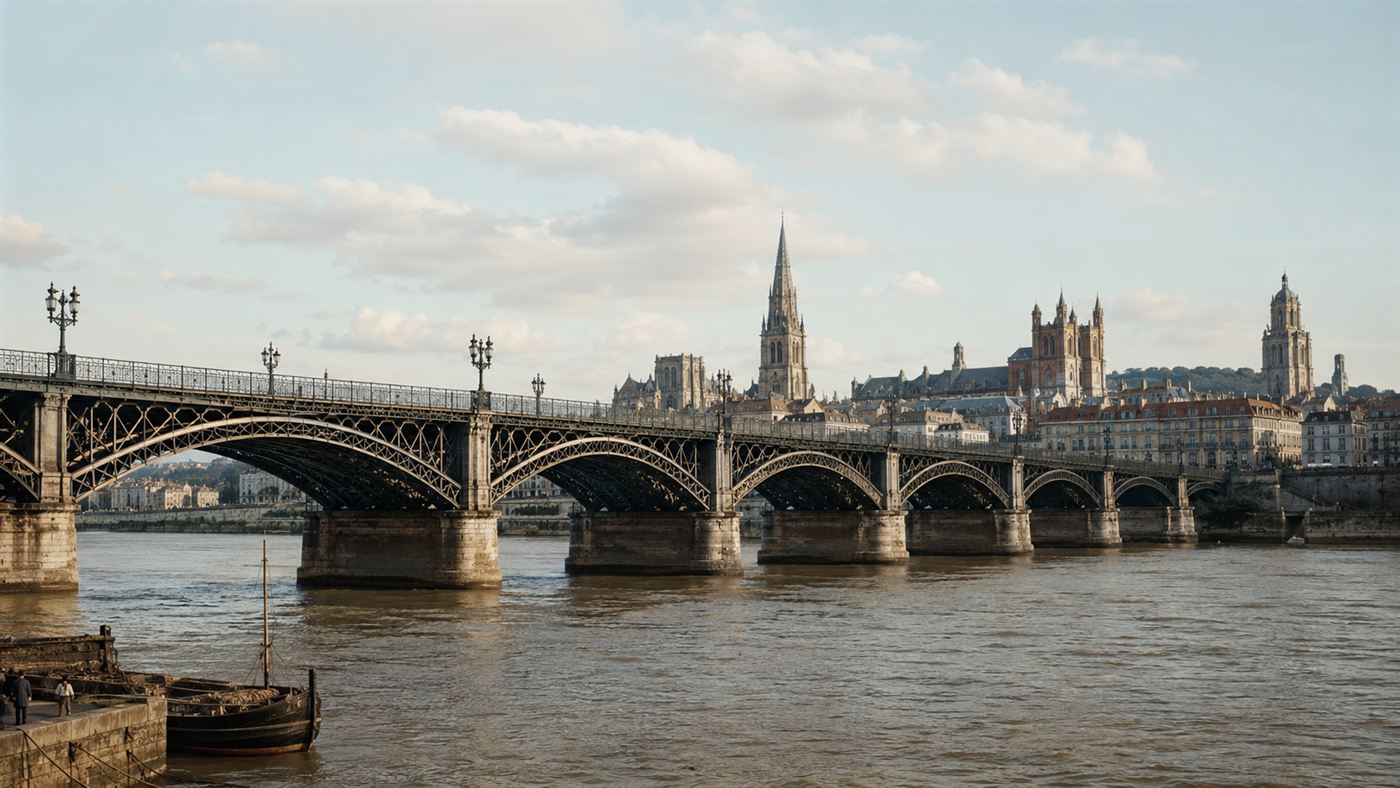
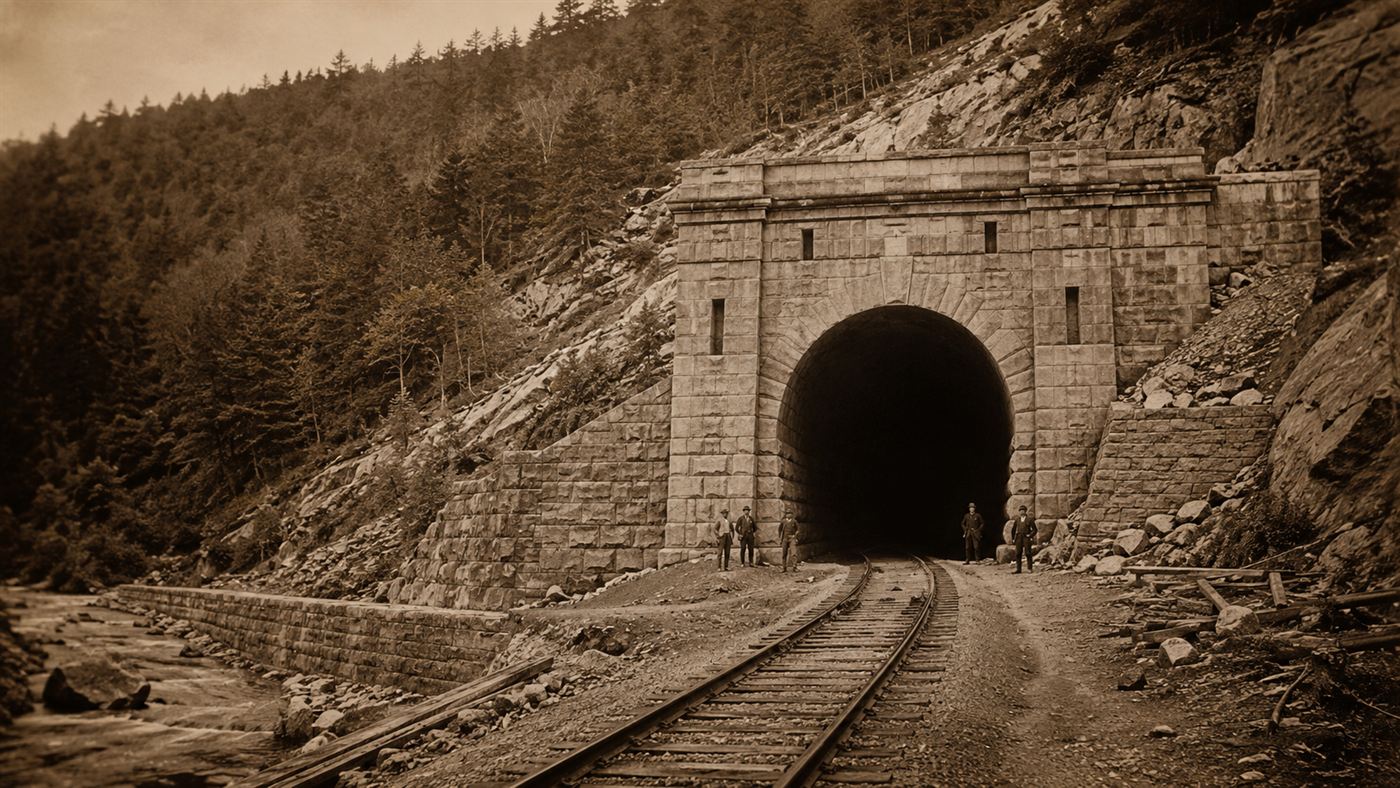
Related reading: the White City, a dazzling vision of the future built to vanish. See also the Eads Bridge that proved a new metal could hold, and the Hoosac Tunnel that helped invent modern tunnelling.