Diego the giant tortoise became famous as the tireless father who saved his species from extinction almost by himself, until a DNA test showed a quieter male in the same pen had fathered even more of the offspring
When his kind was down to its last 15 animals, Diego was pulled into a desperate breeding program on the Galapagos and fathered hundreds of young, becoming a global symbol of a species saved. Years later, the genetics told a more complicated story about who really did the work.
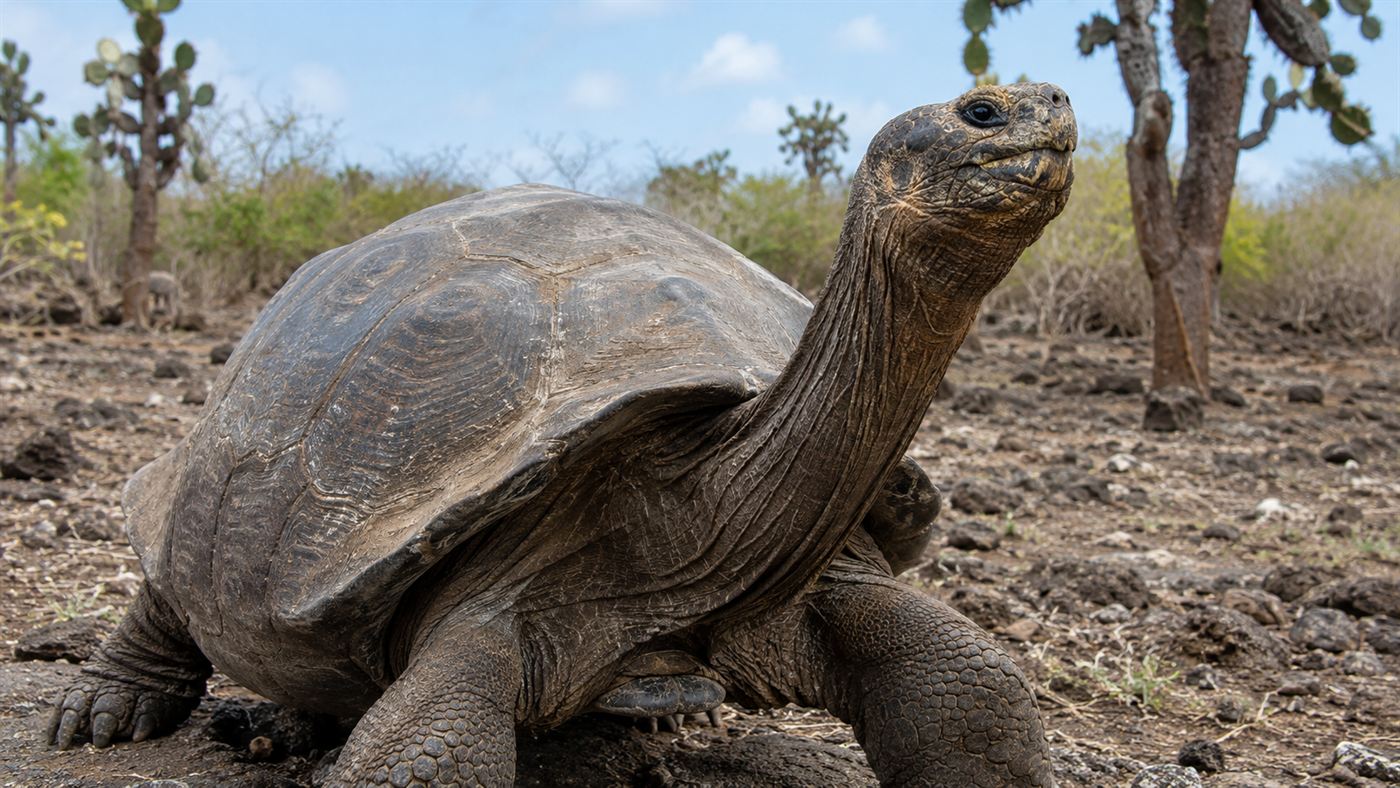
An Espanola giant tortoise on its home island, the kind of animal Diego helped bring back. Illustration: Watts & Wild.
When the breeding program that had filled most of his very long life finally closed, Diego the Galapagos giant tortoise went home. On June 15, 2020, after more than 80 years away, the reptile thought to be around a hundred years old was carried back onto Espanola, the remote southern island in the Galapagos where he had hatched, along with 14 others. He left behind a reputation as one of the most successful animals in the history of conservation.
The numbers behind that reputation are genuinely staggering. As the UN Environment Programme reported when he returned home, Diego's species had crashed to just 15 surviving tortoises, and the captive program rebuilt them into a wild population of more than 2,000. Diego, with his enthusiasm for mating and his habit of being photographed doing it, became the face of that rescue. The catch is that the headlines had been celebrating the wrong tortoise.
The Galapagos giant tortoise down to its last fifteen
Espanola is the oldest and one of the most remote of the Galapagos islands, and its giant tortoises were almost wiped out long before anyone thought to save them.
For centuries, passing whalers and sailors had hauled giant tortoises onto their ships by the thousand, stacking the living animals in their holds as a way to carry fresh meat for months without refrigeration.
By the middle of the twentieth century the Espanola tortoises were all but gone.
As the Galapagos Conservancy describes, when a captive breeding program was set up in the 1960s and 1970s only 15 of them could be found, just 12 females and 3 males, scattered so far apart across the scrubby island that they had effectively stopped breeding in the wild.
Fourteen of those fifteen were brought into a breeding centre on the island of Santa Cruz, in a last attempt to keep the line alive.
The tortoise who was named after a zoo
Diego was the fifteenth, and he arrived from much further away.
Hatched on Espanola around the 1910s, he had been taken off the island as a young animal decades earlier and shipped abroad, ending up on display at the San Diego Zoo in California, which is where his nickname comes from.
For about 30 years nobody realised how rare he was.
Only when researchers went looking for surviving Espanola tortoises and ran DNA tests did they confirm that the old male in San Diego was one of the missing fifteen.
In 1976 he was flown back to the Galapagos to join the breeding program, an exile returning to rescue his own kind.
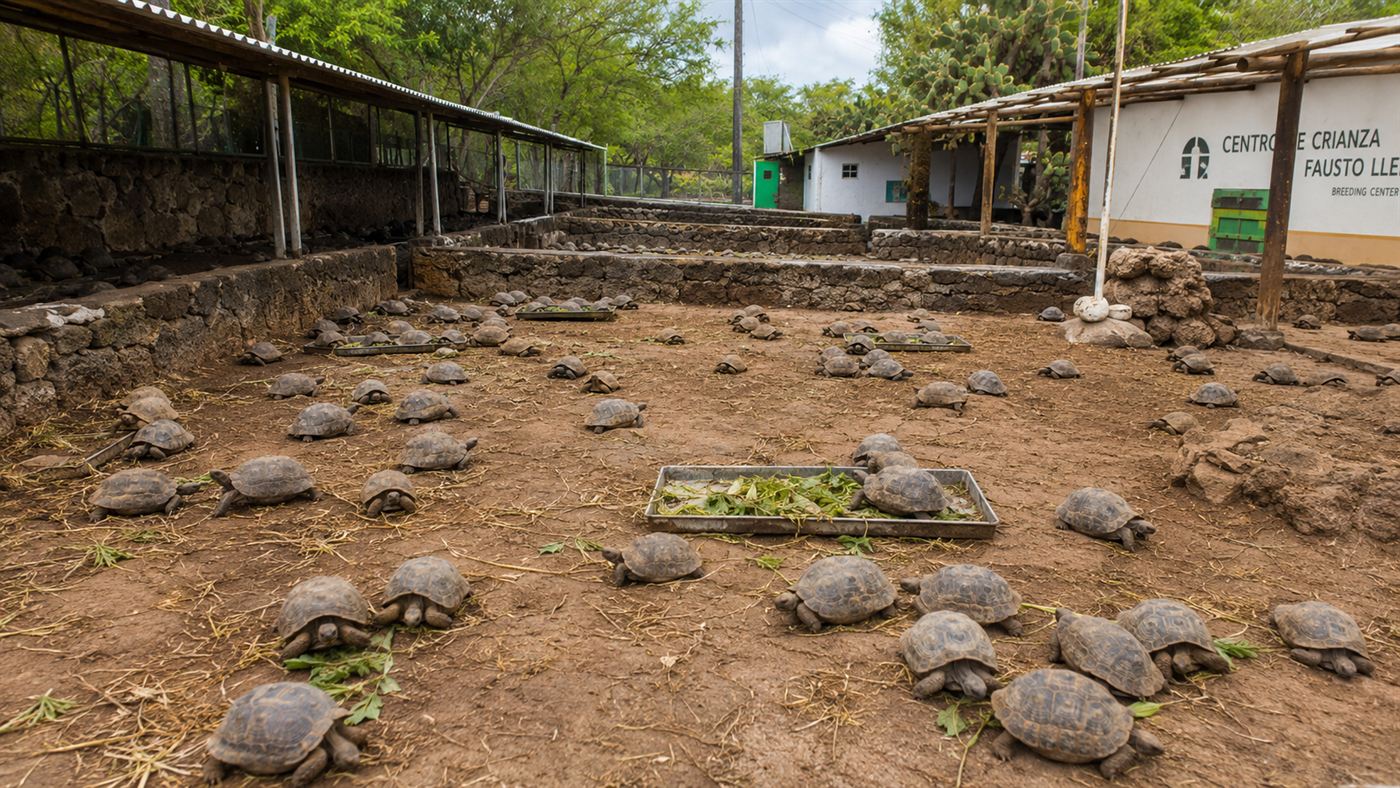
Hundreds of offspring, and a legend
Diego threw himself into the job with a gusto that made him famous.
Large, loud and relentlessly amorous, he became the breeding centre's star attraction, and over the following decades he fathered an enormous number of young.
By the time the program wound down, it had released around 1,900 tortoises onto Espanola, and estimates credit Diego with siring roughly 40 percent of them, somewhere around 900 animals.
It was an irresistible story: the amorous old tortoise, rescued from a zoo, who personally repopulated an island and pulled his species back from oblivion.
The world's press fell for him completely.
The quiet male who actually did more
Then the genetics complicated the fairy tale.
As genetic analysis of the program later showed, Diego was not even the most prolific father in his own pen, because a second male, known only by the label E5, had quietly sired most of the other 60 percent of the offspring.
The third male, E3, contributed very little.
E5 did more of the actual work of saving the species, and got almost none of the credit.
The reason is uncomfortably human.
E5 had a reserved character, a dull name and was rarely caught in the act, while Diego was aggressive, conspicuous and endlessly photogenic, so the cameras and the headlines went to the showman rather than the quieter animal who out-fathered him.
Why the island had to change first
There is a deeper catch under the whole triumphant story, which is that no amount of breeding would have mattered if Espanola itself had stayed broken.
Goats introduced by people had stripped the island almost bare, eating out the vegetation the tortoises and other native species depended on.
The Galapagos Conservancy notes that the island only became able to support a growing tortoise population after those introduced goats were eradicated, and the released animals were put down near stands of Opuntia cactus, their main food.
The tortoises matter to far more than themselves.
As they move and graze they clear space and spread seeds, helping keep the open ground that Espanola's famous waved albatross needs to take off and land, so saving the tortoise was really about repairing a whole island.
The honest catch
It is a real conservation success, and it deserves the applause, but the tidy hero version does it a quiet disservice.
The recovery was the work of decades of unglamorous effort by Ecuadorian park staff and scientists, the painstaking removal of goats, and three males rather than one, not the solo achievement of a charismatic tortoise.
The population is growing but still needs monitoring, and a species rebuilt from just 15 animals carries very little genetic diversity, which can store up problems far down the line.
And Diego's fame is a useful warning about how we tell these stories.
We reach for a single hero because it is easy to love, and in doing so we tend to overlook the patient, unphotogenic work, and the quieter contributors like E5, that actually carry the day.
Why the wrong hero still matters
None of this takes anything away from what happened on Espanola.
A species that was down to fifteen animals now numbers well over two thousand, walking a wild island that had nearly lost them, and Diego genuinely was part of that.
He just was not the whole of it, and the tortoise who did slightly more of the work will never have his picture in the paper.
Diego retired a hero, even if the DNA says he had plenty of help. Does it matter that the famous face of a conservation success was not quite its biggest contributor, or is a hero we can love worth more than a fair share of the credit? Tell us what you think in the comments.
Related reading: The longest-lived animal with a backbone on Earth is a shark in the Arctic that may live for 400 years and does not become an adult until it is 150 years old.

Bruno Teles is an energy and industry journalist at Watts & Wild, covering power, batteries, electric mobility, and the natural world around them. More from Bruno Teles.