An American bomber flew off into the North African night in 1943 and simply disappeared, and fifteen years later it turned up nearly intact deep in the empty Sahara
A crew of nine took off on their very first mission and never came home. There was no wreck, no bodies, no clue, only a bomber that had flown into the dark and vanished. The answer, when it finally came, was hidden hundreds of miles inside the desert, and it was almost unbearably sad.
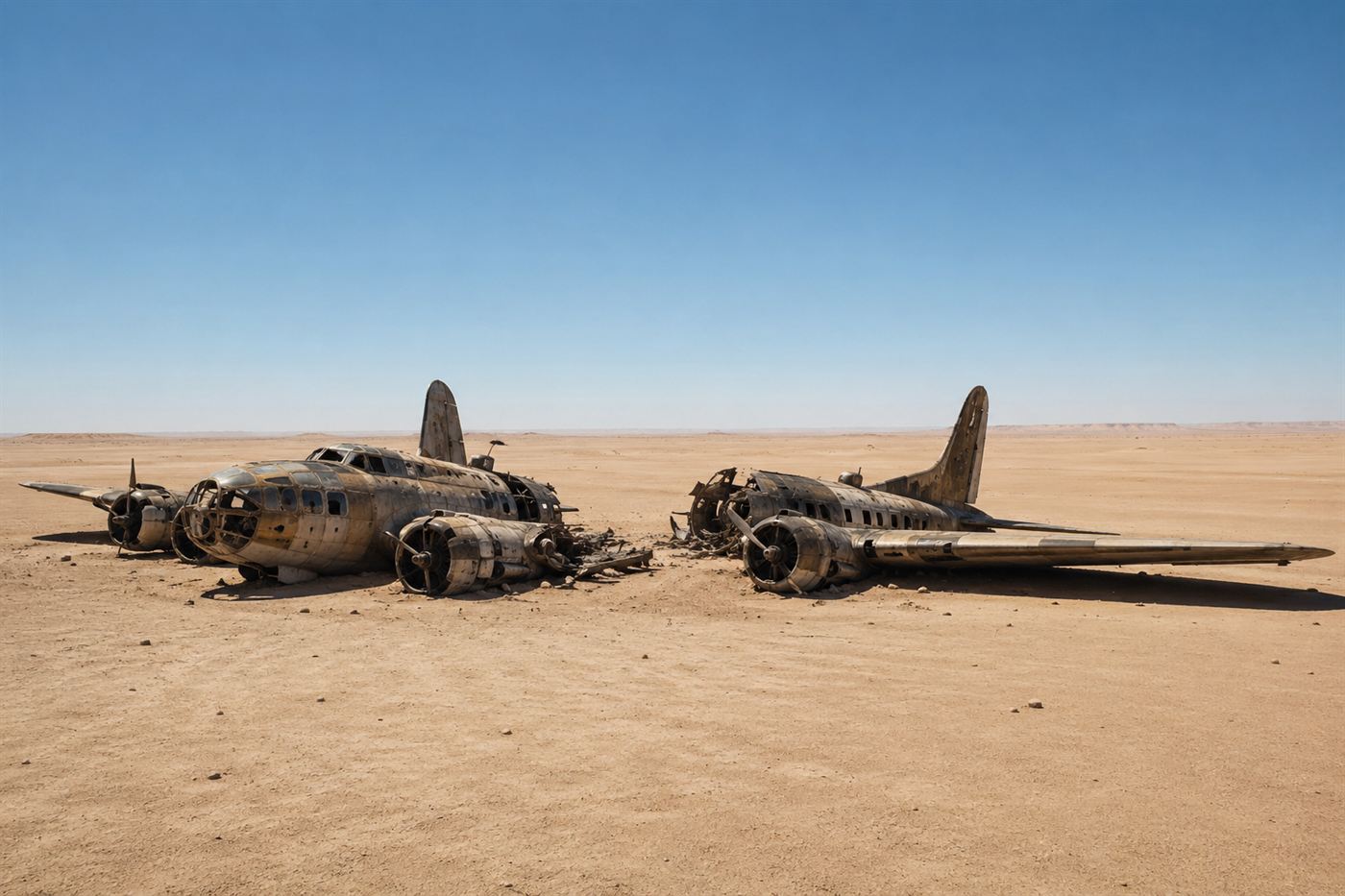
The dry Sahara preserved the Lady Be Good almost perfectly for fifteen years. Illustration: Watts & Wild.
On 4 April 1943, a B-24 Liberator called the Lady Be Good lifted off from a dusty airfield in Libya on its first combat mission, part of the Naples raid in Italy. The flight was troubled from the start, and by the time the Naples raid was done and darkness had fallen, the bomber was returning alone toward its base on the North African coast.
Somewhere in that black, featureless night, something went wrong with the navigation. The crew believed they were still out over the Mediterranean, approaching home, when in fact they had already crossed the coast and were flying inland, deeper and deeper into the emptiness of the Libyan desert.
The short version is that they never realized their mistake in time. The Lady Be Good flew on past any hope of return until its fuel gave out, and then it, and its nine men, disappeared into the Sahara so completely that for fifteen years no one knew what had become of them.
Why the Lady Be Good vanished
The heart of the tragedy was a simple, deadly navigation error. Flying at night with the instruments of the day, the crew overshot their airfield without seeing it and kept going, trusting readings that told them they had not yet reached land. Every mile they flew took them farther from any water, road or settlement.
When the fuel finally ran low, the men did the sensible thing and bailed out, floating down into the dark not knowing where they were. The abandoned bomber flew on by itself and came down in a long, skidding belly landing on the flat desert floor, breaking in two but staying remarkably whole. It came to rest hundreds of miles from the sea, utterly alone.
What happened to the crew?
The men who parachuted down found one another and took stock, and their situation was far worse than they could have guessed. They had almost no water and no real idea how deep into the Libyan desert they had come, and they made the only choice that seemed to make sense: they began to walk north, toward what they believed was the not-too-distant coast.
In truth the coast was impossibly far away. Yet the crew walked on across the sand and gravel for day after brutal day, covering a distance that stunned investigators when it was later traced. A few of the strongest pushed on well beyond where the others fell, refusing to stop, walking far past the limits of what anyone should have been able to endure.
The wreck the desert kept
For fifteen years the story stayed buried. Then, in 1958, a British oil-survey team flying over the deep desert spotted the unmistakable shape of an aircraft on the sand far below. When men reached it on the ground, they found something eerie: a B-24 Liberator that looked as though it had landed only weeks before.
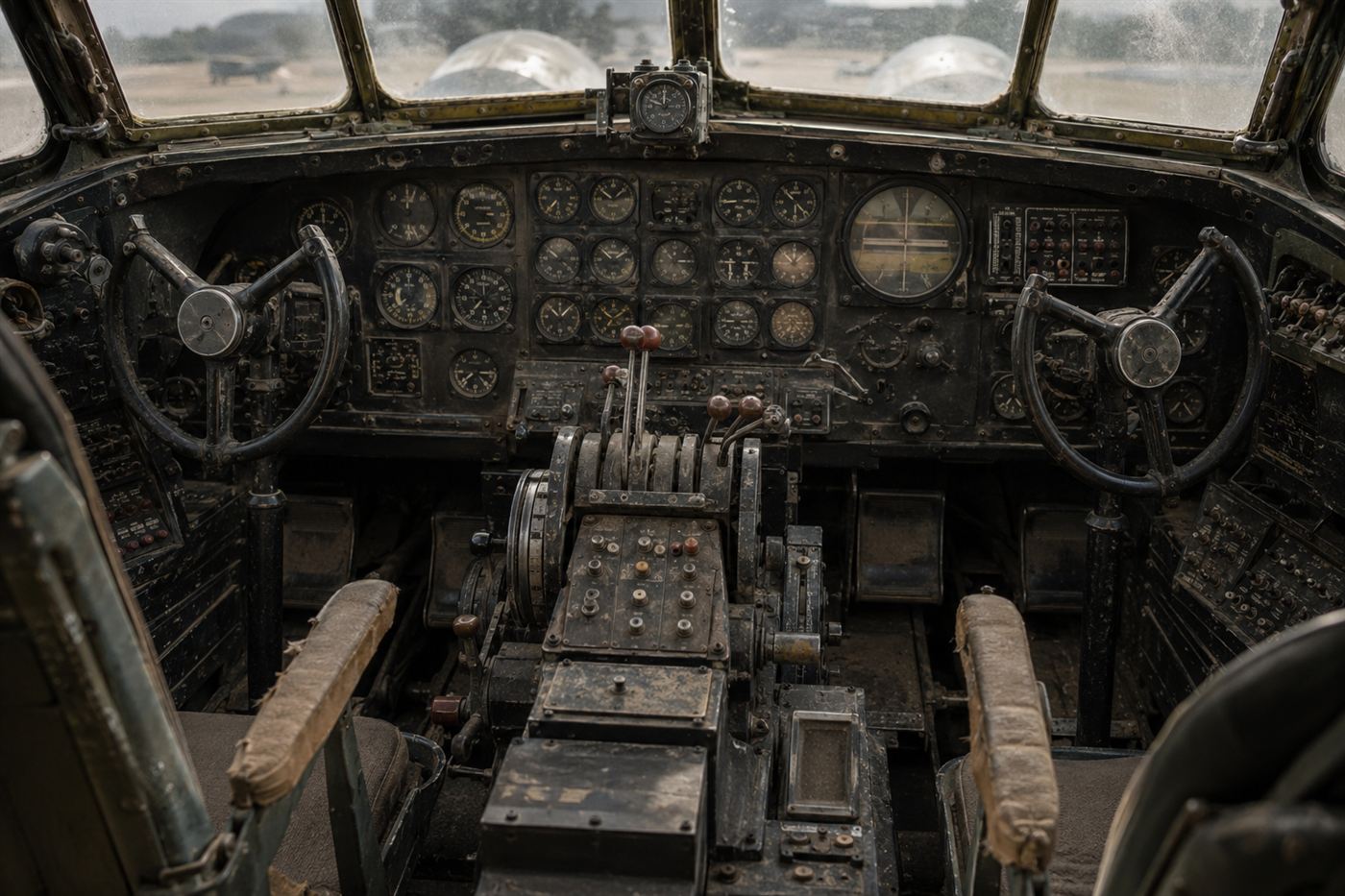
The bone-dry desert air had preserved the Lady Be Good almost perfectly. Its machine guns still fired, its radio still worked, and there was drinkable water and readable paperwork on board. The one thing missing was the crew, and the discovery of the plane finally reopened the question of what had happened to the nine men who flew it.
What the diary revealed
Searches over the following years found most of the crew, scattered across the desert to the north of the wreck, exactly in the direction they had tried to walk. With them was a small diary kept by the co-pilot, and its brief, failing entries told the whole heartbreaking story from the inside.
The diary recorded the men's hope and then their slow collapse over days without water, marking how they pressed north and how, one by one, they could go no farther. It turned an anonymous disappearance into an intimate account of endurance and loss, and it confirmed how astonishingly far some of them had managed to walk before the desert finally stopped them.

The honest catch
The Lady Be Good is sometimes wrapped in talk of a curse, because parts salvaged from the wreck were later fitted to other military aircraft, some of which then suffered accidents of their own. It makes for a chilling story, but it is coincidence, not the supernatural. Spread enough spare parts across enough aircraft and some unlucky ones are inevitable.
The real weight of the story lies elsewhere, in how ordinary the fatal mistakes were. There was no monster and no magic, only tired men, imperfect instruments and a dark night, and a chain of small navigation errors that carried them past the point of return. What makes the Lady Be Good haunting is not a curse but the plain, human truth of it: how easily a wrong turn in the dark can become a walk with no way back.
A bomber and its crew vanished into the dark, and only a preserved wreck and a dying man's diary, found long after the war, could tell the world how far they had walked before the end. Is a story like the Lady Be Good made more powerful or just more painful by knowing exactly how it happened? Tell us what you think in the comments.
Related reading: the giant concrete arrows that once guided pilots who could not navigate by night. See also the Spruce Goose, the giant plane that flew only once, and the flying aircraft carriers the Navy lost in storms.