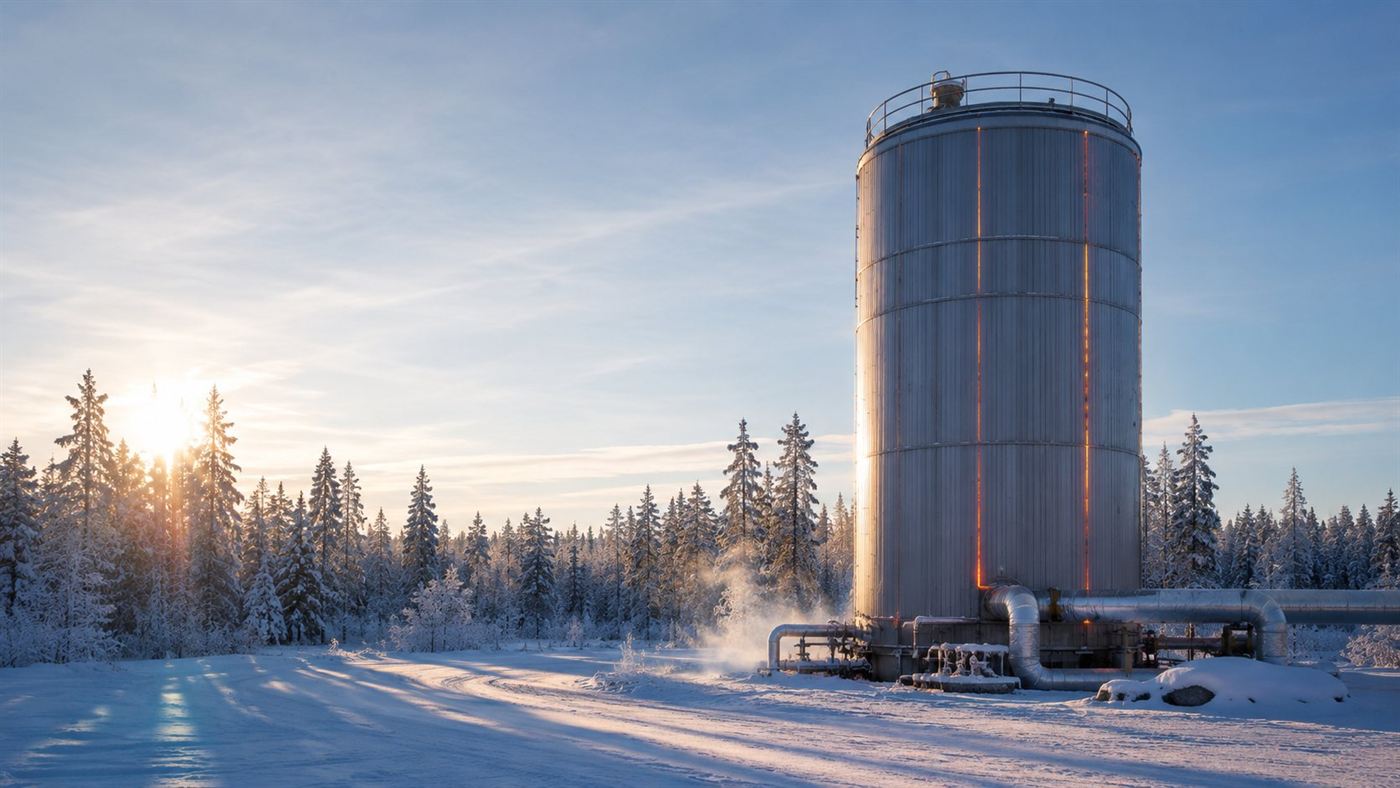
For a fraction of a second, 192 lasers recreated the heart of the sun and, for the first time, fusion gave back more energy than it took
Deep inside a laboratory in California, the world's most powerful lasers fired all at once onto a speck of hydrogen the size of a peppercorn. For the briefest instant the fuel reached the temperature of the sun's core and fused, and in doing so achieved fusion ignition: it gave back more energy than the lasers had poured into it, a thing no one had ever managed before.
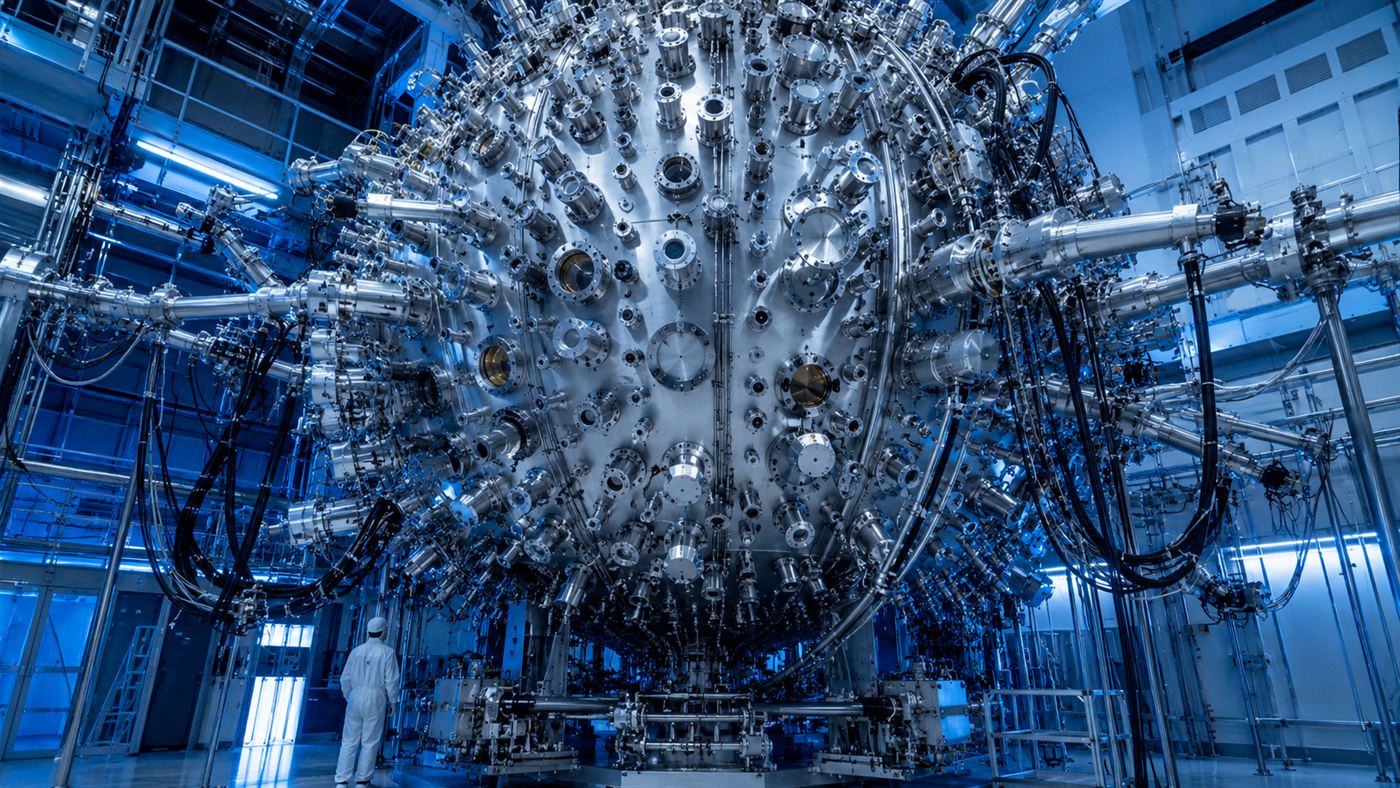
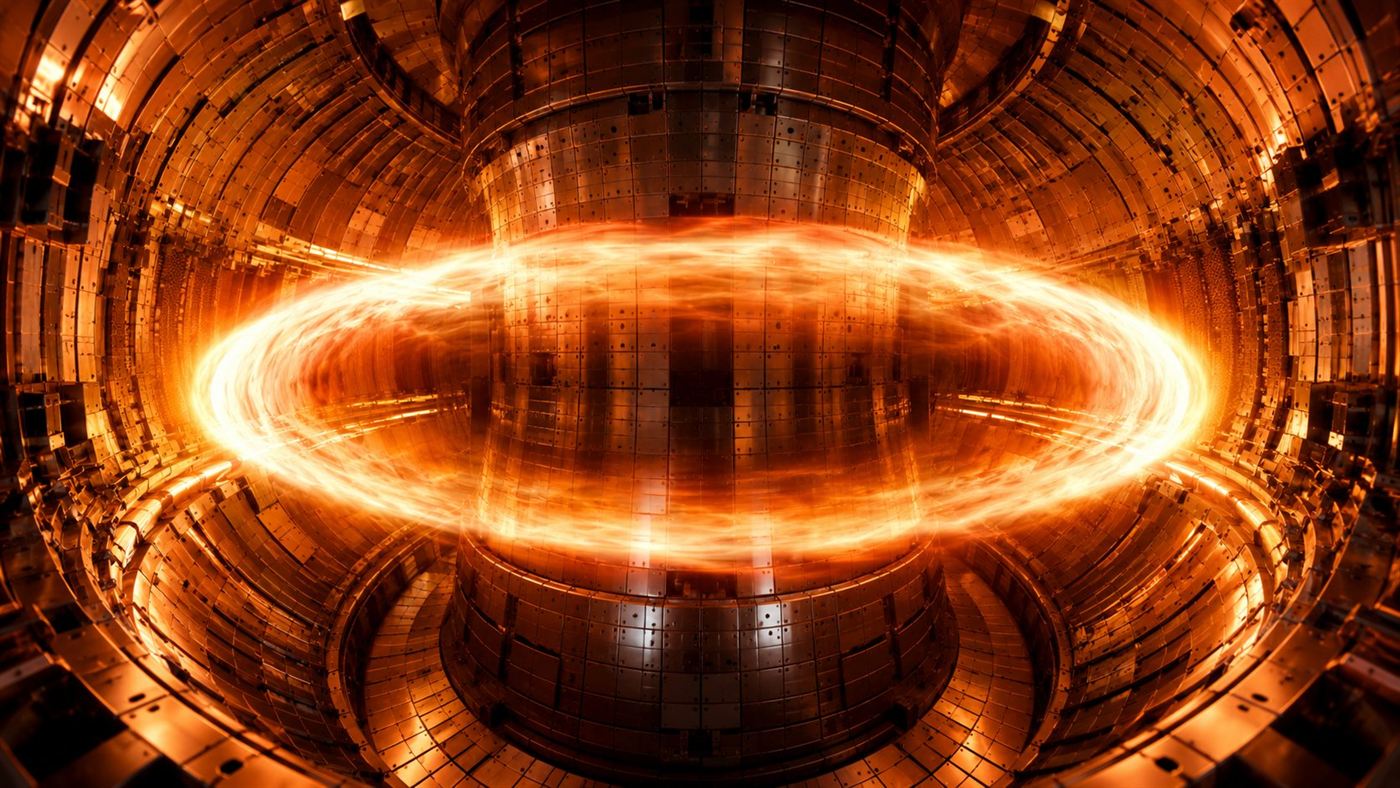
The target chamber where 192 lasers meet at a single point. Illustration: Watts & Wild.
It happened on 5 December 2022 at the National Ignition Facility, part of the Lawrence Livermore National Laboratory. Fusion is the reaction that powers every star, forcing light atoms to merge into heavier ones and releasing enormous energy in the process. On Earth it is fiendishly hard to do, because you have to squeeze and heat the fuel to conditions like those at the centre of the sun.
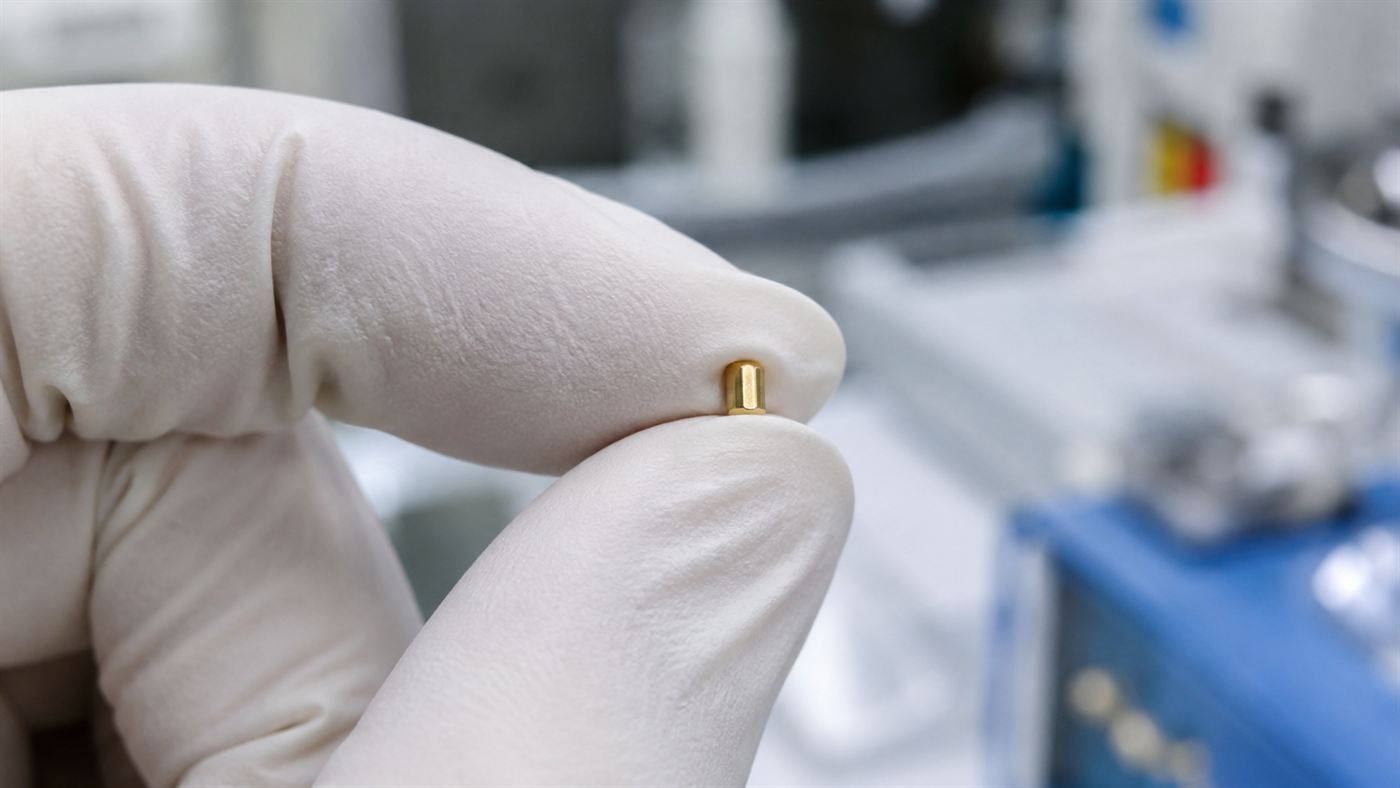
The way Livermore does it is almost violent in its elegance. A tiny capsule of hydrogen sits inside a little gold cylinder, and 192 laser beams, the most energetic on the planet, slam into that cylinder at once. The blast of energy crushes the capsule inward so hard and so fast that the hydrogen fuses, for a flicker of a billionth of a second, hotter and denser than the core of the sun.
What fusion ignition actually means
For decades, every fusion experiment of this kind had the same disappointing result: you put in more energy than you got back. The dream was to cross the line where the reaction at last produces more than it consumes, the threshold scientists call ignition. As the US Department of Energy announced, on that December shot the lasers delivered 2.05 megajoules to the target and the fuel gave back 3.15 megajoules of fusion energy, about half as much again as went in.
It does not sound like much, a difference you could measure in the energy of a few sticks of dynamite. But it was the first time in history that controlled fusion had returned more than it was fed, outside the uncontrolled fury of a hydrogen bomb. A barrier people had been pushing at for sixty years finally gave way. Big physics often needs big machines, like the Large Hadron Collider, the largest and coldest machine ever built.
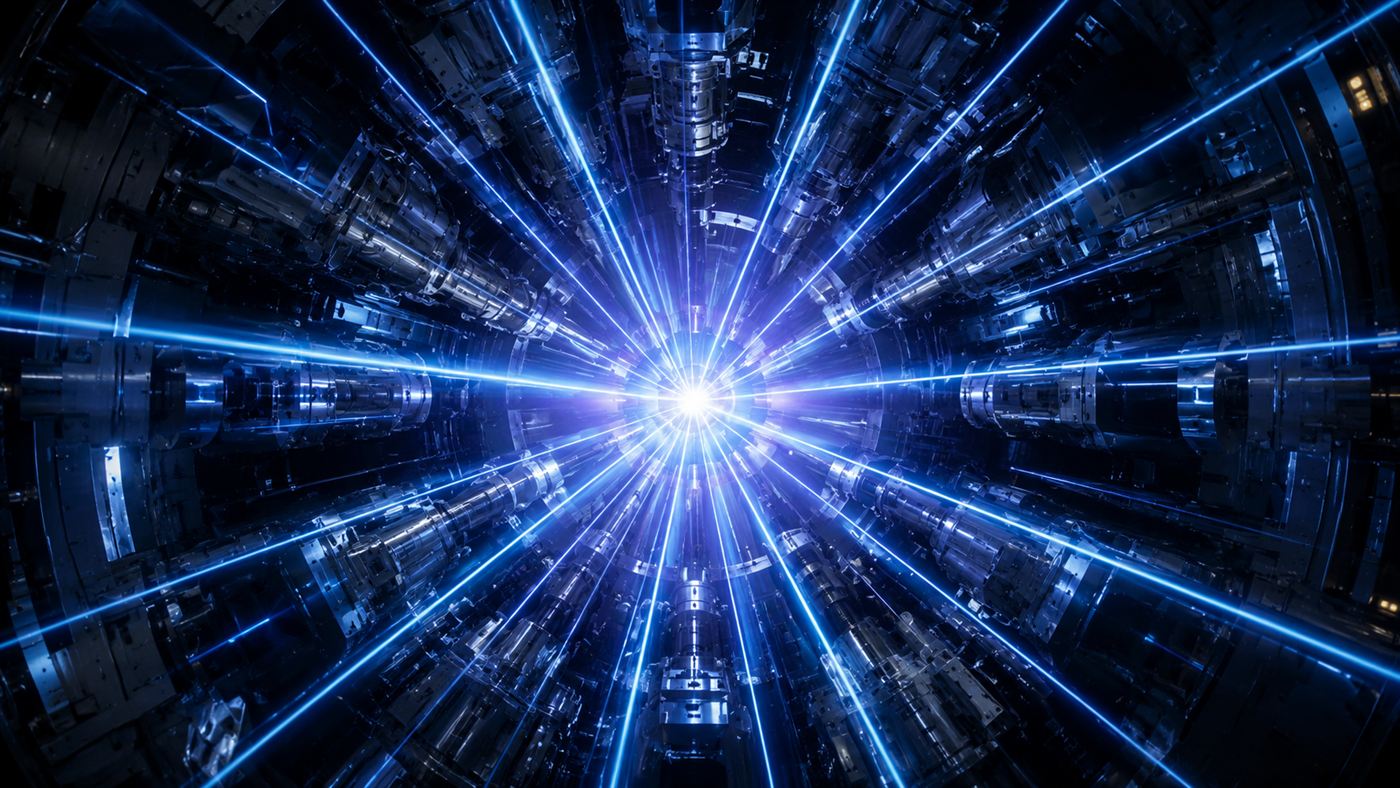
Why a peppercorn of fuel matters so much
The appeal of fusion is almost absurd. The fuel is a form of hydrogen that can be drawn from seawater, it produces no carbon dioxide and no long-lived radioactive waste like today's nuclear plants, and it cannot melt down, because if anything goes wrong the reaction simply stops. A working fusion power station would be about as close to limitless clean energy as physics allows.
That is why a result from a single peppercorn of hydrogen made headlines around the world. It was proof, after a lifetime of "fusion is thirty years away" jokes, that the central physics can be made to work on Earth. Livermore has since repeated ignition several times and pushed the energy gain higher, so it was not a fluke.
What is fusion ignition?
In plain terms, it is the moment a fusion reaction starts paying for itself. Until you reach ignition, you spend more energy heating and squeezing the fuel than the fusion gives back, so the whole thing runs at a loss. Cross that line and the reaction releases more than it took to trigger, which is the basic condition any future fusion power plant will have to meet, over and over, to be worth building.
The honest catch
This is where the excitement needs a firm hand on its shoulder. The famous "more energy out than in" is true only if you measure the laser energy that actually reached the target. The lasers themselves are wildly inefficient, and firing that two-megajoule shot drew well over a hundred times as much electricity from the grid. Counted honestly, from wall socket to fusion, the experiment still lost most of its energy. As Livermore itself is careful to explain, this was a scientific milestone, not a power plant. The facility fires only a handful of shots a day, its main job is actually simulating nuclear weapons rather than making electricity, and a fusion station you could plug into the grid is still realistically decades off. What changed in 2022 is not that we have clean fusion power. It is that, for the first time, we know for certain the door is not locked.
A peppercorn of hydrogen, 192 lasers, and a flash hotter than the sun finally tipped fusion into profit, at least at the target. Does fusion ignition make you hopeful about clean energy, or wary of another breakthrough that stays thirty years away? Tell us what you think in the comments.
Related reading: A very different fusion machine in China took the opposite approach, holding a superhot plasma steady for more than a thousand seconds. And in Wisconsin, a startup pulled electricity straight out of a fusion plasma for the first time.