This Indian stepwell drops thirteen storeys into the Earth on 3,500 perfect steps
In a dusty village in Rajasthan sits one of the most hypnotic structures ever built for something as ordinary as fetching water. Chand Baori is a stepwell that falls thirteen storeys into the ground in a dizzying lattice of around 3,500 steps, shaped more than a thousand years ago to outwit the desert.
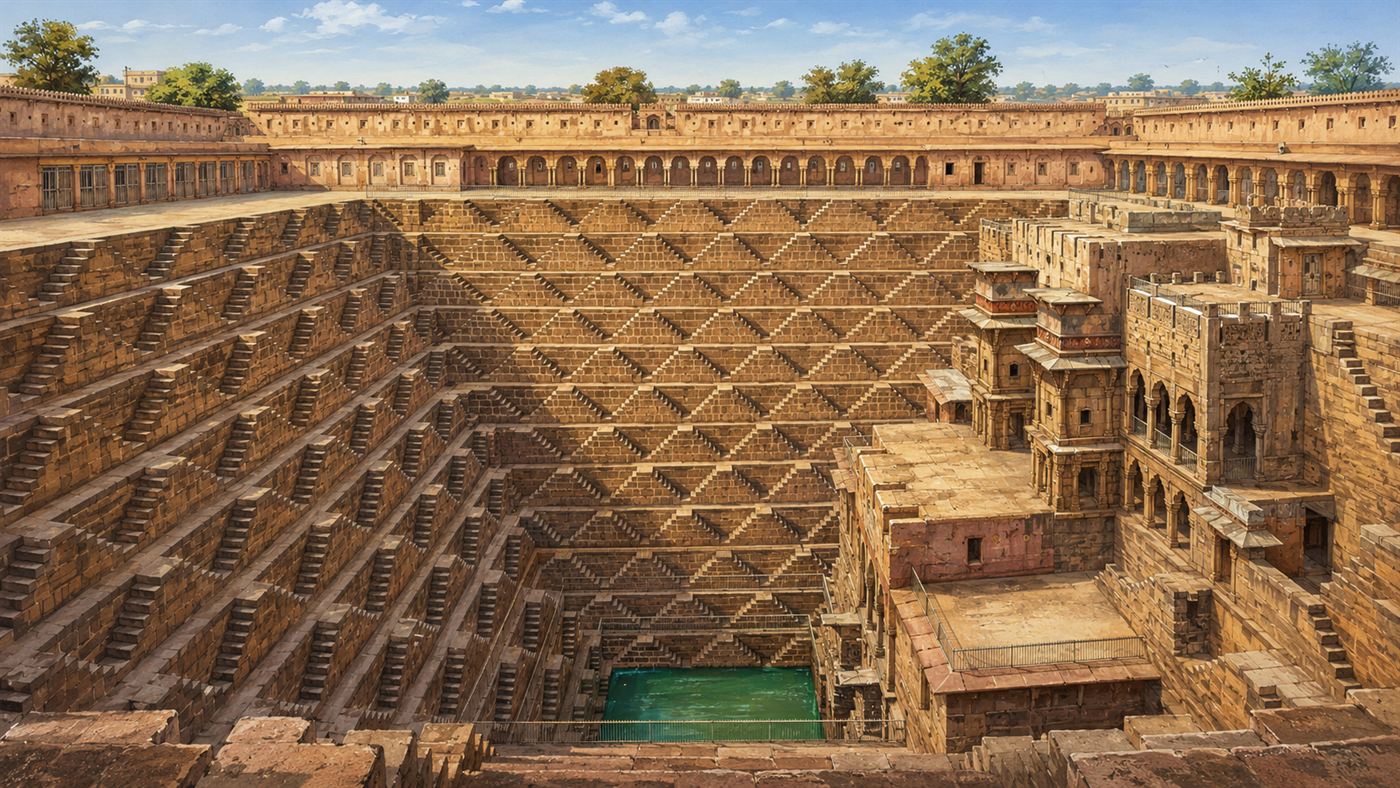
Thousands of steps fold down the walls of Chand Baori toward the water. Illustration: Watts & Wild.
We tend to build our grandest staircases going up, toward thrones and altars and viewing platforms.
In one corner of India, the most breathtaking staircase of all was built pointing straight down into the dark.
What is Chand Baori? Chand Baori is a giant stepwell in the village of Abhaneri in Rajasthan, India. Built more than a thousand years ago, it descends about thirteen storeys underground in a symmetrical lattice of roughly 3,500 narrow steps, designed to reach groundwater that rose and fell with the seasons.
Chand Baori, a stepwell carved into the Earth
Chand Baori is one of the largest and deepest stepwells in India, usually dated to around the eighth or ninth century.
Three of its four walls are clad in flights of steps that zig-zag downward in a strict geometric rhythm.
The steps fold back on themselves again and again, forming row upon row of repeating triangles all the way to the floor.
At the bottom, far below the lip of the surrounding land, lies a small pool of green water.
To stand at the edge and look down is to see a building turned completely inside out, with all its drama hidden beneath the ground.
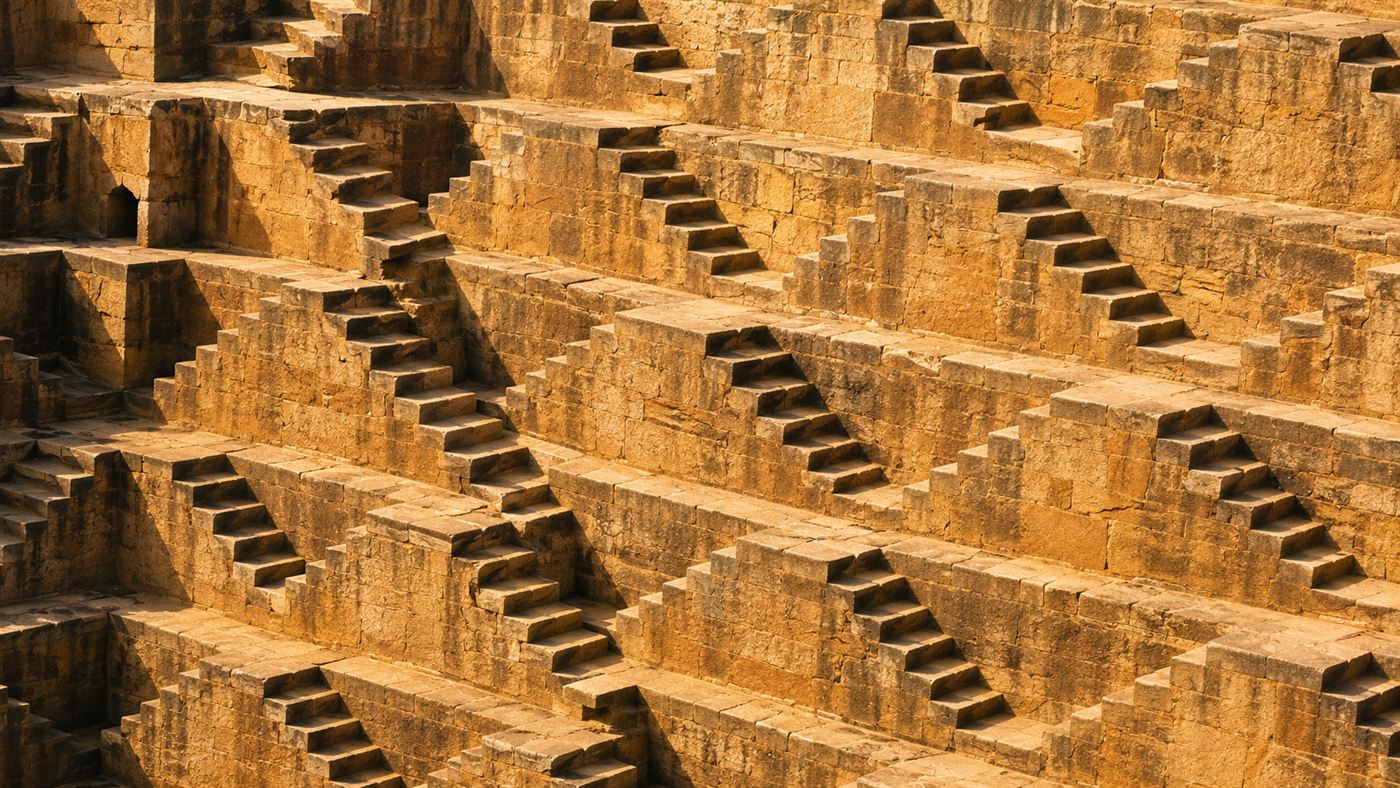
Why dig a well like a stadium?
The strange shape is not decoration for its own sake, but an answer to a hard problem.
A stepwell is a well reached by descending stairs rather than by hauling a bucket up a shaft.
In arid Rajasthan the water table can sit far below the surface and drop further still through the long dry season.
By lining the pit with steps, people could always walk right down to the waterline, however high or low it happened to be that month.
The huge open mouth also caught and stored the brief, precious rains of the monsoon.
A cool refuge from the heat
A stepwell did far more than hold water, and that is part of why it was built so grandly.
The air at the bottom stays noticeably cooler and damper than the baking surface above.
People came down to draw water, to rest in the shade and to escape the worst of the afternoon, so the well doubled as a communal gathering place.
Chand Baori stands beside a temple to Harshat Mata, a goddess of joy, which tied the daily chore of fetching water to something sacred.
A trip to the well, in other words, was social, spiritual and practical all at once.
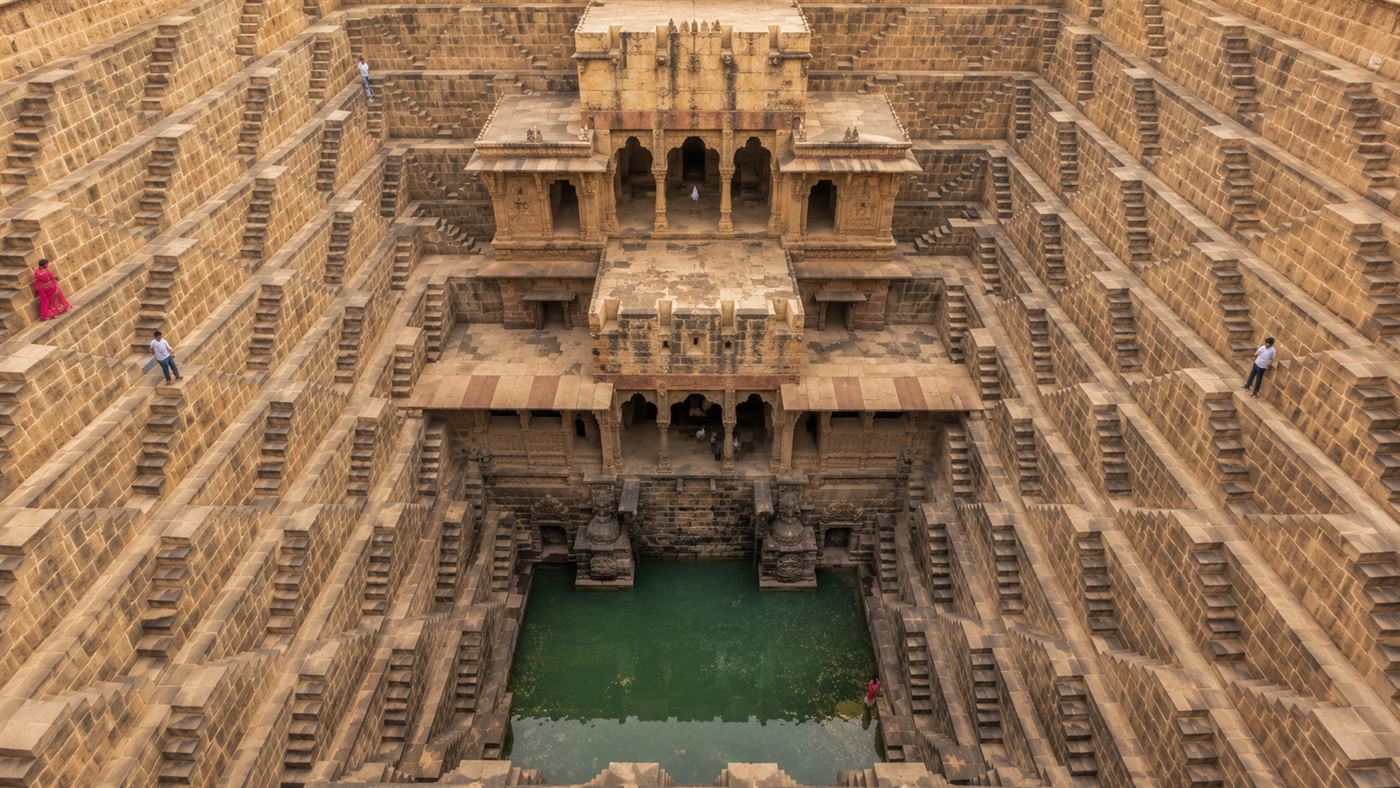
Geometry that still stuns
What stops visitors in their tracks today is the sheer precision of the thing.
The thousands of steps line up so cleanly that the whole wall seems to shimmer, like an optical illusion carved in stone.
All of it was laid out and built without any of the surveying tools we would now consider essential.
That hypnotic pattern has since drawn filmmakers and photographers, who use the well as a ready-made set from another world.
It is rare for a piece of pure infrastructure to double as one of the most photogenic places in a country.
The honest catch
It is worth being honest about how much we actually know.
The exact date and the ruler who ordered Chand Baori are uncertain, and the upper galleries were added much later under Mughal rule.
The famous figures, around 3,500 steps and thirteen storeys, are approximate and vary from one source to the next.
Stepwells like this one fell out of use as piped water arrived, and many were left to silt up or grow stagnant.
Today Chand Baori is a protected heritage site, fenced for safety, so visitors admire the steps from the top rather than walking down them.
Chand Baori is a reminder that some of the cleverest engineering on Earth was built simply to survive a dry season.
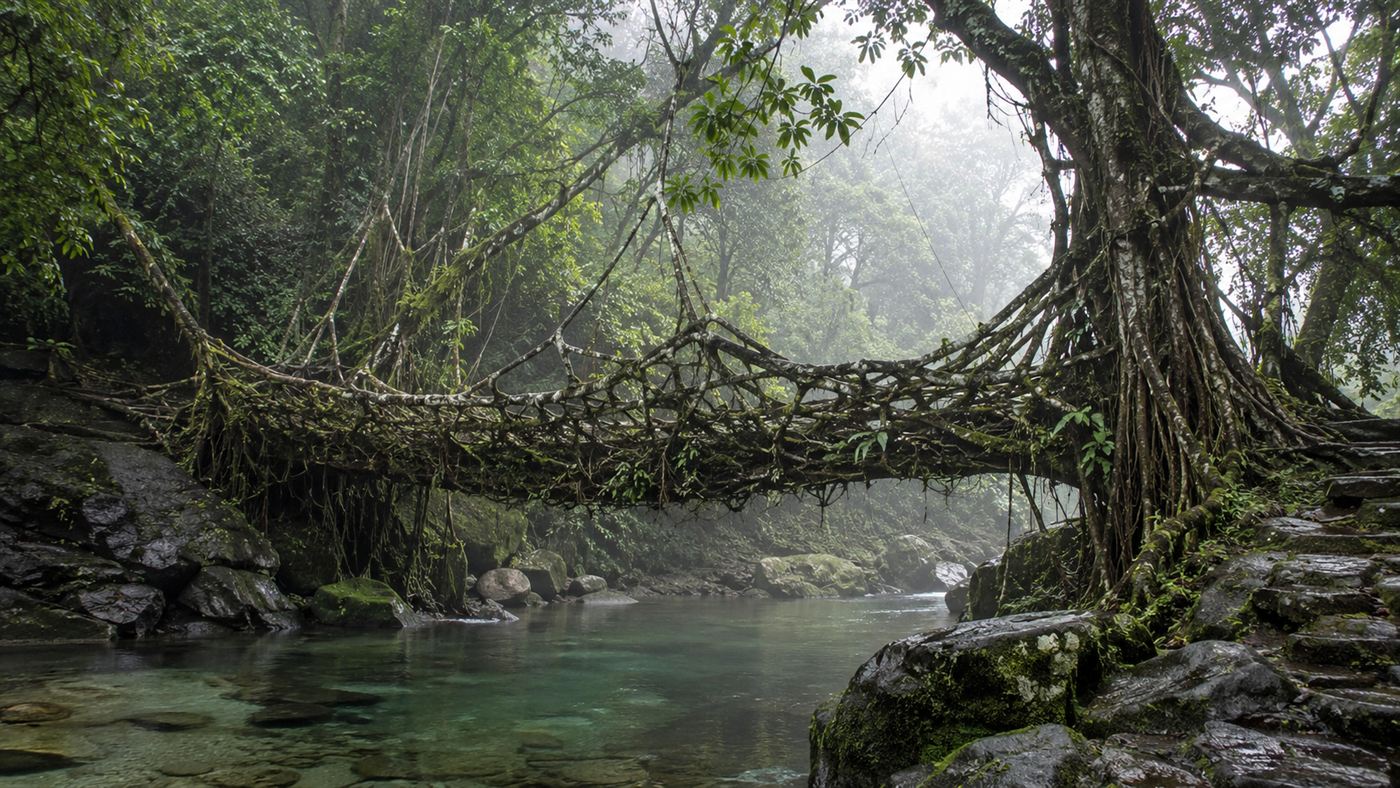
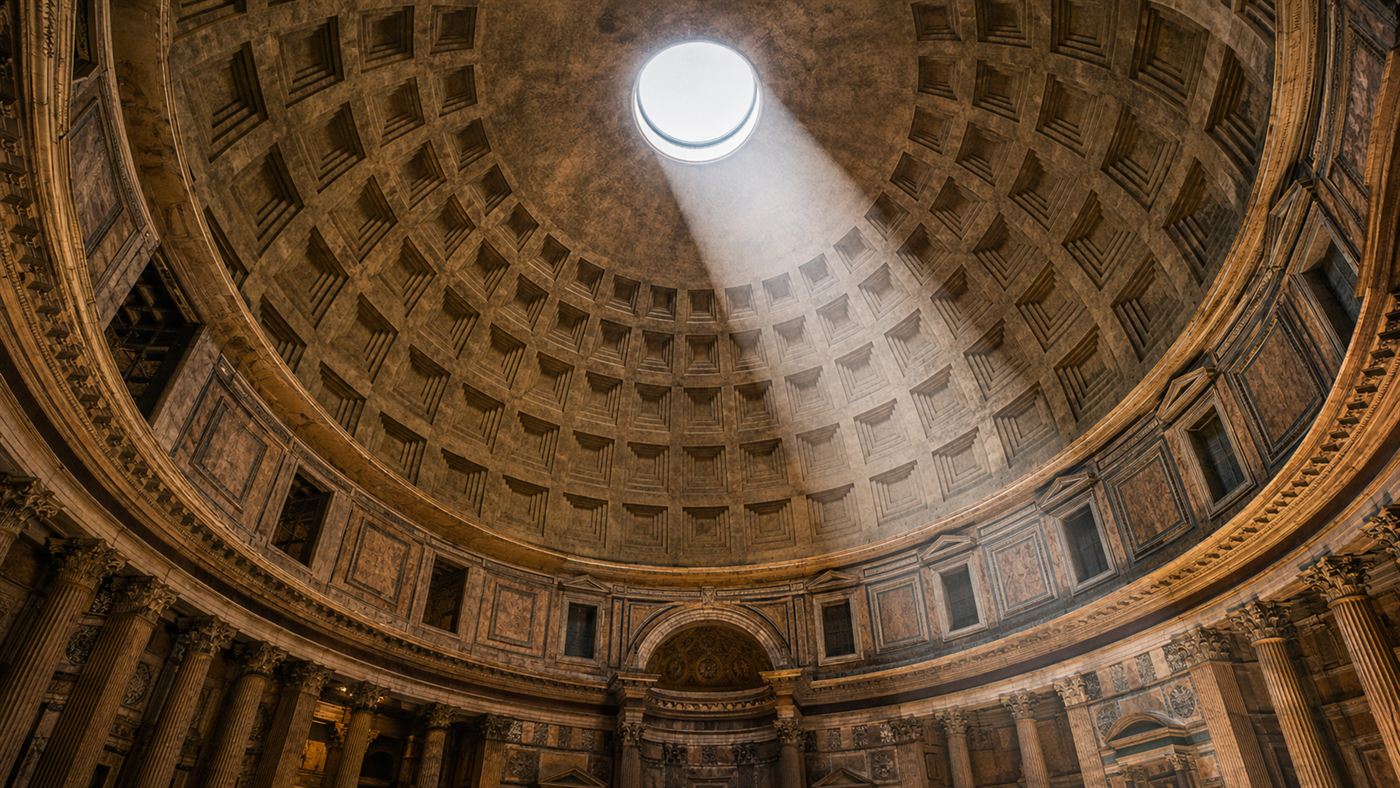
It sits happily alongside the other quiet feats where people bent the landscape to reach water and outlast time, from the bridges India grows from living tree roots to the Roman concrete that still refuses to crumble.
If a village a thousand years ago could turn the daily walk to the well into a thirteen-storey work of art, what everyday piece of infrastructure around you might a future traveller queue up to photograph? Tell us in the comments.