People who grew no crops built one of the biggest earthworks in ancient North America, and it broke a rule that scholars were sure of
For a long time, experts were confident that you could not build monuments without farms first, because only settled agriculture could feed and organise the crowds it takes. Then a set of giant earthen ridges in Louisiana, raised by people who grew nothing at all, quietly proved them wrong.
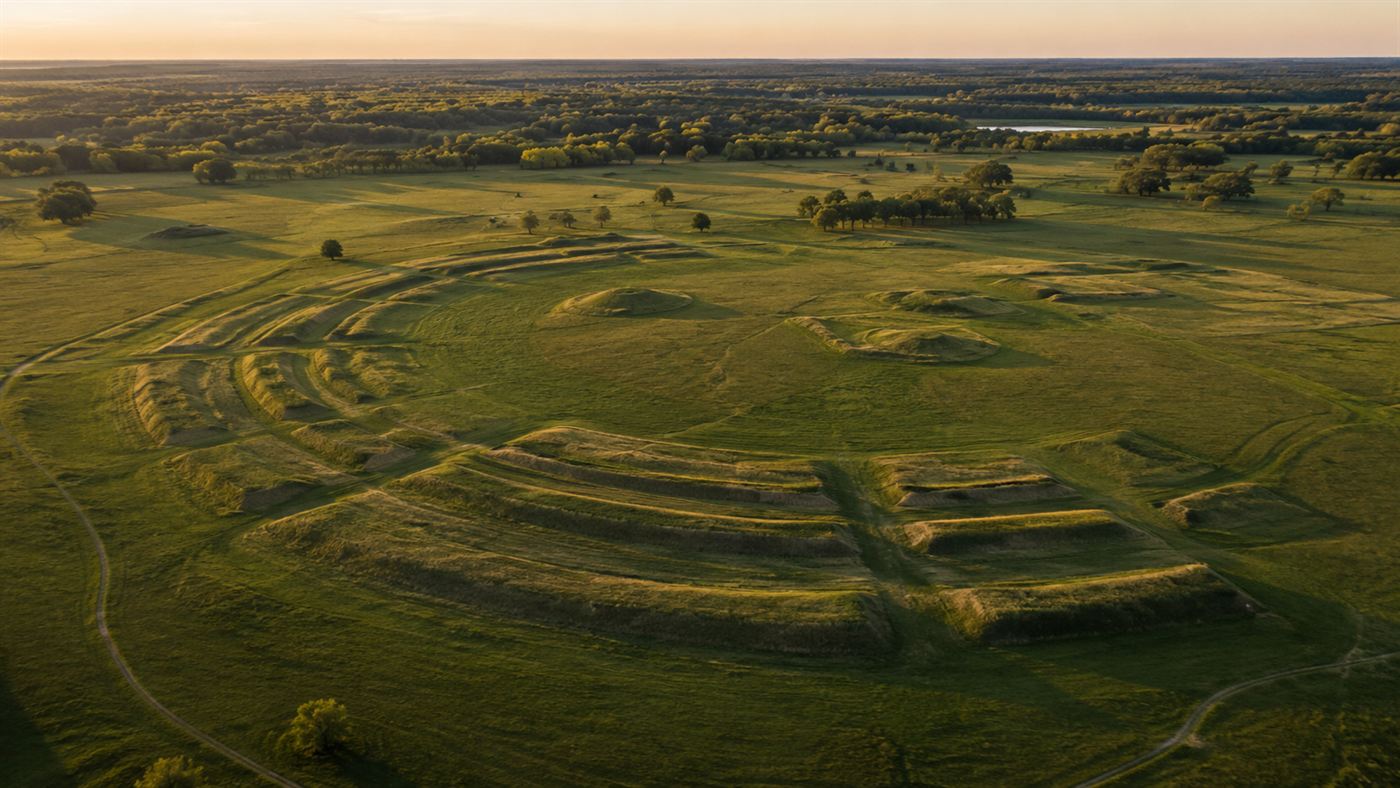
From the air, Poverty Point's nested earthen ridges and mounds come into focus. Illustration: Watts & Wild.
In the flat country of northeastern Louisiana sits one of the most important ancient sites in North America, and one of the least known. Poverty Point is a sprawling complex of earthworks, built more than three thousand years ago, and for sheer ambition it stands with the famous monuments of the ancient world.
At its heart are six great ridges of earth, laid out as nested half-circles one inside the next, along with several large mounds, one of them a huge bird-shaped hill that is among the biggest earthen structures on the continent. All of it was shaped by hand, and all of it is far older than most people ever imagine anything in the region to be.
The short version is that Poverty Point should not, by the old rules, exist at all. The people who built it were not farmers, and that single fact forced archaeologists to tear up an assumption they had held for generations.
What the builders of Poverty Point were not
They were hunter-gatherers. They lived by fishing the rich rivers and swamps, hunting game and gathering wild plants, without the fields of grain that were supposed to be the foundation of any great building project. There were no domesticated staple crops here, no granaries feeding a settled workforce.
That is what makes the place so startling. The standard story of human history said that first came farming, then surplus food, then the settled towns and the organised labour that raise monuments. Poverty Point runs that sequence backwards, showing hunter-gatherers pouring enormous, coordinated effort into a monument long before agriculture arrived to supposedly make it possible.
Moving a landscape by hand
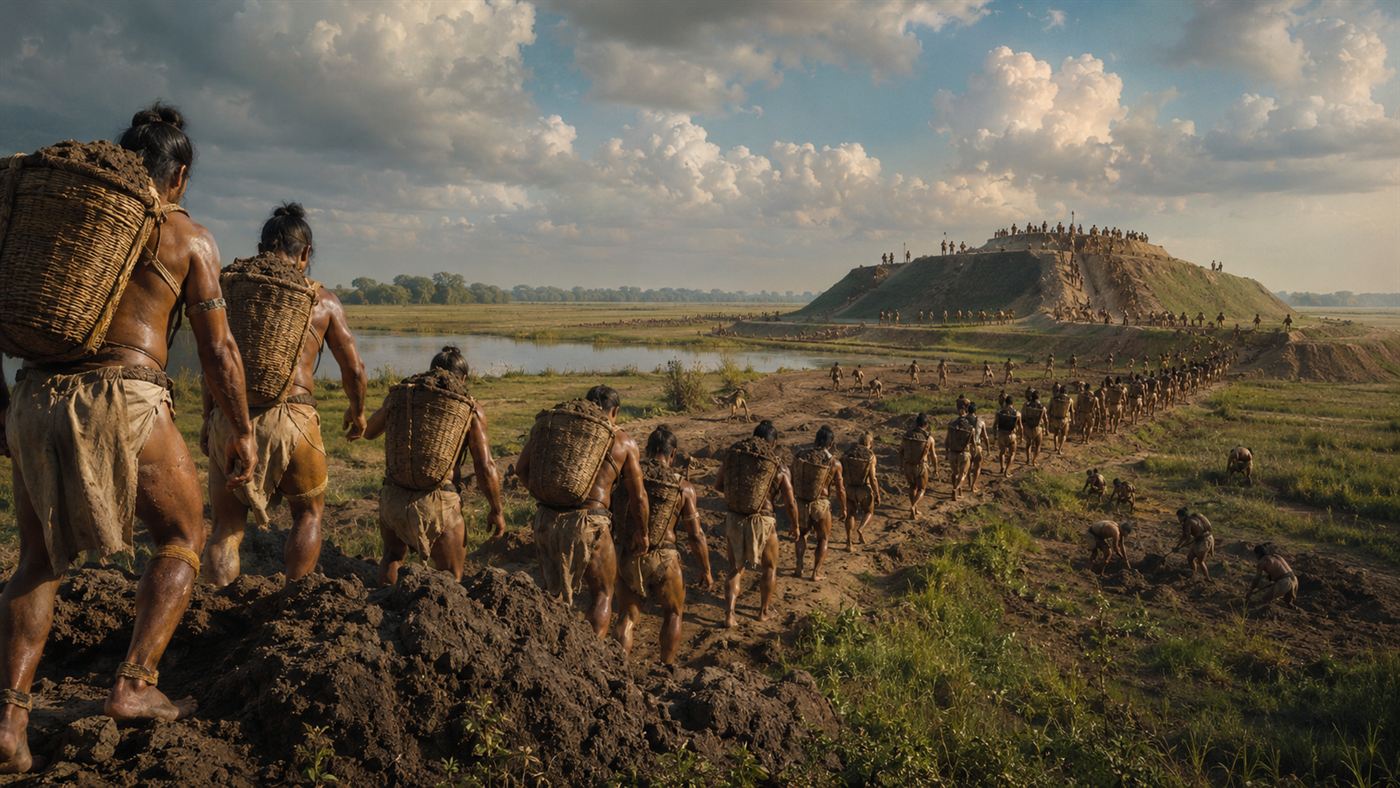
The scale of the work is hard to take in. Every scrap of those ridges and mounds was dug loose and carried in woven baskets on people's backs, one load at a time, then packed into place. There were no wheels to roll it, no animals to haul it and no metal tools to dig it, only human muscle and baskets of earth.
Add it up and it comes to millions of basket-loads of soil, a mountain of labour by any measure. Careful study of the largest mound even suggests it may have been thrown up astonishingly fast, in a matter of months rather than centuries, which would mean a huge crowd working together in a single burst of effort.
A crossroads of a continent
Poverty Point was not an isolated curiosity either. Among the things found there are stones and materials that simply do not occur nearby, copper from the far north and rock from hundreds of miles away in every direction, carried in along ancient networks of exchange.
That turns the site into evidence of something even bigger than the earthworks themselves. Whoever gathered here was plugged into a web of trade and contact spanning much of the continent, drawing distant goods and, presumably, distant people toward this one spot on the Louisiana lowlands.
Why have so few people heard of it?
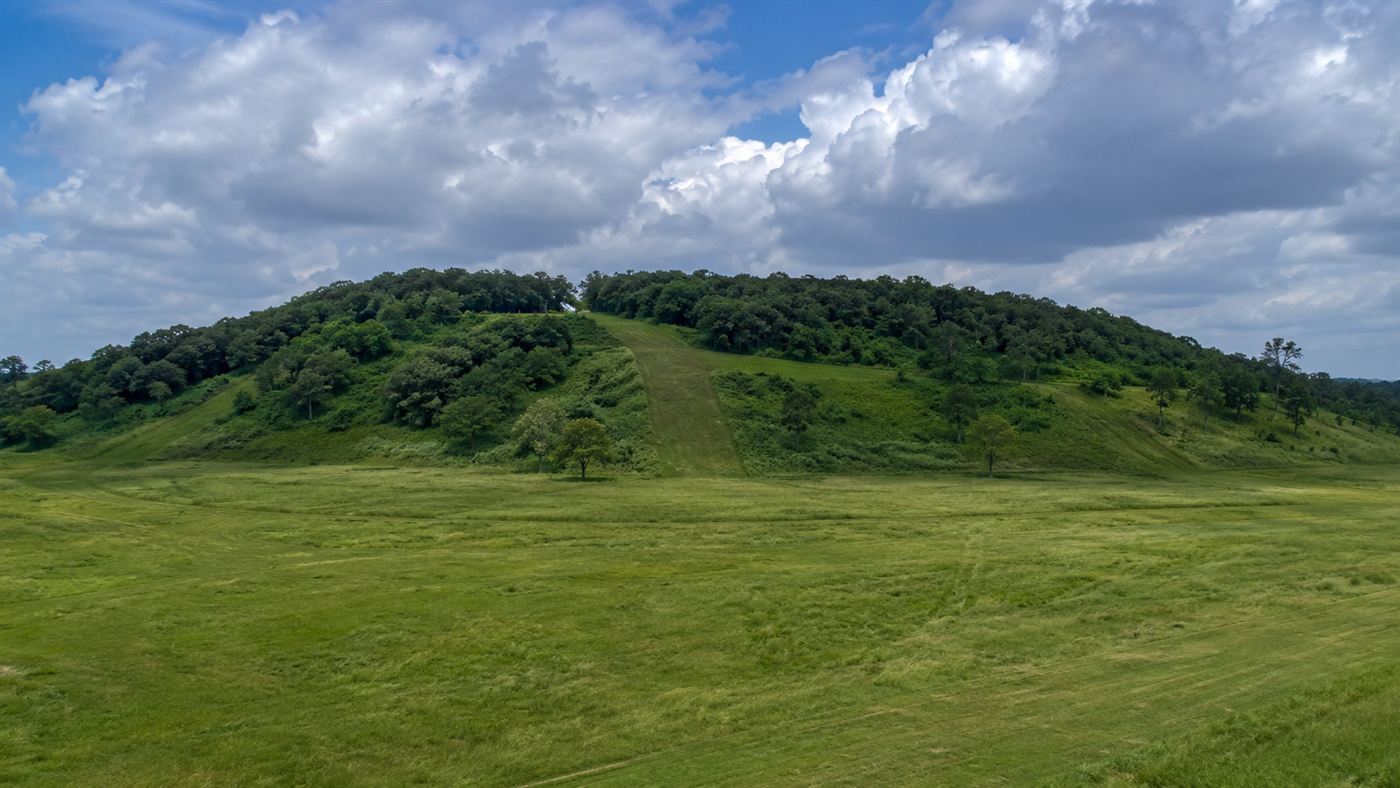
Partly it is the earth itself. Poverty Point is built of soil, not carved stone, so time and farming have softened its ridges into gentle swells that are easy to miss from the ground and only leap out from the air. It does not announce itself the way a pyramid or a temple does.
And partly it is the story we are taught. A monumental site made by hunter-gatherers, with no gold and no written records, does not fit the neat march from farming to cities to grandeur that fills the textbooks, so it slips through the cracks of the tale we tell about the human past.
The honest catch
It is tempting to present Poverty Point purely as a marvel that shattered the rules, and it did upend a real assumption. But the honest lesson is a little humbler. The rule it broke was partly our own prejudice, the quiet belief that people without farms or writing could not achieve much, and the site is less a freak of history than a correction to that bias.
There is also a great deal we still do not know. Exactly how many people lived at Poverty Point, whether they stayed year round, and what the ridges and mounds truly meant to them remain open questions, and confident labels like "city" or "capital" reach beyond the evidence. What is certain is quieter and grander at once: that more than three thousand years ago, people the textbooks underestimated moved a landscape with their bare hands, for reasons we are still trying to understand.
People with no farms and no metal moved millions of baskets of earth to build something we still cannot fully explain. What do you think could gather that many people to such a place three thousand years ago? Tell us what you think in the comments.
Related reading: Chaco Canyon, another great American site wrongly said to have vanished. See also Cahokia, a huge city of mounds near the Mississippi, and Ohio's Serpent Mound, a giant snake shaped in earth.