A college in rural India takes illiterate grandmothers nobody else would hire and turns them into solar engineers in six months, then sends them home to electrify their own villages
They cannot read the manuals and often do not share a language with their teachers or each other. So Barefoot College teaches them with colour and gesture, and in six months turns village grandmothers into solar engineers. By 2025, around 3,500 of them had brought power to roughly 2.5 million people.
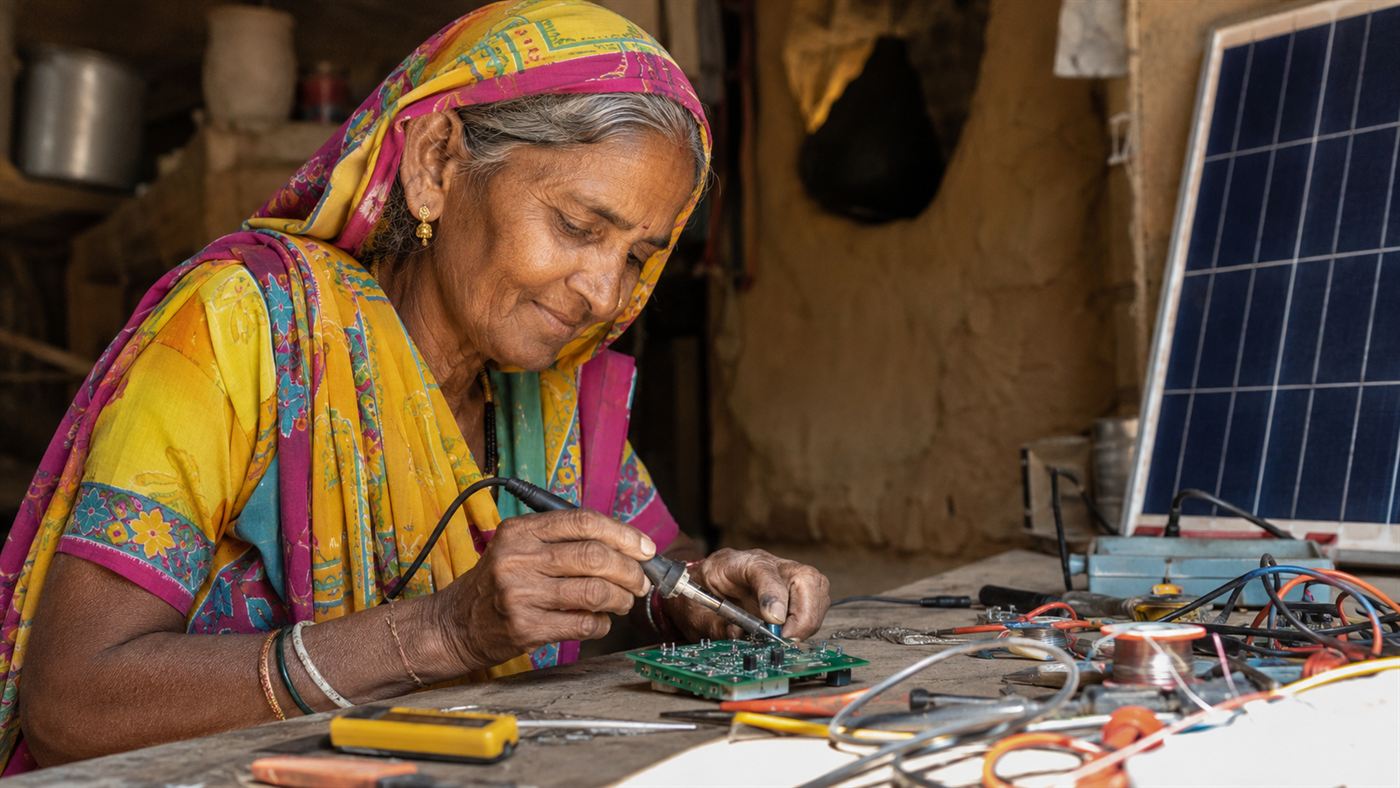
A Solar Mama assembles a charge controller, matching parts by colour rather than by name. Illustration: Watts & Wild.
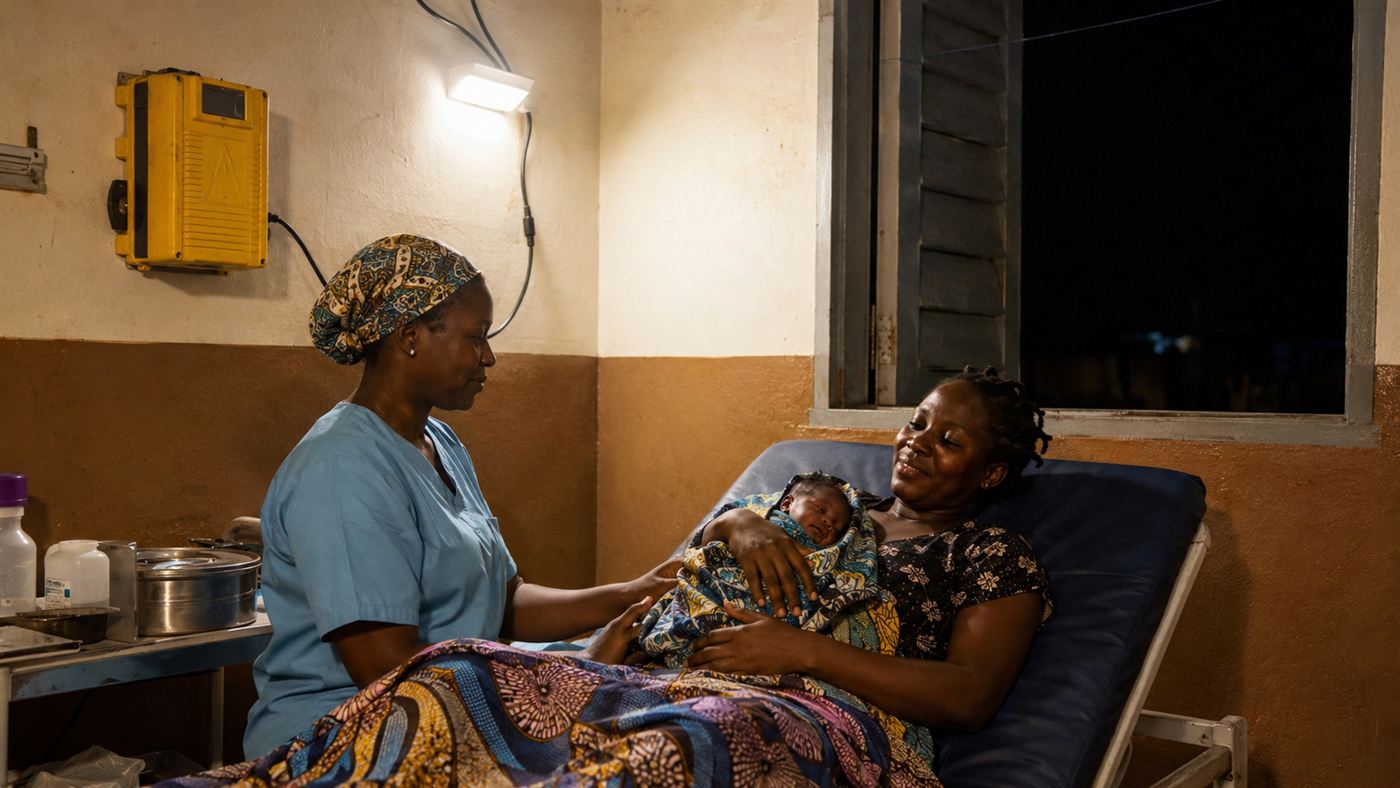
In a workshop in Rajasthan, a woman in her fifties who never learned to read sits soldering a circuit board, matching the components not by their names but by their colours. In a few months she will travel home to a village that has never had mains electricity and switch on its first electric lights. She is one of the Barefoot College Solar Mamas, as the programme affectionately calls them, and she is one of thousands.
The place that trains her is Barefoot College, started by the activist Bunker Roy in the early 1970s in the village of Tilonia, on a simple and almost stubborn idea: that the rural poor can master the technology everyone assumes is beyond them. By the start of 2025, according to figures gathered on the Solar Mamas programme, its solar training had reached around 3,500 women from more than 90 countries and helped bring power to some 2.5 million people.
The students everyone else overlooked
Barefoot College does not want the obvious candidates. It deliberately recruits older women, often grandmothers, frequently unable to read or write, from the kind of remote village that the electricity grid has never bothered to reach. On paper they are the least promising engineering students imaginable. That is exactly the point.
Bunker Roy has been blunt about why. "Illiterate grandmothers are humble and easy to teach," he told WIPO Magazine. "Grandmothers have a vested interest in the village and have no desire to leave. Give a youth a piece of paper and he is off to the city to find a better job." Train a young man and you often train someone who leaves. Train a grandmother and you train someone who stays, and who anchors the whole community around what she learns.
How you teach an engineer who cannot read
The obvious objection is that you cannot teach electronics to someone who cannot read a manual, especially when the women in a single class may come from a dozen countries and share no common language at all. Barefoot College simply refuses the premise. It throws out words almost entirely.
Instead, components are identified by their shape and colour, instructions are mimed, and skills are passed on by repetition and example until the hands know the work. Over six months, women who arrived having never held a soldering iron learn to assemble and repair solar lanterns, home lighting systems, charge controllers and the small inverters that turn a panel's output into usable power. As Barefoot College describes its own solar work, the goal is to demystify the technology and put it directly into the hands of the villagers who will live with it, not to hand anyone a certificate.
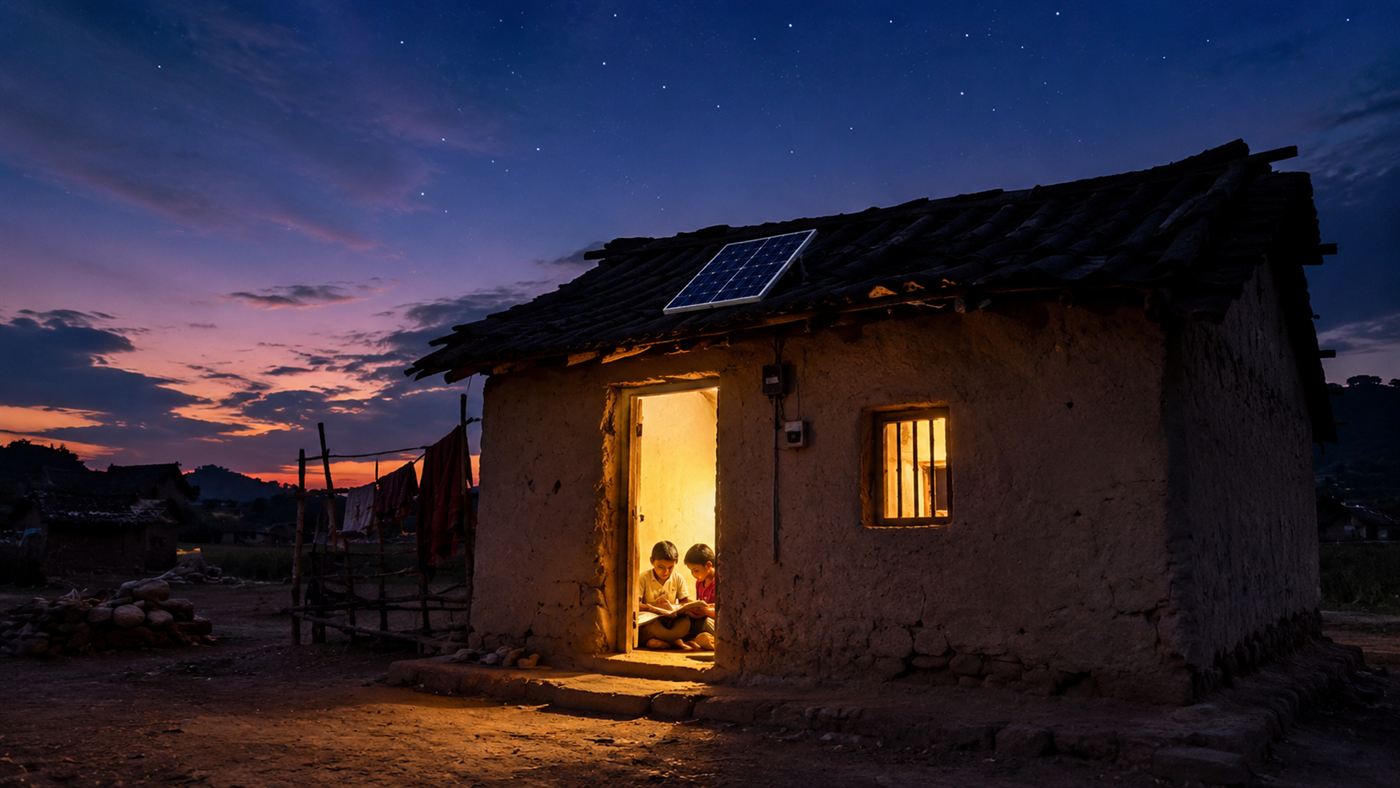
What the Barefoot College Solar Mamas carry home
The training is only half the story. The women go back to their own villages as the resident engineer, installing solar home systems, hanging lights, and keeping the equipment running for years afterward. In places the grid was never going to reach, they become the reason a child can read after dark and a phone can be charged without a day's walk to the nearest town.
The change is social as much as electrical. A woman who was seen only as a wife or mother comes home with a skill, an income and a standing she did not have before, responsible for the literal power of the place she lives in. The light on the ceiling is the visible part. The quieter shift is who installed it.
The numbers behind the lamps
What began as one campus in Tilonia has turned into an export. India has long used the programme as a form of development diplomacy, flying in women from villages across Africa, Asia, the Pacific and Latin America to train at Tilonia and then return home as engineers. The reach is genuinely global, which is how a single rural college ends up with alumnae on nearly every continent.
The cumulative figures are striking for a project built on the people development usually ignores. Across two decades the model has put solar light into well over a thousand previously dark villages, and by 2025 the running total stood at thousands of women trained and millions of people reached. Each of those numbers is, in the end, a specific grandmother and a specific switch on a specific wall.
The honest catch
It is important not to oversell what a Solar Mama installs. These are small off-grid systems, enough for lights, a fan and charging, not the industrial power that runs factories or pumps a city's water. They are a brilliant answer for a remote village with no grid, and no substitute for the larger electricity systems those countries still need to build.
The scale is humbling too. Hundreds of millions of people still live without reliable electricity, and a few thousand trained engineers, however inspiring, do not close that gap on their own. There are quieter frictions as well, from women who meet resistance at home to the simple fact that the deeper problem, generations of girls never taught to read, is the very thing the programme has to work around rather than fix. The Solar Mamas are proof of what the overlooked can do. They are not, by themselves, the whole grid.
A college that bets on illiterate grandmothers has quietly turned thousands of them into the engineers lighting up villages the grid forgot. If a grandmother who cannot read can be taught to run a village's solar power in six months, what does that say about who we usually decide is worth training? Tell us what you think in the comments.
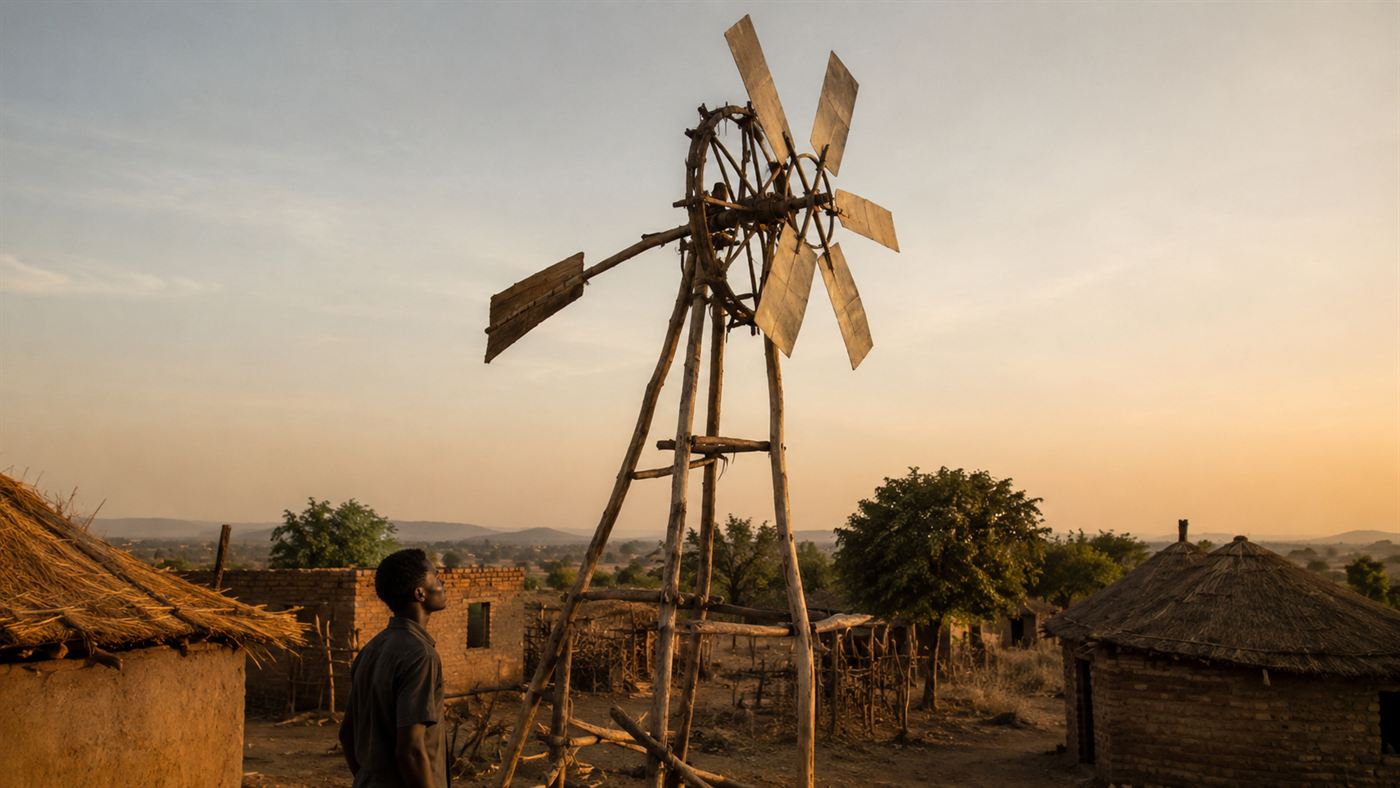
Related reading: A famine pulled a 14-year-old out of school in Malawi, so he taught himself from a library book and built a windmill from scrap to light his home.
See also: the Lakota solar warrior bringing clean power to Pine Ridge.