An American doctor went to Nigeria to study why mothers die in childbirth, and found the answer was sometimes as simple as the lights going out, so she built a suitcase full of sunlight
She went looking for a medical reason and found an electrical one. In a hospital with no reliable power, the difference between a mother who lived and one who did not could come down to whether anyone could see. Her fix fits in a box you can carry.
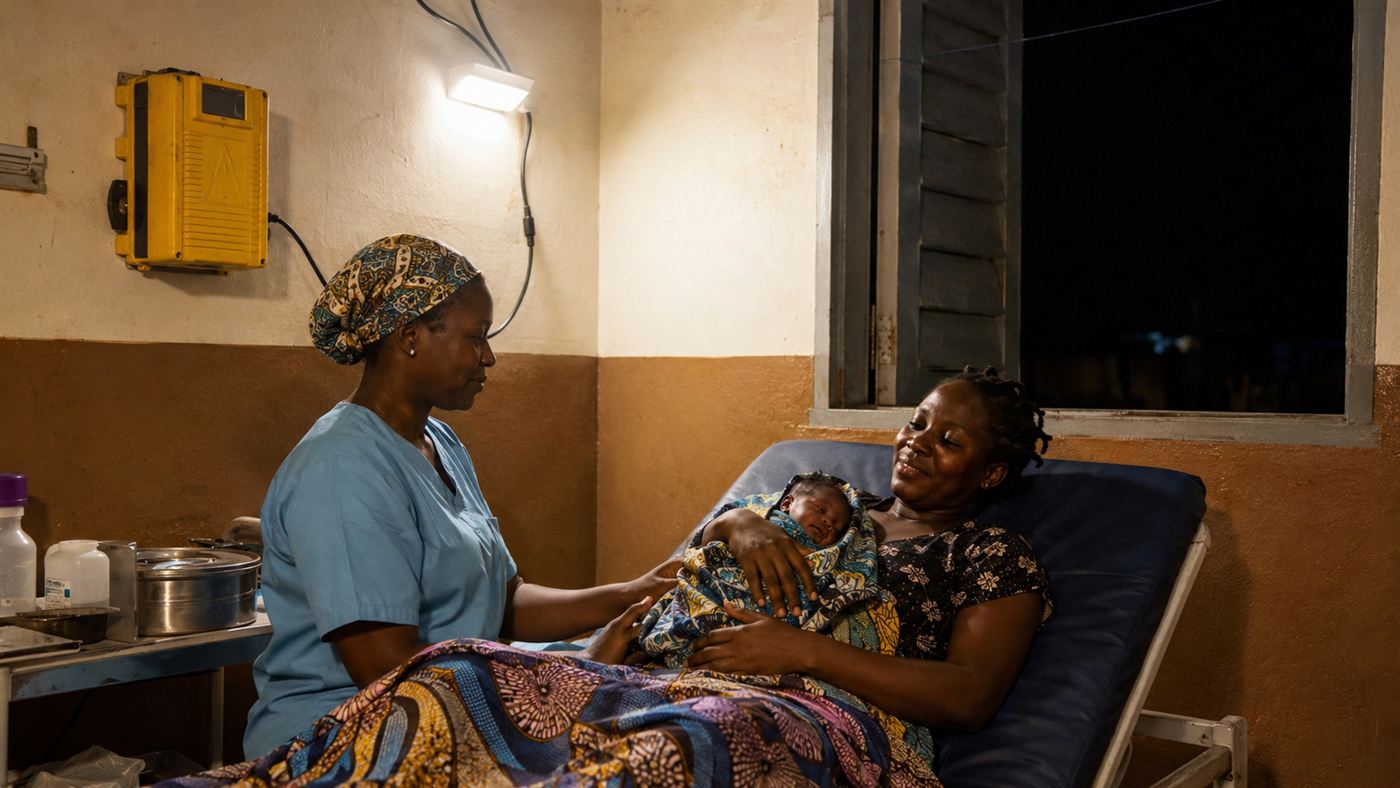
A maternity ward lit at night by a solar suitcase, where there was once only candlelight. Illustration: Watts & Wild.
In 2008 an American obstetrician named Laura Stachel travelled to northern Nigeria, not to treat patients but to study a grim statistic: why so many women there were dying in pregnancy and childbirth. The answer would lead her to invent the solar suitcase, a portable kit of light and power that now serves clinics around the world. As We Care Solar tells the story of its own beginning, what she found in the state hospital was not just a medical problem but an electrical one, with health workers struggling by kerosene lanterns or candlelight, unable to properly examine or treat the patients in front of them. The power simply was not reliable, and when it failed, so did the care.
She had expected to record numbers. Instead she watched the lights go out in the middle of emergencies, and realised that some of these deaths were not really about medicine at all.
The hospital that went dark
The blackouts were not occasional. They were the rhythm of the place. When the grid dropped, the hospital was plunged into a darkness so complete that staff postponed caesarean sections until daybreak, or performed them by the wavering light of a torch held in someone's mouth or a phone propped on a tray. A woman haemorrhaging at two in the morning could not always wait for the sun.
Stachel, who had trained for years to handle exactly these emergencies, found herself standing in a maternity ward where the single thing missing was not skill or willingness but light. It is hard to imagine a more solvable reason for a mother to die.
The solar suitcase, a box full of sunlight
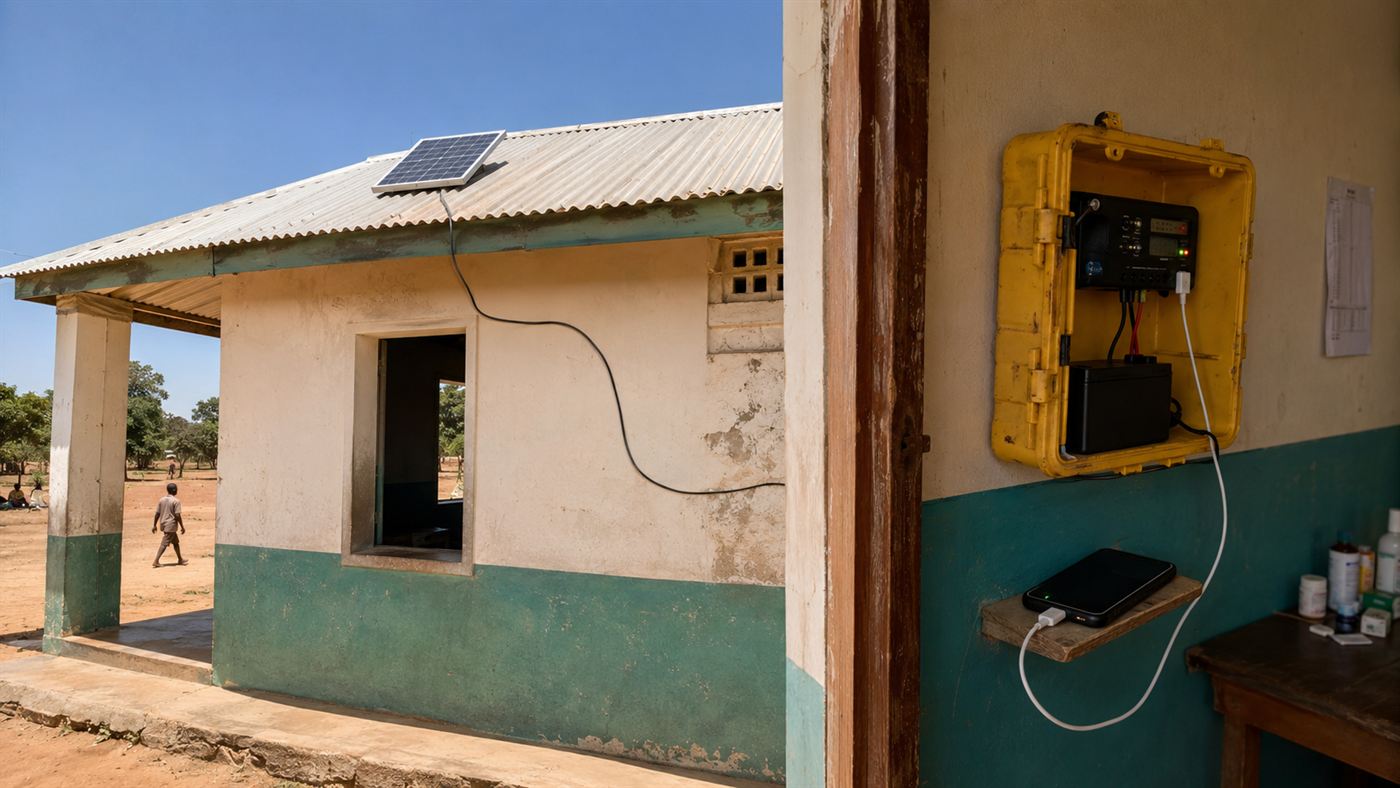
When she described the problem to her husband, Hal Aronson, a solar energy educator back in California, he did something more useful than sympathise. He designed her a compact solar kit she could carry to the hospital: a couple of small panels, a battery, and bright, efficient LED lights, packed into a case roughly the size of carry on luggage.
That first improvised kit worked so well that it became a product and then a mission. Refined with the help of an Engineers Without Borders volunteer, it turned into the We Care Solar Suitcase, a rugged yellow box holding a solar charge controller, a battery, medical grade lights, and outlets to charge phones, headlamps and small devices like a fetal heart monitor. Mounted on a wall and wired to a panel on the roof, it gives a clinic with no grid a dependable supply of its own.
When light is a medical instrument
It sounds almost too humble to matter, a box of lights against a problem as huge as maternal mortality. But light, it turns out, is not a comfort in an emergency delivery, it is a tool. You cannot judge how much a woman is bleeding, find a vein, read a blood pressure dial, suture a tear or resuscitate a silent newborn if you cannot see your own hands.
That is the quiet reversal at the heart of the story. We tend to picture the fight against maternal death in terms of doctors, drugs and operating theatres. Stachel had all the training in the world and still watched the system fail for want of a working light bulb. Giving a midwife reliable light and a charged phone does not look like high tech medicine, yet it can be the difference between a routine night and a funeral.
From one ward to fifty countries
What began as one doctor's workaround has spread across the developing world. We Care Solar now says its suitcases have brought light and power to more than 8,400 health centres across Africa, Asia and Latin America, in over fifty countries. Its Light Every Birth programme aims to electrify every maternity ward in a target region at once, and in Sierra Leone it reached a national goal by installing more than 1,200 of the units.
As Berkeley's Blum Center noted when Stachel was named one of CNN's top ten Heroes of 2013, the solar suitcase had already begun turning up in clinics far beyond the one Nigerian hospital that inspired it. As The Story Exchange has reported, a back injury had ended Stachel's career as a practising surgeon, and the suitcase became the way she kept saving lives without an operating table. The doctor who could no longer operate built a tool that lets thousands of others do it in the light.
The honest catch
It would be a disservice to pretend a box of solar panels fixes maternal mortality, because it does not. A solar suitcase is a stopgap, not a power grid, and it treats one barrier, darkness, out of many. A mother can still die from haemorrhage, from infection, from being hours from any clinic at all, from a shortage of trained staff, blood or medicine that no amount of lighting will conjure. The deepest causes of these deaths are poverty and broken health systems, and a suitcase does not undo those.
There are practical limits too. Batteries age and need replacing, panels need cleaning, and a unit is only useful if someone is trained to maintain it and the clinic it serves still has a midwife on duty. Hand one over and walk away, and in a few years it can become another piece of dead equipment in the corner. The suitcase works because it comes with training, monitoring and follow up, not because solar panels are magic. What it really proves is narrower and more powerful than a cure. It proves that some of the world's most heartbreaking deaths have absurdly simple causes, and that a problem as basic as the lights being off should never be the reason a mother does not come home.
A doctor went looking for why mothers die in childbirth and discovered that sometimes the killer was simply the dark, so she built a suitcase of sunlight that now lights thousands of maternity wards. How many other huge problems do you think are hiding a fix this simple, if someone just looks in the right place? Tell us what you think in the comments.