While its national grid sank into debt, Pakistan became one of the fastest solar nations on Earth, as millions of families bolted cheap Chinese panels to their roofs to escape soaring power bills
Pakistan's electricity was supposed to come from giant plants the country borrowed heavily to build. Instead, as bills soared, ordinary people stopped waiting. Shop by shop and rooftop by rooftop, they bolted on cheap Chinese solar panels, and almost by accident built one of the fastest solar booms anywhere on Earth.
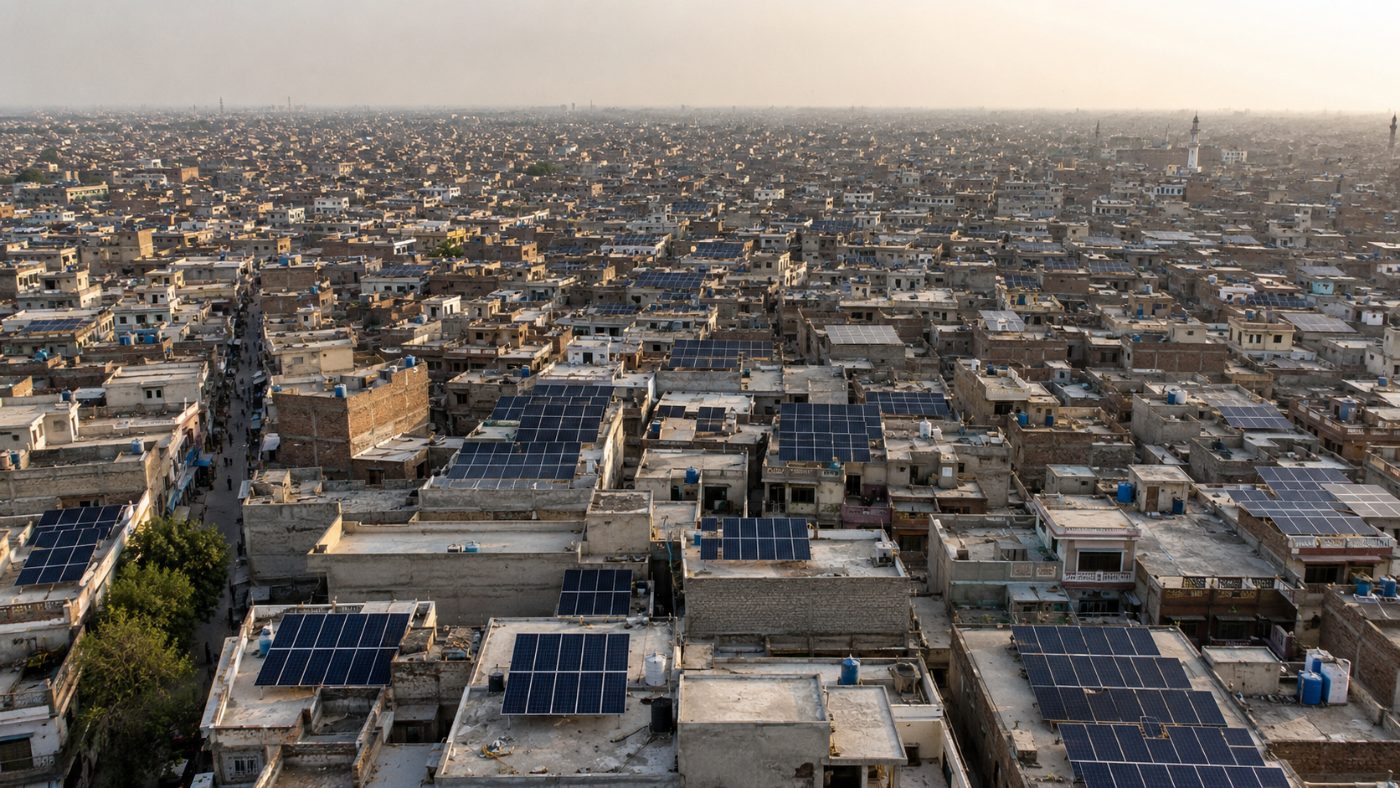
Across Pakistan's cities, flat rooftops have filled with solar panels bought to escape the grid. Illustration: Watts & Wild.
In the summer of 2024, with electricity bills in Pakistan climbing past what many families earned in a week, people stopped arguing with the grid and started quietly leaving it. Not in protest, and not because of a climate campaign, but on their own roofs, one panel at a time. The Pakistan rooftop solar boom was not planned by anyone, yet by the time the numbers were added up, the country had pulled off one of the fastest solar surges the world has seen.
The scale is startling for a place that barely registered on solar maps a few years ago. As CNN reported in May 2025, Pakistan imported around 17 gigawatts of solar panels in 2024 alone, roughly double the year before, buying so aggressively it became one of the largest panel importers on the planet. This was not a state megaproject or a green pledge signed at a summit. It was millions of households, shopkeepers and factory owners making the same cold calculation at the same time.
How power got too expensive to use
To understand the rooftops, you have to start with the bill. For years Pakistan signed deals to build thermal power plants on borrowed money, promising to pay the owners whether or not the plants actually ran. When the currency fell and the country leaned on the International Monetary Fund, subsidies were stripped away and the cost of all those idle plants landed on consumers.
The result was brutal. Electricity prices in Pakistan more than doubled in three years, turning the monthly bill into one of the heaviest costs a family or a small business faced. The World Resources Institute called it a perfect storm: punishing grid tariffs on one side and collapsing solar panel prices on the other. When staying connected hurts that much, people start looking for the exit.
The Chinese panel that changed the math
The exit was made in China. A glut of solar manufacturing there sent panel prices into free fall, and Pakistan bought hungrily, taking in roughly 1.4 billion dollars of Chinese panels in just the first half of 2024. A product that once felt like a luxury became something a shopkeeper could finance.
That flipped the arithmetic completely. When grid power is this expensive, a rooftop system can pay for itself in only a couple of years and then deliver nearly free electricity for two decades. For a factory running machines all day, or a household sweating through long, hot afternoons, the panels stopped being an environmental statement and became the obvious financial move.
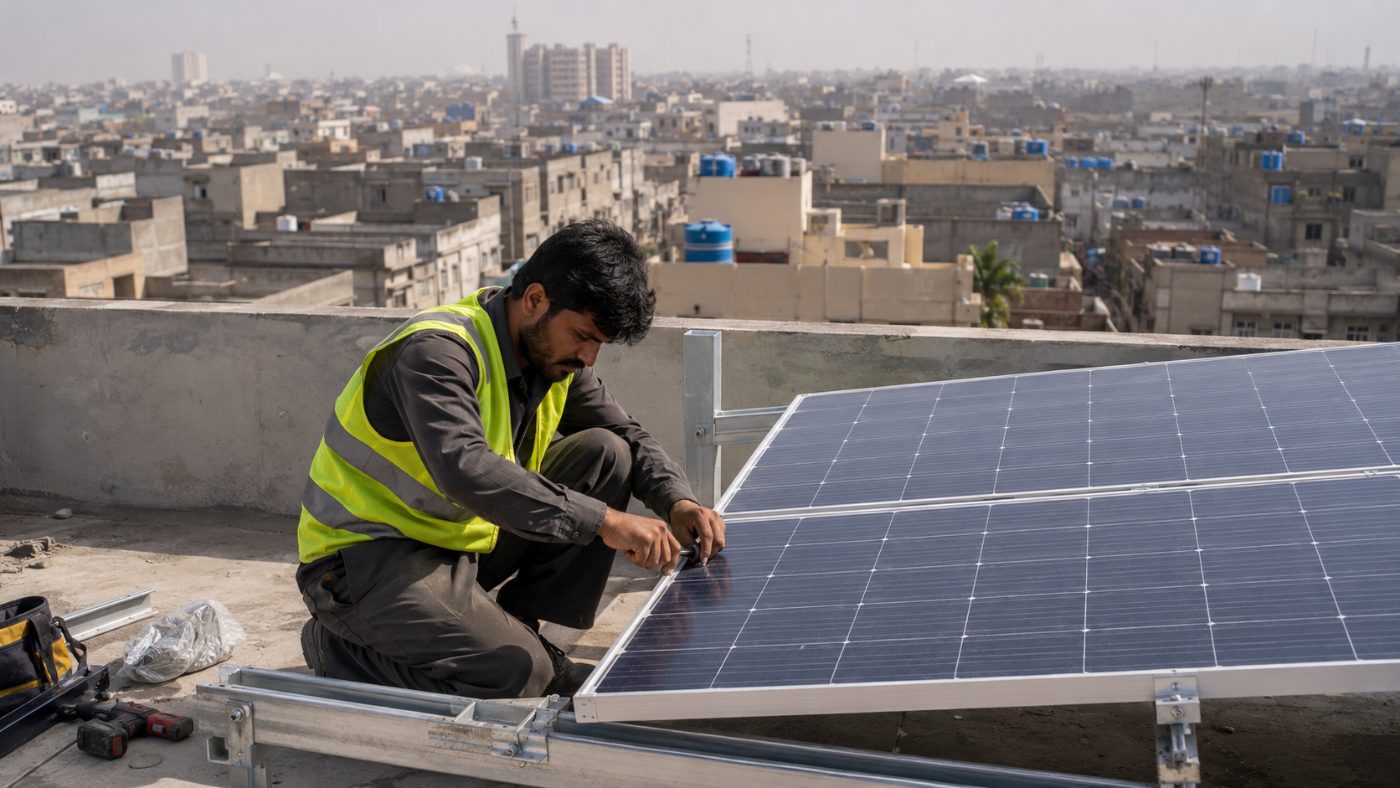
Pakistan rooftop solar became a revolution with no leader
What makes Pakistan's story unusual is that nobody was in charge of it. There was no national plan, no flagship project to cut a ribbon on, just a vast number of separate decisions that added up to a movement. People did not wait for the grid to fix itself. They routed around it.
The numbers climbed fast. Net-metered connections, the rooftops officially wired to sell power back, jumped from about 226,000 in October 2024 to roughly 283,000 just two months later, and rooftop capacity reached around 5.3 gigawatts by April 2025, close to ten times what it had been two years earlier. By 2025, solar was supplying more than a quarter of the country's electricity, making the sun Pakistan's single largest power source.
Who actually went solar first
The boom did not touch everyone equally, and that matters. The early movers were the big electricity users, the people with the roof space, the heavy bills and the cash to buy a system. Industrial sites make up roughly two thirds of the officially metered installations, while ordinary homes are a much smaller slice.
You can see the shift in the strangest places. Farm electricity demand fell by more than a third in 2024 as tube wells that once pumped water on grid power switched to panels. Factories trimmed their connections, malls put arrays on their roofs, and the customers the grid relied on most to cover its costs were precisely the ones walking away first.
The honest catch: someone still has to pay for the grid
Here is the uncomfortable part of a feel-good solar story. The wires, the transformers and above all those expensive idle plants still have to be paid for, and that cost is now spread across a shrinking group of customers. As the big users leave, the bill for everyone left behind goes up, which pushes a few more to leave, which raises the bill again.
The figures are already stark. Electricity sales actually fell about 3 percent in 2024 even as the number of customers grew, and industrial and farm sales dropped far more. The government estimated that rooftop owners had shifted hundreds of millions of dollars of cost onto everyone else by late 2024, a burden projected to balloon into the tens of billions over the next decade if nothing changes. An analysis by the Institute for Energy Economics and Financial Analysis put it bluntly, that grid defection in Pakistan is less a vote for clean energy than an economic escape route.
The people who cannot escape are the ones who can least afford it: renters, families in flats with no roof of their own, and the poor who cannot find the upfront money for panels. They stay on the grid and watch their share of its costs rise. In response, the government has moved to cut the rate it pays rooftop owners for the power they send back, a deeply unpopular fix that tries to slow the exodus.
What Pakistan is showing the rest of us
Strip away the local detail and Pakistan looks like a preview. It is what happens when cheap solar meets a grid that has become too expensive and too unreliable to trust, anywhere in the world. The technology has run out ahead of the rules, and clean power is winning not because of a climate target but because it is simply cheaper.
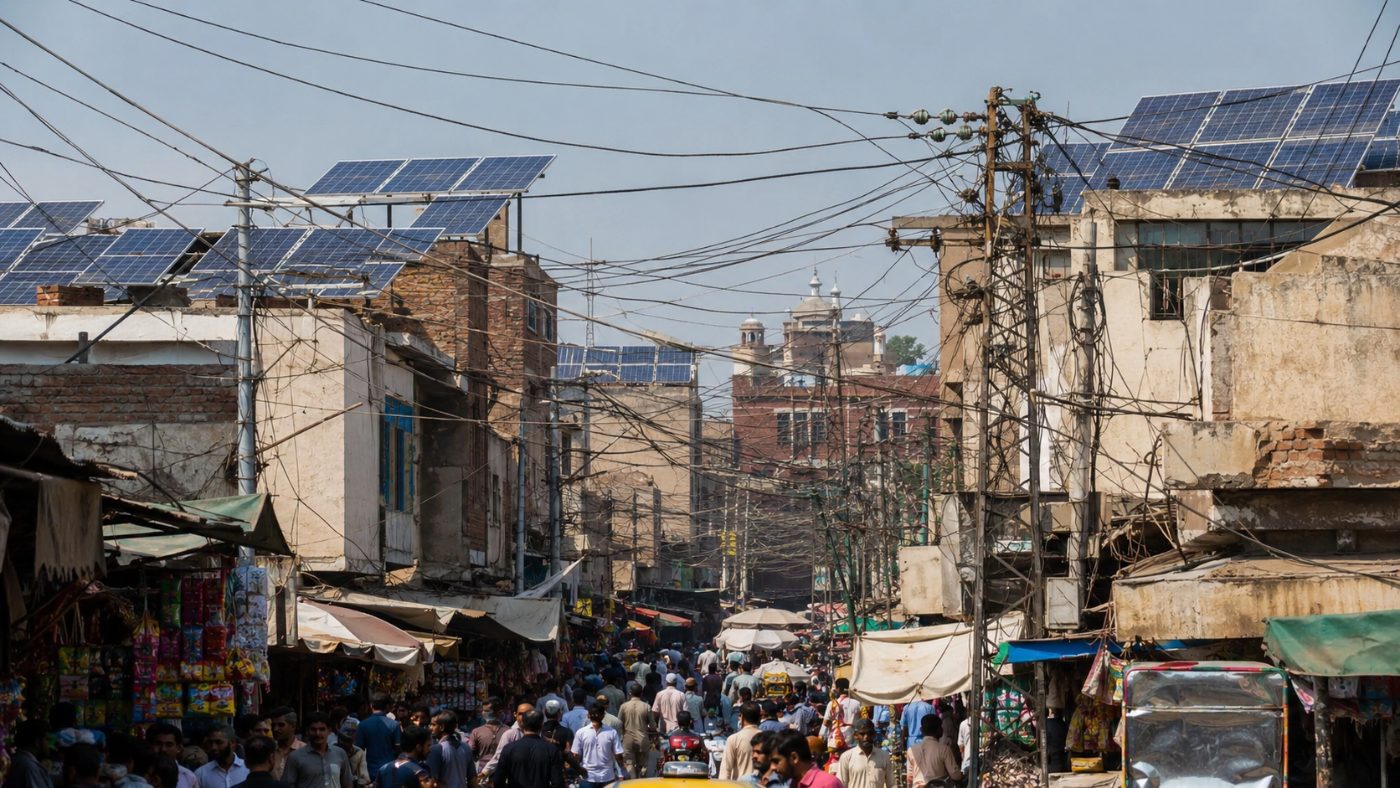
A country borrowed billions to build power plants, and its people answered by quietly building their own power supply on the roof instead. The panels were the easy part. The hard part, sharing the cost of the grid that the winners are leaving behind, is the fight everyone now has to have. If your power company doubled your bill, and a roof of panels paid for itself in two years, how long would you stay on the grid? Tell us what you think in the comments.
Related reading: China is building a 400 km solar great wall across a desert it once called the Sea of Death, aiming for 100 GW by 2030 to help power Beijing.