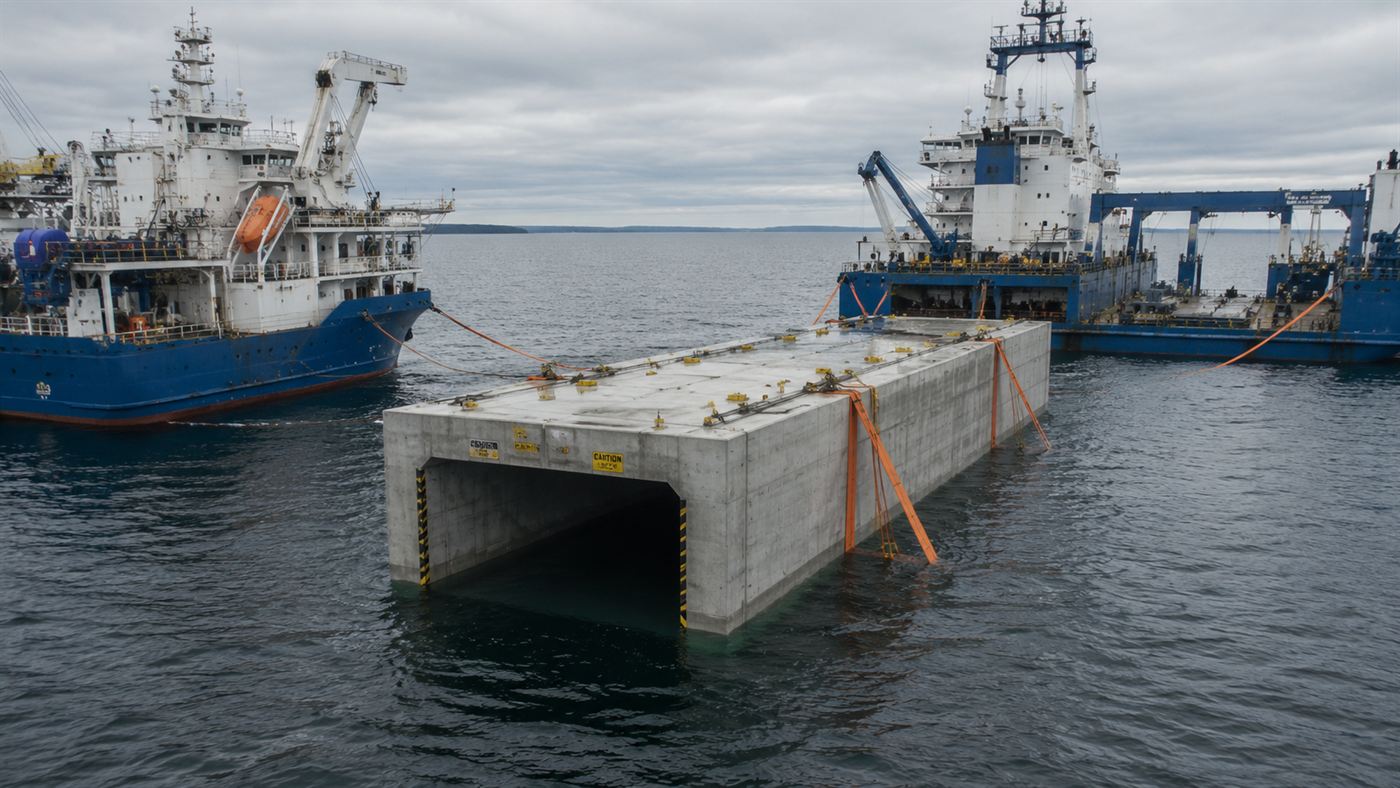
To stop a dam from drowning Ramesses II's 3,000-year-old temple, engineers sawed it into 1,042 blocks and rebuilt it higher up the cliff
In the 1960s Egypt was building a dam that would back up the Nile into a lake big enough to swallow the colossal temples of Abu Simbel, carved into a cliff thirty-three centuries ago. Rather than let Ramesses II drown, the world did something audacious: the Abu Simbel relocation cut the entire monument into pieces and carried it up the hill.
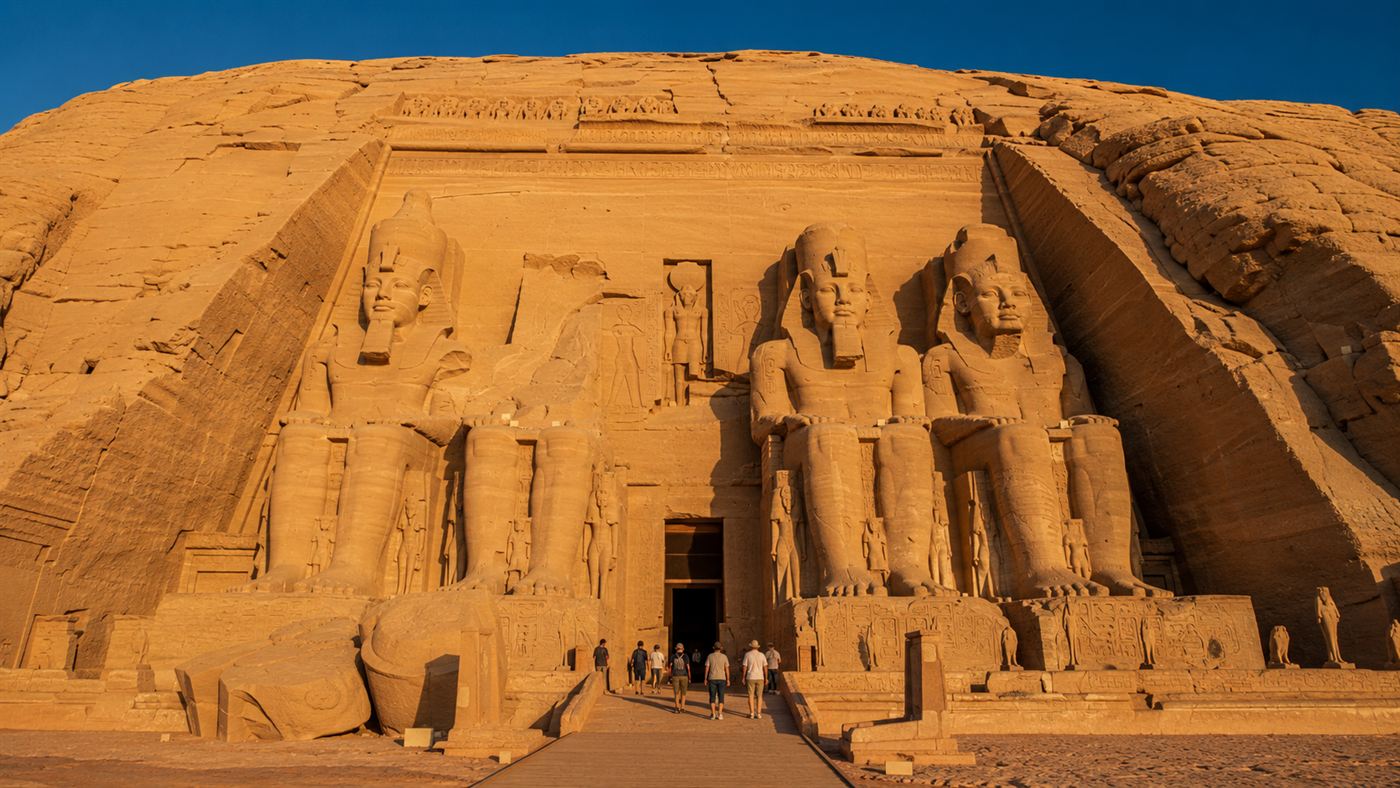
The four 20-metre colossi of Ramesses II at the Great Temple of Abu Simbel. Illustration: Watts & Wild.
The temples were carved around 1264 BC for the pharaoh Ramesses II, the larger one guarded by four seated statues of the king some twenty metres tall, the smaller one dedicated to his queen, Nefertari. For more than three thousand years they sat above the Nile in Nubia, in what is now southern Egypt. Then the modern world decided to dam the river.
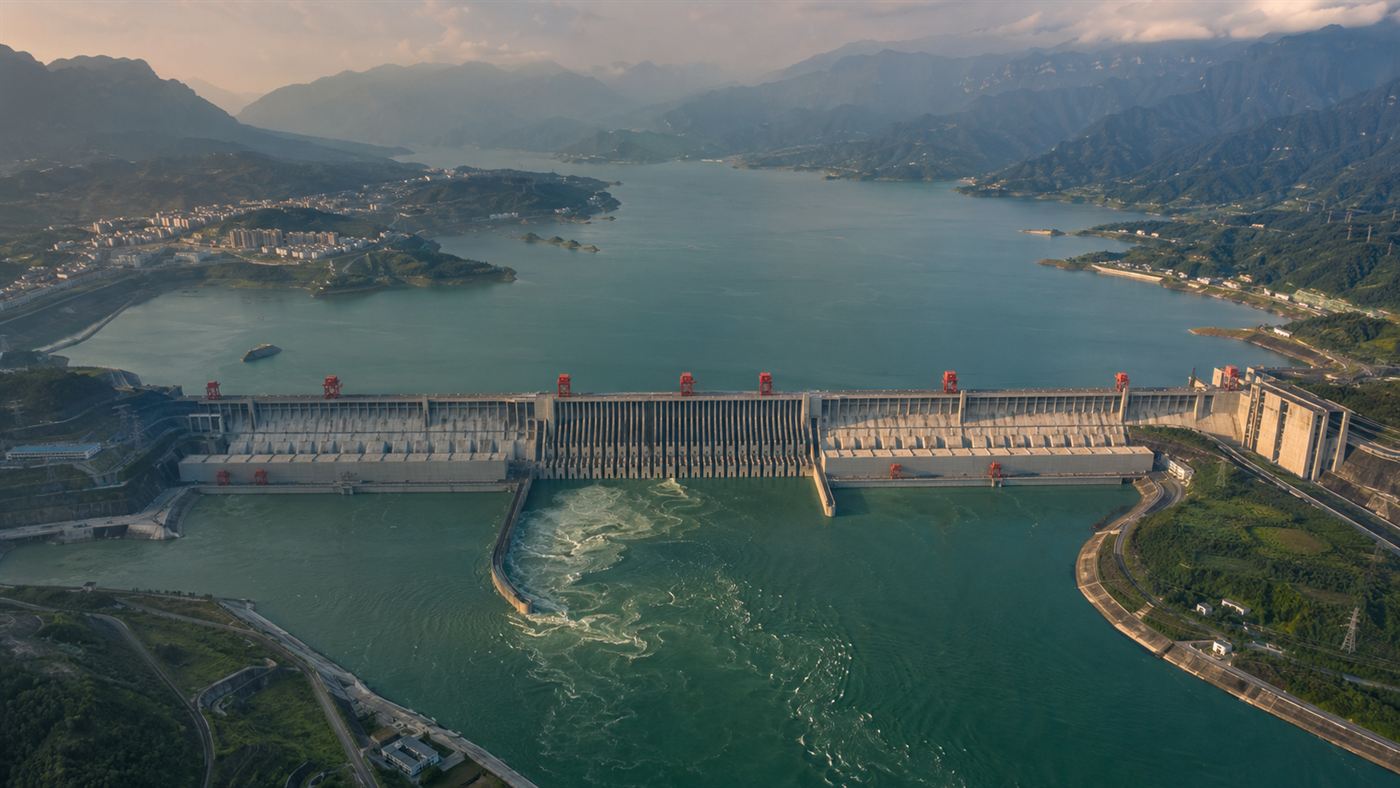
The Aswan High Dam, begun in 1960, was meant to tame the Nile's floods and generate power for a growing nation. But the lake it would create, Lake Nasser, was going to rise straight over Abu Simbel and bury it under tens of metres of water. Egypt had to choose between the dam its future needed and the monuments its past demanded, and it refused to choose.
How the world agreed to save Abu Simbel
On 8 March 1960, UNESCO launched the International Campaign to Save the Monuments of Nubia, and the response was extraordinary. As UNESCO records, around fifty countries rallied to the cause, sending money and engineers, and in the end forty technical missions helped rescue twenty-two separate monuments along the doomed stretch of river. Abu Simbel was the hardest and most famous of them all.
The plan that won out was almost absurd in its boldness. Engineers would not try to drag the temples whole or wall them off from the lake. They would take them apart, stone by stone, lift the pieces to safety, and put the whole thing back together exactly as it had been, only higher.
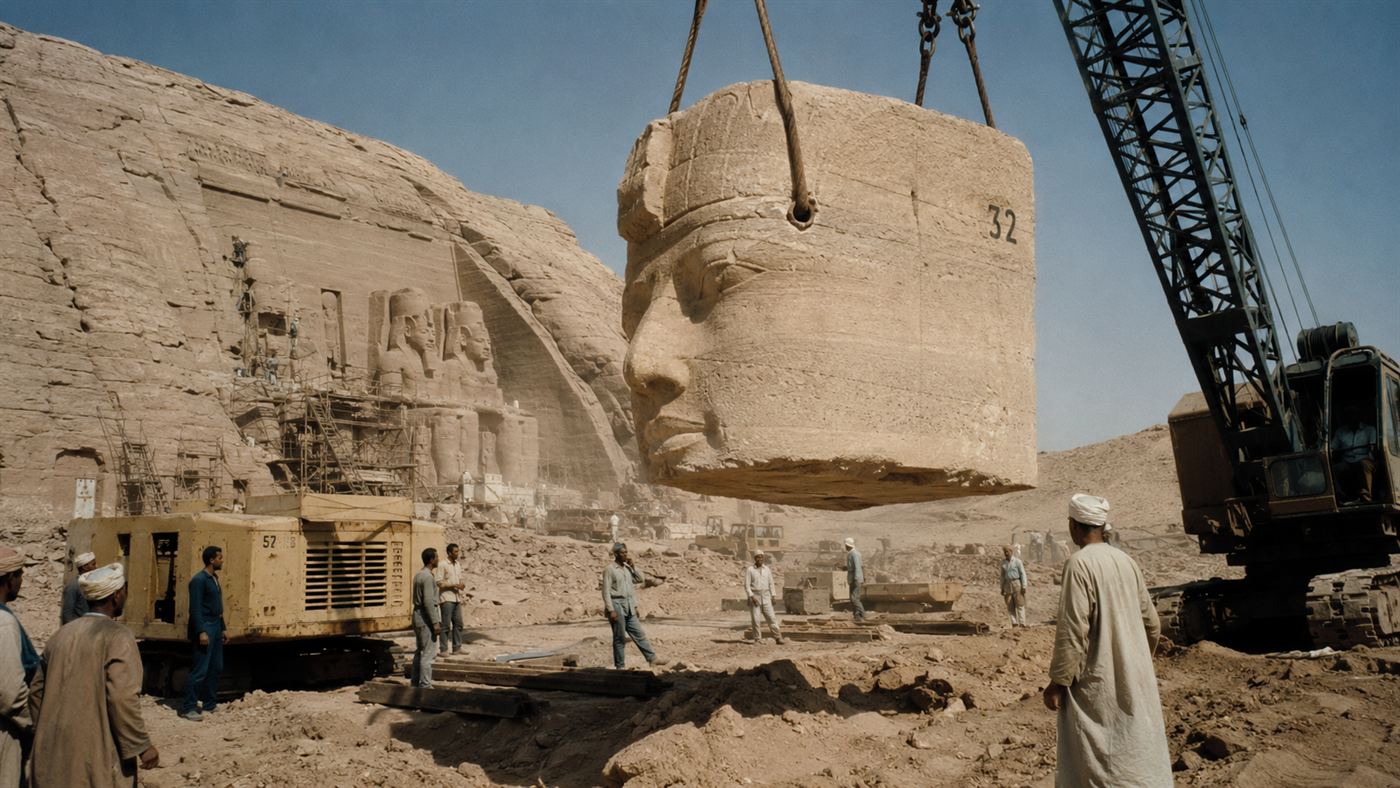
Cutting a mountain temple into 1,042 numbered blocks
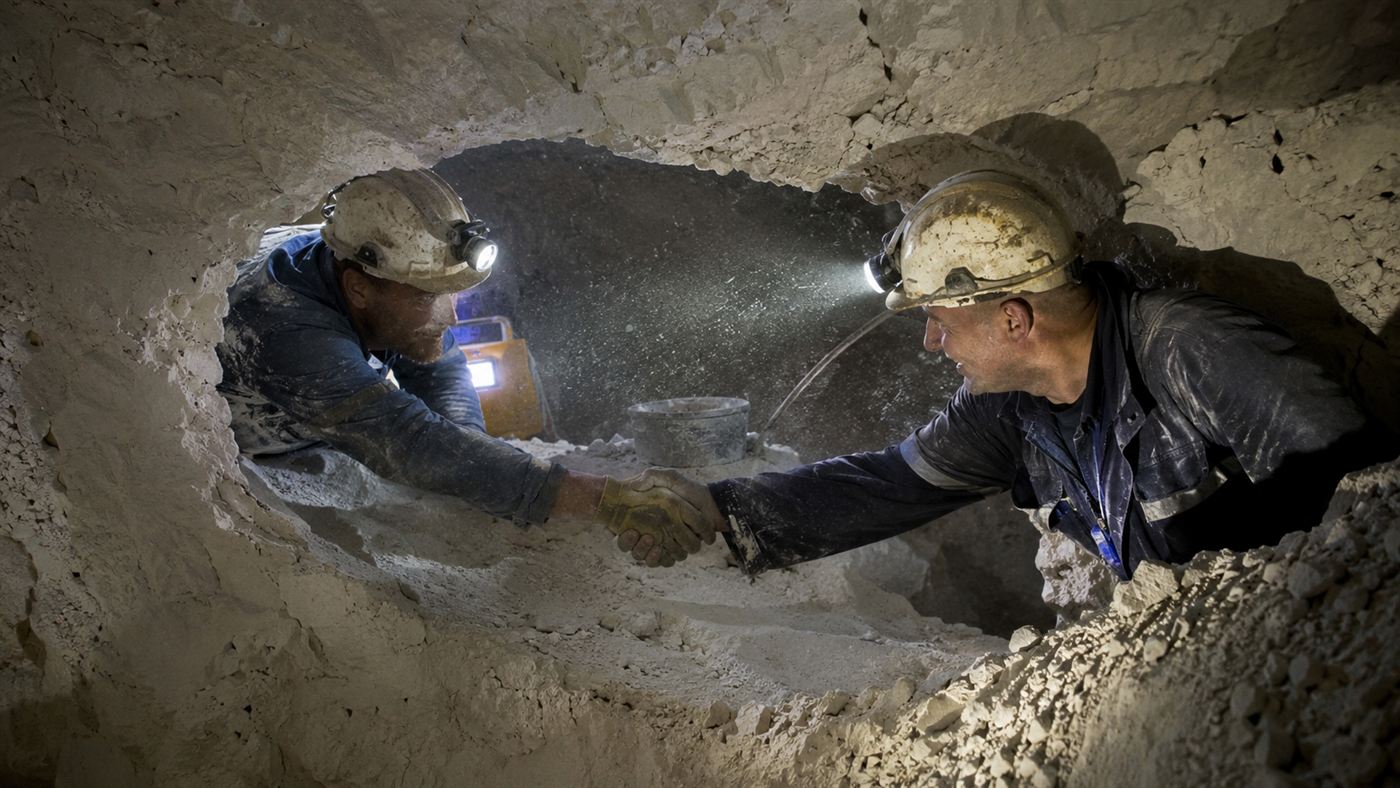
Between 1964 and 1968, crews worked against the rising water with hand saws, slicing the temples and their statues into more than a thousand blocks. As We Build Value details, the Great Temple came apart into 807 pieces and the smaller one into 235, each weighing as much as thirty tonnes. Every block was numbered, lifted out, and stored while a new home was prepared.
That new home was a fake hill. On higher ground, sixty-five metres up and about two hundred metres back from the original site, builders raised vast concrete domes and reassembled the temples inside them, then packed the structure with rock so it looked like the natural cliff the pharaohs had carved. The seams between blocks are there if you know where to look, but the illusion is nearly perfect.
The trick they could not afford to get wrong
The hardest part was not the lifting but the aiming. The original temple had been cut so that twice a year the rising sun shoots straight down its sixty-metre passage and lights up the gods seated in the inner sanctuary, leaving only Ptah, lord of the underworld, in shadow. Rebuild it a degree off and that 3,000-year-old piece of solar clockwork would break.
So the engineers reconstructed the orientation with painstaking care, and the sunbeam still reaches the back wall around the same dates each February and October. A monument older than almost anything else standing was taken to bits and put back together, and the ancient astronomers' alignment survived the move.
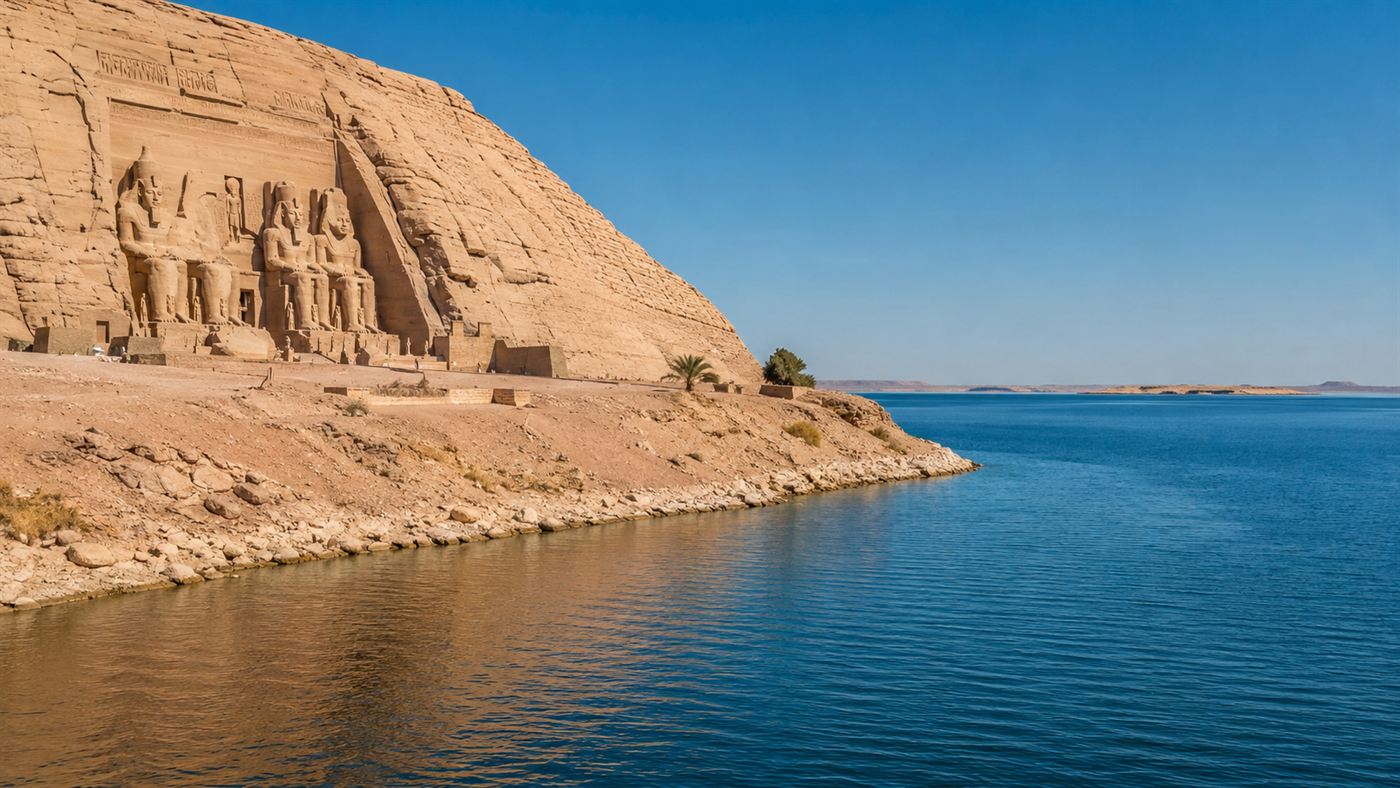
Why was Abu Simbel moved?
Because the Aswan High Dam's reservoir, Lake Nasser, was going to flood the site completely. The dam was vital to modern Egypt for flood control and electricity, but its lake would have swallowed Abu Simbel along with much of ancient Nubia, so the temples were lifted clear of the water rather than abandoned to it.
The honest catch
The rescue is rightly celebrated, but it has a shadow. The same lake that the temples were saved from drowned the homeland of the living Nubian people, and well over a hundred thousand of them were forced from villages their families had occupied for generations. The world spent around forty million dollars and the goodwill of dozens of nations to move the carved stones of a long-dead king, while the people who actually lived on that land were displaced. It is also worth noting that the popular claim that the sun alignment shifted by exactly one day after the move is debated, with the truth blurrier than the neat story suggests. The engineering was a genuine marvel. What it could not do was save everything worth saving.
A 3,000-year-old temple was sawn into a thousand pieces and rebuilt higher up to outrun a dam, sun alignment and all. Was the Abu Simbel relocation a triumph of human ingenuity, or a reminder of who gets saved and who gets moved? Tell us what you think in the comments.
Related reading: Another giant dam reshaped a landscape so completely it measurably changed the planet itself.