Every couple of years, sleek cars powered by nothing but sunlight race 3,000 kilometres across the Australian outback in the World Solar Challenge
The World Solar Challenge sends solar-powered cars on a 3,000-kilometre dash across the Australian desert, from Darwin to Adelaide, running on sunshine alone. It began with one adventurer's hunch in the 1980s, and it has quietly trained a generation of clean-energy engineers.
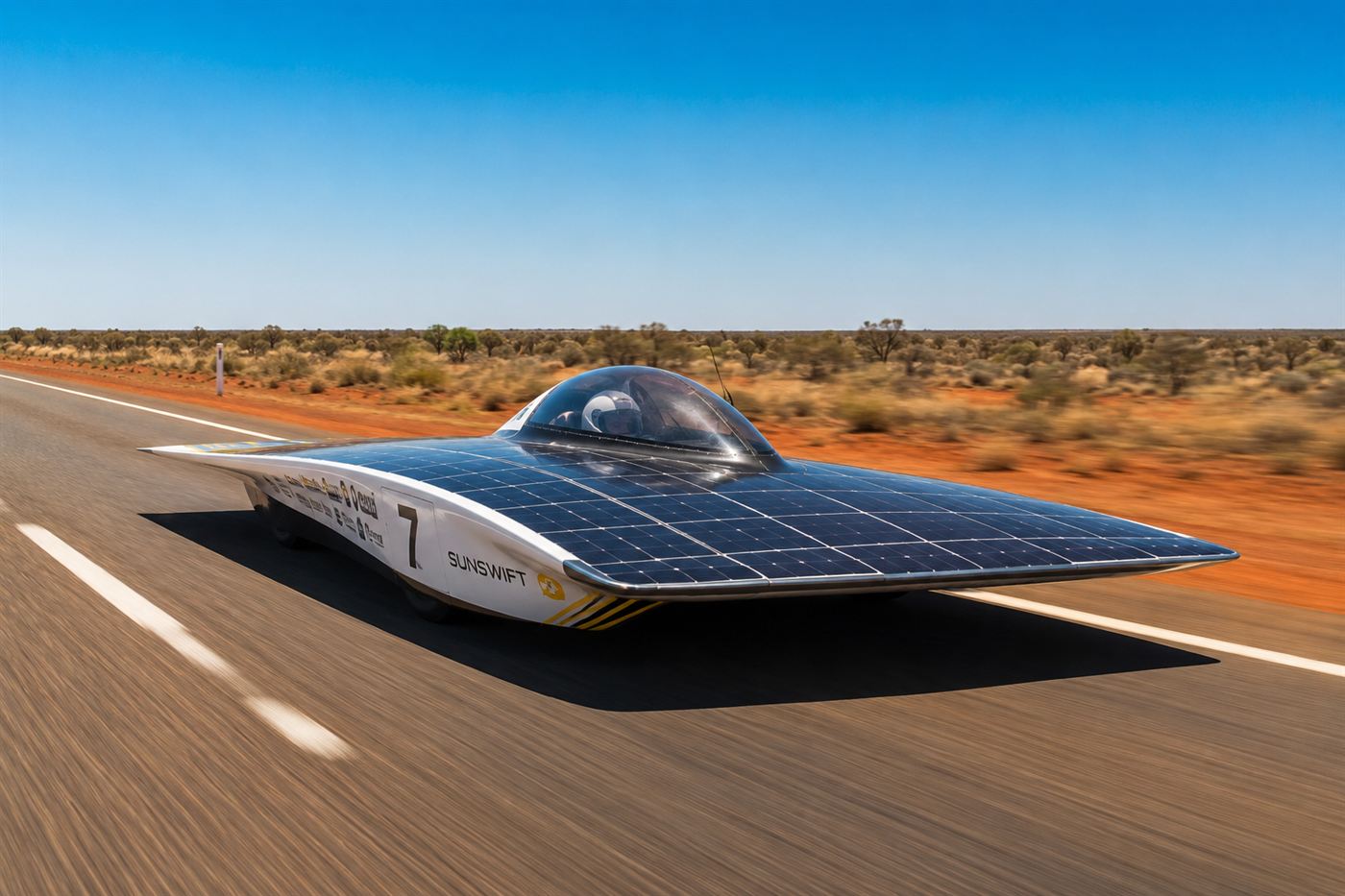
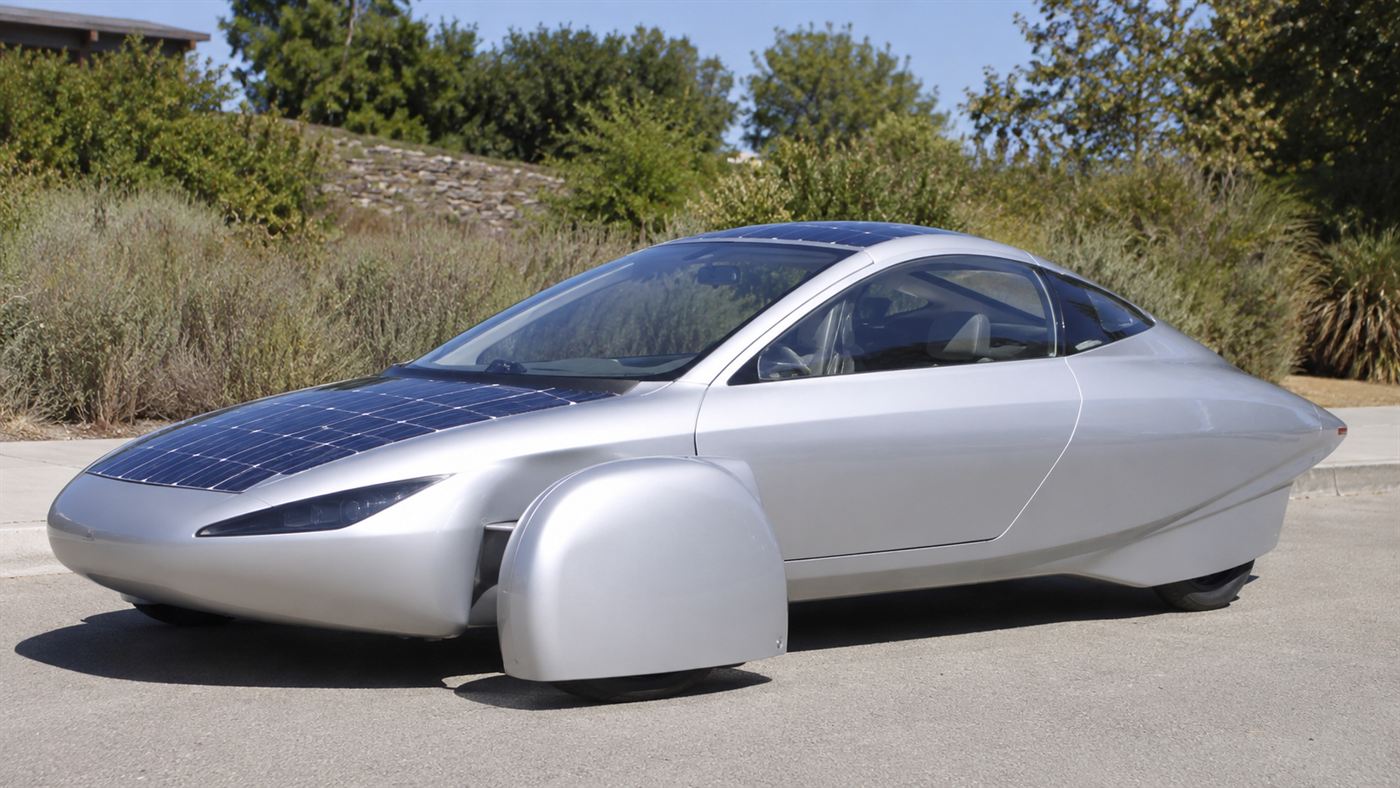
A solar car races across the Australian outback in the World Solar Challenge. Illustration: Watts & Wild.
The World Solar Challenge is the strangest car race on Earth. There is no fuel, no charging, no pit stop to plug in. Instead, teams from around the world build flat, glittering, insect-like cars covered in solar panels and point them down the highway that runs the length of Australia, from Darwin in the tropical north to Adelaide on the southern coast, around three thousand kilometres away. The only thing that moves them is the sun.
It is a genuine endurance race across one of the emptiest places on the planet. As the event is documented, the cars cover roughly 3,000 kilometres of outback, racing through the day and stopping to camp at sunset, then setting off again at dawn to chase the route south. To finish at all is hard; to win, a team has to turn sunlight into speed more efficiently than anyone else.
What is the World Solar Challenge? The World Solar Challenge is a race for solar-powered cars across about 3,000 kilometres of the Australian outback, from Darwin to Adelaide. Held since 1987, the cars run on sunlight alone, captured by solar cells on their bodies, and the best teams average around 90 km/h.
The World Solar Challenge, the strangest race on Earth
Part of what makes the World Solar Challenge so compelling is the setting. The route runs through the red heart of Australia, long straight roads through desert and scrub where the sun is brutal and reliable, exactly the conditions a solar car needs. The teams travel as small convoys, the solar car flanked by support vehicles, inching down the continent at the mercy of the weather. A passing cloud can cost a race; a clear sky is everything.
The cars themselves look like nothing else on the road, low slung and impossibly thin, more like a tabletop on wheels than a vehicle, with a tiny bubble cockpit for a single driver lying almost flat. Every shape is dictated by the need to catch sunlight and slip through the air with as little resistance as possible.
One adventurer's idea
The World Solar Challenge exists because of one restless man. Hans Tholstrup, a Danish-born adventurer who had already circled Australia in a small boat, grew worried in the 1980s about the world's reliance on fossil fuels, and decided to make a point. He built what is often called the world's first solar car, "The Quiet Achiever", and drove it right across Australia, from Sydney to Perth, powered only by the sun. The trip took twenty days, and it proved that a solar car was not just a toy.
Out of that journey grew the race. The first World Solar Challenge was held in 1987, with twenty-three teams, and was won by a sleek car called Sunraycer built by General Motors, ahead of entries from Ford and a Swiss engineering college. A stunt had become a serious competition, and it has run roughly every two years ever since.
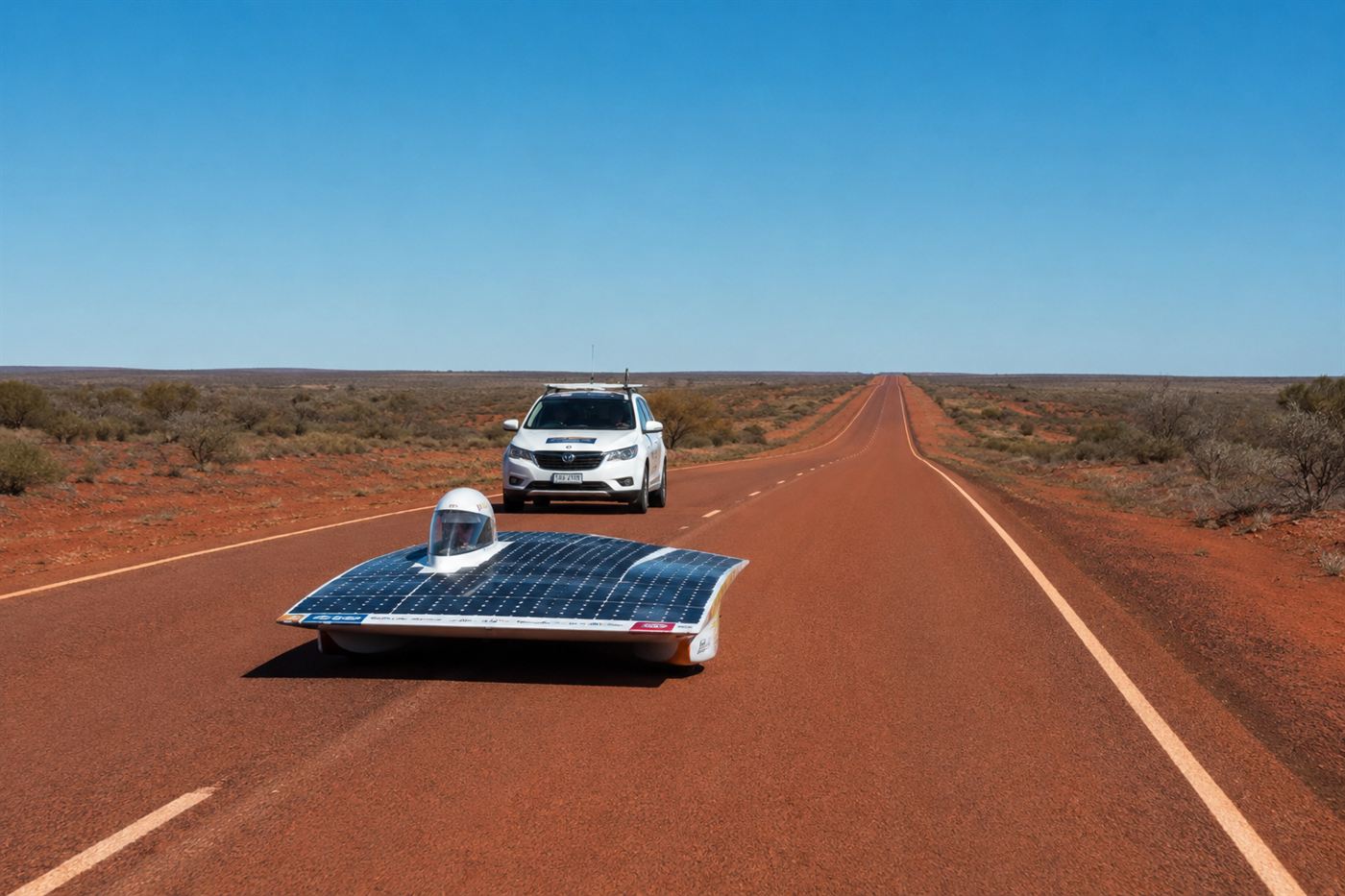
Driving on a few square metres of sunshine
The engineering challenge at the heart of the World Solar Challenge is severe, and it comes down to scarcity. A solar car can only carry a few square metres of photovoltaic cells, and even in the fierce outback sun that is a tiny trickle of power compared with what an engine or a big battery delivers. The cells convert sunlight into electricity directly, freeing electrons in their silicon to make a current, which runs an electric motor and tops up a small battery to cover clouds and hills.
Because the power is so limited, everything else has to be ruthlessly efficient. The cars are feather-light, slip through the air with almost no drag, and roll on hard, thin tyres to cut friction. The whole machine is an exercise in wasting nothing, squeezing every last metre out of each watt the sun provides. That discipline, getting the most from very little energy, is exactly the skill a clean-energy world needs.
The student dynasties
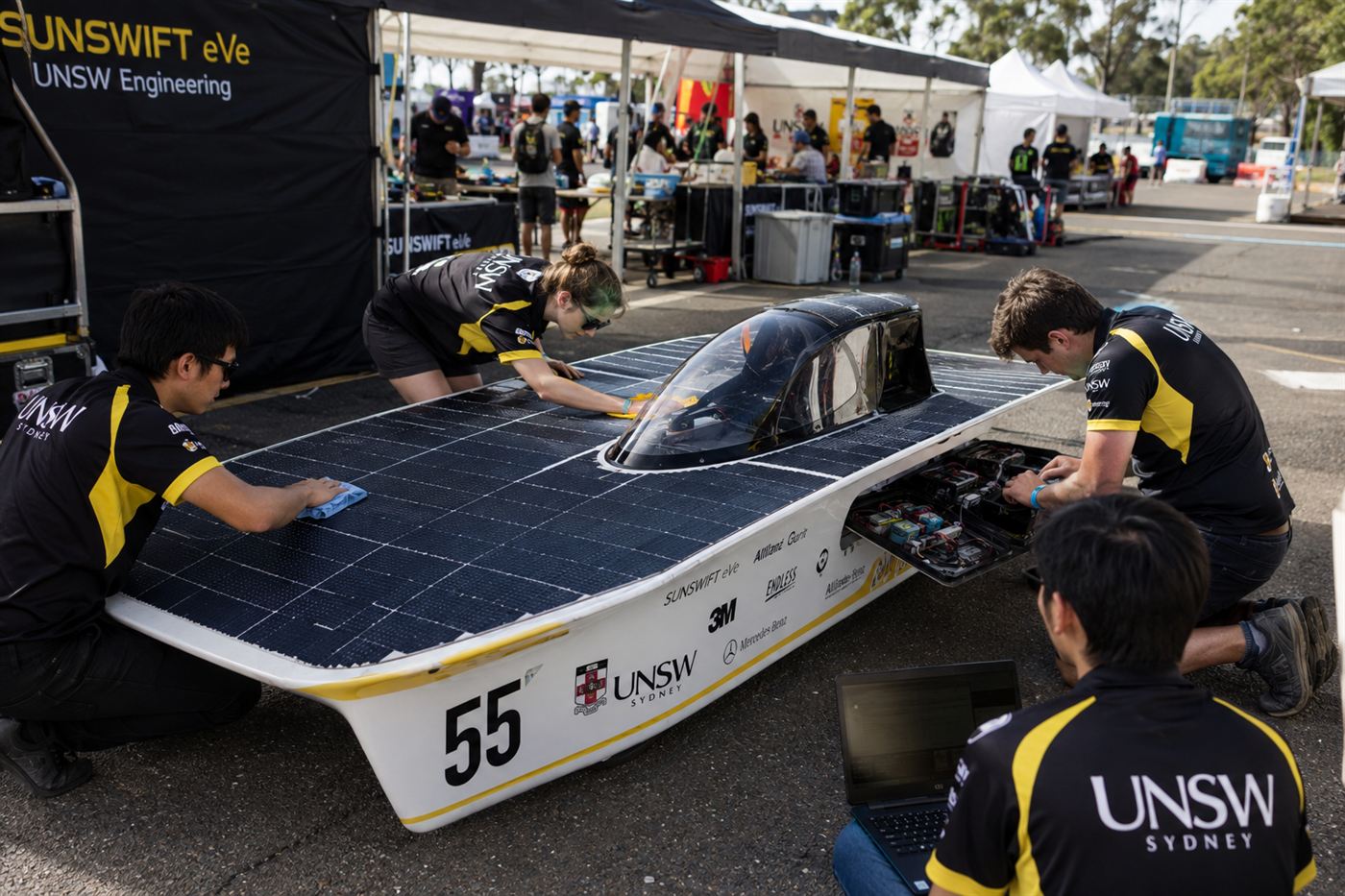
Over the decades the World Solar Challenge has become dominated by universities, and a few of them have built genuine dynasties. The team from Delft University of Technology in the Netherlands, racing cars called Nuna, has won the main class again and again since 2001, while Tokai University in Japan took the title in 2009 and 2011. The best of these cars now average around ninety kilometres an hour across the desert, on sunshine alone, the result of thousands of hours of student work on aerodynamics, electronics and solar cells.
A solar family car
In 2013 the race added a new category, the Cruiser Class, for more practical solar cars carrying two to four people and judged partly on how usable they are, not just how fast. Its great success story is Stella, built by students at Eindhoven University of Technology and billed as the world's first solar-powered family car. Stella and its successors won the Cruiser Class every time it was held, and the cars were designed to be energy-positive, producing more electricity over a trip than they used. Several of the engineers behind them went on to launch real solar-car companies, carrying the World Solar Challenge out of the desert and into the wider world.
The honest catch
It is important not to oversell what these cars are. A World Solar Challenge racer is not a car you could buy or drive to work; it is a fragile, expensive, one-off prototype, often carrying a single person lying flat, that only performs in bright, open sunshine. An ordinary car cannot run on a solar roof alone, because its body is far too small and too heavy to catch enough sunlight, and that is unlikely to change. The dream of a normal family car powered purely by its own panels remains, for the most part, a dream.
What the race really produces is not a product but knowledge. The relentless focus on efficiency, light weight, aerodynamics and squeezing power from a small solar array feeds directly into ordinary electric cars, into batteries and motors and the broader business of doing more with less energy. And the people matter as much as the technology: the World Solar Challenge has trained thousands of young engineers in exactly the problems a cleaner world has to solve. The cars crossing the outback on sunlight are not the future of driving, but the minds inside them very well might be.
Cars that cross a continent on nothing but sunlight, built mostly by students. Would you rather see a solar car in every driveway, or just the clever engineers these races produce? Tell us in the comments.
Related reading: Aptera, the three-wheeled solar car that aims to charge itself from the sky.