On the thin-aired road up Pikes Peak, an electric Volkswagen beat a century of petrol cars to set the fastest time ever, because its motors never gasped for breath
Every June, cars race twelve miles up Pikes Peak to a summit nearly three miles high, where the air is so thin that petrol engines choke. In 2018 a silent electric Volkswagen used that thin air against them, beating every combustion car in history to the top.
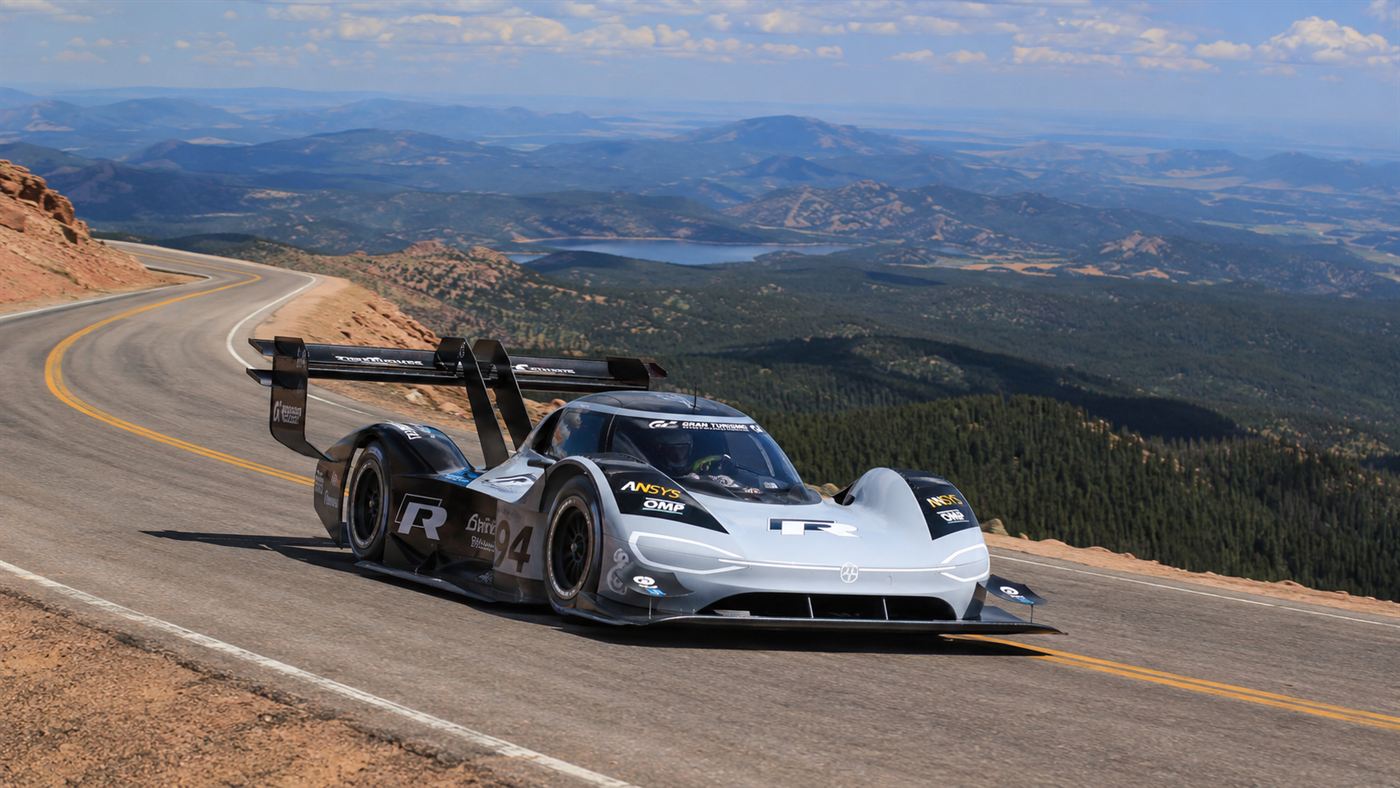
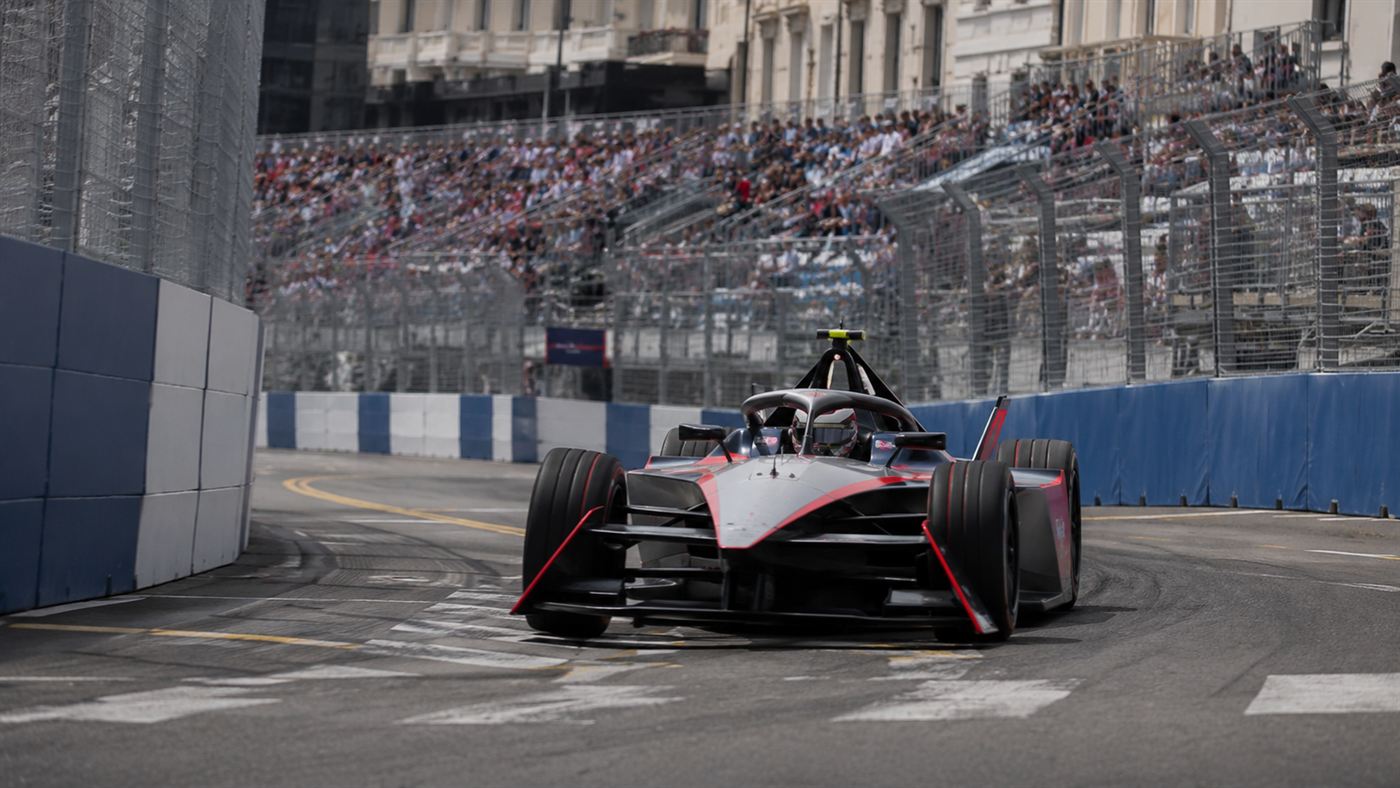
The electric Volkswagen ID.R climbing Pikes Peak in 2018. Illustration: Watts & Wild.
The road up Pikes Peak is a peculiar kind of cruel. It runs for about twelve and a half miles up the side of a Colorado mountain, through roughly 156 corners, many of them edged by nothing but a long drop, and it finishes in the sky, at a summit more than 14,000 feet above the sea. The race held on it every summer, the Pikes Peak International Hill Climb, is more than a century old, and for most of that century the mountain itself has been the toughest opponent in it.
What makes the climb so punishing is not just the corners but the altitude. The higher a car goes, the thinner the air becomes, and for an ordinary engine thin air is poison. In 2018 Volkswagen brought a car that simply did not care about that problem, and it rewrote the record book.
What is the Pikes Peak record? In 2018 the electric Volkswagen ID.R, driven by Romain Dumas, climbed Pikes Peak in 7:57.148, the first car ever under eight minutes. It beat the fastest petrol car's time by about 16 seconds, helped by electric motors that do not lose power in thin air.
Pikes Peak, the race to the clouds
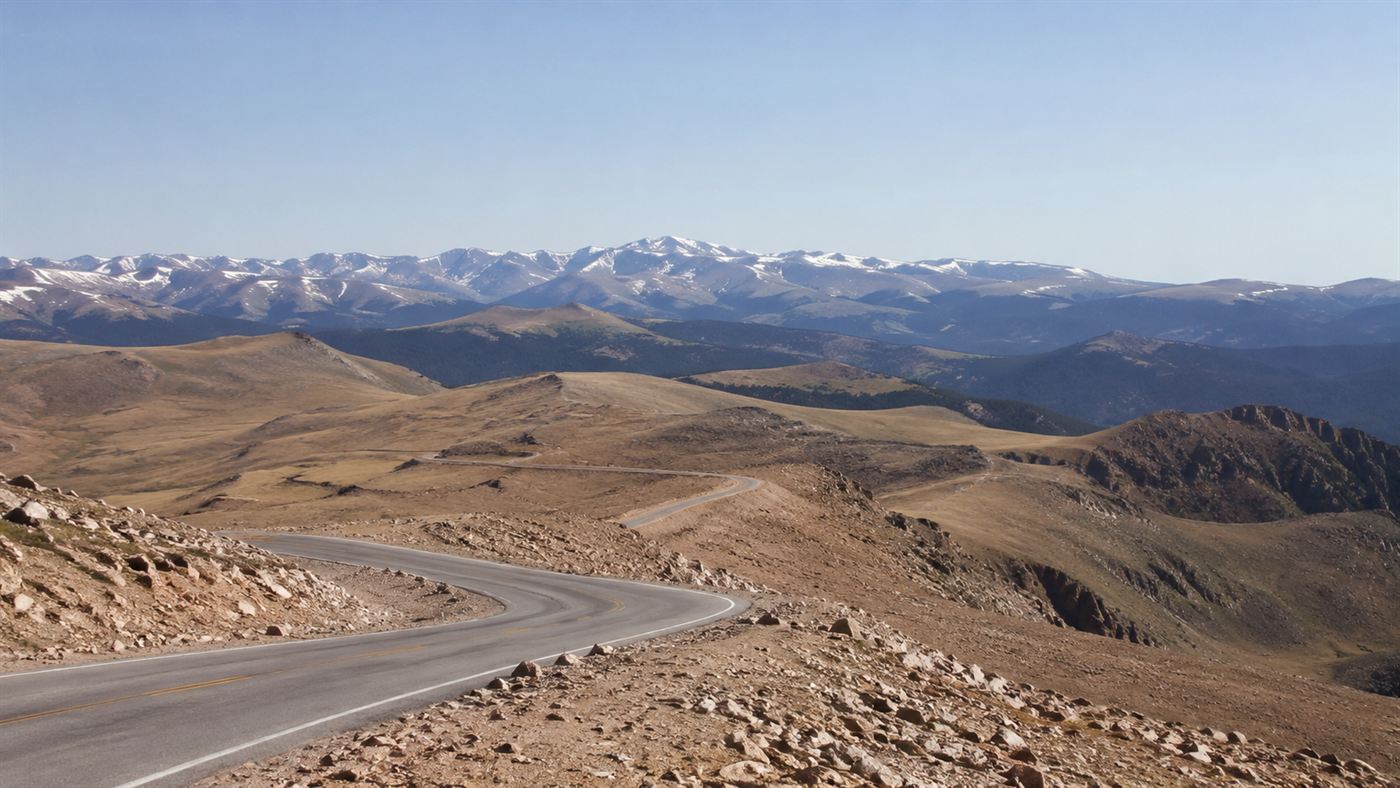
They call Pikes Peak the Race to the Clouds, and the name is barely an exaggeration. A car that starts the climb in pine forest finishes it on bare rock above the treeline, in air so thin that spectators feel light-headed. Drivers have to cope not only with the relentless turns and the lack of barriers but with a machine that grows weaker beneath them with every hundred metres of height. It has always been a race against the mountain as much as against the clock.
For decades the record was a petrol story, traded between rally cars and specials with monstrous turbocharged engines fighting to breathe. The benchmark to beat had been set in 2013 by the rally legend Sébastien Loeb, whose petrol-powered car reached the summit in 8 minutes and 13 seconds, a time that looked as though it might stand for years.
Why thin air chokes a petrol engine
To understand what happened next, you have to understand what altitude does to an engine. A petrol engine makes power by burning fuel with oxygen from the air, and the amount of power it can produce depends on how much oxygen it can cram into each cylinder. Near the top of Pikes Peak there is far less air to draw on, and an engine there can lose something like 20 to 30 percent of the power it makes at sea level. A car that storms off the start line arrives at the summit gasping, a shadow of its full strength.
Turbochargers can claw some of that back by force-feeding air into the engine, which is why the fastest petrol climbers have always been heavily turbocharged. But it is a fight against physics, and the mountain always wins a little. The thinner the air gets, the harder the engine has to work simply to stay strong, and the closer to the clouds, the weaker it becomes.
An electric car that does not breathe
An electric motor does not burn anything. It makes its power from electricity and magnetism, and it does not need a single molecule of oxygen to do it. That means an electric racing car produces exactly as much power at the windswept summit of Pikes Peak as it does at the bottom. The thin air that quietly strangles a petrol engine all the way up the mountain does nothing at all to an electric one.
Volkswagen understood that this was not a small advantage but the whole game. The mountain that had always punished engines was, for an electric car, no obstacle to power at all, only to grip and aerodynamics. So the company built a car to take that gift and run with it: the ID.R, a purpose-built electric prototype designed for one climb and one record.
Seven minutes, fifty-seven seconds
The ID.R was light and brutally focused. It carried two electric motors making around 680 horsepower, weighed under 1,100 kilograms even with its battery, drove all four wheels, and wore an enormous rear wing to press it into the road. It even used regenerative braking on the way up, clawing back energy in the corners to feed the battery for the straights. Volkswagen built the whole thing in about 250 days.
On 24 June 2018, with Romain Dumas at the wheel, it climbed Pikes Peak in 7 minutes and 57.148 seconds. It was the first car of any kind to break eight minutes on the mountain, and it beat Loeb's all-time petrol record by roughly 16 seconds, an enormous margin on a climb measured in fractions. An electric car had not merely won its own class; it had set the fastest time in the entire history of the race, against everything petrol could throw at it.
The honest catch
It is worth being precise about what the record does and does not prove. The ID.R was a bespoke racing prototype with no real relationship to any car you can buy; it was built to do exactly one thing, and it cost a fortune to do it. The headline that electric beat petrol is true, but it is sharpest in this very specific arena, a long climb into thin air where combustion engines are crippled and electric motors are not. Lower down, at sea-level circuits, petrol prototypes remain ferociously fast.
And the altitude advantage, real as it is, was not the only reason the car won. Its low weight, its all-wheel-drive traction, its aerodynamics and its regenerative braking all mattered, and the team still had to manage changing weather and the way downforce itself fades in thin air. But the symbolism was hard to miss. On the one mountain in motorsport where breathing is the whole problem, the car that did not need to breathe went quicker than anything had ever gone before. The Pikes Peak record had become, fittingly, an electric one.
On the one climb where thin air is the great equaliser, the car that did not need air beat a century of engines. Does an electric outright record at Pikes Peak impress you, or does the altitude advantage feel like cheating? Tell us in the comments.
Related reading: Formula E, the championship that took electric racing into the heart of the city.