After a 140-year fight, a Māori people in New Zealand won their river the legal rights of a human being, and now two guardians speak in court as the river itself
To the law, a river is a thing, something you can own, dam, drain or pollute. In 2017 New Zealand decided that one river was not a thing at all but a living being with legal rights, and gave it two human guardians to speak in its name. The idea is now spreading around the world.
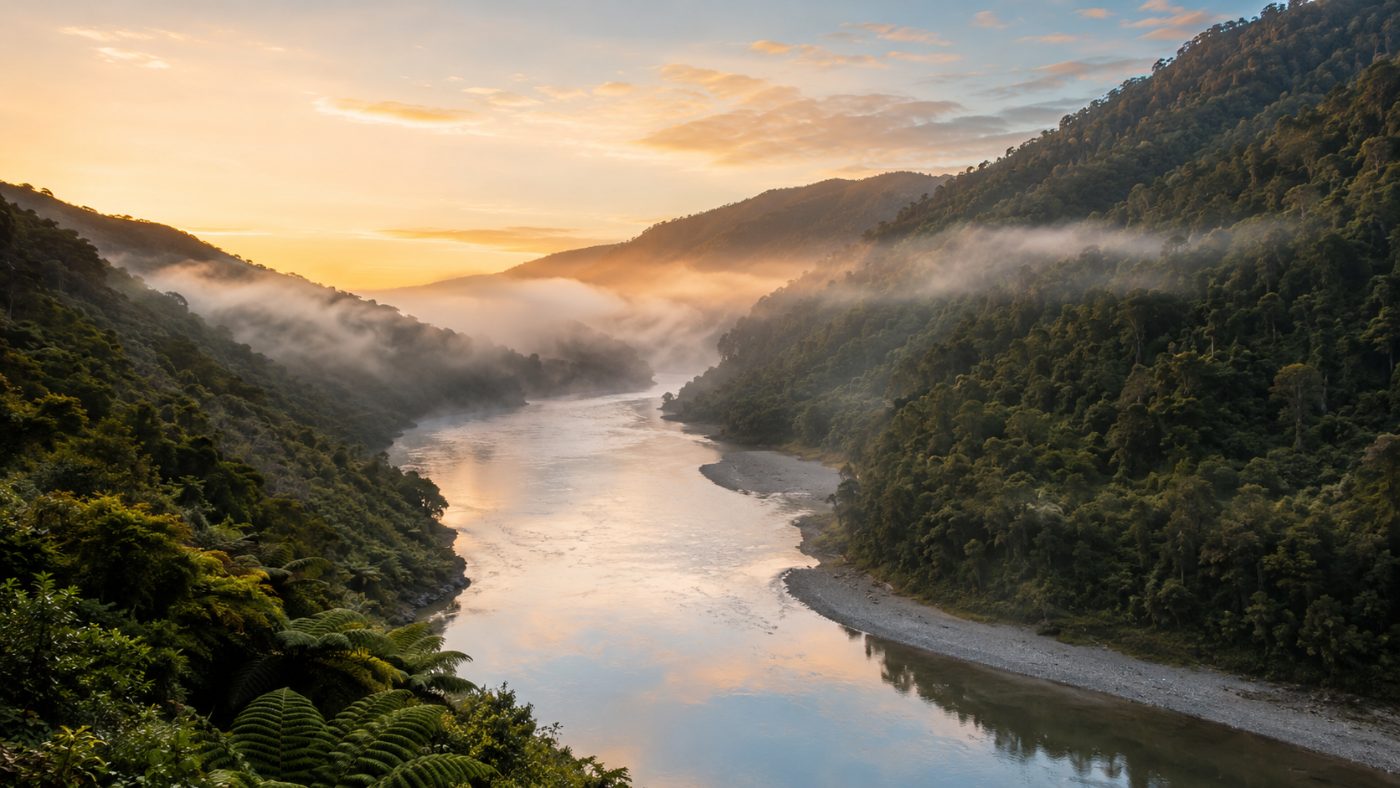
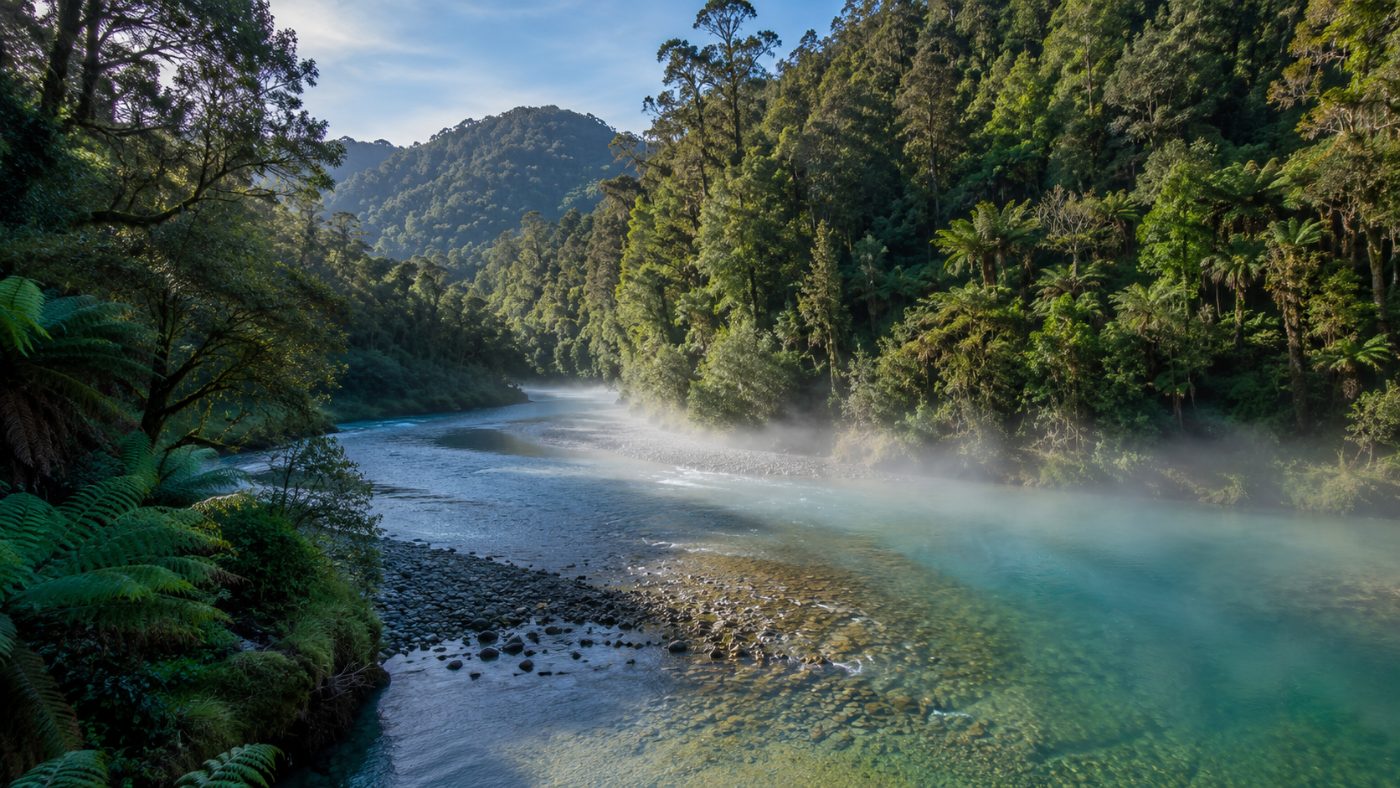
The Whanganui River, which New Zealand law now treats as a living person. Illustration: Watts & Wild.
For the Māori people of the Whanganui, the river that winds through the heart of New Zealand's North Island was never a piece of property. It was an ancestor, a single living whole running from the mountains to the sea, captured in a saying they have repeated for generations: Ko au te awa, ko te awa ko au, I am the river, and the river is me. For nearly a century and a half, the law saw it very differently, as water and gravel to be used, until New Zealand recognised the Whanganui River as a legal person.
That changed in March 2017. After one of the longest legal battles in the country's history, New Zealand's parliament passed the Te Awa Tupua Act and did something no nation had done before. As New Zealand's Parliament described it, the river was granted all the rights, duties and liabilities of a legal person, no longer a resource to be managed but an entity with standing of its own.
A 140-year argument finally settled
This was not a sudden act of generosity. From the 1870s, as the colonial government took gravel from the riverbed, ran steamers up its course and diverted its headwaters for hydropower, the Whanganui iwi and hapu, the river's tribes and sub-tribes, fought the settler legal system for authority over the water they considered family. Petition followed petition, case followed case, generation after generation.
The Te Awa Tupua Act was the end of that road, the settlement of what is often called the longest-running litigation in New Zealand's history. It came as part of the country's process of redress with Māori under the Treaty of Waitangi, which makes it more than an environmental law. It is also an act of apology, returning to a people a relationship the state had spent 140 years denying.
How the Whanganui River became a legal person
A river cannot file papers or stand in a courtroom, so the Act built it a voice. It created an office called Te Pou Tupua, described as "the human face" of the river, made up of two people, one appointed by the Whanganui iwi and one by the Crown, whose job is to act and speak on behalf of the river and to defend its interests, including in court.
The law also wrote down Tupua te Kawa, the intrinsic values of the river as a living being, and set up a strategy group and a fund for its long-term health. In practical terms, the river can now be a party in a legal dispute, represented by guardians who are bound to act in its interest rather than their own. A company has long been able to be a legal person on paper. New Zealand simply asked why a river could not.
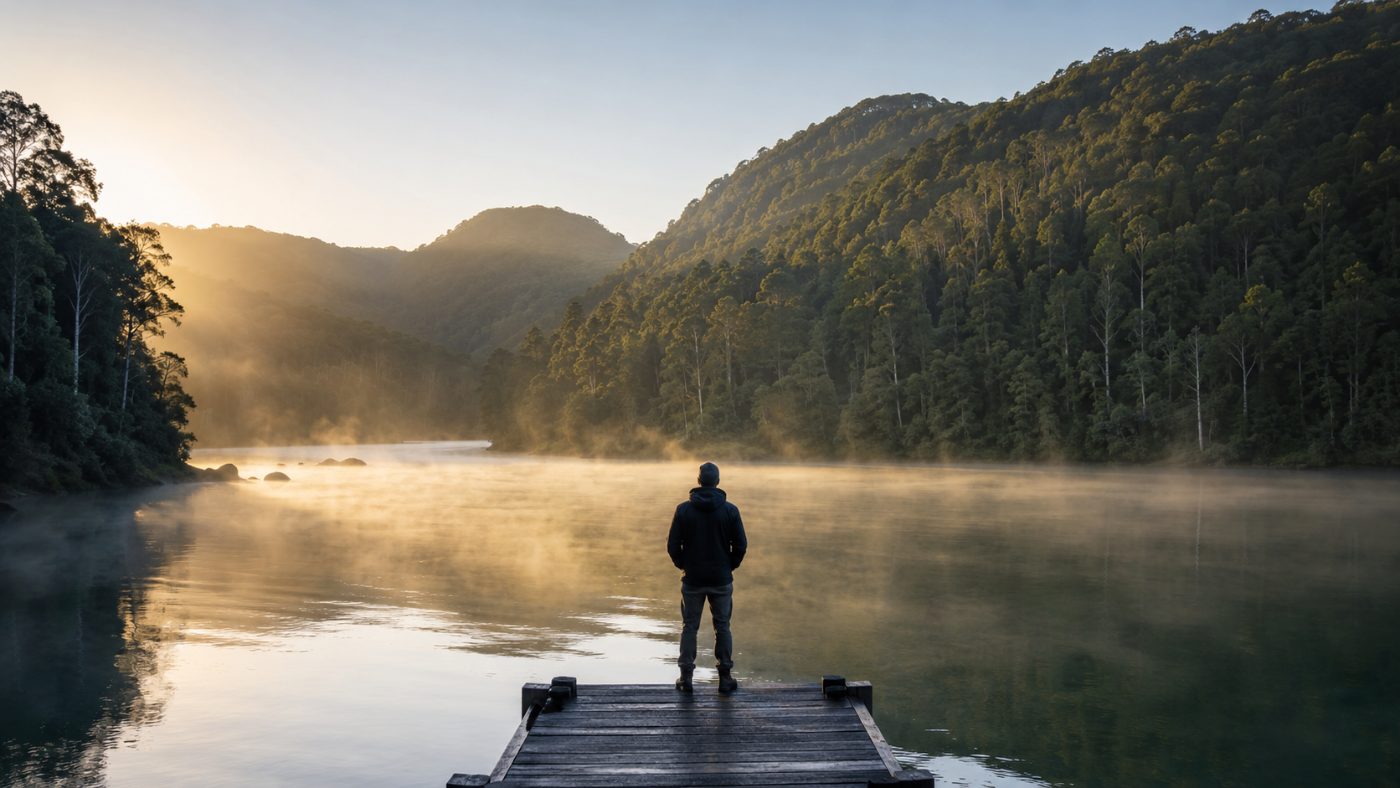
An idea that turns ownership upside down
What makes the Whanganui story so striking is how completely it inverts the usual relationship. In most of the world, nature is something humans own and use. Here the river is the being with rights, and the people are its guardians, responsible to it rather than the other way around.
Gerrard Albert, the lead negotiator for the Whanganui iwi, put the shift plainly when the law passed, saying that "rather than us being masters of the natural world, we are part of it," and that starting from the view of the river as a living being "is not an anti-development, or anti-economic use of the river," but simply a different place to begin. It is a Māori worldview, finally written into Western law.
The idea jumps borders
The Whanganui opened a door, and others walked through it fast. Just days later, a court in India recognised the Ganges and Yamuna rivers as legal persons, although that ruling was suspended within months. As The Revelator has reported, the Te Awa Tupua Act has become an inspiration for communities elsewhere to grant rights to their own ecosystems.
Since 2017 the rights-of-nature idea has spread to rivers, lakes, mountains and forests in countries from Ecuador and Bangladesh to Spain, where citizens voted to make the Mar Menor lagoon a legal person. A single law about one river on a small Pacific nation quietly seeded a global movement to give parts of the natural world a legal voice.
The honest catch: a legal person is not a magic spell
For all its power as an idea, legal personhood does not, on its own, fix a river. It gives the Whanganui standing and a voice, but it does not automatically clean the water, undo the dams that still divert its flow, or stop pollution upstream. Those battles still have to be fought, now with the river as a party rather than a possession.
As Mongabay reported, even some Māori and scholars debate whether legal personhood is a genuine tool or a symbolic distraction from the harder work of restoring the river and returning real power to its people. The quick suspension of the Ganges and Yamuna ruling in India showed how easily a court can take the status back. A river with rights still depends, in the end, on humans choosing to honour them.
At a time when most of the world still treats rivers and forests as free resources to use up, declaring one river a living person is a quiet revolution in how we see the things that keep us alive. Should nature have legal rights of its own, or is "person" the wrong word for a river? Tell us what you think in the comments.